
Range Rover Sport Engine Failure Warranty Claim: What's Covered, What's Not, and How to Get Approved
Facing a Range Rover Sport engine failure can be stressful, especially when you're unsure if your warranty will cover the repair. This guide breaks down what Land Rover's factory and extended warranties actually cover, the most common reasons claims get rejected, and the real causes behind SDV6, TDV6, and Ingenium engine issues. It also walks through how to file a strong claim, what to do if you're denied, and your consumer rights under UK law — so you know exactly where you stand before making any decisions.
Your Range Rover Sport just threw a warning light, and now there's a knock coming from under the bonnet that wasn't there last week. Your first thought probably isn't about the noise, it's about the bill. Engine replacement costs on these vehicles can run into five figures, and the question that matters most right now is simple: will your warranty actually pay for this?
That question doesn't have a one-size-fits-all answer, and that's exactly the problem. Land Rover's warranty terms, service history requirements, and the difference between a manufacturer warranty and an extended warranty all affect whether your claim gets approved or rejected on the spot. Add in the fact that engine failures on the SDV6, TDV6, and Ingenium units follow known patterns, and you've got a situation where the right documentation and the right questions can be the difference between a covered repair and a costly denial.
This guide walks through exactly what's covered, why claims fail, what causes these engines to fail in the first place, and what your options look like if the dealer says no.
Does Your Range Rover Sport Warranty Actually Cover Engine Failure?
The short answer: sometimes. Whether your engine failure is covered depends on which warranty you're under, how the vehicle was maintained, and what actually caused the failure. Land Rover, like most manufacturers, draws a hard line between mechanical defects and damage caused by wear, neglect, or third-party modification.
Understanding the type of cover you have is the first step before you even pick up the phone to book an inspection.
What Land Rover's Factory Warranty Covers on the Range Rover Sport
The standard Land Rover factory warranty typically covers manufacturing defects for a set period from the vehicle's first registration, usually three years, though this varies by market and model year. Within that window, if the engine fails due to a genuine part or build fault, it should be repaired or replaced at no cost to you.
What it generally covers includes:
- Mechanical breakdown caused by a defect in materials or workmanship
- Component failure on items still within their service life, such as oil pumps, camshafts, and injectors, where failure isn't linked to poor maintenance
- Crankshaft and bearing failures where evidence points to a manufacturing fault rather than oil starvation from missed servicing
What it typically excludes:
- Damage from wear and tear outside expected parameters
- Failures linked to missed or late servicing
- Damage from aftermarket modifications, including ECU remapping or non-OEM parts
- Off-road damage that falls outside intended use
Manufacturer Warranty vs Extended Warranty vs Powertrain Warranty, What's the Difference?
These three terms get used interchangeably by owners, but they're not the same thing, and confusing them is one of the most common reasons people misjudge whether their engine failure should be covered.
Warranty Type | What It Covers | Typical Duration | Best For |
| Manufacturer (Factory) Warranty | Defects in materials, workmanship, and factory-fitted parts | 3 years or set mileage from first registration | New or nearly-new Range Rover Sport owners |
| Extended Warranty | Extends factory-style cover beyond the original term, often with tiered packages | Additional 1–5 years, purchased separately | Owners keeping the vehicle past factory cover |
| Powertrain Warranty | Specifically the engine, transmission, and drivetrain components | Varies, sometimes bundled into extended cover | Owners most concerned about engine and gearbox failure specifically |
A land rover extended warranty or range rover sport extended warranty can be worth the investment if you're planning to keep the vehicle long-term, particularly given how expensive an uncovered engine replacement can be. But not all extended warranties are equal, some aftermarket warranty providers exclude exactly the components most likely to fail on these engines, so read the schedule of cover carefully before assuming you're protected.
How Your Service History Can Make or Break a Warranty Claim
This is the single biggest factor that determines whether a warranty claim succeeds. Land Rover and most extended warranty providers require full, documented service history at the correct intervals, using the correct oil specification and parts.
A gap in your service history, even a small one, gives the manufacturer or warranty provider grounds to argue the failure resulted from poor maintenance rather than a defect. This applies whether the servicing was done at a main dealer or an independent garage, provided the independent garage used OEM-equivalent parts and followed the manufacturer's service schedule.
Keep in mind:
- Digital service records (via Land Rover's system) are generally viewed more favourably than paper records
- Missing even one scheduled service can be used as grounds for rejection
- Using the wrong oil grade, even if the vehicle "seemed fine," can void engine-specific cover
Top Reasons Range Rover Sport Warranty Claims Get Rejected
Warranty rejections aren't random. They follow a consistent pattern, and knowing what they are means you can prepare before you submit a claim rather than find out the hard way.
The most common reasons include:
- Incomplete or missing service history the most frequent cause of rejection by a wide margin
- Evidence of oil starvation traced back to missed or delayed oil changes
- Aftermarket modifications, including ECU remapping, non-standard exhaust systems, or non-OEM fluids
- Off-road use beyond intended parameters, where damage is attributed to abuse rather than normal use
- DIY repairs that weren't carried out to manufacturer specification
- Late reporting — waiting too long after a warning light or noise appears before booking an inspection
If any of these apply to your situation, it doesn't automatically mean your claim will fail but it does mean you need stronger supporting evidence, which we'll cover further down.
What Causes Range Rover Sport Engine Failure? (SDV6, TDV6 & Ingenium)
Knowing why these engines fail helps you understand what a warranty assessor will actually be looking for, and it helps you spot early warning signs before a small problem becomes a total engine loss.
The Range Rover Sport has used several engine platforms over the years, the TDV6, SDV6, the AJD-V6, and more recently the Ingenium diesel and petrol units. Each has its own known weak points, but a handful of failure patterns show up again and again across the range.
Crankshaft and Bearing Failures: Why They Happen
Crankshaft and connecting bearing failures are among the most serious and most expensive, issues reported on SDV6 and TDV6 engines. In many documented cases, the root cause traces back to oil starvation: the bearings aren't receiving adequate lubrication at the moment of highest load, often due to oil pump wear, blocked oil feeds, or extended oil change intervals.
Once a bearing starts to fail, the damage escalates quickly. A knocking noise from the bottom end of the engine is rarely a minor issue, it's usually a sign that metal-on-metal contact has already begun, and continuing to drive the vehicle at this stage can turn a bearing replacement into a full engine rebuild or replacement.
Turbocharger Failure and Oil Starvation Explained
Turbo failures on these engines are frequently connected to the same root cause: inadequate oil supply. The turbocharger relies on a constant, clean oil feed to lubricate its bearings, which spin at extremely high speeds. When oil pressure drops, whether from a failing oil pump, a blocked feed line, or simply running the engine on old, degraded oil, the turbo bearings can seize or wear prematurely.
Symptoms that typically precede a turbo failure include:
- A whining or whistling noise under acceleration
- Visible blue or grey smoke from the exhaust
- Noticeable loss of power or delayed throttle response
- The engine warning light or limp mode activating
Early Warning Signs Before a Complete Engine Seizure
Catching a problem before total failure isn't just about saving money, it directly affects your warranty position too. A claim submitted at the first sign of trouble looks very different, from an assessor's point of view, to one submitted after weeks of driving with a known fault.
Watch for:
- Persistent knocking or ticking noises, especially at idle or under load
- Oil pressure warning lights, even if they clear after restarting
- Unexplained oil consumption between services
- Overheating or coolant loss without an obvious external leak
- Engine misfires or rough running that wasn't present before
If you notice any of these, the safest move is to stop driving the vehicle and book a diagnostic inspection immediately, rather than waiting to see if it gets worse.
Is This a Known Fault? Common Problems by Engine Type
Not every failure is identical, and the engine variant in your Range Rover Sport affects both the likely cause and how a warranty provider is likely to respond.
- TDV6 engines: commonly associated with crankshaft and bearing wear linked to oil starvation, particularly in higher-mileage vehicles
- SDV6 engines: share similar bottom-end vulnerabilities, with additional reports around EGR cooler failures affecting cooling and emissions performance
- Ingenium diesel and petrol units: generally more modern, but timing chain wear and turbo actuator issues have been reported in certain model years
If you're trying to establish whether your specific issue is a "known fault," a documented pattern across multiple owners strengthens your case considerably, this is where independent forums, owner communities, and even Motor Ombudsman case data can support a claim.
How to File a Range Rover Warranty Claim (And What to Do If It's Denied)
Filing a claim correctly the first time saves weeks of back-and-forth. This section covers what to prepare before you submit anything, and what your options look like if the initial answer is no.
Documents and Evidence You Need Before Submitting a Claim
Before you contact the dealer or your warranty provider, gather everything that supports your case. Assessors are far more likely to approve a claim quickly when the paperwork is complete and organised from the outset.
You'll typically need:
- Full service history, ideally digital records showing every scheduled service
- Purchase invoices for any parts or servicing carried out
- A written fault description, including when symptoms first appeared
- Diagnostic reports from the dealer or an independent specialist
- Photos or video of any visible symptoms, smoke, leaks, or warning lights
Independent Inspection Report vs Dealer Diagnostic — Which Carries More Weight?
This is a genuinely useful question, and the honest answer is: it depends on who's assessing the claim. A main dealer diagnostic is usually the required first step, since it's tied directly into Land Rover's internal systems. However, an independent engineer's report can be valuable as supporting evidence, particularly if you're disputing a dealer's initial finding or preparing for an appeal.
If your claim is denied and you believe the assessment was wrong, an independent inspection from a qualified engine specialist gives you a second, impartial opinion, something that carries real weight if the dispute progresses to the Motor Ombudsman.
What Happens After a Warranty Denial
A denial isn't necessarily the end of the road. Manufacturers and warranty providers reject a percentage of claims that are later overturned on appeal, particularly when new evidence is presented or the original assessment missed something.
Your options after a denial typically include:
- Requesting a detailed written explanation for the rejection
- Submitting an appeal with additional evidence or an independent inspection report
- Asking about goodwill assistance, a discretionary contribution some manufacturers offer even outside strict warranty terms, particularly for brand-loyal customers or vehicles just outside the warranty window
- Escalating to the Motor Ombudsman if you believe the manufacturer or dealer hasn't acted fairly
Your Consumer Rights Under UK Law
UK consumers have legal protections that exist independently of the manufacturer's warranty terms. Under the Consumer Rights Act 2015, goods must be of satisfactory quality, fit for purpose, and as described, and this can apply even after a manufacturer's warranty has technically expired, particularly for higher-value vehicles where a reasonable consumer would expect the engine to last significantly longer than the warranty period.
This doesn't guarantee a free repair, but it does give you a legal basis to pursue the retailer or manufacturer if you believe the failure represents an inherent fault rather than fair wear and tear. If a dispute reaches this stage, it's worth seeking guidance from Citizens Advice or a solicitor familiar with consumer vehicle claims before proceeding.
Range Rover Sport Engine Replacement Cost & Repair Options in the UK
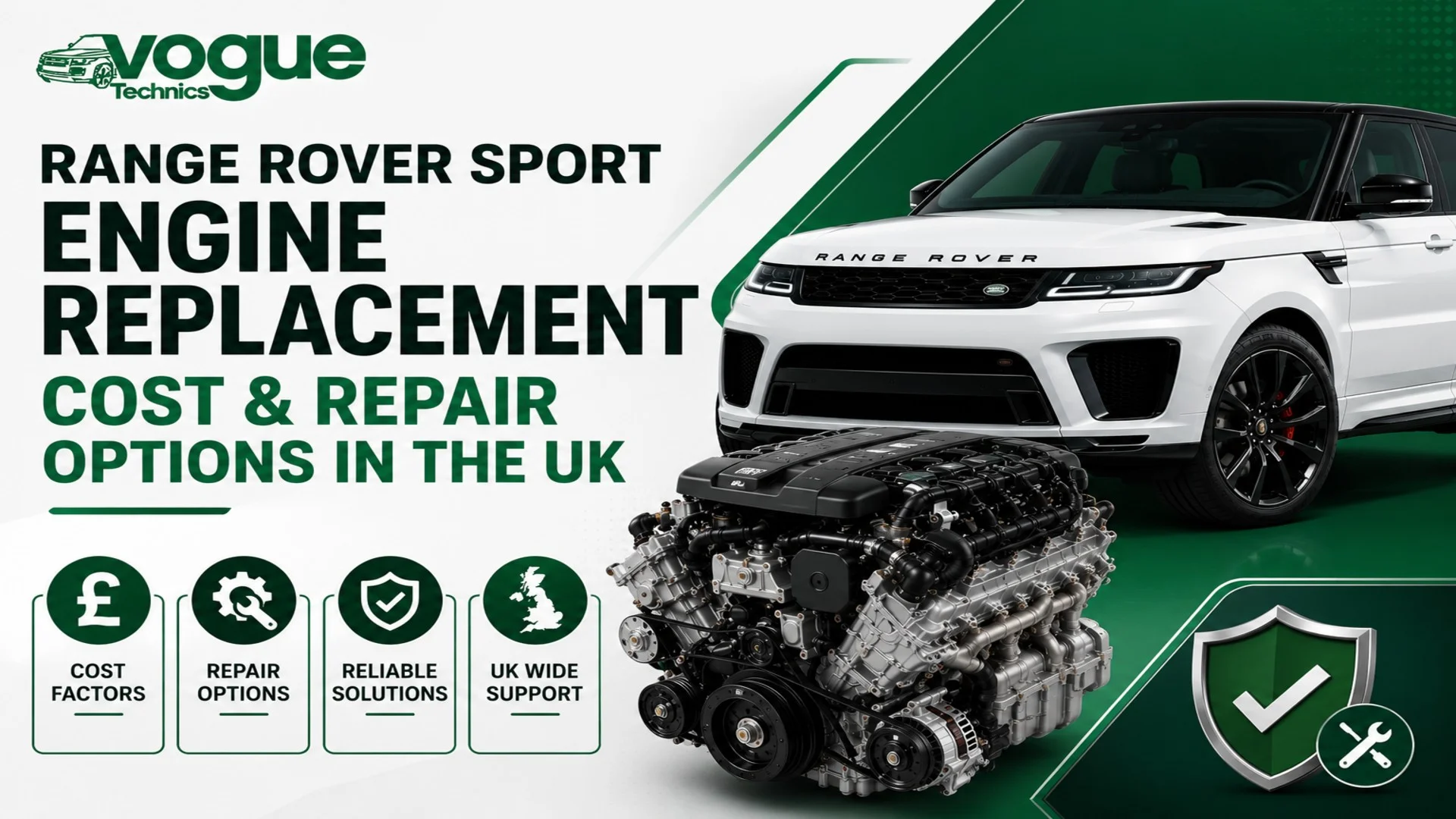
If your warranty claim is denied, reduced, or you're simply outside any cover, the next question is practical: what will it actually cost to get the vehicle back on the road, and what are your options?
Reconditioned vs Used vs New Engine: Cost Comparison
Engine replacement costs vary significantly depending on the route you choose. Here's a general comparison of what UK owners typically encounter:
Option | Typical Cost Range | Warranty Included | Considerations |
| New engine (via dealer) | Highest cost, often the most expensive route | Yes, dealer-backed | Longest wait times, highest price |
| Reconditioned engine | Mid-range cost | Usually yes, from specialist | Good balance of cost and reliability |
| Used engine | Lowest upfront cost | Limited or none | Higher risk if history is unknown |
A reconditioned engine, rebuilt to OEM specification with new wear components, tends to offer the best balance between cost and long-term reliability, particularly when it comes with its own warranty from the specialist carrying out the work.
Why an Engine Specialist Can Cost Less Than a Main Dealer
Main dealer labour rates and parts markups are a significant part of why engine replacement quotes vary so widely. An independent engine specialist, particularly one focused specifically on Range Rover and Land Rover engines, often has direct sourcing relationships for reconditioned units and doesn't carry the same overhead as a franchised dealership.
This doesn't mean cutting corners, a reputable specialist should still use OEM or OEM-equivalent parts, follow correct torque and calibration procedures, and back the work with a genuine warranty. The difference is in cost efficiency, not quality, when you choose the right provider.
Get a No-Obligation Engine Quote from Voguetechnics (Grays, Essex)
If you're facing a Range Rover Sport engine failure and want a straight answer on cost before committing to anything, Voguetechnics Engine Rebuild, based in Grays, Essex, specialises in Range Rover and Land Rover engine diagnostics, rebuilds, and replacements. Getting a no-obligation quote gives you a clear comparison point, whether your warranty claim comes back approved, reduced, or denied, you'll already know what your options and costs look like.
Frequently Asked Questions
Is engine failure covered under Land Rover warranty?
It can be, provided the failure results from a manufacturing defect rather than wear, neglect, or modification, and your service history is complete and up to date.
Why was my warranty claim rejected?
The most common reasons are missing service history, evidence of oil starvation from delayed servicing, aftermarket modifications, or damage attributed to off-road use beyond normal parameters.
Can I appeal a denied warranty claim?
Yes. You can request a written explanation, submit additional evidence such as an independent inspection report, and escalate to the Motor Ombudsman if you believe the decision was unfair.
Does extended warranty cover engine replacement?
Most extended warranties do cover engine replacement, but coverage varies significantly between providers, always check the specific schedule of cover rather than assuming full protection.
Does missing service history void my warranty?
It can significantly weaken a claim, since manufacturers use service history as primary evidence that the vehicle was maintained correctly. A single missed service doesn't always void cover outright, but it does open the door to disputes.
Does DIY servicing void my warranty?
Not automatically, but any servicing must follow the manufacturer's specified intervals, parts, and fluid grades. Poorly documented or incorrect DIY work is a common reason claims are challenged.
How long does a warranty claim take?
Timelines vary, but a straightforward claim with complete documentation is typically resolved faster than one requiring additional investigation or appeal, often a matter of weeks rather than days.
Should I get an independent inspection before filing a claim?
It's not always required upfront, but having one available strengthens your position, particularly if the initial dealer assessment doesn't go in your favour.
Final Thoughts
A Range Rover Sport engine failure is stressful, but it's rarely a dead end. Whether your warranty claim is approved, partially covered, or denied outright, understanding how these engines fail, what evidence strengthens a claim, and what your consumer rights actually cover puts you in a far stronger position than simply accepting the first answer you're given.
If you're currently weighing up a warranty dispute against the cost of repair, getting a clear, no-obligation engine quote is a sensible next step, it removes the guesswork and gives you a real number to compare against whatever the warranty process delivers.
Get in touch with Voguetechnics Engine Rebuild in Grays, Essex, for an honest assessment and a straightforward engine replacement or repair quote, no pressure, no obligation, just a clear picture of your options.