
Reconditioned Range Rover Sport Engine Cost: Complete UK Pricing Guide
Find out the Range Rover Sport Engine Replacement Cost UK with this practical 2026 guide covering replacement prices, engine options, labour costs, and common causes of engine failure. Learn whether a reconditioned, used, or new engine is the right choice and discover what affects the final cost. Get expert advice and request an instant, no-obligation quote for your vehicle.
Your Range Rover Sport is making a noise it's never made before. Maybe there's smoke where there shouldn't be, or the power just isn't there anymore. And now you're staring down a question that no owner wants to face: how much is this actually going to cost to fix properly?
You're not alone in asking. Engine failure in a Range Rover Sport, whether it's a TDV6, SDV6, or one of the newer Ingenium units, is one of the most expensive repairs an owner will ever face. But it's also one of the most misunderstood. Garages throw around numbers, dealerships quote eye-watering figures, and online forums are full of contradictory advice. This guide cuts through that confusion with real UK pricing, honest comparisons, and a clear path forward, whether you decide to rebuild, replace, or explore your other options.
How Much Does a Reconditioned Range Rover Sport Engine Cost in the UK?
Let's get straight to the number you came here for.
A reconditioned Range Rover Sport engine typically costs between £2,800 and £6,500, supplied and fitted, depending on the engine variant, the extent of the reconditioning work, and whether labour and ancillary parts are included in the quote. That's a wide range and for good reason. A straightforward reconditioned diesel unit sits at the lower end, while a fully remanufactured petrol V8 or a more complex Ingenium engine with extensive turbo and cooling system work can push toward the upper end.
What matters more than the headline figure is understanding why prices vary so much between suppliers. Two garages can quote wildly different numbers for what sounds like the same job, and the difference usually comes down to what's actually included, genuine parts versus aftermarket, full engine testing versus a quick swap, and whether ECU programming and diagnostics are bundled in or charged separately later.
Cost by Engine Type — TDV6, SDV6, Ingenium and AJ133
Not all Range Rover Sport engines are priced the same, and it helps to know where your specific engine code sits in the market.
- TDV6 (diesel): One of the most commonly replaced units due to age and mileage across the used market. Reconditioned TDV6 engines generally fall in the £2,800–£4,200 range, largely because parts availability is strong and the rebuild process is well established.
- SDV6 (diesel): A more advanced successor to the TDV6, often found in later Sport models. Expect costs closer to £3,500–£5,000 due to more complex turbocharger and injector systems.
- SDV8 (diesel V8): A larger, heavier-duty engine that commands a premium, typically £4,500–£6,500 once reconditioned, reflecting the scale of the rebuild.
- Ingenium (diesel and petrol): JLR's newer engine family, used across later Range Rover Sport models. Pricing varies significantly depending on which Ingenium variant you have, generally £3,200–£5,800.
- AJ133 (petrol V8): Found in performance and supercharged Sport models. Reconditioning costs here tend to run higher, often £4,000–£6,500, due to the complexity of the supercharger and cooling architecture.
If you're not sure which engine code your Range Rover Sport has, this is one area where a VIN check is invaluable. Matching the reconditioned engine to your exact VIN and engine code prevents compatibility issues down the line, something worth confirming before you commit to any quote.
Labour Costs and Hidden Extras Explained
This is where a lot of owners get caught out. A quoted "engine price" and a genuine supply and fit price are not always the same thing, and the gap between them is where hidden costs tend to hide.
Labour for a full engine replacement typically adds £600–£1,200 on top of the engine cost itself, depending on the complexity of the removal and whether additional components need to come out to access the engine bay.
Beyond labour, keep an eye out for these commonly overlooked costs:
- ECU programming reprogramming the ECU to recognise the new engine, often not included as standard
- Coolant, oil, and fluids a full service package after installation
- Timing chain and ancillary parts sometimes billed separately if worn components are found during fitting
- Transport or collection fees particularly relevant if you're not local to the supplier
- Turbocharger inspection checking the existing turbo is compatible with the "new" engine rather than assuming it
A transparent supplier will itemise all of this upfront rather than adding surprises to your final invoice. If a quote seems unusually low compared to others, it's worth asking directly what's included because in this market, the cheapest headline price rarely stays the cheapest once the full job is done.
Reconditioned vs Used vs Remanufactured Engines — Which Should You Choose?
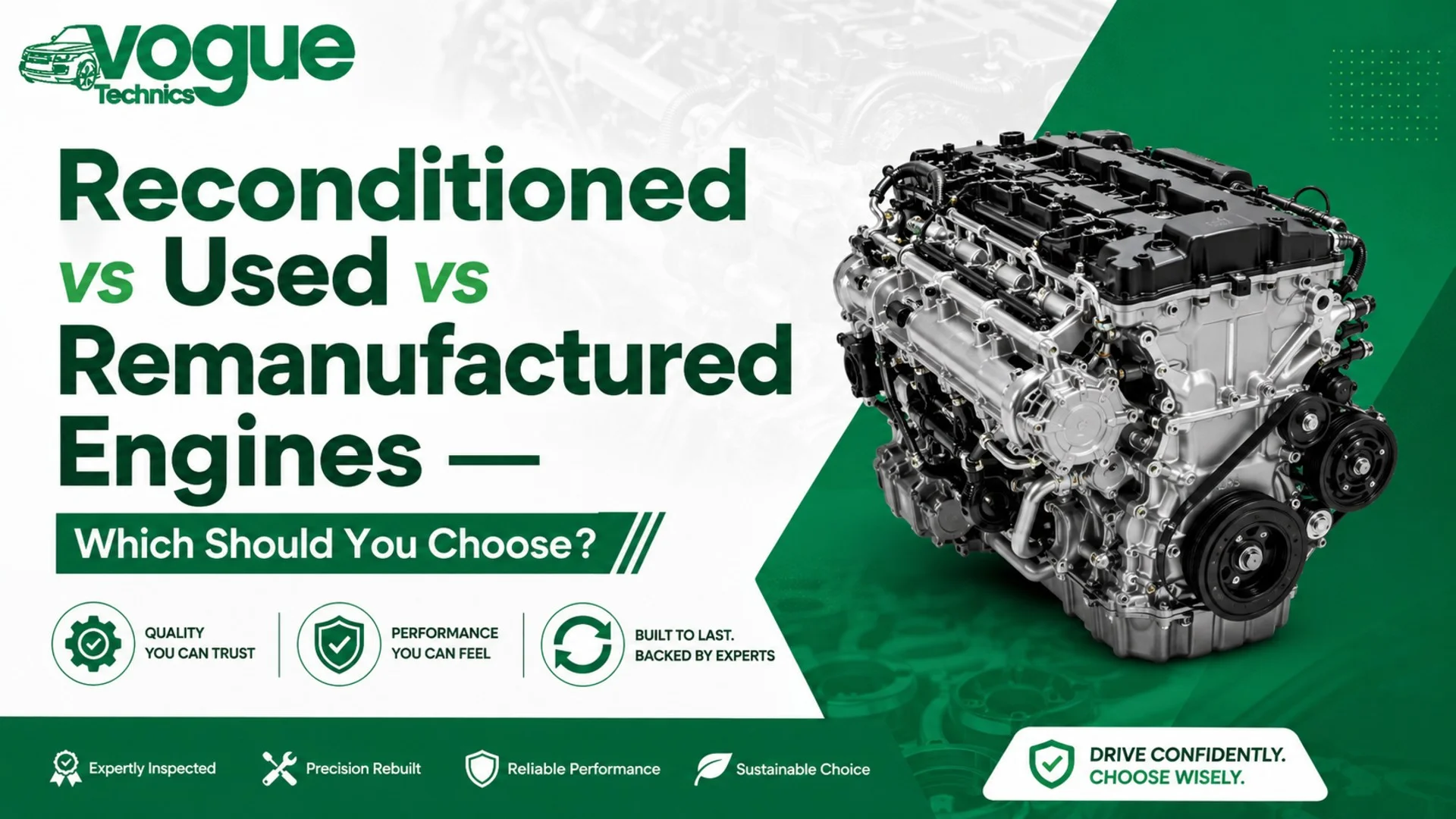
This is probably the single most confusing part of the whole process, and understandably so, the terms get used almost interchangeably by sellers, even though they mean genuinely different things.
- A used engine is exactly what it sounds like: pulled from another vehicle, usually from a scrapyard or breaker, with no rebuild work done. It may run fine for years, or it may be carrying the same wear patterns that killed the donor vehicle's engine in the first place.
- A reconditioned engine has been stripped down, inspected, and had worn or damaged components replaced, think crankshaft, pistons, bearings, and gaskets before being reassembled and tested.
- A remanufactured engine goes a step further, typically rebuilt to original manufacturer specification using OEM or OEM-equivalent parts, often with more rigorous quality control and testing before it leaves the workshop.
Here's a straightforward comparison to help you weigh up the options:
Engine Type | Typical Cost | Reliability | Warranty | Best For |
| Used | Lowest | Unknown history, variable | Rarely offered | Budget-only, short-term fix |
| Reconditioned | Mid-range | Good, inspected and tested | Usually included | Most owners seeking value and reliability |
| Remanufactured | Highest | Excellent, OEM-spec rebuild | Comprehensive | Owners keeping the vehicle long-term |
For most Range Rover Sport owners, a reconditioned engine hits the sweet spot — it costs considerably less than a remanufactured unit while offering far more assurance than an unknown used engine with an unclear service history.
Warranty, Reliability and Long-Term Value Compared
A warranty isn't just paperwork, it's a genuine indicator of how confident a supplier is in their own rebuild work.
Reputable reconditioned engine suppliers typically offer warranties ranging from 3 to 12 months, with some remanufactured engines backed by longer cover. Before committing, it's worth asking specifically what the warranty excludes. Common exclusions include turbocharger failure caused by pre-existing oil contamination, damage from continued driving after a warning light appears, or issues traced back to unrelated components like the cooling system.
Reliability also comes down to process. A quality-inspected, road-tested engine — one that's been run and checked before it's fitted, gives you far more confidence than a unit shipped straight from storage. If a supplier can't tell you whether the engine has been tested, that's a reasonable question to ask before you pay a deposit.
Signs You Need a Range Rover Sport Engine Replacement
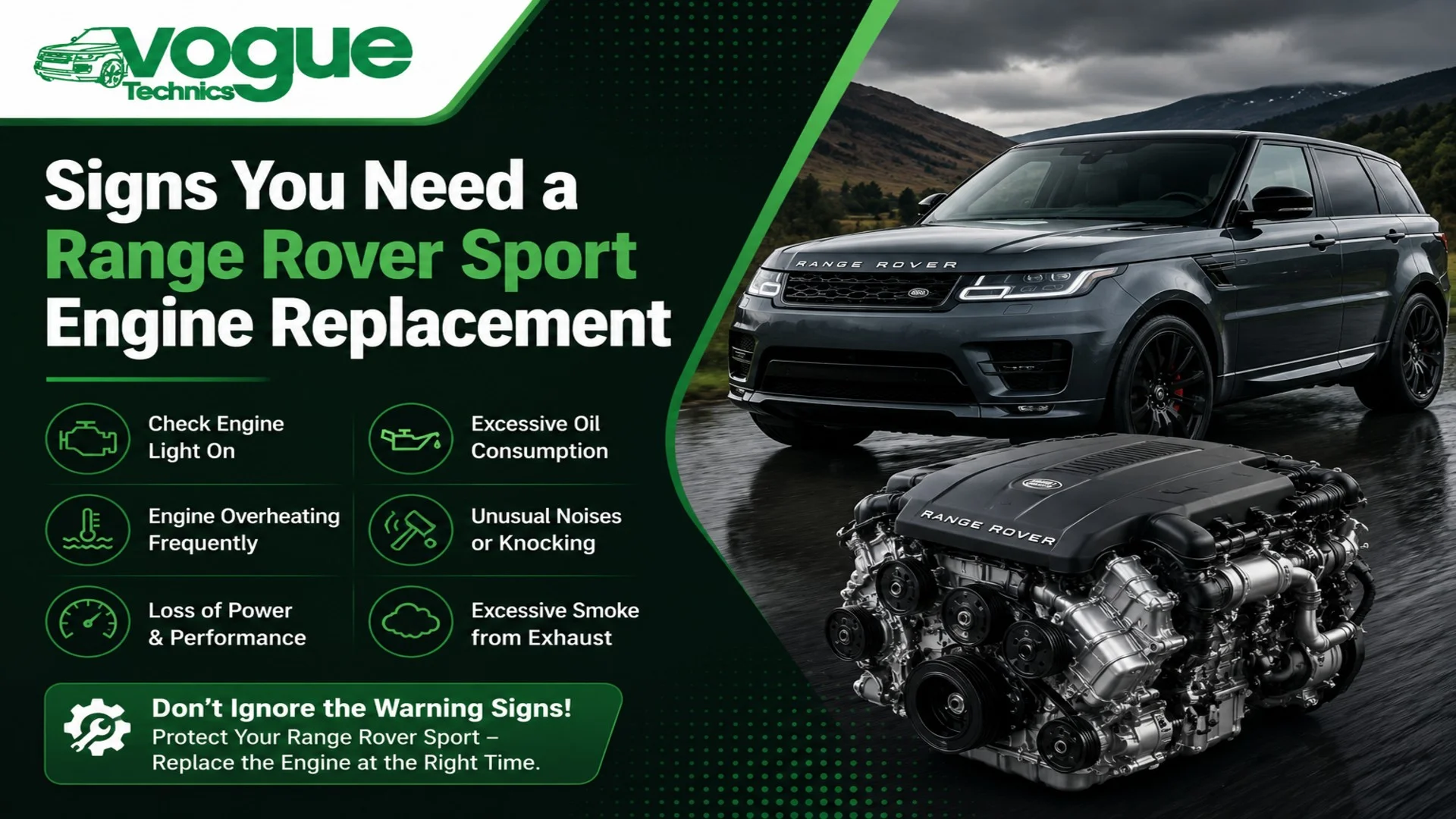
Engine failure rarely happens overnight. In most cases, there's a build-up of warning signs — and catching them early can be the difference between a manageable repair and a full engine replacement.
Watch out for:
- Persistent engine warning light that doesn't clear after diagnostics
- Excessive smoke from the exhaust, particularly blue (oil burning) or white (coolant contamination) smoke
- Engine knocking or unusual mechanical noise, often linked to crankshaft or piston wear
- Overheating, especially if it happens repeatedly despite coolant top-ups
- Noticeable power loss, sluggish acceleration, or the vehicle struggling under load
- Oil pressure loss, which can indicate serious internal wear and shouldn't be ignored
- Turbocharger failure, often signalled by whining noises or a sudden drop in performance
If you're seeing two or more of these signs together, it's worth getting a proper diagnostic check rather than waiting to see if it resolves itself. A seized engine caused by oil starvation, for example, often gives clear warning signs beforehand, but by the time the engine actually seizes, a rebuild is usually no longer an option, and full replacement becomes the only realistic route forward.
Rebuild, Replace, or Sell? Weighing Your Options
Not every engine problem means you need a full replacement. Depending on the severity and cause of the fault, you genuinely have a few paths open to you.
- Engine rebuild: If the damage is contained, a worn timing chain, a failing turbo, or a head gasket issue, a targeted rebuild can be far more cost-effective than a full engine swap.
- Full engine replacement: Necessary when there's significant internal damage, such as a snapped crankshaft, cylinder scoring, or a seized engine block.
- Sell or trade the vehicle: For older Range Rover Sports with high mileage, sometimes the maths genuinely doesn't favour spending thousands on an engine replacement for a vehicle that's depreciating regardless.
- Preventive maintenance: If you've caught the warning signs early, sometimes a full service, addressing the cooling system, oil pump, or fuel system, can prevent the problem from ever reaching replacement stage.
The right choice depends on your vehicle's age, mileage, overall condition, and how long you plan to keep it. A five-year-old Sport with low mileage and a single failed component is a very different decision to a fifteen-year-old high-mileage vehicle with multiple issues stacking up.
How to Get a Reconditioned Engine Supplied and Fitted by Voguetechnics
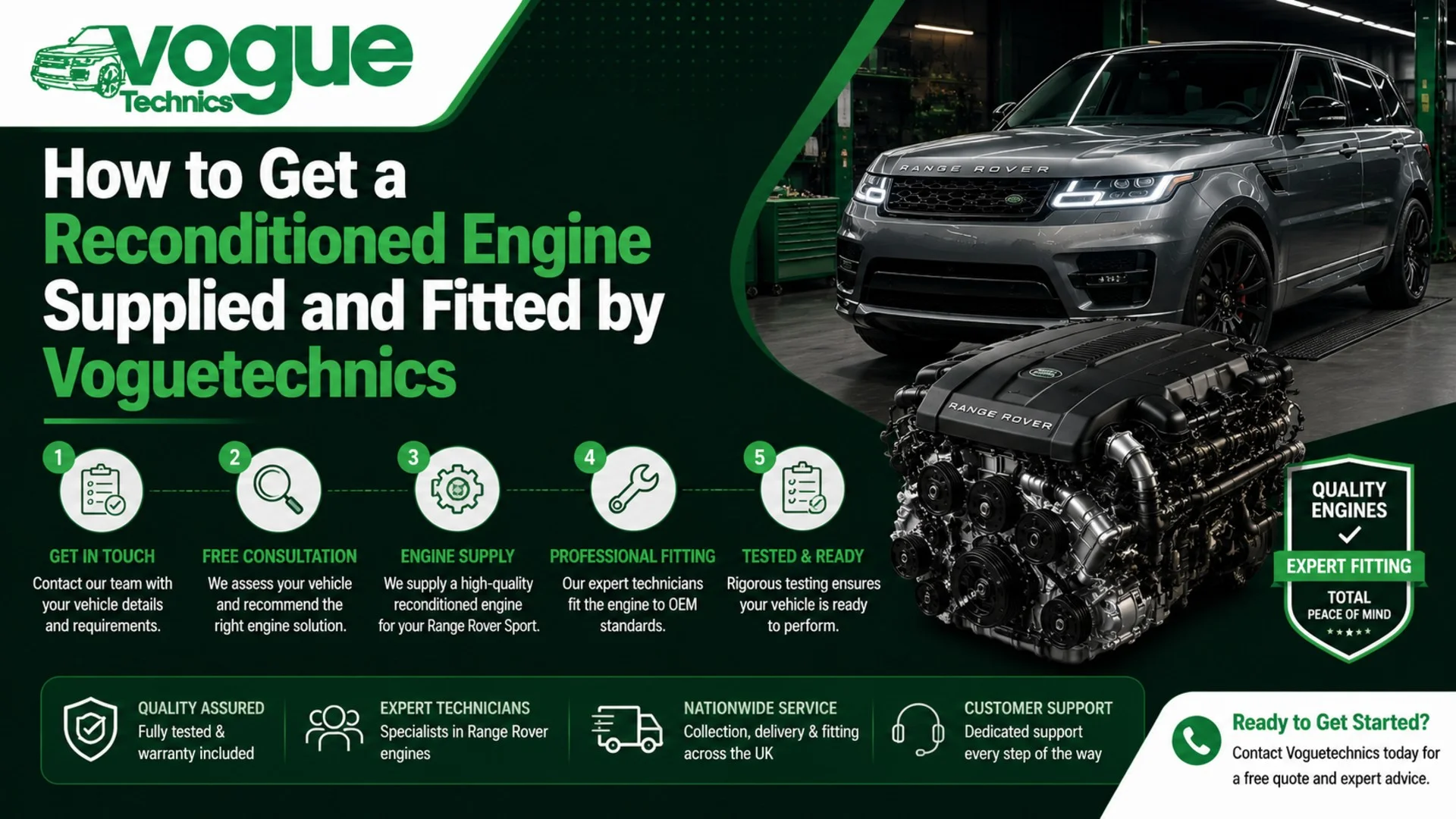
Once you've decided that a reconditioned engine is the right route, the next question is finding a supplier you can actually trust with the job.
At Voguetechnics Engine Rebuild, based in Grays, Essex, we specialise in supplying and fitting reconditioned Range Rover and Range Rover Sport engines across the UK. Every engine we supply goes through inspection, quality control, and road testing before it's fitted, not just checked on paper, but genuinely run and verified.
We work across the full range of engine codes, including TDV6, SDV6, SDV8, Ingenium, and AJ133 units, and we match every engine to your vehicle's VIN to make sure compatibility isn't left to chance. Our team handles everything from ECU programming to full diagnostics as part of the process, rather than leaving you to sort those separately afterward.
No Deposit, UK-Wide Collection and Free Quotes
We know that trusting a supplier you haven't used before is genuinely difficult, especially when the job involves this much money. That's why we've built our process around removing risk at every stage:
- No upfront deposit required before work begins
- UK-wide vehicle collection service, so you're not limited to customers local to Essex
- Free, no-obligation quotes, based on your specific vehicle and engine code
- Warranty included on all reconditioned and supplied engines
- Genuine and OEM-specification parts used throughout the rebuild process
If your Range Rover Sport isn't drivable, that's not a barrier, our collection service is designed specifically for vehicles that can't be brought to us under their own power. You'll get a straightforward quote, a clear breakdown of what's included, and a realistic timeline before any work begins.
Frequently Asked Questions
What is a reconditioned engine?
A reconditioned engine is an existing engine that's been stripped down, inspected, and rebuilt with worn or damaged parts replaced, then tested before being fitted into a vehicle.
How much does a reconditioned Range Rover Sport engine cost?
Costs typically range from £2,800 to £6,500 supplied and fitted, depending on the engine code and the extent of the rebuild required.
Is a rebuilt engine better than a used engine?
Generally, yes. A rebuilt or reconditioned engine has been inspected and had worn components replaced, whereas a used engine's condition and history are often unknown.
How long does engine replacement take?
Most Range Rover Sport engine replacements take between 3 and 7 working days, depending on the vehicle's condition and parts availability.
Do I need to pay a deposit before work begins?
Not with Voguetechnics, we don't require an upfront deposit before starting work on your engine replacement.
Can my vehicle be collected if I'm not near Grays, Essex?
Yes. We offer UK-wide vehicle collection, so location isn't a barrier to getting your engine sorted.
What's the difference between an engine rebuild and a full replacement?
A rebuild repairs specific damaged components within the existing engine, while a full replacement swaps the entire engine unit, typically needed when internal damage is too extensive to repair.
Final Thoughts
A failing engine in your Range Rover Sport is stressful, but it doesn't have to be a leap into the unknown. Once you understand what genuinely drives the cost engine type, labour, parts, and warranty, you're in a much stronger position to compare quotes properly and avoid being caught out by hidden extras later.
If you're currently facing a diagnosis, a warning light, or you've simply noticed your Sport isn't performing the way it used to, getting an accurate, honest quote is the sensible next step. Get in touch with Voguetechnics Engine Rebuild for a free, no-obligation quote on your reconditioned Range Rover Sport engine, no deposit required, and UK-wide collection available wherever you're based.