
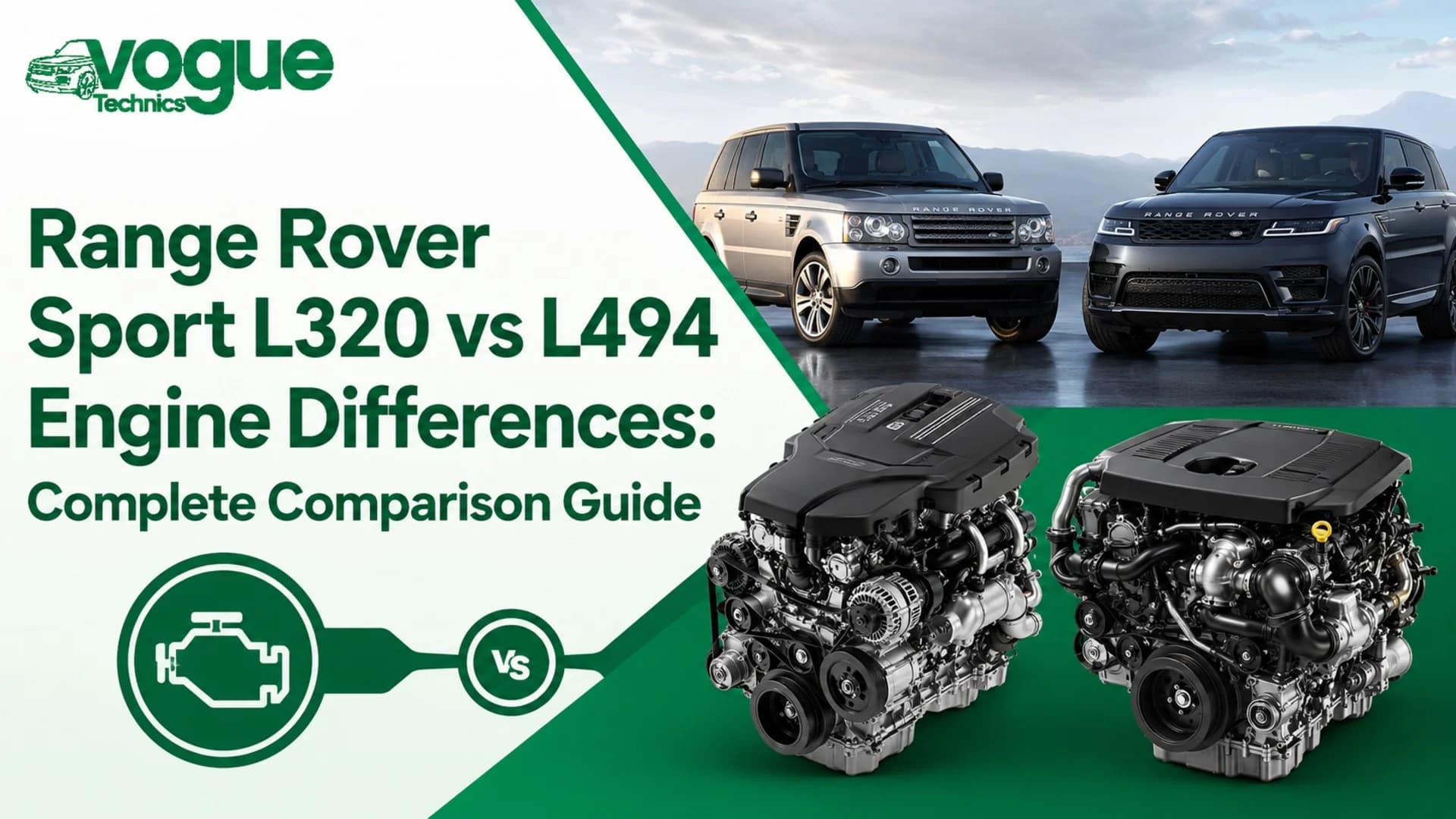
Range Rover Sport L320 vs L494 Engine Differences: Complete Comparison Guide
This guide compares the Range Rover Sport L320 and L494 engine lineups, covering power, torque, and the key design changes between generations. It breaks down common reliability issues from TDV6 timing chain wear to Ingenium EGR faults and explains which engine offers the best long-term value. Whether you're buying used or already dealing with an ageing engine, this comparison helps you make an informed decision before you spend a penny.
If you're standing between a used L320 and a newer L494 Range Rover Sport, wondering why one owner swears by their old TDV6 while another won't touch anything but the Ingenium diesel, you're not alone. The engine question is where most buyers get stuck and honestly, it's the one decision that determines whether you enjoy years of trouble-free driving or spend your weekends googling "why is my Range Rover in limp mode."
We've rebuilt and repaired engines from both generations at our workshop in Grays, Essex, and the pattern is always the same: people buy based on badge and looks, then discover the engine underneath tells a completely different story. This guide breaks down exactly what changed between the L320 and L494, why it matters for reliability and running costs, and what to do if you're already dealing with an engine on its way out.
L320 vs L494 Engine Overview — What Changed and Why It Matters
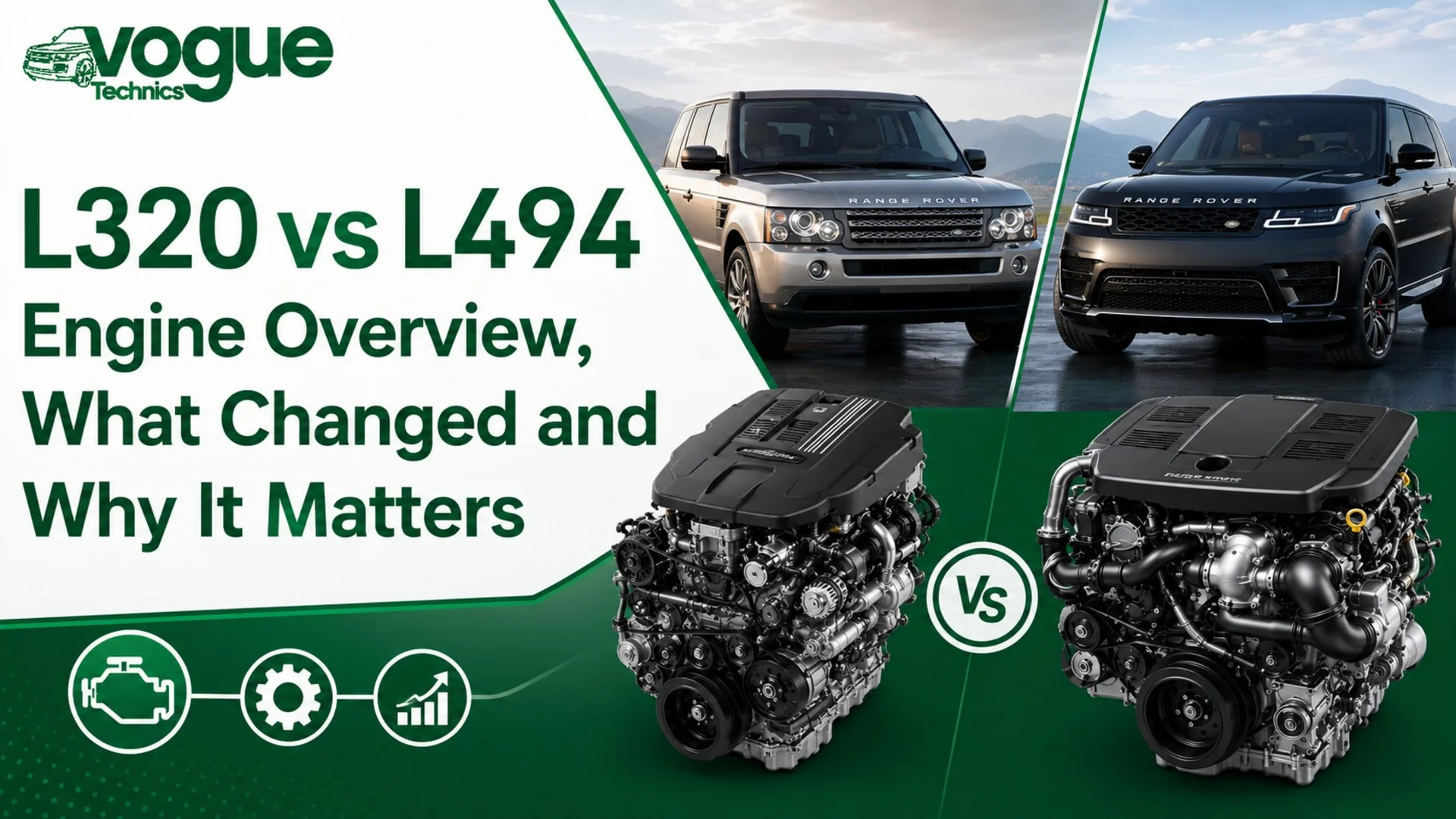
The Range Rover Sport went through a genuine platform and engineering overhaul between generations, not just a styling refresh. The L320 (2005–2013) rode on a steel monocoque chassis borrowed from the Discovery 3/4 family, while the L494 (2013–2022) moved to Jaguar Land Rover lightweight aluminium architecture. That shift alone changed how every engine option was mounted, cooled, and tuned.
What Engines Came in the L320 Range Rover Sport (2005–2013)?
The L320 offered a fairly conservative engine lineup by today's standards, but each unit has its own reputation:
- 2.7 TDV6: the original diesel option, a Ford-sourced Lion V6 shared with Jaguar and Peugeot-Citroën platforms
- 3.0 TDV6: the facelifted, more powerful diesel that replaced the 2.7 from around 2010
- 4.4 V8 (naturally aspirated): smooth but thirsty, dropped fairly early in the model run
- 4.2 Supercharged V8: the early performance option
- 5.0 Supercharged V8 (AJ133): introduced in the 2010 facelift, also available naturally aspirated
What Engines Came in the L494 Range Rover Sport (2013–2022)?
The L494 brought a much wider and more modern spread of powertrains, reflecting Jaguar Land Rover's shift toward emissions compliance and in-house engine development:
- 3.0 SDV6 diesel: the direct successor to the TDV6, now with a stronger block and revised turbo setup
- 4.4 SDV8 diesel: a torque-heavy option aimed at towing and long-distance driving
- 3.0 Supercharged V6 petrol: a smoother, more efficient alternative to the V8
- 5.0 Supercharged V8 (AJ133): carried over and refined from the L320, later used in SVR models
- 2.0 Ingenium diesel and petrol: introduced later for markets prioritising fuel economy and lower emissions
- 3.0 Ingenium diesel (straight-six): replaced the SDV6 in the final years of production
- P400e plug-in hybrid: JLR's first electrified Range Rover Sport powertrain
L320 vs L494 Engine Comparison Table (Displacement, Power, Torque)
Engine | Generation | Displacement | Power (approx.) | Torque (approx.) |
| 2.7 TDV6 | L320 | 2.7L V6 | 190 bhp | 440 Nm |
| 3.0 TDV6 | L320 | 3.0L V6 | 245 bhp | 600 Nm |
| 4.2 Supercharged V8 | L320 | 4.2L V8 | 390 bhp | 550 Nm |
| 5.0 Supercharged V8 (AJ133) | L320 | 5.0L V8 | 503–510 bhp | 625 Nm |
| 3.0 SDV6 | L494 | 3.0L V6 | 258–306 bhp | 600–700 Nm |
| 4.4 SDV8 | L494 | 4.4L V8 | 339 bhp | 740 Nm |
| 5.0 Supercharged V8 (AJ133) | L494 | 5.0L V8 | 510–575 bhp | 625–700 Nm |
| 3.0 Ingenium Diesel | L494 | 3.0L I6 | 300–350 bhp | 700 Nm |
| 2.0 Ingenium Petrol/Diesel | L494 | 2.0L I4 | 240–300 bhp | 340–500 Nm |
Even from this table alone, you can see the L494's engines generally push more power from smaller displacements, a direct result of improved turbocharging, engine management, and materials.
Petrol vs Diesel Engine Differences Between L320 and L494
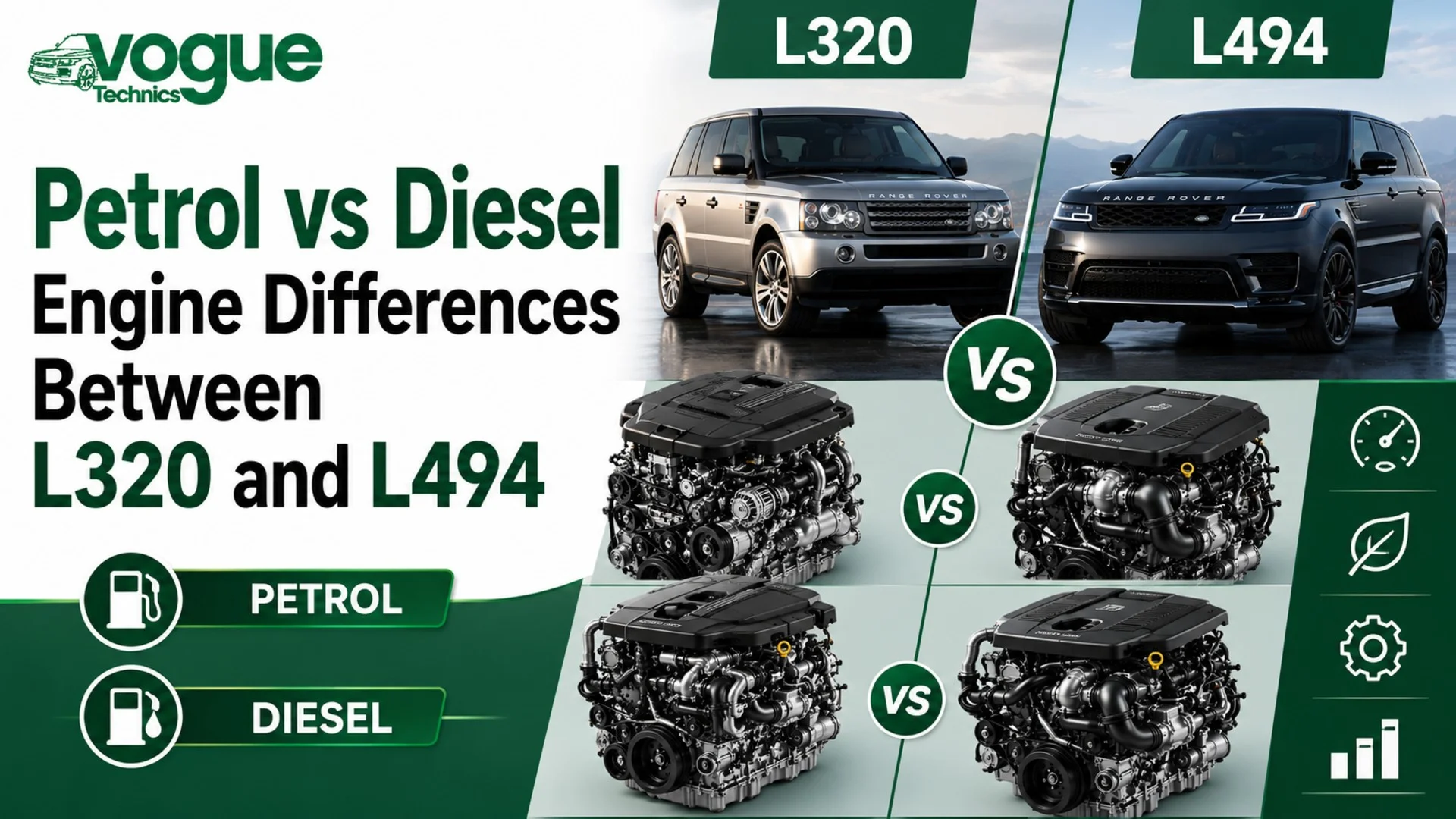
Choosing between petrol and diesel isn't just about fuel economy anymore, the underlying engineering shifted significantly between the two generations.
L320 vs L494 Diesel Engine Differences
2.7 & 3.0 TDV6 (L320) vs 3.0 SDV6 (L494)
The TDV6 in the L320 is a Ford Lion-derived unit, solid in concept but known for a handful of recurring issues: swirl flap failures, timing chain wear on higher-mileage examples, and injector seal problems if servicing gets neglected. The 3.0 SDV6 that replaced it in the L494 kept the same basic architecture but added a stronger crankshaft, revised turbo geometry, and better cooling, addressing several of the TDV6's known weak points while adding genuine mid-range torque.
Ingenium Diesel — What Changed in Later L494 Models
From around 2018, JLR moved to its own in-house Ingenium diesel engines, replacing the outsourced SDV6 units entirely. Ingenium diesels are lighter, more efficient, and meet Euro 6 emissions standards without the compromises seen on earlier facelifted TDV6/SDV6 units. However, they've introduced their own set of concerns, particularly around timing chain tensioners and EGR cooler failures on early production runs, which we see regularly in our workshop.
L320 vs L494 Petrol Engine Differences
4.2 & 5.0 Supercharged V8 (L320) vs AJ133 5.0 Supercharged (L494)
Both generations share the AJ133 supercharged V8 lineage, but the L494 version benefits from a decade of refinement: improved cooling jackets, updated ECU mapping, and a stronger bottom end. If you've ever wondered why the same "5.0 Supercharged" badge feels noticeably different between an L320 and L494, this is why, same family, meaningfully different execution.
2.0 Ingenium Petrol — The New Entry-Level Option in L494
The L494 also introduced smaller-capacity turbocharged petrol engines, something the L320 never offered. These four-cylinder units trade outright power for lower running costs and were aimed squarely at buyers who wanted Range Rover Sport styling without V6 or V8 fuel bills.
Which Range Rover Sport Engine Is More Reliable — L320 or L494?
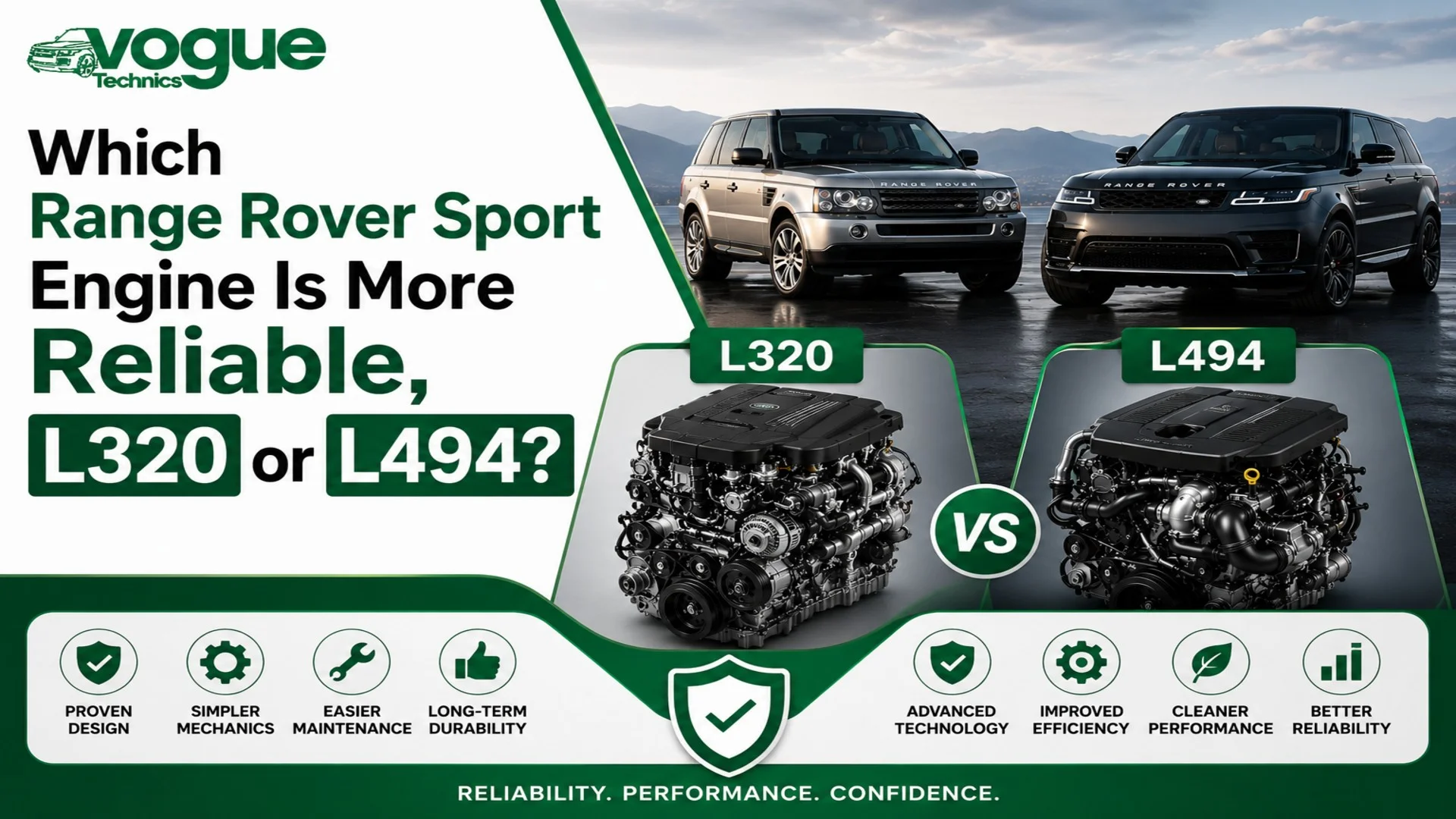
This is the question we get asked most often at our Grays workshop, and the honest answer is: it depends on the specific engine, not just the generation.
Common L320 Engine Problems (Timing Chain, Turbo, Crankshaft Wear)
The L320, being an older platform, tends to show age-related wear rather than design flaws at this point:
- Timing chain and guide wear on both TDV6 and early V8 units, especially past 100,000 miles
- Turbocharger degradation on the diesel variants, often linked to oil starvation from infrequent servicing
- Crankshaft wear indicators on high-mileage TDV6 engines that haven't had regular oil changes
- Coolant pipe corrosion on the supercharged V8s, a known weak point across the range
Common L494 Engine Problems (Ingenium Faults, EGR & DPF Issues)
The L494 is newer, but that doesn't mean problem-free, the issues just look different:
- EGR valve and cooler failures, particularly on early SDV6 and Ingenium diesel units
- DPF regeneration problems in vehicles used mostly for short journeys or urban driving
- Timing chain tensioner faults on certain Ingenium diesel production batches
- Turbo actuator faults on the 3.0 SDV6, often mistaken for more serious engine damage
L320 vs L494 Maintenance and Ownership Costs Compared
Generally speaking, the L320 costs less to buy but can cost more in reactive repairs once it passes 100,000–120,000 miles, particularly around timing components and turbochargers. The L494 costs more upfront and often carries higher parts prices, but well-maintained examples tend to need fewer major interventions before 100,000 miles, assuming the emissions system (DPF/EGR) has been looked after.
In both cases, the single biggest factor in long-term reliability isn't the generation, it's whether the previous owner followed proper service intervals and used the correct oil specification.
Which Range Rover Sport Should You Buy — and What If Your Engine Fails?
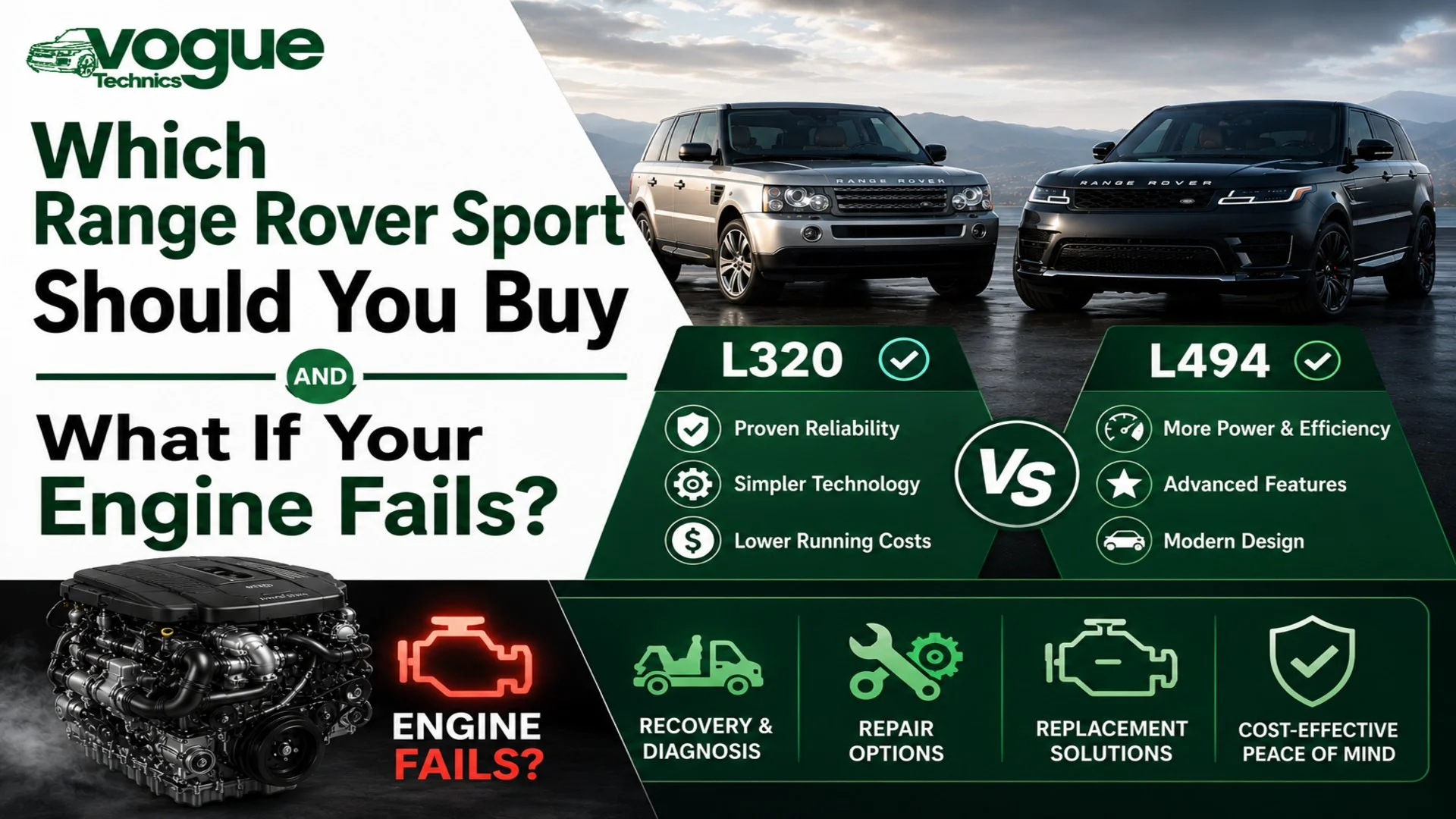
L320 vs L494 — Which One Should You Choose?
If budget is your priority and you're comfortable with proactive maintenance, a well-documented L320 with a fresh timing chain and turbo history can be a genuinely rewarding ownership experience. If you want lower running costs, better refinement, and access to more modern diesel and hybrid options, the L494 is the stronger long-term bet, provided you avoid early Ingenium units with known EGR issues.
Signs Your Range Rover Sport Engine Needs a Rebuild or Replacement
Regardless of which generation you own, watch for these warning signs:
- Persistent limp mode or reduced power warnings
- Unusual knocking or ticking noises from the engine bay, especially on cold starts
- Excessive oil consumption between services
- Coolant loss with no visible external leak
- Blue or black smoke from the exhaust under load
Catching these early is almost always cheaper than waiting for full engine failure.
Why Choose Voguetechnics for L320 & L494 Engine Rebuilds in Grays, Essex
Whether you're dealing with a tired TDV6, a failing SDV6 turbo, or an AJ133 supercharged V8 that's lost its spark, our team specialises specifically in Range Rover Sport engine diagnostics, rebuilds, and replacements. We work on both L320 and L494 platforms daily, which means we recognise the difference between a genuine engine fault and a sensor or wiring issue that's been misdiagnosed elsewhere.
Based in Grays, Essex, we offer honest diagnostics, transparent rebuild quotes, and engines rebuilt to original specification, not a generic "fits most" replacement.
Frequently Asked Questions
What engine is in the L320?
The L320 was available with 2.7 and 3.0 TDV6 diesels, a 4.4 naturally aspirated V8, a 4.2 supercharged V8, and later a 5.0 supercharged V8.
What engine is in the L494?
The L494 offered the 3.0 SDV6 diesel, 4.4 SDV8 diesel, 3.0 supercharged V6 petrol, 5.0 supercharged V8, and later Ingenium 2.0 and 3.0 diesel and petrol units, plus a P400e plug-in hybrid.
Is the L494 more reliable than the L320?
In general, yes, but it depends on the specific engine and how well it's been serviced. A well-maintained L320 can outlast a neglected L494.
What is the difference between TDV6 and SDV6?
The SDV6 is a revised version of the TDV6 with a stronger crankshaft, improved turbo geometry, and better cooling, introduced with the L494.
Which diesel is best for a Range Rover Sport?
The 3.0 SDV6 is widely considered the strongest balance of power and reliability, though later Ingenium diesels offer better fuel economy if maintained properly.
Can an L494 engine fit an L320?
Not directly, differences in mounting points, ECU integration, and chassis architecture make swaps complex and generally not cost-effective without specialist conversion work.
Which model has more timing chain issues?
Both platforms have documented timing chain concerns; the L320's TDV6 and early V8s, and the L494's early Ingenium diesels, are the most commonly affected.
Is the AJ133 5.0 Supercharged engine reliable?
Yes, when properly maintained, particularly regarding coolant pipe integrity and regular oil changes, it's one of the more dependable performance engines across both generations.
Final Thoughts
The L320 vs L494 engine debate doesn't have a single right answer, it comes down to your budget, how the specific vehicle has been maintained, and which known weak points you're prepared to manage. What matters most is catching problems early, understanding exactly which engine you're dealing with, and working with someone who knows these platforms inside and out.
If your Range Rover Sport is showing warning signs, or you're weighing up a rebuild versus a full replacement, get in touch with our team in Grays, Essex. We'll give you a straight answer on what your engine actually needs, no guesswork, no upselling, just an honest diagnosis and a rebuild done properly.