
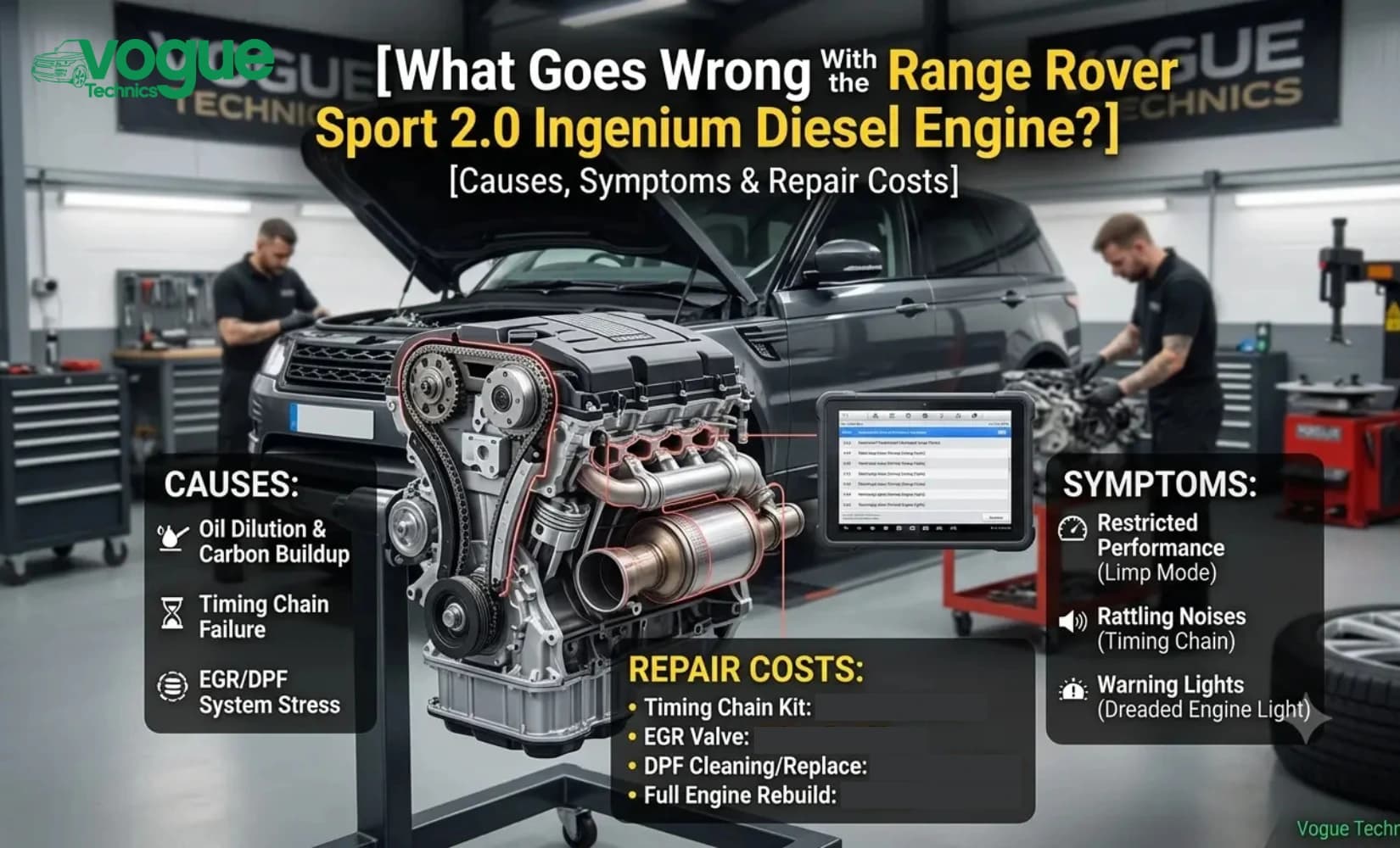
Range Rover Sport 2.0 Ingenium Diesel Engine Problems: Causes, Symptoms & Repair Costs (UK Specialist Guide)
A UK specialist's hands-on guide to the most common Range Rover Sport 2.0 Ingenium diesel engine problems timing chain stretch, oil dilution, DPF blockage, and AdBlue/SCR faults. Learn the early warning signs, which 2016–2017 model years carry the most risk, and how to diagnose faults through limp mode and trouble codes. Plus realistic UK repair, rebuild, and reconditioned engine costs to help you decide what makes financial sense.
If your Range Rover Sport has started rattling on a cold morning, slipping into limp mode on the motorway, or burning through oil faster than it should, you already know something isn't right, and you're probably worried about how much it's going to cost. You're not imagining it, and you're not alone. The range rover sport 2.0 ingenium diesel engine problems we see week in, week out at our Grays workshop in Essex follow a frustratingly predictable pattern, and most owners only discover the warning signs after the damage is already done.
We rebuild these engines for a living. That means we've had dozens of 2.0 Ingenium units stripped down on the bench, and we can tell you exactly where they fail, why they fail, and what it realistically costs to put right. This guide skips the recycled forum chatter and gives you the practical, mechanic's-eye view, so whether you're trying to diagnose a fault, decide between repair and replacement, or weigh up buying a used one, you'll know precisely what you're dealing with.
Let's get into it.
What Are the Most Common 2.0 Ingenium Diesel Engine Problems?
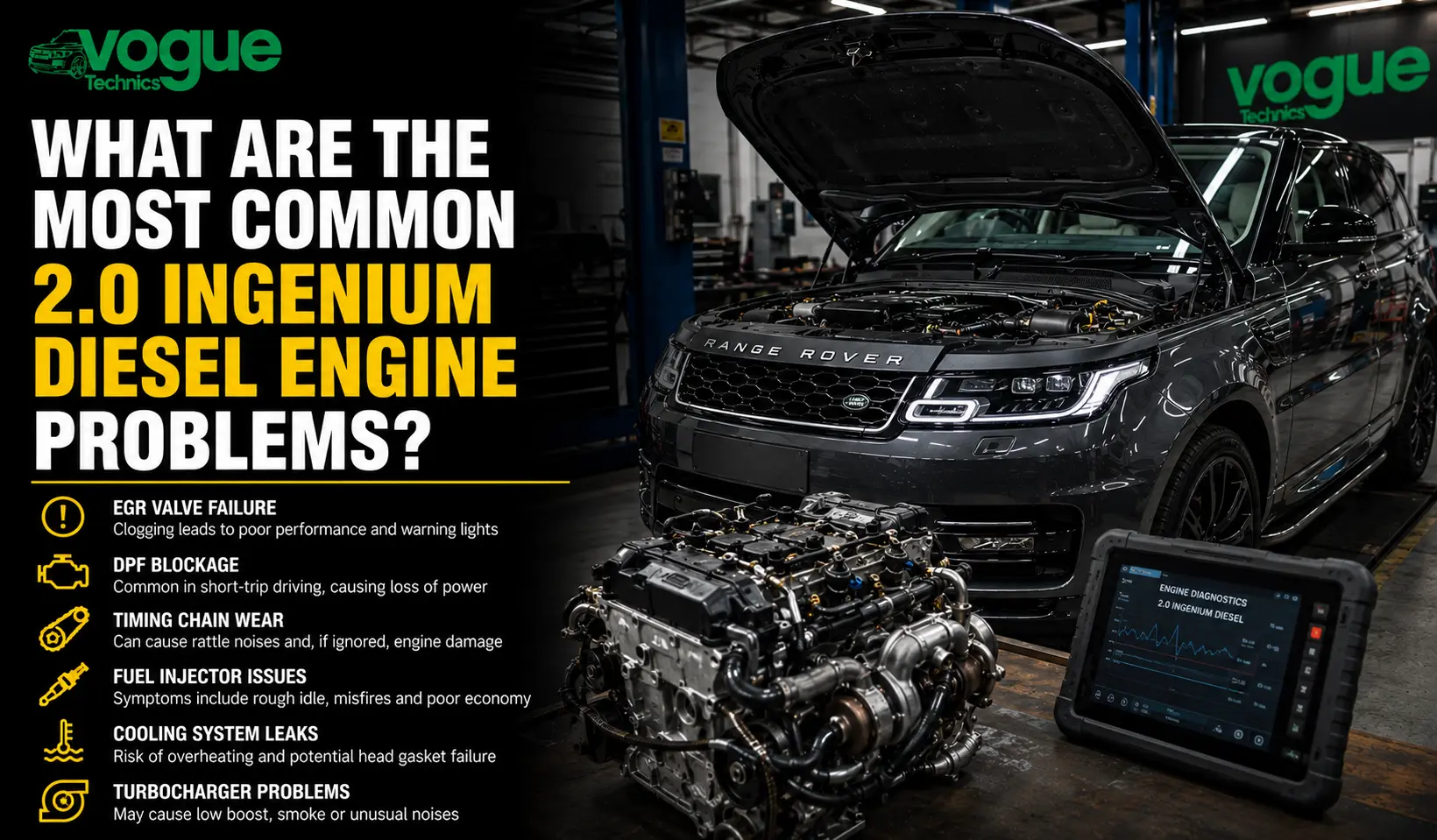
The 2.0 Ingenium diesel was Jaguar Land Rover's answer to tightening emissions rules, a modern, aluminium, twin-turbo (on SD4 variants) common-rail unit designed to be lighter and cleaner than the engines it replaced. On paper it's a clever piece of engineering. In the real world, a handful of recurring weaknesses have given it a difficult reputation for 2.0 ingenium diesel engine reliability.
Here's the honest summary before we break each one down: the emissions hardware (DPF, EGR, AdBlue/SCR) is fussy, the timing chain wears earlier than it should, and oil dilution quietly shortens the life of the bottom end. Most of these issues are interlinked, one fault triggers another, which is why a small symptom ignored today becomes a £4,000 problem next year.
These are the failures we see most often, ranked roughly by how serious they get.
Timing Chain Stretch and Rattle on Startup — The Critical Failure
If there's one fault that defines land rover 2.0 ingenium diesel engine problems, it's the timing chain. On a healthy engine the chain should comfortably outlast the car. On the Ingenium, we routinely see stretch and tensioner wear well before 100,000 miles.
Why the Ingenium timing chain fails early
The chain runs at the rear of the engine (cam-to-crank), and the combination of the tensioner design, guide-rail wear, and critically degraded oil quality from dilution accelerates the stretch. Once the chain stretches, valve timing drifts, the ECU throws codes, and in the worst cases the chain can jump or snap. On an interference engine like this, a snapped chain usually means bent valves and a destroyed cylinder head.
Warning signs to catch before it snaps
Catching this early is the difference between a manageable repair and a catastrophic one. Watch and listen for:
- A rattle or "death rattle" on cold startup that lasts a second or two before settling, this is the single most important early warning.
- A flickering or steady engine warning light with timing-related fault codes.
- Rough running or a slight loss of power, especially when the timing has drifted far enough to affect combustion.
- A faint metallic chatter that gets worse as the engine warms, indicating tensioner failure.
If you hear that startup rattle, stop driving the car and get it inspected. We've taken in too many vehicles where the owner "gave it a few more weeks" and turned a £900 chain job into a full engine rebuild.
Oil Dilution: The Silent Killer Most Guides Miss
This is the problem almost every competing article glosses over, and it's arguably the most damaging of the lot. Oil dilution is when diesel fuel works its way into the engine oil, thinning it until it can no longer protect the moving parts.
How DPF regeneration causes diesel to enter the oil
The diesel particulate filter needs to burn off trapped soot through a process called regeneration (active regen). To do this, the engine injects extra fuel into the cylinders. On short, stop-start journeys, exactly the kind of school-run and town driving many Range Rover Sports do, regenerations get interrupted before they finish. That unburnt diesel slips past the piston rings and into the sump. Over hundreds of incomplete cycles, oil level rises, viscosity drops, and lubrication quality collapses.
Symptoms of oil dilution and why it destroys bearings
The cruel part is that oil dilution does its damage silently. There's no dramatic warning light until the consequences arrive. Look out for:
- A rising oil level on the dipstick (oil that smells of diesel is a dead giveaway).
- Excessive oil consumption or fluctuating levels between services.
- Premature bearing wear, which eventually shows up as low oil pressure warnings or a deep knocking noise.
Thinned oil starves the crankshaft and balance shaft bearings of protection. We've opened up Ingenium engines with scored bearings and worn balance shafts directly traceable to dilution, and once that wear sets in, you're into rebuild territory, not a simple oil change. If you mostly do short trips, getting on top of your maintenance schedule with more frequent oil changes is genuinely one of the best things you can do for this engine's longevity.
DPF Blockage and Failed Regeneration
Closely tied to the dilution problem is the diesel particulate filter itself. When regeneration repeatedly fails, soot accumulates until the DPF blockage becomes severe enough to choke the engine.
Black smoke, limp mode and the regeneration cycle explained
A blocked DPF restricts exhaust flow, which the ECU detects and responds to by derating the engine, dropping you into limp mode to prevent further damage. You'll often see black smoke from the exhaust, feel a sudden loss of power, and get a dashboard warning. Sometimes a long, steady motorway run will trigger a passive regeneration and clear it; just as often, by the time you've noticed, the filter needs a forced regen or a professional clean. Ignore it long enough and the DPF needs replacing outright, a costly part on these vehicles.
AdBlue, SCR and NOx Sensor Faults
The SCR (Selective Catalytic Reduction) system uses AdBlue (diesel exhaust fluid) injected into the exhaust to neutralise NOx emissions. It's effective when it works, but it's a common source of range rover sport adblue system failure.
Typical culprits include a failed AdBlue injector, crystallised dosing lines, a faulty NOx sensor, or a pump fault. The classic symptom is an AdBlue warning counting down the miles until the car won't restart, Land Rover legally has to prevent the engine starting once the system fails to dose correctly. A failed NOx sensor alone can trigger limp mode and emissions faults, and replacement isn't cheap once you factor in the sensor and the diagnostic time.
Turbocharger and EGR Valve Failures
Rounding out the common faults are the forced-induction and recirculation components. The turbocharger, particularly the variable geometry mechanism and the turbo actuator, can stick or fail, causing boost problems, a whistling noise, smoke, and lost power. Meanwhile the EGR valve and EGR cooler clog with soot and carbon, leading to rough running, intake carbon buildup, and yet more limp-mode events. These often appear alongside DPF issues because they're all part of the same overworked emissions chain.
Which Years and Engines Are Affected? (2016, 2017 & the 3.0 Comparison)
A question we get constantly is some version of "which ingenium engine to avoid?" It's a fair one, because the answer genuinely affects whether you should buy, keep, or sell. The Ingenium family has evolved, and the earlier units carry the heaviest baggage.
Are 2016 and 2017 Range Rover Sport 2.0 Diesels the Worst Years?
In our experience, yes, the early cars are the ones that land on our ramps most often. The 2016 range rover sport 2.0 ingenium diesel engine problems and 2017 range rover sport 2.0 ingenium diesel engine problems we see tend to cluster around the timing chain and oil dilution issues described above, because these were among the first units in the field and predate several of the software and hardware refinements JLR rolled out later.
That doesn't mean every early car is doomed. A 2016 or 2017 example with a documented service history, frequent oil changes, and plenty of motorway miles can be perfectly sound. A neglected one bought purely on price is a gamble. Service history matters more on these engines than on almost anything else of the same era.
2.0 Diesel vs 3.0 Ingenium Engine Problems — Which Is More Reliable?
The newer 3.0 Ingenium straight-six diesel is a different animal. It's a mild-hybrid six-cylinder unit and is broadly regarded as smoother and, so far, more robust than the four-cylinder 2.0. That said, 3.0 ingenium engine problems do exist, owners on 3.0 ingenium engine problems forum threads report the same families of emissions and oil-dilution concerns, just less frequently. On current evidence, 3.0 ingenium engine reliability edges ahead of the 2.0, partly because the six-cylinder isn't worked as hard for the same output.
Here's a quick at-a-glance comparison based on what we see on the bench and in the trade:
Factor | 2.0 Ingenium Diesel | 3.0 Ingenium Diesel |
| Configuration | 4-cylinder | 6-cylinder (mild hybrid) |
| Timing chain risk | Higher (early stretch common) | Lower, but still present |
| Oil dilution | Common on short trips | Less common, still possible |
| Refinement | More vibration, harsher | Noticeably smoother |
| Overall reliability reputation | Mixed / cautious | Better, but newer = less long-term data |
| Typical repair frequency | Higher | Lower |
How Does the 2.0 Ingenium Petrol Compare?
It's worth a quick word on the petrol, since many buyers cross-shop them. 2.0 ingenium petrol engine problems are generally fewer because petrol engines skip the whole DPF/AdBlue/SCR emissions burden that causes so much grief on the diesels. Petrols aren't immune, timing chain and oil consumption questions still come up but if your mileage is low and mostly urban, a petrol sidesteps the diesel's biggest headaches entirely.
Which Ingenium Engine Should You Avoid?
If we had to give a blunt answer: be most cautious with the earliest 2.0 Ingenium diesels (roughly 2016–2017) that lack a full service history and have lived a short-journey, town-driving life. Those are the cars most likely to arrive with stretched chains and diluted oil.
Model-years and warning signs to check before buying
Before you sign anything on a used range rover sport 2.0 diesel, run through this checklist (or have a specialist do it for you):
- Cold-start it yourself and listen for the timing chain rattle, never let the seller "warm it up" before you arrive.
- Pull the dipstick and check for an over-full level or a diesel smell (oil dilution).
- Ask for the full service history and look specifically for regular oil changes.
- Scan for stored fault codes, even if no warning light is currently showing.
- Check for any limp-mode history or recurring DPF/AdBlue warnings.
- Confirm AdBlue and emissions components are functioning, not just reset.
A one-hour pre-purchase inspection is the cheapest insurance you'll ever buy on a car like this.
How Do You Diagnose Ingenium Diesel Failure? (Fault Codes & Limp Mode)
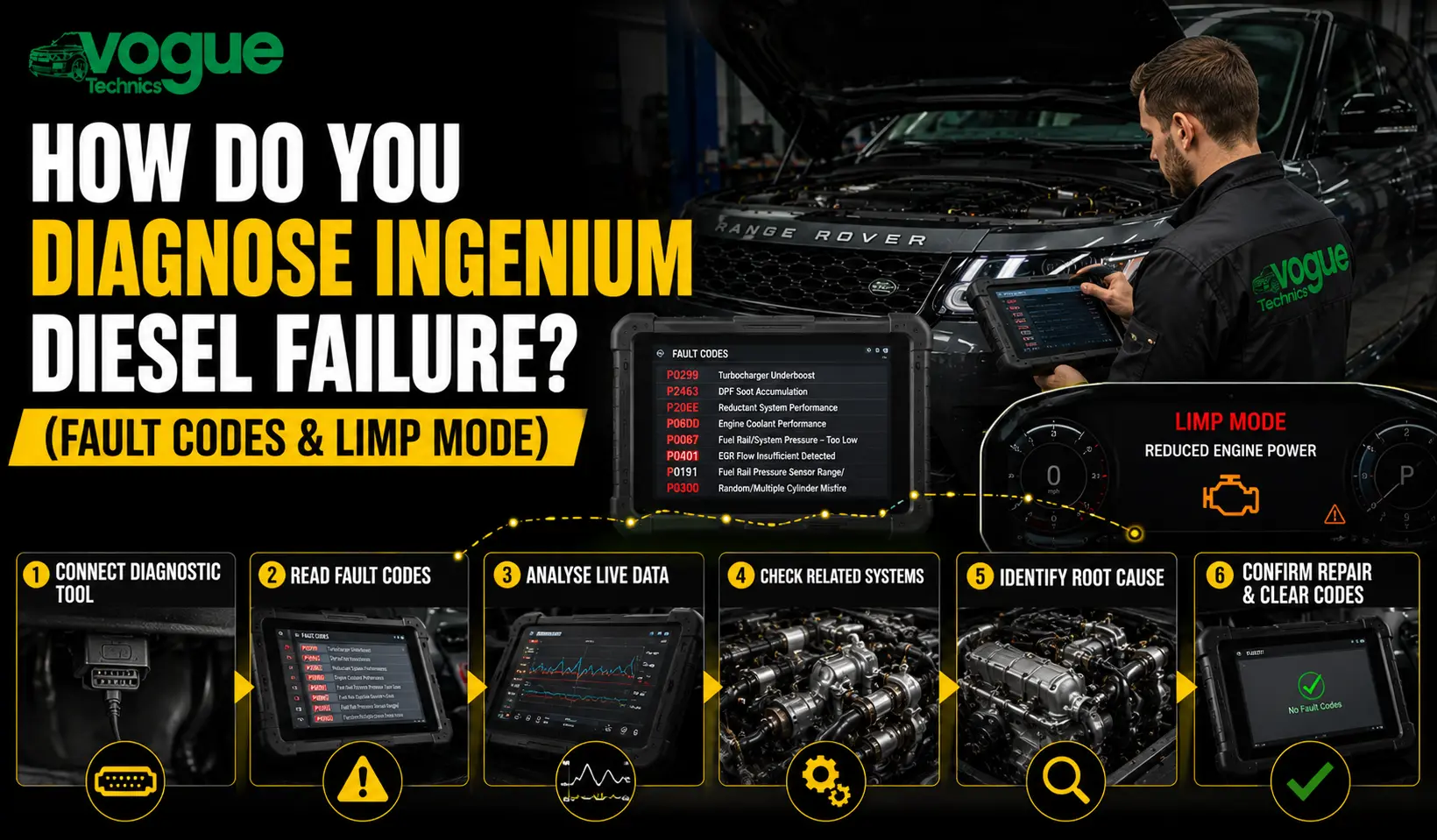
When something goes wrong, the car talks to you, first through warning lights, then through stored diagnostic trouble codes. Reading those codes correctly is the difference between fixing the actual fault and throwing parts at a symptom.
Common Ingenium Diesel Fault Codes Explained
A proper diagnostic scan pulls codes from the engine control module that point to specific systems. These are the ones that come up again and again on Ingenium diesels.
P20EE, P2002, P2463 and what they actually mean
- P2002 / P2463: DPF efficiency below threshold / excessive soot accumulation. Translation: your particulate filter is blocking up.
- P20EE: SCR catalyst efficiency below threshold. Usually an AdBlue/SCR system fault.
- P2458: DPF regeneration duration fault, often linked to interrupted regens.
- P0401 / P0402: EGR flow insufficient or excessive, a clogged or sticking EGR valve.
- P229F / P2200: NOx sensor circuit faults.
The key thing to understand: codes tell you where to look, not always why it failed. A P2002 might be a genuinely dying DPF or it might be the downstream result of oil dilution and incomplete regens. Proper diagnosis traces the root cause, which is exactly why a quick code-read at a chain garage so often leads to expensive, repeated, ineffective repairs.
Why Is My Range Rover Sport in Limp Mode?
Limp mode (engine derate) is the car protecting itself. The ECU caps power and revs to prevent damage when it detects something dangerous. On these engines the usual triggers are a blocked DPF, a turbo or boost-pressure fault, an emissions/AdBlue failure, or a sensor reading outside safe limits.
Sometimes it clears on a restart and never returns, a one-off glitch. More often it's the first sign of an underlying fault that will keep coming back until the cause is fixed. If your Range Rover Sport drops into limp mode more than once, treat it as a genuine warning, not an inconvenience to reset and ignore.
Repair, Rebuild or Replace — Which Makes Financial Sense?
Once you know what's wrong, the real decision begins. Not every fault justifies a new engine, and not every engine is worth saving.
When a reconditioned engine beats a repair
As a rough guide:
- Repair makes sense for isolated faults caught early, a single injector, an EGR valve, a DPF clean, a sensor.
- Rebuild is the right call when there's internal wear (stretched chain plus bearing damage from oil dilution) but the block is sound, you replace the worn internals and restore the engine to health.
- Replace with a reconditioned engine wins when the damage is extensive: a snapped chain that's wrecked the head and valves, or a bottom end destroyed by dilution. At that point, a fully reconditioned long engine with a warranty is often cheaper and far more reliable than chasing repair after repair.
The trap many owners fall into is spending £1,500 on one repair, then £2,000 on another six months later, then a third, when a single reconditioned engine would have cost less overall and come with peace of mind. A good specialist will tell you honestly which side of that line your car sits on.
Ingenium Engine Replacement Costs & Specialist Repair in Essex
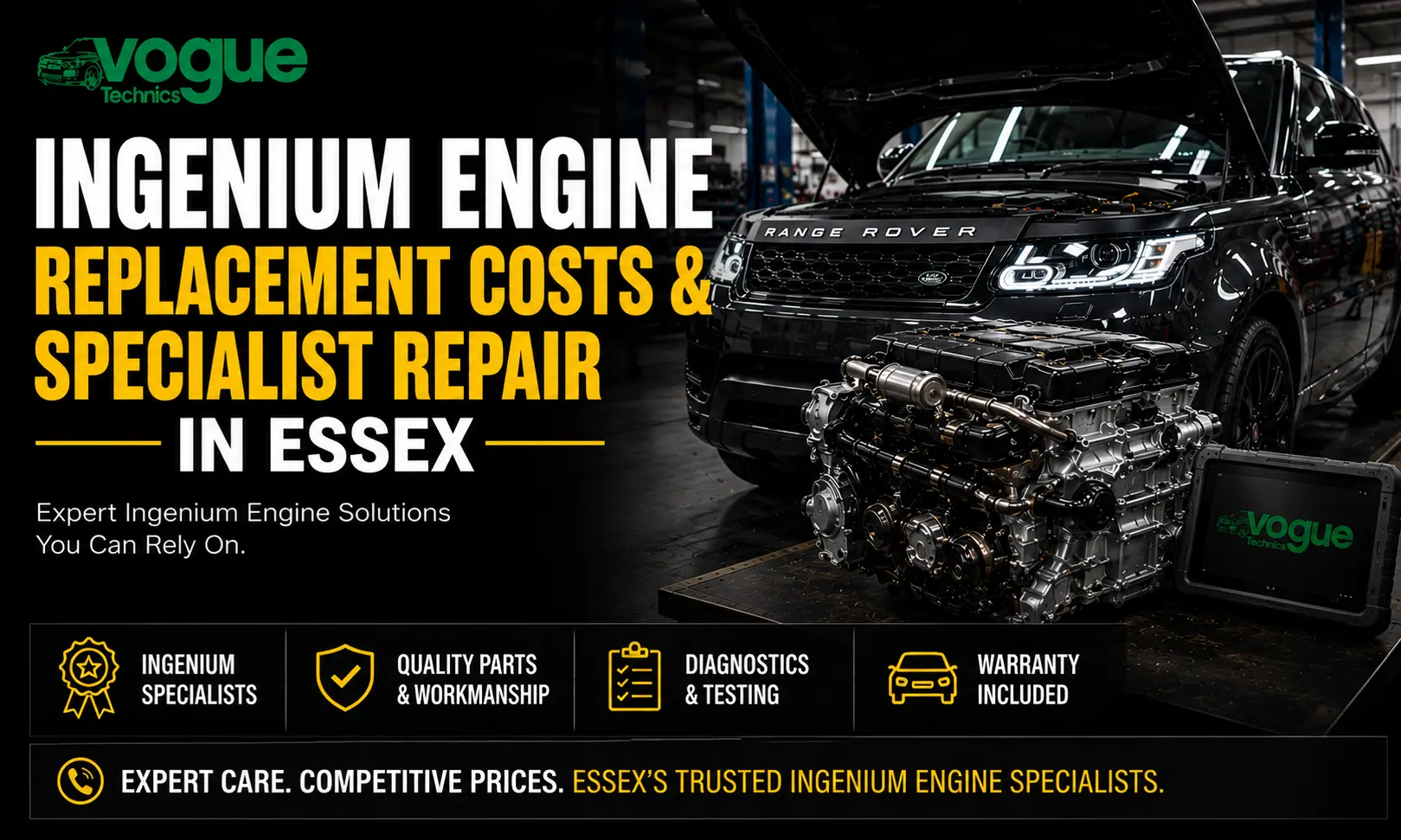
This is where we can speak from direct experience rather than theory. We rebuild and supply-and-fit Ingenium engines from our workshop in Grays, Essex, so the numbers below reflect real UK market pricing rather than guesswork.
How Much Does a 2.0 Ingenium Diesel Engine Replacement Cost in the UK?
Costs vary with the extent of damage, the parts required, and whether you go reconditioned or new. As a realistic UK guide:
Solution | Typical Price Range (UK) | Best For |
| DPF professional clean | £300 – £600 | Early-stage blockage, no internal damage |
| EGR valve / sensor replacement | £350 – £900 | Isolated emissions faults |
| Timing chain replacement | £900 – £1,800 | Caught before the chain jumps |
| Engine rebuild | £2,500 – £4,500 | Sound block, worn internals |
| Reconditioned engine (supply & fit) | £4,000 – £6,500+ | Major internal failure |
These are indicative ranges to help you budget, your exact figure depends on your specific vehicle and fault, which is why we always provide a written quote after inspection rather than a number over the phone.
Supply-and-fit vs reconditioned long engine pricing
A reconditioned long engine includes the rebuilt block, crankshaft, pistons, and cylinder head as a complete assembled unit, ready to drop in. Supply-and-fit means we provide that engine and carry out the full installation, transferring ancillaries, refilling fluids, programming, and road-testing. Supply-and-fit costs more upfront than buying an engine alone, but you get one accountable specialist, one warranty, and no risk of "the engine was fine, it's the fitting that's faulty" finger-pointing between suppliers.
What's Included in Our Ingenium Engine Rebuild Package
When we take on an Ingenium job, we don't just swap the lump and hand you the keys. A typical rebuild or supply-and-fit package from us includes:
- Full diagnostic assessment to confirm the root cause, not just the symptom.
- A reconditioned or rebuilt engine with worn components renewed to spec.
- Replacement of common failure points timing chain, tensioner and guides, as part of the work.
- Fresh oil and filters, with the correct specification to resist dilution.
- Professional installation by technicians who work on these engines regularly.
- Post-fit road testing and a fault-code recheck before the car goes back to you.
Why Choose Vogue Technics Engine Rebuild, Grays, Essex
Plenty of garages will take on a Range Rover Sport. Far fewer specialise in the Ingenium platform specifically. We focus on these engines, which means we know their quirks, where the chain wears, how dilution presents, which fault codes mislead and we don't learn on your car. Being based in Grays, Essex, we're well placed to help owners across Essex, London and the South East, whether you need diagnostics, a rebuild, or a full diesel engine rebuild service.
Our warranty and what it covers
A reconditioned engine is only as reassuring as the warranty behind it. We stand behind our work with a parts-and-labour warranty on the engine we supply and fit, so you're covered against fitting faults and component failure within the warranty period. (We'll confirm the exact warranty term and coverage in your written quote, get in touch and we'll set it out in plain English before any work begins.)
Get a No-Obligation Written Quote
If your Range Rover Sport is showing any of the symptoms in this guide, the cold-start rattle, rising oil, limp mode, or persistent warning lights, don't wait for a small fault to become a four-figure one. Send us your registration and a description of the symptoms, and we'll give you an honest, written, no-obligation quote. If a repair will do, we'll tell you. If a rebuild or reconditioned engine genuinely makes more sense, we'll explain exactly why and what it costs.
Frequently Asked Questions
Is the 2.0 Ingenium diesel reliable?
It's capable but demanding. Looked after with frequent oil changes and regular motorway runs to complete DPF regenerations, a 2.0 Ingenium diesel can give long service. Neglected, or used only for short urban trips, it's prone to timing chain wear and oil dilution. Reliability on this engine is heavily owner-dependent.
How long does an Ingenium diesel engine last?
A well-maintained example can comfortably exceed 150,000 miles, and some go well beyond. The cars that fail early almost always have a history of skipped servicing, short journeys, or ignored warning signs. Maintenance, not mileage alone, decides the lifespan.
Is Ingenium timing chain failure common?
Unfortunately, yes, it's one of the most common serious faults on the 2.0 Ingenium diesel, particularly on earlier 2016–2017 cars. The good news is it gives warning (the cold-start rattle) before it fails completely, so catching it early can save you thousands.
What causes oil dilution on the Ingenium?
Interrupted DPF regenerations on short journeys allow unburnt diesel to pass into the engine oil, thinning it. Frequent short trips are the main culprit. More frequent oil changes and the occasional longer drive to complete a regeneration both help reduce it.
Should I repair or replace my Ingenium engine?
It depends entirely on the extent of the damage. Isolated faults are worth repairing; widespread internal wear or chain-related catastrophic damage usually makes a rebuild or reconditioned engine the smarter long-term choice. A proper diagnostic will tell you which side of that line you're on.
The range rover sport 2.0 ingenium diesel engine problems in this guide are well-known, well-understood, and caught early entirely fixable. The owners who lose the most money are the ones who hope a noise will go away. The ones who keep their cars running well for years are the ones who act on the first warning sign. If yours is trying to tell you something, get it looked at properly while you still have the cheaper options on the table.