
Range Rover Velar Reliability: Complete UK Owner's Guide (2026)
Wondering if the Range Rover Velar is worth the risk? This guide breaks down real reliability data by year, the most common faults (from air suspension to infotainment glitches), and engine-specific issues across petrol, diesel, and hybrid variants. Packed with owner forum insights and a practical maintenance checklist, it's everything a current or prospective Velar owner needs to drive with confidence.
So you're eyeing a Range Rover Velar, or you already own one and something's just started nagging at the dashboard. Maybe it's a flicker on the infotainment screen. Maybe it's a whisper of an odd noise from under the bonnet that wasn't there last month. Whatever brought you here, you want a straight answer to one question: is the Range Rover Velar actually reliable, or are you about to sign up for years of dealership waiting rooms?
Fair question. The Velar sits in a strange spot, it looks every bit as premium as its bigger Range Rover siblings, but it's built on a platform and set of engines that have earned Land Rover a mixed reputation over the years. We've pulled together reliability data, owner forum chatter, engine-specific fault patterns, and real repair costs to give you the full picture, not just a marketing gloss.
Is the Range Rover Velar Reliable?
Let's not dance around it. The Range Rover Velar has a reputation for being a genuinely stunning SUV to drive and sit in, but reliability has never been its strongest selling point. Independent reliability surveys consistently place Land Rover and Range Rover models below the industry average, and the Velar is no exception.
That said, "below average" doesn't mean "unreliable death trap." It means you need to go in with your eyes open, buy the right year and engine, and stay on top of maintenance far more diligently than you would with, say, a Lexus or a Toyota.
Range Rover Velar Reliability Rating Explained
Reliability surveys from sources like What Car? and J.D. Power typically score vehicles on faults reported within the first few years of ownership, weighted by severity. The Velar tends to score in the lower half of the luxury SUV segment, with electrical systems and suspension components being the most frequently flagged issues.
To put it plainly:
- Engine reliability: Moderate concern, particularly around timing chains and turbochargers in early diesel units
- Electrical/infotainment reliability: The most commonly reported weak point across nearly all model years
- Suspension (air suspension especially): A recurring theme in owner complaints, particularly on higher-mileage cars
- Transmission: Generally solid, with the ZF 8-speed automatic holding up reasonably well when serviced on schedule
None of this means every Velar will let you down. It means the margin for skipping maintenance is smaller than on more conventionally reliable brands.
Range Rover Velar Reliability by Year (2018–2023)
Reliability isn't static across a model's production run. Manufacturers iron out early issues, update software, and sometimes swap suppliers. The Velar is a good example of this, earlier cars and later cars behave quite differently in the real world.
2018 Range Rover Velar Reliability
The 2018 Velar was the launch year model, and like most launch-year vehicles, it carries the highest concentration of early teething problems. Owners commonly report infotainment glitches, minor electrical gremlins (window switches, sensor faults), and some air suspension compressor failures, particularly once the car passes 40,000–50,000 miles. If you're looking at a 2018 car, a thorough pre-purchase inspection isn't optional, it's essential.
2019 Range Rover Velar Reliability
2019 saw some quiet software improvements to the Pivi Pro infotainment system's predecessor, and a handful of running changes to electrical wiring looms. Reliability improved marginally, though air suspension and turbocharger-related complaints still show up regularly in forum threads and independent garage reports.
2020 Range Rover Velar Reliability
By 2020, Land Rover had rolled out the updated Pivi Pro infotainment system, which owners generally rate as more stable and less prone to freezing or rebooting mid-drive. Engine reliability on the Ingenium units also benefited from revised cooling and turbo components. This year is often cited by specialists as a sensible sweet spot for used buyers who want the design without launch-year risk.
Range Rover Velar Reliability vs Range Rover Sport
It's a natural comparison, since both share a lot of underlying architecture and engine options. In practice, the Range Rover Sport tends to have a slightly longer track record and a broader range of well-tested engines, simply because it's been around longer. The Velar, being newer and more design-led, has had less time to smooth out its rough edges. Neither is a "reliable" car by mainstream standards, but the Sport edges ahead marginally on long-term owner satisfaction scores.
Common Range Rover Velar Problems & Engine Issues
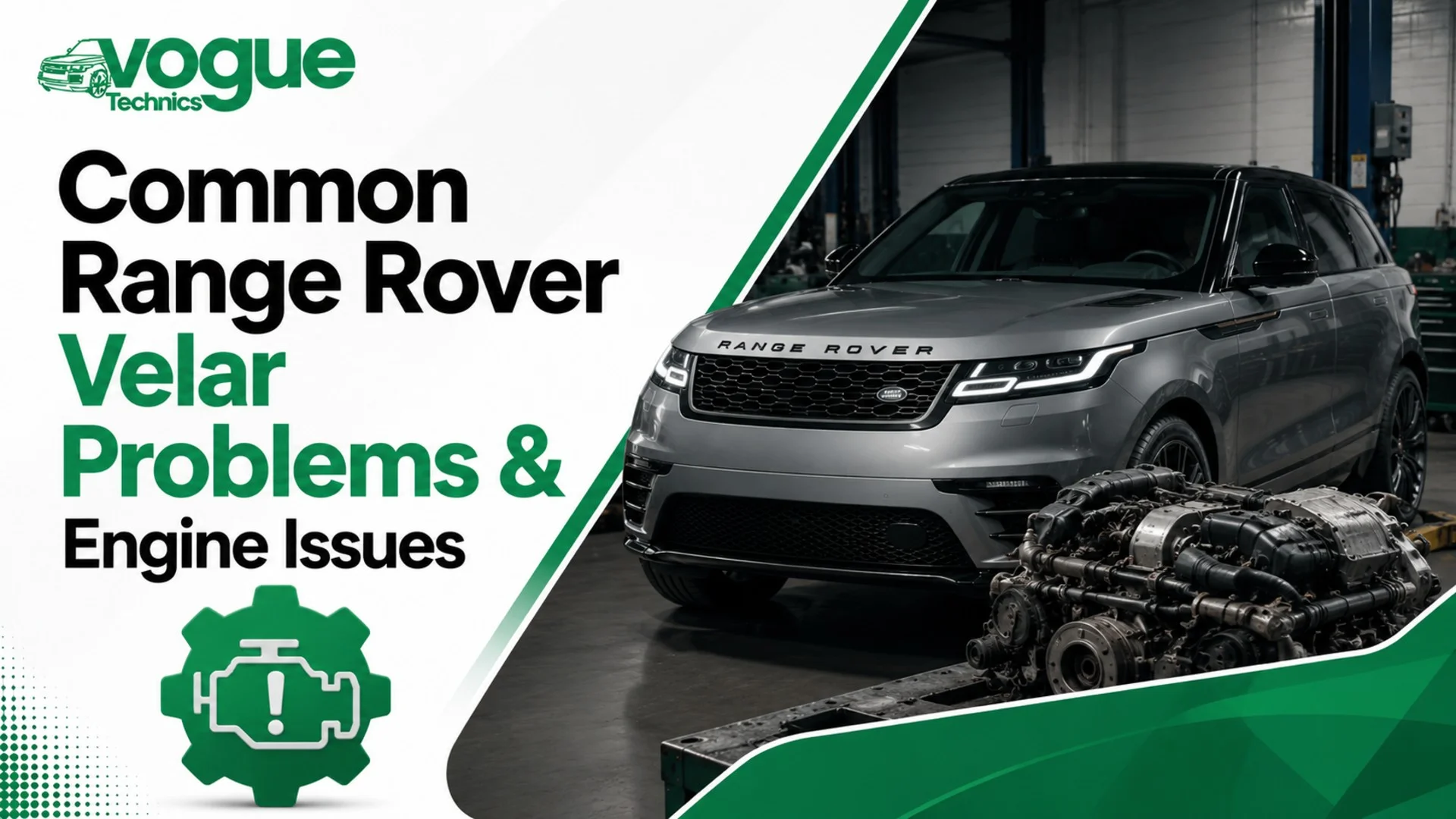
This is the section most people actually came here for. Knowing the specific faults — not just a vague "reliability score" is what actually helps you make a decision or budget properly for ownership.
Most Common Range Rover Velar Problems
Across owner forums, independent garage reports, and manufacturer service bulletins, a handful of issues come up again and again:
- Air suspension failures: compressor wear and air strut leaks, usually appearing after 40,000+ miles, often triggering a "vehicle may not restart" warning
- Infotainment freezing or blackouts: more common on 2018–2019 cars before the Pivi Pro update
- Water pump and coolant leaks: a known weak point on the Ingenium diesel range across several Jaguar Land Rover models, not just the Velar
- Timing chain tensioner wear: less common than in older JLR engines, but still reported on high-mileage diesel units
- Sensor and electrical faults: parking sensors, door handle sensors, and window regulators are frequent minor annoyances
None of these are necessarily catastrophic on their own. But when several show up together on a neglected car, repair bills stack up fast.
Range Rover Velar Engine Problems Explained
The Velar has been offered with a range of engines, the four-cylinder Ingenium petrol and diesel units, the V6 diesel, and later the P400e plug-in hybrid. Each has its own reliability profile.
Engine | Common Issues | Reliability Notes |
| D180 / D200 (4-cyl diesel) | Timing chain tensioner wear, water pump leaks | Generally solid if serviced on time |
| D300 (V6 diesel) | Turbocharger wear at high mileage | More expensive to repair, fewer units on the road |
| P250 / P300 (petrol) | Fewer reported faults, occasional coil pack issues | Considered the more dependable choice |
| P400e (PHEV) | Battery degradation concerns, complex electronics | Still building a track record; early data is limited |
If reliability is your top priority and you're choosing between engines, the petrol variants tend to have a cleaner fault history than the diesels, largely because diesel particulate filters and turbo systems add extra points of failure.
Range Rover Velar Diesel Reliability & Known Issues
Diesel Velars carry a specific reputation. The Ingenium diesel engines used across Jaguar Land Rover's range have had well-documented issues with:
- Timing chain tensioners stretching prematurely on early production units
- EGR valve and DPF (diesel particulate filter) clogging, especially on cars used mainly for short urban trips
- Water pump failures leading to coolant loss and, in worst cases, overheating
The good news is that later production diesel units (roughly 2019 onward) benefited from revised components addressing several of these points. If you're buying a diesel Velar, ask specifically about timing chain history and DPF condition, a specialist inspection here can save you thousands down the line.
Electrical, Software & Infotainment Faults
This is genuinely the Velar's Achilles' heel. The car is packed with sensors, cameras, and software-driven features, which is fantastic when it all works, and frustrating when it doesn't. Common complaints include:
- Infotainment screens freezing, rebooting, or losing connectivity
- Door handles that fail to present (a signature Velar design feature that can stick or fail electronically)
- Parking sensor and camera glitches
- Battery drain issues from modules that don't sleep properly when the car is parked
Software updates have improved this over time, but electrical faults remain the most frequently reported category of problem across nearly every model year.
What Owners Say — Range Rover Velar Forum Insights

Reliability surveys tell you what happens on average. Forums tell you what it actually feels like to live with the car day to day and that's often more honest.
Common Complaints from Range Rover Velar Forums
Browsing through Range Rover Velar forum threads and wider Range Rover forum communities, a few recurring themes stand out:
- Owners frequently mention unexpected warning lights that don't correspond to an obvious fault, requiring a dealership diagnostic scan to clear
- Air suspension warnings are one of the most discussed topics, often accompanied by advice on which specialist garages handle the repair affordably
- Several long-term owners note that the car feels significantly more dependable once it's past the 3-year manufacturer warranty scare period and any early faults have been ironed out under cover
Range Rover Velar Problems Reported by Real Owners
Real-world reports tend to paint a more nuanced picture than raw statistics. Many owners who service their Velar diligently, sticking to schedule, using genuine or OEM-equivalent parts, and addressing small issues early, report years of trouble-free driving. Owners who buy neglected, high-mileage examples without any service history tend to be the ones posting the most frustrated forum threads.
This is a genuinely important pattern: with the Velar, ownership experience often depends more on maintenance history than on luck.
Is the Velar Reliable for Daily Driving in the UK?
For UK daily driving, school runs, commutes, the occasional motorway blast, a well-maintained Velar is a comfortable, capable, and reasonably dependable choice. Where it can catch owners out is on short, stop-start urban journeys, which are harder on diesel particulate filters and turbo systems than longer motorway trips. If most of your driving is short urban hops, a petrol Velar or the mild-hybrid variant may suit you better than a diesel.
Protecting Your Velar's Reliability — Maintenance & Expert Support
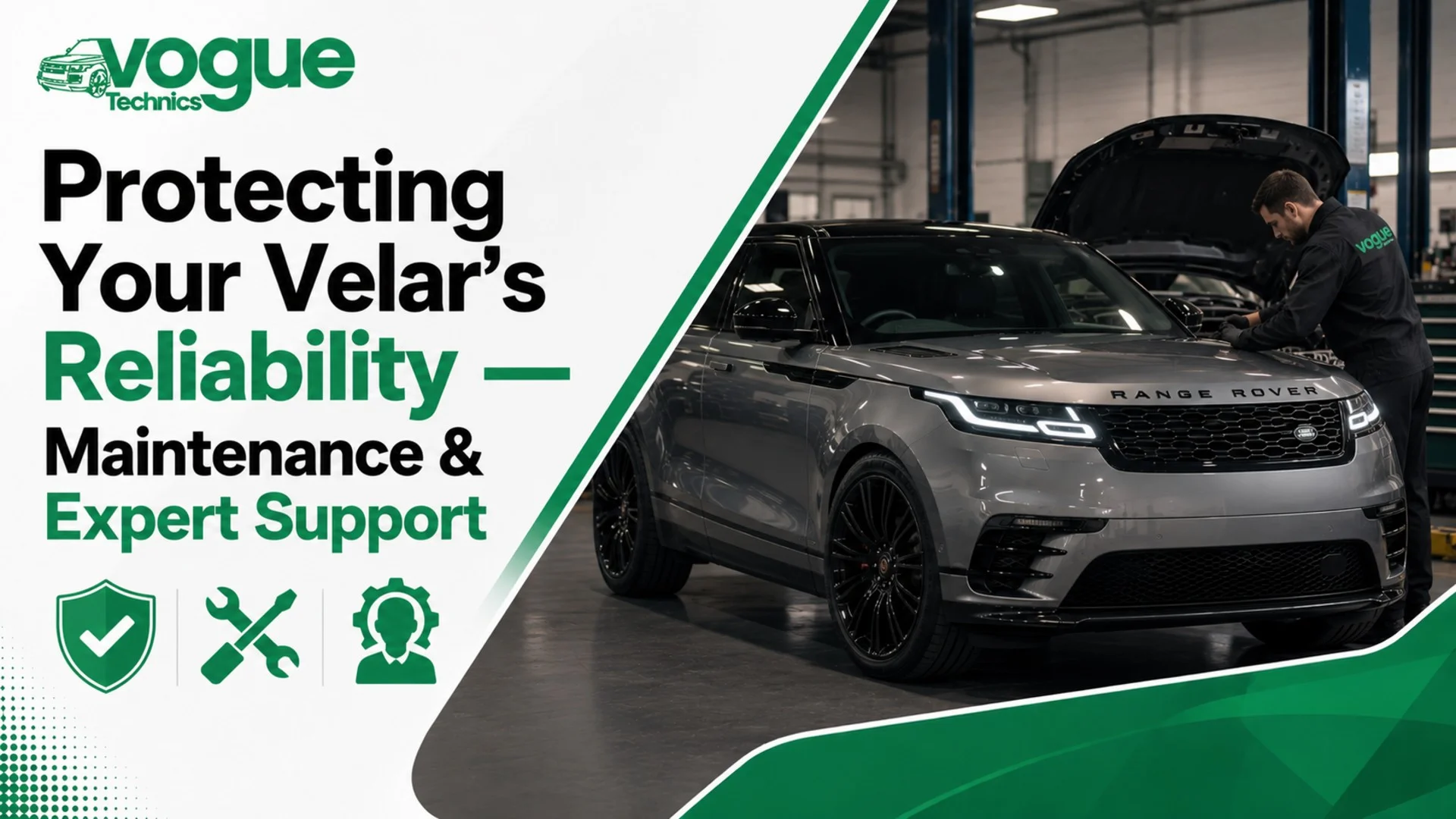
Here's the honest truth about luxury SUV ownership: reliability isn't just something that happens to you. A huge portion of it is determined by how the car is looked after, and by whether small issues get caught early or ignored until they become expensive ones.
Preventative Maintenance Checklist for Velar Owners
A little discipline goes a long way with the Velar. Owners who stay ahead of these checks tend to report far fewer major issues:
- Stick to manufacturer-recommended service intervals, even if it feels like "nothing's wrong yet"
- Have the air suspension system inspected annually once the car passes 30,000 miles
- Keep an eye on coolant levels and have any drop investigated immediately, not "next time it's in"
- Book a diagnostic scan at the first sign of an unexplained warning light rather than waiting
- On diesel models, avoid excessive short journeys where possible, or take the car on a longer motorway run periodically to help clear the DPF naturally
Following this kind of routine doesn't guarantee a fault-free car, but it dramatically reduces the odds of a small issue turning into a five-figure repair bill.
Signs Your Range Rover Velar Engine Needs a Rebuild
Some symptoms are worth taking seriously rather than hoping they resolve themselves:
- A persistent rattling or ticking noise from the engine bay, especially on cold starts
- Noticeable loss of power or rough idling that doesn't clear after a service
- Excessive oil consumption between changes
- Warning lights linked to engine management or emissions systems that keep returning after being cleared
- Visible oil or coolant leaks around the engine block
If you're seeing more than one of these, it's worth getting the engine properly assessed before the problem escalates into something that can't be repaired economically.
Why Choose a Specialist Range Rover Engine Rebuild in Essex
This is exactly where we come in. At Voguetechnics Engine Rebuild, based in Grays, Essex, we specialise in diagnosing and rebuilding engines for Range Rover, Land Rover, and Jaguar models — including the Velar's Ingenium and V6 diesel units. Rather than a blanket dealership replacement quote, we assess exactly what's failing and rebuild to genuine specification, often at a fraction of main dealer cost.
Our experience with JLR-specific issues, timing chain tensioners, water pump failures, turbocharger wear, means we know precisely what to check and how to fix it properly the first time, not just patch over symptoms.
Get a Free Velar Reliability & Engine Health Check
If your Velar has started throwing warning signs, or you're about to buy a used one and want peace of mind before you commit, get in touch with our team in Grays, Essex. We'll run a proper diagnostic assessment and give you an honest picture of what you're dealing with, no scare tactics, no unnecessary upsells, just a clear answer on what your engine actually needs.
Frequently Asked Questions
Is the Range Rover Velar reliable?
The Velar is moderately reliable compared to mainstream SUVs, scoring below average on independent reliability surveys mainly due to electrical and air suspension faults. With diligent maintenance, many owners report years of dependable use.
What are the most common Range Rover Velar problems?
Air suspension failures, infotainment freezing, water pump leaks, and timing chain tensioner wear on diesel models are the most frequently reported issues.
Which Range Rover Velar year is most reliable?
2020 models onward tend to be more reliable thanks to the updated Pivi Pro infotainment system and revised engine components addressing earlier faults.
Is the Range Rover Velar diesel reliable?
Diesel Velars can be reliable if serviced correctly, but they're more prone to timing chain, DPF, and water pump issues than petrol variants, particularly on cars used mainly for short journeys.
How much does it cost to maintain a Range Rover Velar?
Running costs are higher than a mainstream SUV, with annual servicing, air suspension checks, and occasional turbocharger or electrical repairs adding up. Budgeting for a specialist inspection annually is a sensible approach.
Should I buy a used Range Rover Velar?
A used Velar can be a great buy if it has full service history, no unresolved warning lights, and has been inspected by a specialist familiar with JLR engines. Avoid neglected, high-mileage examples without documented maintenance.
Final Thoughts
The Range Rover Velar isn't a car that rewards a "buy it and forget it" mindset, but it's also far from the reliability nightmare some headlines suggest. Choose the right year, lean toward petrol if reliability is your priority, stay ahead of maintenance, and get any warning signs checked properly rather than ignored.
If your Velar's engine is already showing signs of trouble, don't wait for a small issue to become an expensive one. Get in touch with Voguetechnics Engine Rebuild in Grays, Essex for an honest, specialist assessment and drive with real confidence in what's under the bonnet.