
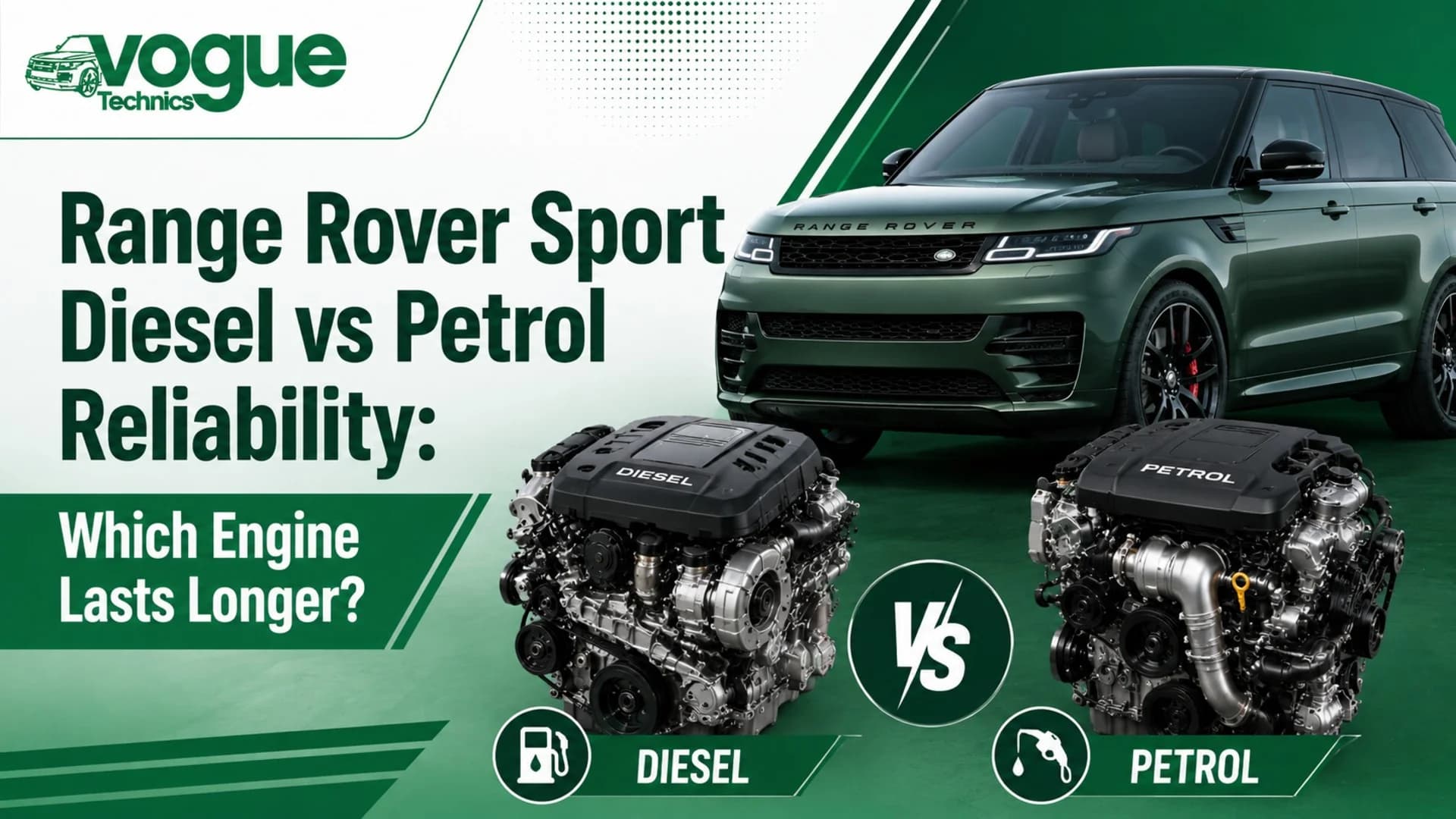
Range Rover Sport Diesel vs Petrol Reliability: Which Engine Lasts Longer?
Choosing between a diesel or petrol Range Rover Sport comes down to how you actually drive, not a simple "better engine" answer. Diesels (TDV6/SDV6/SDV8) offer stronger towing power and better long-distance economy but carry costly DPF, EGR, and AdBlue risks, especially on short city trips. Petrols are mechanically simpler and suit urban driving, though superchargers and ignition components wear out over time. This guide breaks down real failure points, repair costs, and expected mileage for both, plus when a rebuild beats a full engine replacement.
Your Range Rover Sport just threw up a warning light again, and you're wondering if you bought the wrong engine. You're not alone. Every week, our workshop in Grays, Essex sees owners asking the same question: should I have gone diesel or petrol, and is my engine actually going to make it to 150,000 miles without bankrupting me?
Here's the honest answer: neither engine is "bad." But they fail differently, cost differently to maintain, and suit very different driving habits. If you're trying to decide which one to buy, or you're already stuck with expensive repair quotes on the one you've got, this guide breaks down exactly what to expect from both.
We've rebuilt more TDV6, SDV6, SDV8, and supercharged petrol units than we can count. What follows isn't guesswork pulled from a forum thread. It's what we actually see on the ramp.
Diesel vs Petrol Range Rover Sport — Key Differences Explained

Before comparing breakdown rates and repair bills, it helps to understand what's mechanically different between the two engine families. The differences explain almost everything about how they fail and what they cost to keep running.
How Do Diesel and Petrol Engines Differ in Performance?
Diesel engines in the Range Rover Sport, the TDV6, SDV6, and SDV8, are built around high compression ratios and turbocharging. They deliver strong low-end torque, which is why diesel has traditionally been the choice for towing and motorway cruising.
Petrol engines, particularly the supercharged V6 and V8 units (and the newer Ingenium four-cylinder petrols), rev higher and deliver power more linearly. They feel noticeably smoother and quieter, but they don't match diesel torque figures at low RPM.
In practical terms:
- Diesel pulls harder from a standstill and suits caravan or trailer towing
- Petrol feels more refined and responds better at higher speeds
- Diesel typically returns better long-distance economy
- Petrol tends to be kinder on emissions-related components (no DPF or AdBlue system)
Which Engine Offers Better Fuel Economy and MPG?
Range Rover Sport diesel mpg figures generally sit noticeably higher than petrol equivalents, particularly on motorway driving. Diesel variants often return meaningfully better real-world fuel consumption on longer runs, while petrol engines lose efficiency faster in stop-start traffic.
That said, range rover sport fuel economy varies a lot by driving style. Short journeys punish diesel engines disproportionately, since the diesel particulate filter (DPF) never gets hot enough to regenerate properly. Petrol engines don't have this issue, which makes them a genuinely better fit for city-only drivers.
Range Rover Sport 3.0 Diesel vs 3.0 Petrol — What's the Real Difference?
The 3.0 diesel (SDV6) and 3.0 petrol (supercharged V6) share a similar displacement but almost nothing else in terms of how they age. The diesel variant carries additional emissions hardware — EGR valve, DPF, SCR system with AdBlue/DEF fluid, all of which add potential failure points that simply don't exist on the petrol engine.
The 3.0 petrol is mechanically simpler but tends to be less fuel-efficient and, in older mild hybrid configurations, has its own set of electrical quirks.
Which Range Rover Sport Engine Is More Reliable?
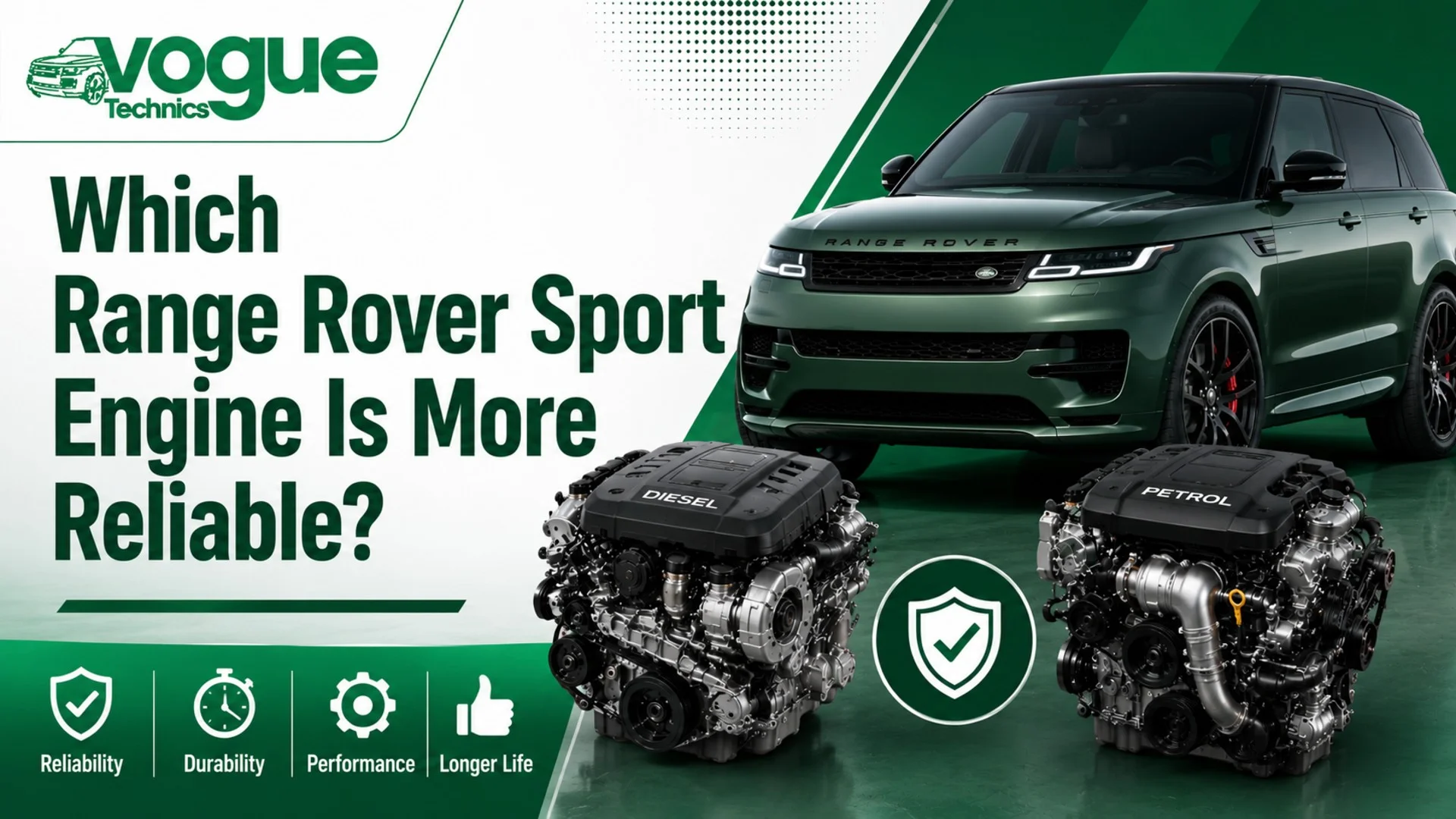
This is the question everyone actually wants answered, and it doesn't have a one-word answer. Reliability depends heavily on engine generation, mileage, and most importantly, how well the vehicle has been maintained.
Common Diesel Engine Problems (TDV6, SDV6, SDV8)
Diesel reliability issues on the Range Rover Sport cluster around a fairly predictable set of components:
- Timing chain wear: particularly on early TDV6 units, where chain stretch can trigger rattling and, if ignored, catastrophic engine damage
- DPF blockages: common in vehicles used mainly for short trips, leading to reduced power and warning lights
- EGR valve failure: causes rough running, poor economy, and can trigger limp mode
- AdBlue/SCR system faults: NOx sensor failures and DEF fluid dosing errors are a recurring complaint on later SDV6 and SDV8 units
- Injector and fuel pump wear: high-mileage diesels are particularly prone to injector seal failure and fuel pump degradation
The SDV8, used in higher-spec models, adds turbocharger wear to this list, especially where servicing has been stretched beyond recommended intervals.
Common Petrol Engine Problems (Supercharged V6/V8, Ingenium)
Petrol reliability issues tend to be different in nature rather than necessarily fewer:
- Supercharger wear: the drive belt and bearings on supercharged units need attention around 60,000–80,000 miles
- Ignition coil and spark plug degradation: leads to misfires, particularly on higher-mileage V8s
- Timing chain tensioner issues: the Ingenium petrol engines have had documented timing chain and tensioner concerns
- Cooling system faults: water pump and thermostat failures are common across both diesel and petrol, but petrol engines run hotter under load, which accelerates wear
- Carbon build-up: direct-injection petrol engines can suffer intake valve carbon deposits over time, affecting performance
Which Engine Has Fewer Breakdowns and a Longer Lifespan?
In our experience rebuilding both engine types, diesel units generally tolerate higher mileage before requiring major mechanical work, provided the timing chain and emissions system have been properly maintained. Petrol engines are mechanically simpler and suffer fewer catastrophic failures, but auxiliary components like superchargers and ignition systems tend to need attention sooner.
Diesel Engine Longevity and Mileage Expectations
A well-maintained SDV6 or SDV8 can comfortably reach 150,000–200,000 miles before needing significant engine work, assuming regular oil changes, timely DPF maintenance, and no history of ignored warning lights. Engines used mainly for short urban trips fare considerably worse.
Petrol Engine Longevity and Mileage Expectations
Supercharged petrol V6 and V8 engines typically remain reliable to around 120,000–150,000 miles before supercharger and ancillary wear becomes a real cost consideration. The core engine block itself is generally robust; it's the surrounding systems that tend to need rebuilding or replacing first.
Maintenance, Running and Repair Costs Compared

Reliability only tells half the story. What actually determines your ownership experience is what happens to your wallet when something does go wrong.
Range Rover Sport Diesel Maintenance and Service Costs
Diesel servicing costs more per interval because of the additional emissions hardware. Expect to budget for:
- DPF cleaning or replacement (£300–£1,200 depending on severity)
- EGR valve replacement (£250–£600)
- AdBlue system diagnostics and NOx sensor replacement (£150–£500)
- Timing chain replacement if worn (£1,000–£2,500+)
Range Rover Sport Petrol Maintenance and Service Costs
Petrol servicing tends to be cheaper on routine items but can spike sharply when supercharger or ignition components fail:
- Spark plug and ignition coil replacement (£150–£400)
- Supercharger service or rebuild (£800–£2,000)
- Timing chain tensioner replacement, particularly on Ingenium units (£600–£1,500)
What Affects Range Rover Engine Repair Costs?
Several factors push repair bills up regardless of engine type: service history gaps, high mileage without preventative maintenance, and delayed response to warning lights.
DPF, EGR & AdBlue-Related Repairs (Diesel)
These emissions components are diesel-specific and account for a large share of diesel-only repair costs. Regular motorway driving reduces DPF issues significantly, so a diesel used almost exclusively in town is at higher risk of expensive emissions-related repairs.
Timing Chain & Ignition-Related Repairs (Petrol)
Petrol repair costs cluster around ignition and timing components. Unlike diesel emissions faults, these issues rarely leave the vehicle undriveable in the short term, but ignoring early symptoms (rattling on cold start, misfires) tends to turn a moderate repair into a full engine rebuild.
Range Rover Sport Diesel vs Petrol — Quick Comparison
Factor | Diesel (TDV6/SDV6/SDV8) | Petrol (Supercharged V6/V8, Ingenium) |
| Fuel economy | Better on motorway/long distance | Better in short, urban journeys |
| Towing capability | Stronger low-end torque | Adequate, less suited to heavy towing |
| Typical failure points | DPF, EGR, AdBlue, timing chain | Supercharger, ignition, timing chain tensioner |
| Longevity potential | 150,000–200,000+ miles (well maintained) | 120,000–150,000 miles before major work |
| Servicing cost per interval | Higher (emissions system) | Lower routine, higher spike risk |
| Best suited to | Motorway drivers, towing, high annual mileage | City drivers, shorter commutes, lower annual mileage |
Which Engine Should You Choose — And When to Repair vs Rebuild?

There's no universally "best" Range Rover Sport engine, only the one that suits how you actually drive.
Best Engine for Daily Driving and City Use
If most of your mileage is short urban trips, petrol is the more sensible choice. Without a DPF or AdBlue system to worry about, you avoid the most common diesel complaint entirely: emissions components clogging up from short journeys that never let the engine reach full operating temperature.
Best Engine for Towing and Long-Distance Driving
For owners regularly towing horseboxes, caravans, or trailers or covering serious motorway mileage, diesel remains the stronger option. The torque advantage and better long-run fuel economy generally outweigh the higher servicing costs, as long as the DPF and EGR system are properly looked after.
When Does an Engine Rebuild Make More Sense Than Replacement?
This is where we come in. A lot of owners assume that once an engine develops a serious fault, a stretched timing chain, a failed turbocharger, worn bearings, the vehicle is essentially finished, or that a full engine replacement is the only option.
That's rarely true, and it's almost never the most cost-effective route.
A professional engine rebuild replaces the worn components, pistons, bearings, timing chain, gaskets, seals, while retaining the original engine block. It typically costs significantly less than a replacement unit, and when done properly, restores the engine to a condition that can genuinely outlast the original.
We'd recommend a rebuild over replacement when:
- The engine block itself is structurally sound (no cracked block or catastrophic damage)
- The vehicle otherwise has a solid service history
- You're planning to keep the car for several more years rather than sell immediately
- A replacement engine of matching mileage and condition isn't readily available or is priced similarly to a rebuild
At Voguetechnics Engine Rebuild, based in Grays, Essex, we specialise specifically in Range Rover and Land Rover engine rebuilds, diesel and petrol alike. If your Range Rover Sport is showing timing chain rattle, DPF warning lights, supercharger noise, or has simply racked up serious mileage, it's worth getting a proper inspection before assuming the worst.
FAQs — Range Rover Sport Diesel vs Petrol Reliability
Is Range Rover Sport diesel more reliable than petrol?
Not universally. Diesel engines tend to last longer at high mileage when well maintained, but they carry more emissions-related failure points. Petrol engines are mechanically simpler but face their own wear issues around superchargers and ignition components.
Which engine costs less to maintain?
Petrol servicing is generally cheaper per routine interval, but diesel can work out more economical over high annual mileage due to better fuel economy. Repair costs depend more on maintenance history than fuel type alone.
Is diesel worth buying for a Range Rover Sport?
Yes, if you cover high motorway mileage or tow regularly. It's a less sensible choice if your driving is mostly short, urban trips, since this accelerates DPF and EGR problems.
Which engine has fewer problems — TDV6 or supercharged petrol?
Both have known issues. The TDV6 is prone to timing chain wear and DPF-related faults, while supercharged petrol engines face supercharger and ignition wear. Neither is problem-free, but failure patterns differ.
What mileage is too high for a used Range Rover Sport?
There's no fixed number. A diesel with full service history and healthy DPF/EGR systems can be a safe buy well past 100,000 miles. A neglected example with gaps in servicing can be risky even at lower mileage. Always request a pre-purchase inspection.
Does AdBlue fail on Range Rover Sport diesels?
Yes, AdBlue and SCR system faults, particularly NOx sensor failures, are a known issue on later diesel models. It's worth checking for any AdBlue-related warning history before buying.
Is air suspension reliability linked to engine type?
No, air suspension issues occur independently of whether the vehicle is diesel or petrol, though they're worth checking on any used Range Rover Sport regardless of engine choice.
Final Verdict: Which Engine Should You Choose?
If you're buying new or used, the decision comes down to your driving pattern more than a blanket reliability ranking. Diesel rewards high-mileage, motorway-heavy, towing-focused owners. Petrol suits shorter journeys and lower annual mileage, with fewer emissions headaches.
If you're already an owner dealing with a costly fault, don't assume it's the end of the road for your engine. In most cases, a targeted rebuild resolves the underlying problem for considerably less than a full engine replacement and does it properly, rather than just patching the symptom.
If your Range Rover Sport is showing warning signs, whether that's a rattling timing chain, persistent DPF faults, or supercharger noise, get in touch with our team at Voguetechnics Engine Rebuild in Grays, Essex. We'll give you a straight assessment of what's actually wrong and whether a rebuild is the right call before you spend money on guesswork.