
Range Rover Velar Engine Rebuild Specialists Grays, Essex
Vogue Technics in Grays, Essex specializes in rebuilding Range Rover Velar engines, covering all Ingenium petrol and diesel variants including the P200, P300, D200, and D240. The blog explains common failure causes like timing chain wear, oil starvation, and coolant leaks, and compares rebuild options against used, reconditioned, and full replacement engines. It also breaks down the four-step rebuild process, expected costs, turnaround time, and the warranty coverage included with every job.
There's a specific kind of dread that comes with a warning light on your Velar's dash after a long motorway run. You pull over, check the oil, and there it is again, that faint metallic rattle on cold start that you've been telling yourself is "probably nothing." It isn't nothing. And if you've landed here after searching for answers, you already suspect that.
At Vogue Technics, we rebuild Range Rover Velar engines for a living, Ingenium petrol and diesel units, day in and day out, from our workshop in Grays, Essex. This page walks through exactly what a rebuild involves, what it costs, what causes these engines to fail in the first place, and how to tell whether a rebuild, a reconditioned unit, or a full replacement is the right call for your car.
What Is a Range Rover Velar Engine Rebuild? (And Do You Need One?)
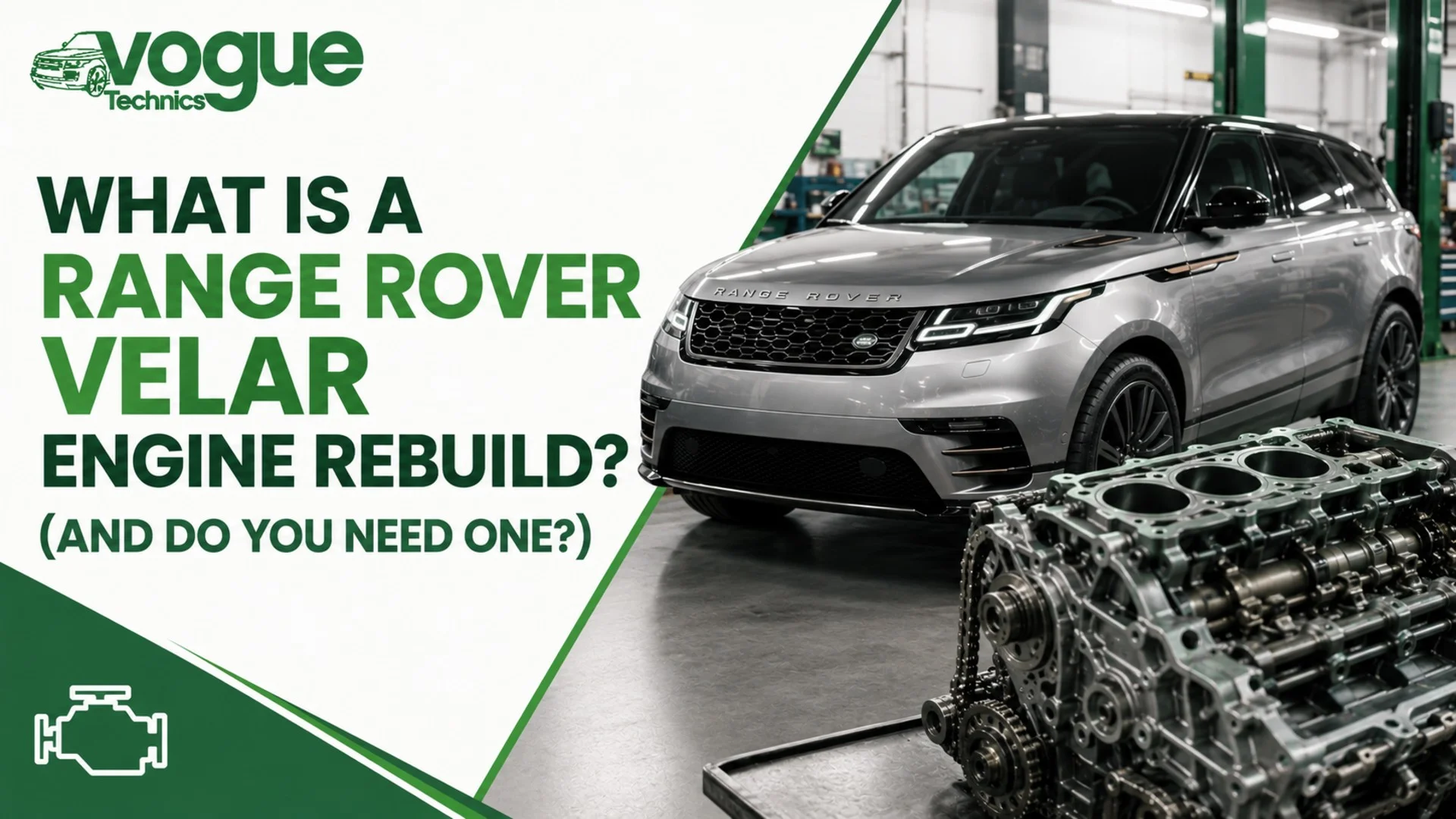
A Range Rover Velar engine rebuild means stripping the engine down to its individual components — block, head, crankshaft, pistons, timing system, inspecting each part, machining or replacing what's worn, and reassembling the unit to factory tolerances. It's not a patch job. Done properly, it addresses the root cause of failure rather than just the symptom that made your dashboard light up.
The Velar range uses Jaguar Land Rover's Ingenium engine family almost exclusively, petrol variants like the P200, P250, and P300, and diesel variants including the D180, D200, and D240. Some later models use the P400 and P400e hybrid powertrains. Each of these has its own known weak points, and knowing which one you're dealing with matters before any rebuild work starts.
Signs Your Velar Engine Needs Rebuilding
Most engine failures don't happen overnight. They build gradually, and the early symptoms are easy to dismiss. Watch for:
- A rattling or ticking noise on cold start that fades once the engine warms up, often an early sign of timing chain wear
- An illuminated engine warning light paired with reduced power or rough idling
- Blue or white smoke from the exhaust, which can point to oil consumption or head gasket failure
- Rising oil consumption between services with no visible leak
- Overheating or fluctuating temperature gauge readings, especially on short journeys
- A noticeable drop in fuel economy or acceleration that isn't explained by driving style
If you're noticing more than one of these together, it's worth getting the engine assessed before it progresses into something catastrophic. A timing chain issue caught early is a rebuild. Left too long, it can turn into a seized engine and a full replacement.
Common Ingenium Engine Problems (P200, P250, P300, D180–D300)
The Ingenium engine was JLR's move toward a modular, lighter, more efficient platform, and in many ways it delivers. But it also introduced some recurring issues that Velar owners across the UK have reported consistently enough that they're now well documented.
Timing Chain Stretch & Tensioner Failure
This is the single most common reason a Velar owner ends up on a page like this one. The timing chain sits at the front of the engine and keeps the crankshaft and camshaft rotating in sync. On many Ingenium units, the chain tensioner is prone to wear earlier than expected, allowing the chain to stretch. Once that happens, ignition timing drifts, you'll hear a rattle on startup, and if the chain skips or snaps, the pistons and valves can collide, which usually means the engine is beyond simple repair.
Oil Starvation and Low Oil Pressure
Oil starvation happens when the engine's moving parts aren't getting consistent lubrication, often due to a failing oil pump, a blocked oil pickup, or incorrect oil viscosity used during a previous service. The result is accelerated wear on crankshaft bearings and cylinder walls. Left unaddressed, it's one of the fastest routes to a seized engine.
Overheating and Coolant Leaks
Coolant leaks, whether from a failing water pump, a degraded hose, or a head gasket starting to go, cause localized overheating that warps the cylinder head over time. This is one of those problems that's genuinely cheaper to fix at the first sign of trouble than to ignore for "just one more trip."
Engine Rebuild vs Replacement vs Reconditioned — Which Is Right for You?
This is the question we get asked more than any other, and honestly, there's no single right answer, it depends on your engine's condition, mileage, and how long you plan to keep the car.
Option | What It Means | Best For | Typical Turnaround |
| Used Engine | A tested, low-mileage engine pulled from a donor vehicle | Budget-conscious repairs on older Velars | 2–5 days |
| Reconditioned Engine | Key wear components replaced, tested to working spec | Balance of cost and reliability | 5–10 days |
| Rebuilt Engine | Fully stripped, machined, and rebuilt to factory tolerances with OEM-standard parts | Owners keeping the car long-term, or where the exact engine code matters | 10–15 days |
| Full Replacement | Complete engine swap with a new or remanufactured unit | Catastrophic failure (seizure, snapped chain) | 5–10 days once sourced |
If your Velar is otherwise in good condition and you're planning to keep it for years, a rebuild almost always makes more financial sense than a replacement, you're paying for the labour and precision of restoring what you already have, rather than sourcing and matching an entirely new unit.
Our Range Rover Velar Engine Rebuild Process
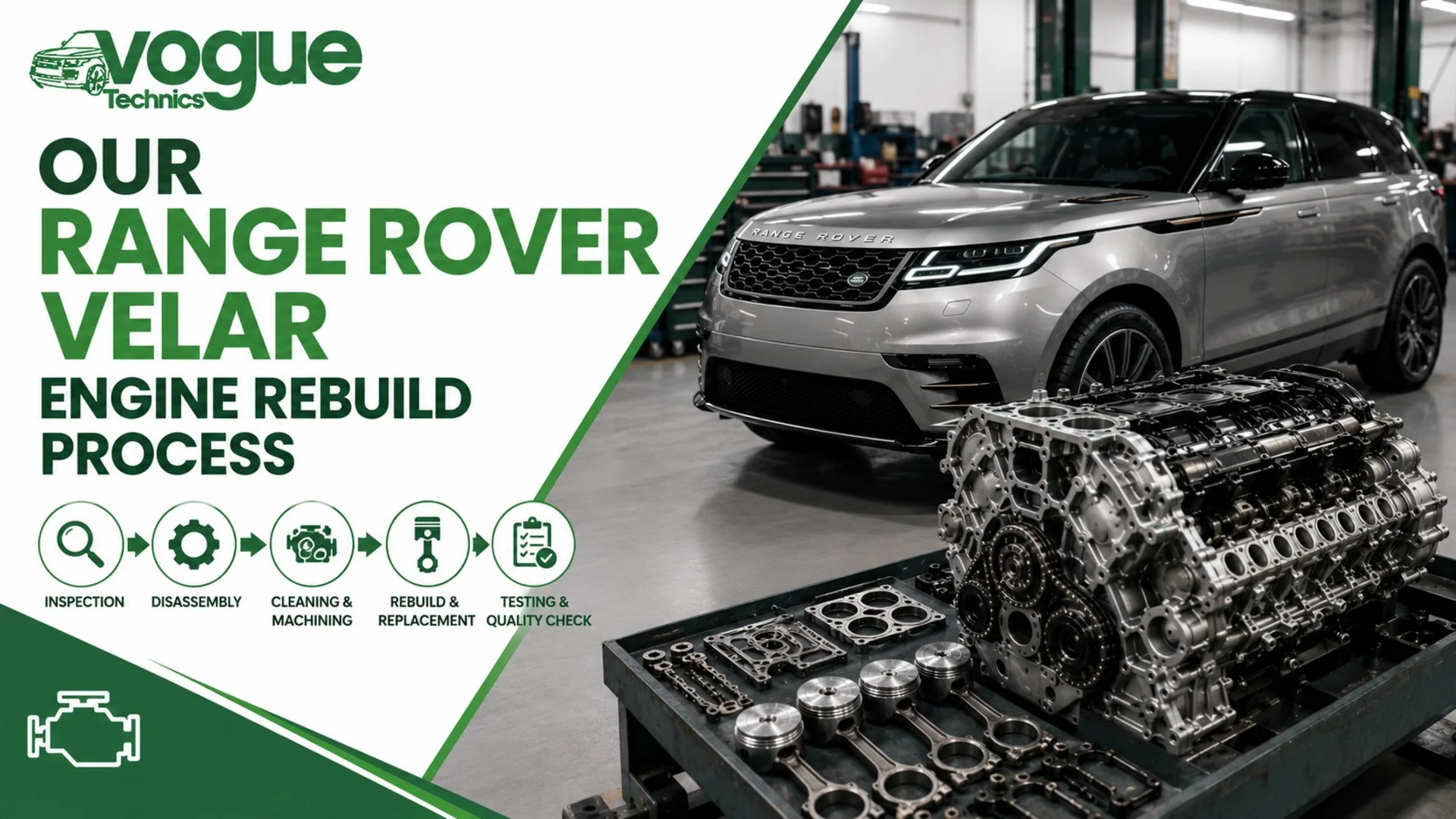
We break every rebuild into four clear stages. You'll know exactly what's happening to your car at each point, and nothing moves to the next stage without being signed off first.
Step 1: Vehicle & Fault Diagnosis
Every rebuild starts with proper diagnostics, not guesswork. We connect JLR-specific diagnostic software to pull fault codes, then correlate that data against what you're actually experiencing, noise, smoke, warning lights, performance loss.
Compression & Leak-Down Testing
A compression test tells us how well each cylinder is sealing. A leak-down test goes a step further, pressurising each cylinder and identifying exactly where air is escaping, past the piston rings, through a valve, or via a head gasket. Together, these two tests give us a precise picture of internal wear before we open the engine up, which means fewer surprises and a more accurate quote.
Step 2: Engine Code Identification & Parts Sourcing
VIN-Specific Engine Matching (AJ200, D240, P400e & More)
Not every Velar engine is interchangeable, even within the same model year. We identify your exact engine code from your VIN before sourcing a single component. This matters because fitting the wrong variant, even one that looks nearly identical, can cause compatibility issues with the ECU, wiring loom, and mounting points. Getting this step wrong is one of the most common (and expensive) mistakes in the used-engine market.
Step 3: Full Strip, Machining & Component Rebuild
Cylinder Head, Bottom End & Timing System Rebuild
This is where the actual rebuild happens. The engine is stripped to component level. The cylinder head is checked for warping and resurfaced if needed. Valve guides, valve stem seals, and gaskets are replaced as standard. The bottom end, crankshaft, connecting rods, pistons, and bearings, is inspected, machined where necessary, and rebuilt with new piston rings and bearings. The timing chain, guide rails, and tensioner are replaced as a complete set, since replacing the chain alone without the tensioner is a false economy that tends to fail again within months.
Step 4: Testing, Fitting & Handover
Once reassembled, the engine goes through pressure testing and, where applicable, a running test before it's fitted back into your vehicle. We carry out a full ECU calibration and a structured break-in procedure before handover, so the engine isn't put under full load before it's ready for it.
Range Rover Velar Engine Rebuild Cost & Warranty
How Much Does a Velar Engine Rebuild Cost in the UK?
Pricing genuinely depends on the extent of the damage, the engine variant, and whether machining work is needed on the block or head. As a rough guide, a full Ingenium rebuild typically sits well below the cost of a brand-new replacement engine from a main dealer, often by a significant margin, while still restoring the engine to factory-spec condition.
The most accurate way to know your cost is a proper inspection, because two Velars with the "same" fault can need very different levels of work. One might need a timing chain kit and a set of bearings. Another might need a full bottom-end rebuild with cylinder head machining. We provide a written quote after diagnosis, before any work begins, no surprises on the invoice.
What's Included in Our Rebuild Warranty?
Every engine we rebuild is warranty-backed. That covers the components we've replaced and the workmanship of the rebuild itself, giving you confidence that if something isn't right, you're covered, not left chasing a supplier who's moved on to the next job.
Petrol vs Diesel Rebuild Cost Comparison (Ingenium Engines)
Broadly speaking, diesel Ingenium units (D180, D200, D240, D300) involve slightly more complex fuel system components, including the high-pressure fuel pump and EGR system, which can add to the overall rebuild scope compared with petrol variants (P200, P250, P300). Petrol engines, meanwhile, are more likely to need attention around carbon buildup on intake valves, a known characteristic of direct-injection petrol engines generally. Neither is inherently "cheaper" across the board, it comes down to the specific fault profile of your engine.
Why Choose Vogue Technics for Your Velar Engine Rebuild?
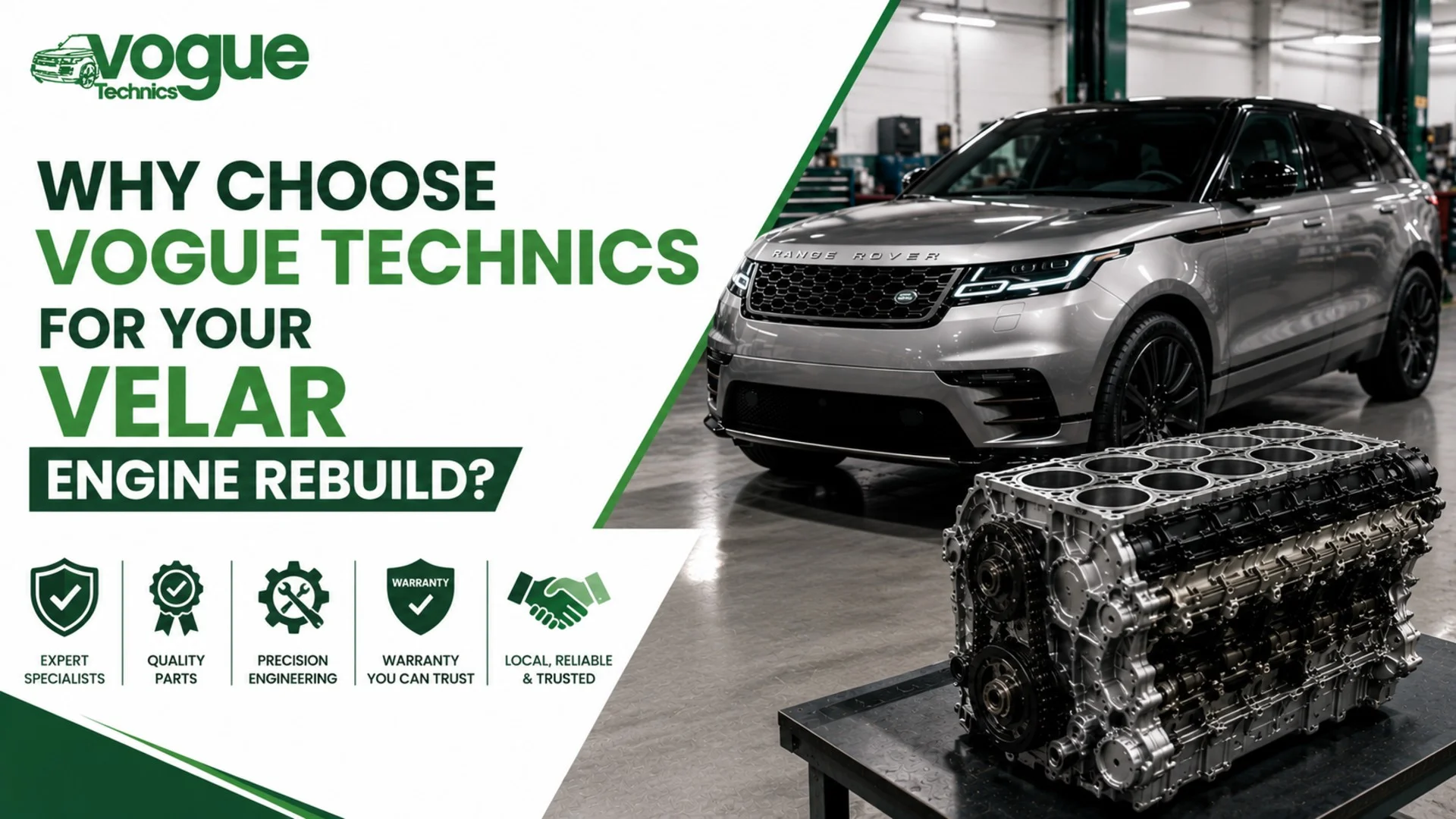
Ingenium & JLR Specialist Experience
We work on Land Rover, Range Rover, and Jaguar engines specifically, not as one line item among dozens of makes we "also" service. That focus means our team recognises Ingenium-specific fault patterns quickly, rather than treating your Velar like a generic diagnostic puzzle.
OEM-Standard Parts & In-House Workshop Standards
We use OEM and OEM-equivalent components throughout the rebuild, timing kits, gaskets, bearings, and seals sourced to the tolerances JLR originally specified. The machining and reassembly happen in-house, under one roof, rather than being split across multiple subcontractors where accountability gets murky.
UK-Wide Collection, Fitting & Support from Grays, Essex
Based in Grays, Essex, we support Velar owners across the UK, with collection, rebuild, and fitting handled as one coordinated process rather than passing your car between separate suppliers and fitters.
Frequently Asked Questions
Is a Velar Engine Rebuild Worth It?
In most cases, yes, particularly if the rest of the vehicle is in good condition and the damage hasn't progressed to a seized engine or bent valves from a snapped timing chain. A rebuild restores the engine to factory tolerances at a fraction of the cost of a brand-new unit, and with a warranty behind it, you get long-term reliability rather than a short-term patch.
How Long Does a Velar Engine Rebuild Take?
Most full rebuilds are completed within 10 to 15 working days from the point parts are confirmed and sourced, though this can vary depending on the extent of machining required and parts availability for your specific engine code.
Does a Rebuilt Engine Come With a Warranty?
Yes. Every rebuild we carry out is warranty-backed, covering both parts and workmanship, so you're protected after the car is back on the road.
Can an Ingenium Engine Be Rebuilt?
Absolutely. Ingenium engines are modular by design, which actually makes them well suited to rebuilding, provided the work is carried out with the correct OEM specifications and the right engine code is confirmed from the outset.
What Causes Range Rover Velar Engine Failure?
The most common causes are timing chain tensioner wear, oil starvation from delayed servicing or incorrect oil grade, and coolant leaks that lead to overheating. Most of these are preventable with regular maintenance and early attention to warning signs.
Get Your Velar Engine Assessed Today
An early diagnosis is almost always cheaper than a delayed one. If your Velar is showing any of the warning signs above, don't wait for it to turn into a seized engine and a full replacement bill.
Get in touch with our team in Grays, Essex for a full diagnostic assessment and a straightforward, written quote for your Range Rover Velar engine rebuild, no guesswork, no pressure, just a clear picture of what your car needs and what it'll cost to put right.