
Range Rover Sport Engine Knocking Noise: Causes, Diagnosis & Expert Repair (UK)
A knocking noise in your Range Rover Sport engine is rarely something to ignore — it usually points to issues like low oil pressure, worn bearings, a stretched timing chain, or piston slap. This guide breaks down what different knock sounds mean, how serious each cause can be, and how professional diagnostics (from OBD scans to bore scope inspections) pinpoint the exact problem. It also covers your repair options — targeted fix, rebuild, or full engine replacement — so you know what to expect before committing to any work.
You're driving along, everything feels normal, and then you hear it — a metallic knock, tap, or rattle coming from somewhere under the bonnet. Maybe it only shows up at idle. Maybe it gets louder when you accelerate. Either way, that sound has probably been sitting in the back of your mind ever since, because deep down you already know engines aren't supposed to knock.
If you're here, you're likely typing some version of "range rover sport engine knocking noise" into Google at 11pm, trying to work out whether this is something you can drive to work tomorrow or something that's about to leave you stranded on the M25. We understand that anxiety, and we've heard this exact sound thousands of times on Range Rover Sport engines that have come through our workshop.
This guide walks you through exactly what causes a Range Rover Sport engine knocking noise, how serious it actually is, how proper diagnosis works, and what your realistic repair options look like — including cost. No vague guesses, no scare tactics, just what we've learned from actually opening up these engines.
Why Is My Range Rover Sport Engine Knocking?
A knocking noise in a Range Rover Sport engine is rarely random. It's almost always a symptom of a specific mechanical or lubrication issue inside the engine, and the type of knock usually points toward the cause.
Range Rover Sport models have run several very different engine platforms over the years — the 3.0L TDV6 and SDV6 diesels, the 3.0L and 5.0L supercharged petrol V6/V8s, and more recently the 2.0L Ingenium four-cylinder along with the AJ126 and AJ133 V6/V8 units. Each of these has its own known weak points, and the knocking sound they produce often traces back to those specific design issues.
Common underlying causes include:
- Low oil pressure or oil starvation — when oil isn't reaching bearings and moving parts fast enough, metal-to-metal contact creates a knocking or rattling sound, particularly noticeable on cold start.
- Worn rod bearings or crankshaft bearings — as bearing clearances increase with wear, you get a deeper, more rhythmic knock that typically gets louder under load or acceleration.
- Timing chain stretch or a failing tensioner — common on Ingenium and AJ133 engines, this produces a rattling or slapping noise, often worse on cold start before oil pressure builds.
- Piston slap — excess clearance between piston and cylinder wall causes a lighter, metallic tapping, usually most obvious when the engine is cold and quietens as it warms up.
- Hydraulic lifter or tappet wear — creates a ticking noise rather than a deep knock, often linked to oil change intervals being missed or the wrong oil viscosity being used.
- Carbon buildup or pre-ignition/detonation — irregular combustion can produce a knocking or pinging sound, sometimes linked to fuel quality or ignition timing issues.
Is Engine Knocking Normal at Cold Start or Idle?
A very brief tapping sound for a second or two on cold start, especially in cold UK winter mornings, can be within normal tolerances on some engines as oil takes a moment to circulate. However, if the noise persists for more than a few seconds, returns at idle once the engine is warm, or gets progressively louder, that's not something to write off as "just how these engines sound." It's worth having it looked at rather than assuming it will go away on its own.
Rod Knock vs Piston Slap vs Timing Chain Noise — How to Tell the Difference
Owners often use "knocking" as a catch-all term, but the sound itself carries real diagnostic clues. Here's a quick comparison of how these noises typically present:
Noise Type | What It Sounds Like | When It's Worst | Likely Cause |
| Rod knock | Deep, rhythmic, metallic knock | Under acceleration or load | Worn/damaged rod bearings |
| Piston slap | Lighter, hollow metallic tap | Cold start, fades as engine warms | Excess piston-to-cylinder clearance |
| Timing chain noise | Rattling or slapping, often at the front of the engine | Cold start, before oil pressure builds | Chain stretch or worn tensioner |
| Lifter/tappet tick | Light, fast ticking | Idle, especially with low oil | Worn hydraulic lifters or low oil level |
| Detonation/pre-ignition | Sharp pinging or knocking | Under load or acceleration | Poor fuel quality, carbon buildup, timing issues |
This table is a starting point for narrowing things down — it isn't a substitute for a proper inspection, because several of these noises can sound frustratingly similar to an untrained ear over a phone recording.
Known Knocking Issues in Ingenium, AJ126/AJ133 & TDV6/SDV6 Engines
Some engine families have well-documented tendencies worth knowing about:
- TDV6 and SDV6 diesels have had reported cases of crankshaft and bearing wear leading to knocking, particularly on higher-mileage vehicles or where oil change intervals were extended too far.
- Ingenium 2.0L engines have seen timing chain and tensioner-related noise complaints, especially on earlier production years.
- AJ126 and AJ133 supercharged V6/V8 petrol engines have had occasional reports linked to bearing wear and, in some cases, oil pump or lubrication-related issues under specific driving conditions.
None of this means every Range Rover Sport will develop these problems — most don't. But if your engine falls into one of these families and you're hearing a knock, it's worth mentioning the specific engine code (found on your V5C or engine bay plate) when you speak to a specialist, since it genuinely narrows down where to look first.
Is a Knocking Engine Dangerous? What Happens If You Ignore It
This is usually the real question underneath all the searching: can I keep driving, or am I about to destroy my engine?
The honest answer is that it depends entirely on the cause — but the safest assumption, until you know otherwise, is to treat any new or worsening knock as something that needs attention soon rather than later.
Can You Still Drive a Range Rover Sport With a Knocking Engine?
If the knock is mild, only present briefly on cold start, and hasn't changed in character or volume, many owners do continue driving short-term while arranging an inspection. However, if the noise is new, getting louder, appearing under acceleration, or accompanied by any of the warning signs below, we'd strongly recommend minimising driving and getting it checked before doing any longer journeys.
Rod bearing knock in particular is a case where continued driving can turn a repairable issue into a full engine rebuild or replacement. Oil starvation and bearing wear tend to get worse quickly once they start, because the very component that's failing is the one responsible for maintaining proper lubrication clearances.
Warning Signs Your Engine Knock Is Becoming Serious
Pay close attention if the knocking is joined by any of these:
- Oil pressure warning light on the dashboard — this is one of the clearest signs of a lubrication problem and shouldn't be ignored even briefly.
- Engine overheating or the temperature gauge creeping up.
- Visible oil leak underneath the vehicle or a noticeably dropping oil level between checks.
- Loss of power or rough running, particularly alongside a check engine light.
- Engine vibration that wasn't there before, especially at idle.
- Increasing knock volume or frequency over just a few days of driving.
Any one of these alongside a knocking noise is a strong signal to stop driving and get the vehicle inspected rather than waiting for your next scheduled service.
How We Diagnose Range Rover Sport Engine Knocking
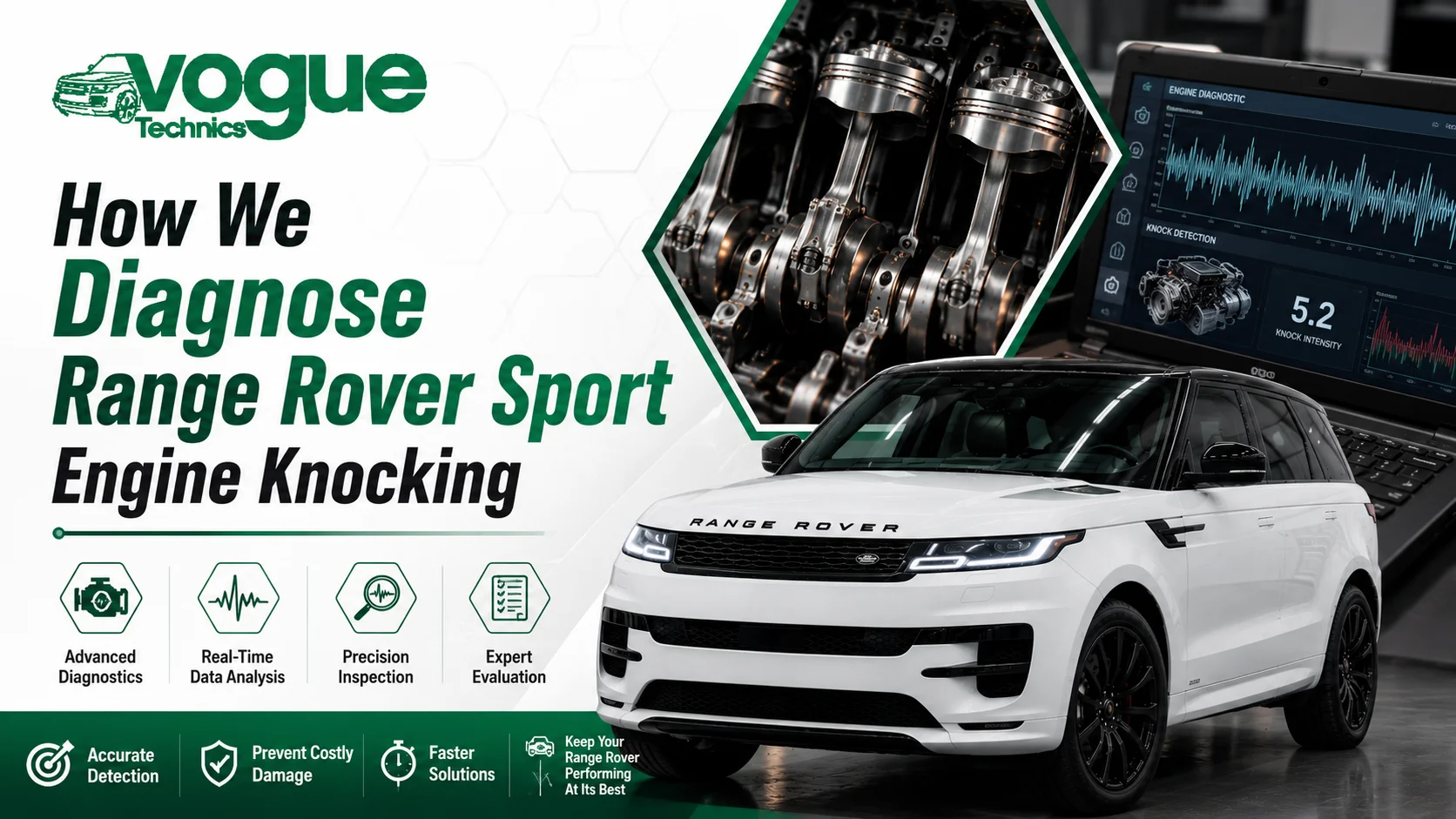
Guessing at engine noises over the phone or from a video clip only gets you so far — and we'd rather tell you that honestly than pretend otherwise. Proper diagnosis means actually testing the engine, not just listening to it.
Our Diagnostic Process — From OBD Scan to Compression & Leak-Down Testing
When a Range Rover Sport comes into our workshop for a knocking noise, our process typically includes:
- OBD diagnostic scan to check for stored fault codes (DTCs) related to misfires, knock sensor readings, oil pressure, or ignition timing.
- Physical inspection of the engine bay, checking for oil leaks, coolant condition, and visible wear around the timing chain area and engine mounts.
- Oil pressure test to check whether the lubrication system is delivering adequate pressure to the bearings and valve train.
- Compression test across all cylinders to identify any cylinder running significantly below the others, which can point toward piston or ring wear.
- Leak-down test to pinpoint exactly where compression is escaping — past the rings, the valves, or the head gasket — giving a much clearer picture than a compression test alone.
- Stethoscope diagnosis, listening directly at different points on the engine block to isolate exactly where the knock is originating from.
Oil Analysis and Bore Scope Inspection Explained
For engines where internal wear is suspected, we often go a step further:
- Oil analysis involves sending a sample of the engine oil to a lab to check for metal particles. Elevated levels of specific metals can indicate bearing wear, piston ring wear, or timing chain wear before we even open the engine.
- Bore scope inspection uses a small camera inserted through the spark plug or injector hole to give us a direct visual of cylinder wall condition, piston tops, and valve condition — without the cost of a full teardown just to look.
These two steps often let us confirm or rule out the more serious causes without unnecessary disassembly, which keeps diagnostic costs down and gives you a clearer answer faster.
What You Receive — Diagnostic Report & Repair Quote
Once diagnosis is complete, you get a written report explaining exactly what we found, what we believe is causing the knock, and a clear repair quote broken down by parts and labour — so you're never left guessing what you're paying for or why.
Range Rover Sport Engine Knock Repair, Rebuild & Replacement Costs
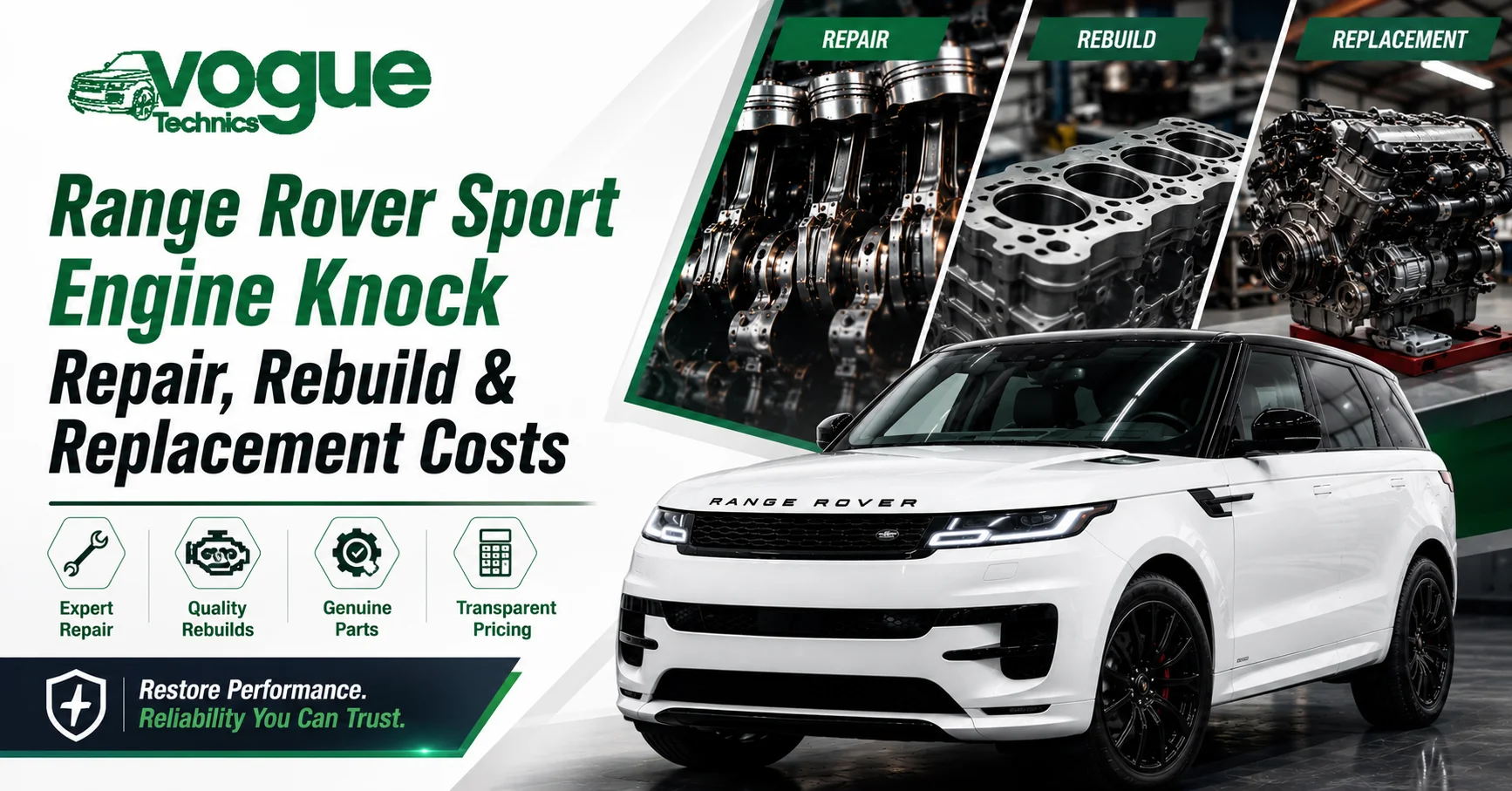
This is usually the part owners care about most, and understandably so. Engine work isn't cheap, and knowing your options upfront makes the decision far less stressful.
Repair vs Rebuild vs Full Engine Replacement — Which One Do You Need?
Not every knocking engine needs a full replacement. The right path depends on what the diagnosis actually shows:
- Targeted repair — suitable when the issue is isolated, such as a worn timing chain tensioner, a specific lifter, or an oil pump fault. Often the fastest and most cost-effective option.
- Engine rebuild — appropriate when there's internal wear across multiple components (bearings, rings, etc.) but the block and major castings are still sound. We strip the engine, replace worn internals, and rebuild it to proper tolerances.
- Engine replacement — necessary when there's significant internal damage, such as a spun bearing that's scored the crankshaft, or when a rebuild would cost close to what a quality replacement engine costs. We supply and fit rebuilt, remanufactured, and quality used engines depending on your budget and vehicle age.
A comparison of what each option generally involves:
Option | Best For | Typical Turnaround | Relative Cost |
| Targeted repair | Isolated fault (chain, tensioner, lifter, pump) | Fastest | Lowest |
| Engine rebuild | Multiple worn internal components, sound block | Moderate | Mid-range |
| Engine replacement | Severe internal damage or high-mileage engine | Varies by engine availability | Highest, but often best long-term value |
How Much Does It Cost to Fix a Knocking Range Rover Sport Engine?
Costs vary significantly depending on the engine variant (2.0 Ingenium, 3.0 TDV6/SDV6, AJ126, AJ133, or 5.0 supercharged V8), the extent of the damage, and whether OEM or quality aftermarket parts are used. A minor repair, such as a timing chain tensioner replacement, sits at the lower end of the cost scale. A full engine rebuild or replacement represents a much larger investment — but it's also often more cost-effective than repeatedly patching an engine with deeper internal wear.
Rather than publishing a generic figure that won't reflect your specific engine and fault, we provide a fixed, written quote after diagnosis, so you know the exact cost before any work begins — with no surprise additions later.
Why UK Owners Choose VogueTechnics — Experience, Warranty & Turnaround
We specialise specifically in Land Rover and Range Rover engine diagnostics, repair, rebuilding, and replacement, which means we're not applying generic knowledge to a complex platform — we work on these engines daily. That specialisation matters when it comes to spotting known issues quickly instead of working through a lengthy trial-and-error process on your bill.
What that looks like in practice:
- Diagnostic testing using proper equipment, not guesswork
- Written, itemised quotes before any work begins
- Rebuilt and replacement engines backed by warranty
- Experience specifically across TDV6, SDV6, Ingenium, AJ126, and AJ133 platforms
- Clear communication throughout, including explaining exactly what we found and why
If your Range Rover Sport is knocking and you'd rather get a straight answer than keep guessing, our team can book in a full diagnostic and walk you through your options.
Frequently Asked Questions
Why is my Range Rover Sport engine knocking? It's usually caused by low oil pressure, worn bearings, a stretched timing chain, piston slap, or worn lifters. The exact cause depends on when the noise occurs (cold start, idle, or acceleration) and which engine variant you have.
Can low oil cause knocking? Yes. Insufficient oil, or oil that isn't reaching the bearings and valve train fast enough, is one of the most common causes of a knocking or rattling noise, particularly on cold starts.
Is engine knocking dangerous? It can be, especially if it's caused by bearing wear or oil starvation, which can worsen quickly. Any knock accompanied by an oil pressure warning light, overheating, or loss of power should be treated as urgent.
Can I drive with engine knock? A brief, mild cold-start tick that disappears may not be urgent, but a new, worsening, or load-related knock should be checked before continuing regular driving, since some causes can escalate into much more expensive damage.
How much does engine knock repair cost? It depends entirely on the cause and engine variant — a tensioner or lifter repair costs considerably less than a full rebuild or replacement. A proper diagnosis gives you an accurate, written quote rather than a rough estimate.
Can bad fuel cause knocking? Yes, poor quality fuel or the wrong octane rating can contribute to pre-ignition or detonation, which produces a pinging or knocking sound under load.
What does rod knock sound like? A deep, rhythmic, metallic knocking that typically gets louder under acceleration or load, and often becomes more noticeable as engine RPM increases.
Can a timing chain cause knocking? Yes. A stretched timing chain or worn tensioner commonly causes a rattling or slapping noise, especially noticeable on cold start before oil pressure builds up fully.
Does premium fuel stop knocking? It can help if the knock is related to detonation from low-octane fuel, but it won't resolve knocking caused by mechanical wear such as bearing or piston damage.
What is piston slap? Piston slap is a light, hollow metallic tapping caused by excess clearance between the piston and cylinder wall. It's usually most noticeable when the engine is cold and often quietens as the engine warms up.
Final Thoughts
A knocking noise from your Range Rover Sport engine is your vehicle's way of telling you something needs attention — and the sooner it's properly diagnosed, the more options you typically have, both mechanically and financially. Some causes are minor and quick to resolve. Others, left unchecked, turn into far more serious and expensive repairs.
If you're currently listening to that knock and wondering what to do next, the most useful step is a proper diagnostic rather than more guessing. Get in touch with VogueTechnics Engine Rebuild for a full engine diagnostic, an honest assessment of what's actually going on, and a clear, written quote for whatever repair path makes sense for your vehicle.