
Range Rover Sport Crankshaft Failure: Causes, Warning Signs & Expert Rebuild Options
That deep knock from under the bonnet is one of the most serious faults a Range Rover Sport can suffer, crankshaft failure. This guide breaks down what causes it (oil starvation and bearing wear on the 3.0 TDV6/SDV6 engines), the 7 warning signs you should never ignore, and whether to repair, rebuild, or replace. Written from the workbench, it helps you act fast and make the right call before a fixable fault becomes a scrapped engine.
That deep, rhythmic knock from under the bonnet of your Range Rover Sport is the sound no owner wants to hear. It usually starts quietly, a faint tick on a cold morning and within days it's a heavy metallic hammering that gets worse the moment the engine warms up. If that's where you are right now, you're likely staring down one of the most serious and expensive faults these vehicles suffer: Range Rover Sport crankshaft failure.
Here's the honest position. By the time the crankshaft itself is involved, the damage is rarely a quick fix. But the difference between a manageable repair bill and a catastrophic engine failure often comes down to how fast you understand what's happening and the decisions you make next. This guide walks you through exactly what causes it, how to spot it early, what your real options are, and what a proper rebuild should look like, written from the workbench, not the brochure.
What Causes Crankshaft Failure in a Range Rover Sport?
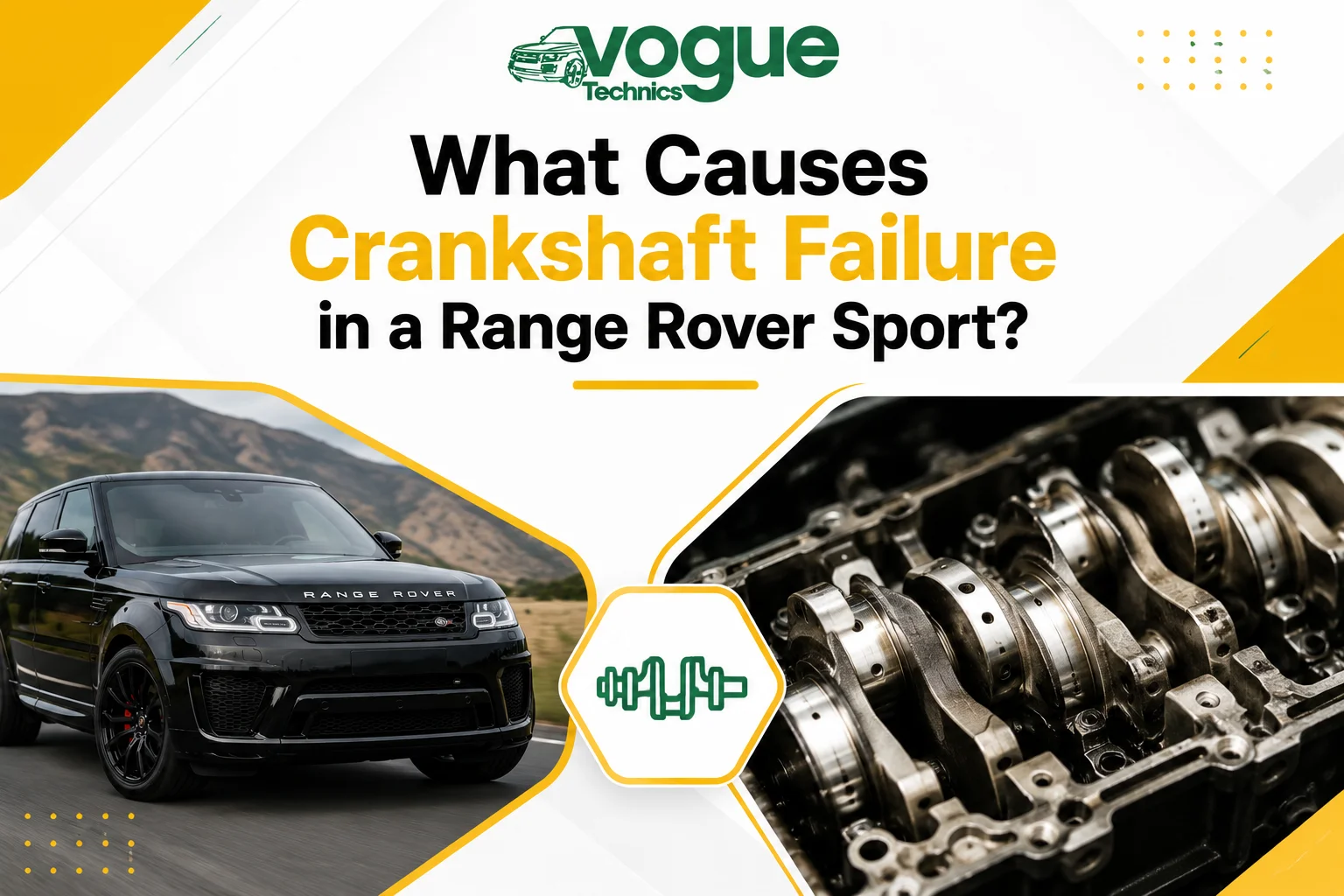
The crankshaft is the backbone of your engine. It converts the up-and-down motion of the pistons into the rotational force that drives the wheels, spinning thousands of times a minute on a thin film of pressurised oil. That oil film is everything. When it's compromised, the failure clock starts ticking and on the 3.0-litre diesel engines fitted to so many of these cars, that clock can run down fast.
How the 3.0 TDV6 and SDV6 Crankshaft Actually Fails
Both the 3.0 TDV6 and the later SDV6 (the 3.0L twin-turbo evolution of the same architecture) share a similar bottom-end design, and they share a similar weakness. Failure almost never happens because the crankshaft is "weak" out of the box. It happens because the rotating assembly gets starved of clean, pressurised oil and metal-on-metal contact does the rest.
Understanding the chain of events helps you see why early action matters so much.
Oil Starvation and Low Oil Pressure — The Number One Culprit
In our experience rebuilding these engines, oil starvation is the single biggest cause of crankshaft damage on the Range Rover and Land Rover 3.0 TDV6 platform. A few things drive it:
- A tired or failing oil pump that can no longer maintain proper oil pressure at idle or under load. The TDV6 oil pump is a known weak point, and when its output drops, the bearings are the first to suffer.
- Blocked oil galleries or a clogged pickup pipe, often caused by sludge from extended service intervals or the wrong grade of engine oil.
- Running the car low on oil between services, which these engines are far less forgiving of than owners expect.
When oil pressure falls below what the bearings need, the protective film collapses. The crankshaft journals start making direct contact with the bearing shells, and within minutes you're generating heat, metal debris, and crankshaft scoring that contaminates the entire lubrication system.
Bearing Wear, Rod Knock, and the Spun Bearing Chain Reaction
Once a main bearing or rod bearing begins to wear, the damage compounds quickly. The clearances open up, oil pressure drops further, and you enter a downward spiral that ends in one of two ways:
- A spun bearing: where the bearing shell overheats, welds itself to the crank, and spins in its housing. This is often terminal for that journal.
- Rod knock: that distinctive deep knocking you can hear and sometimes feel, caused by excessive play in the connecting rod bearing.
Left running, the next stage is a connecting rod punching through the engine block, or the crank snapping outright, at which point you're no longer talking about crankshaft repair, but complete engine failure. This is exactly why we tell owners: the knock is not the problem to solve, it's the warning that the bottom end is already coming apart.
Is Crankshaft Failure Common on the TDV6 and SDV6 Engines?
It's common enough that we see these cars in the workshop on a regular basis, and common enough that it dominates the owner forums. It is not, however, inevitable. The vast majority of failures we strip down trace back to lubrication issues, missed oil changes, a neglected oil pump, or someone who kept driving after the first knock. Cars that are serviced properly, on time, with the correct oil, very often sail past 150,000 miles without bottom-end trouble.
Which Range Rover & Land Rover Models Are Most Affected
The crankshaft and bearing issues show up across the whole family that shares this engine, including the:
- Range Rover Sport 3.0 TDV6 / SDV6 (the most common car we see for this fault)
- Range Rover Vogue 3.0 TDV6 and Range Rover HSE 3.0 TDV6
- Discovery 4 and other Land Rover models using the same 3.0 diesel
- Higher-mileage examples regardless of trim, where servicing history is patchy
If you own any range rover 3.0 TDV6 engine variant, the prevention and warning-sign advice below applies directly to you.
How Do You Know if Your Range Rover Crankshaft Is Failing?
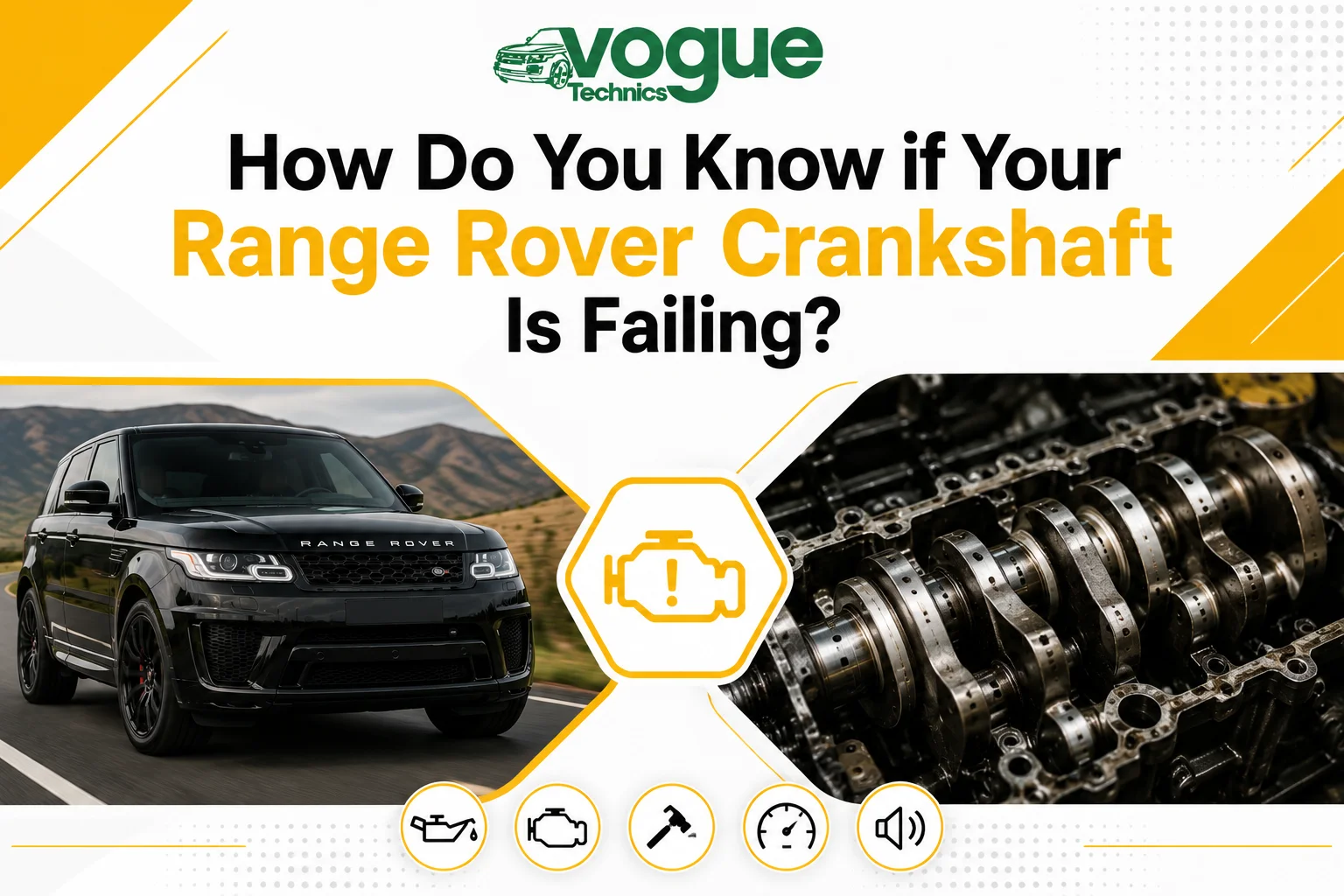
Crankshaft failure rarely arrives without warning. The trouble is, the early signs are easy to dismiss or blame on something minor. Learning to read them properly can be the difference between a bearing job and a full engine rebuild.
7 Warning Signs of Crankshaft Failure You Shouldn't Ignore
Watch for these symptoms, particularly if more than one shows up together:
- Knocking or hammering noise from deep in the engine, worse under load.
- Oil pressure warning light flickering at idle or staying on.
- Rough idle and noticeable engine vibration, especially when stationary.
- Loss of engine power or hesitation under acceleration.
- Metal shavings or a glittery sheen in the engine oil on the dipstick or in the filter.
- Excessive oil consumption with no obvious external leak.
- Engine warning light or stored fault codes (DTCs) relating to oil pressure or the crank sensor.
None of these guarantees the crank is gone but together they paint a clear picture, and each one is your engine asking for a diagnosis before things get worse.
Engine Knocking After Startup — What That Noise Really Means
A knock that's loudest in the first few seconds after a cold start, then quietens as oil pressure builds, is a classic bearing wear signature. It tells you the clearances have opened up and the crank is momentarily running dry on startup before oil reaches the journals. This noise will not fix itself. It only ever travels in one direction, louder.
Oil Pressure Warning Light, Rough Idle & Engine Vibration
When low oil pressure combines with a rough idle and vibration you can feel through the seat, treat it as urgent. That combination usually means the bottom end is already worn and the lubrication failure is feeding on itself. Continuing to drive in this state is what turns a repairable engine into a scrap one.
Can You Still Drive a Range Rover Sport With a Failing Crankshaft?
Technically the car may still move. Practically, every mile you drive after the knocking starts is gambling the entire engine. We've stripped engines that could have been saved for a fraction of the eventual cost, simply because the owner "nursed it home" a few more times. Once you suspect crankshaft or bearing trouble, the safest move is to stop driving and get it diagnosed. A short tow is always cheaper than a new engine.
Repair, Rebuild, or Replace? Your Options When the Engine Fails
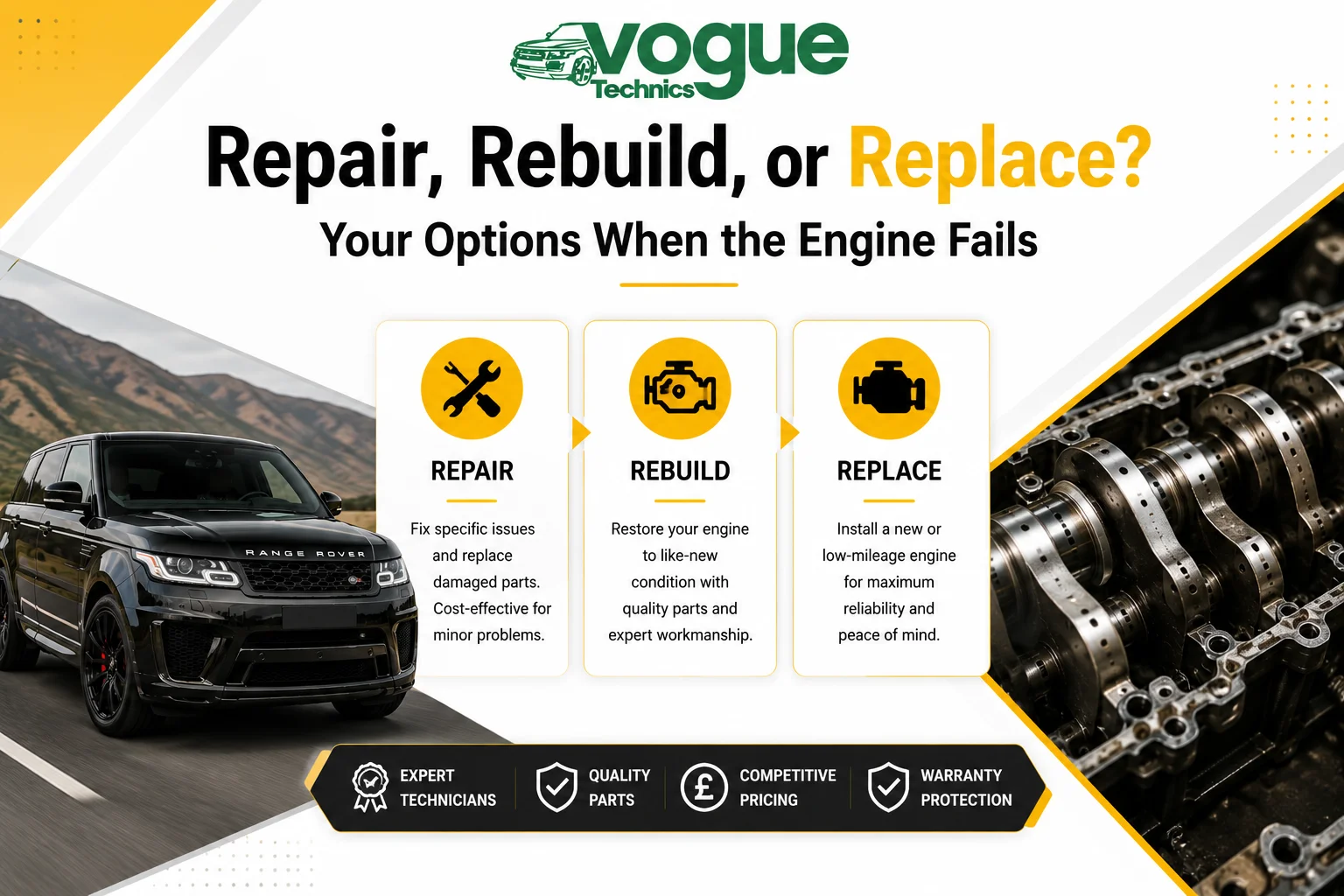
This is the question every owner reaches, and it deserves a straight answer rather than a sales pitch. The right choice depends on the extent of the damage, the condition and history of the car, and your plans for keeping it.
Can a Range Rover Sport Crankshaft Be Repaired?
Sometimes, yes, and this is where a real engine specialist earns their keep. If the crank is caught early and the crankshaft journals show only mild scoring, the crankshaft can often be machined, ground, and polished back to spec and run with new oversized bearings. That's a genuine repair, not a bodge.
But if the crank has snapped, the journals are deeply scored, or a spun bearing has welded itself on, the crankshaft is beyond saving and needs replacing as part of a full rebuild. Only a proper inspection, measuring journal wear, bearing clearance, and crank runout, tells you which camp you're in.
Engine Rebuild vs Engine Replacement — Which Is Right for You?
The two routes are often confused, so here's how they actually compare.
Factor | Engine Rebuild | Engine Replacement |
| What happens | Your original block is stripped, inspected, machined, and reassembled with new bearings, seals and worn components | A reconditioned, remanufactured, or used engine is fitted in place of yours |
| Best when | The block is sound and the damage is contained to the rotating assembly | The block itself is cracked or damaged beyond repair |
| Quality control | Full visibility of every component going back in | Depends entirely on the supplier and the donor engine's history |
| Originality | Keeps your matching, known-history engine | New unit with unknown or limited history (especially used) |
| Typical outcome | A bottom end rebuilt to a known standard | Variable — excellent with a quality reman, risky with a cheap used unit |
For most well-cared-for Range Rover Sport and Land Rover owners, a professional engine rebuild offers the best balance of quality, value, and peace of mind, because you know exactly what went back into your engine.
How Much Does a Range Rover Sport Engine Rebuild Cost?
Cost is the question everyone wants answered first, and the honest answer is: it depends on the damage. A contained bearing and crank job sits at one end of the scale; a full rebuild involving a new crankshaft, pistons, and machining work sits at the other. Range Rover engine replacement with a used or remanufactured unit lands in a different bracket again depending on the donor.
Because every failed engine tells a different story once it's apart, the only figure worth trusting is one based on an actual inspection of your engine, not a guess off a forum thread. We'll always strip and assess before quoting, so the price reflects the real work, with no nasty surprises halfway through.
Why a Properly Rebuilt Engine Outlasts a Cheap Used One
It's tempting to chase the lowest number, a used engine off a breaker can look like a bargain. But a used 3.0 TDV6 engine often carries the same hidden wear and the same oil-pump weakness that killed your original. You're not solving the problem, just resetting the same clock.
A correctly rebuilt engine, by contrast, addresses the root causes: new bearings to the right clearance, a healthy oil pump, fresh seals, clean galleries, and the entire rotating assembly balanced and checked. Done properly, it can outlast the engine that came with the car.
Trusted Range Rover Sport Engine Rebuild Specialists in Grays, Essex
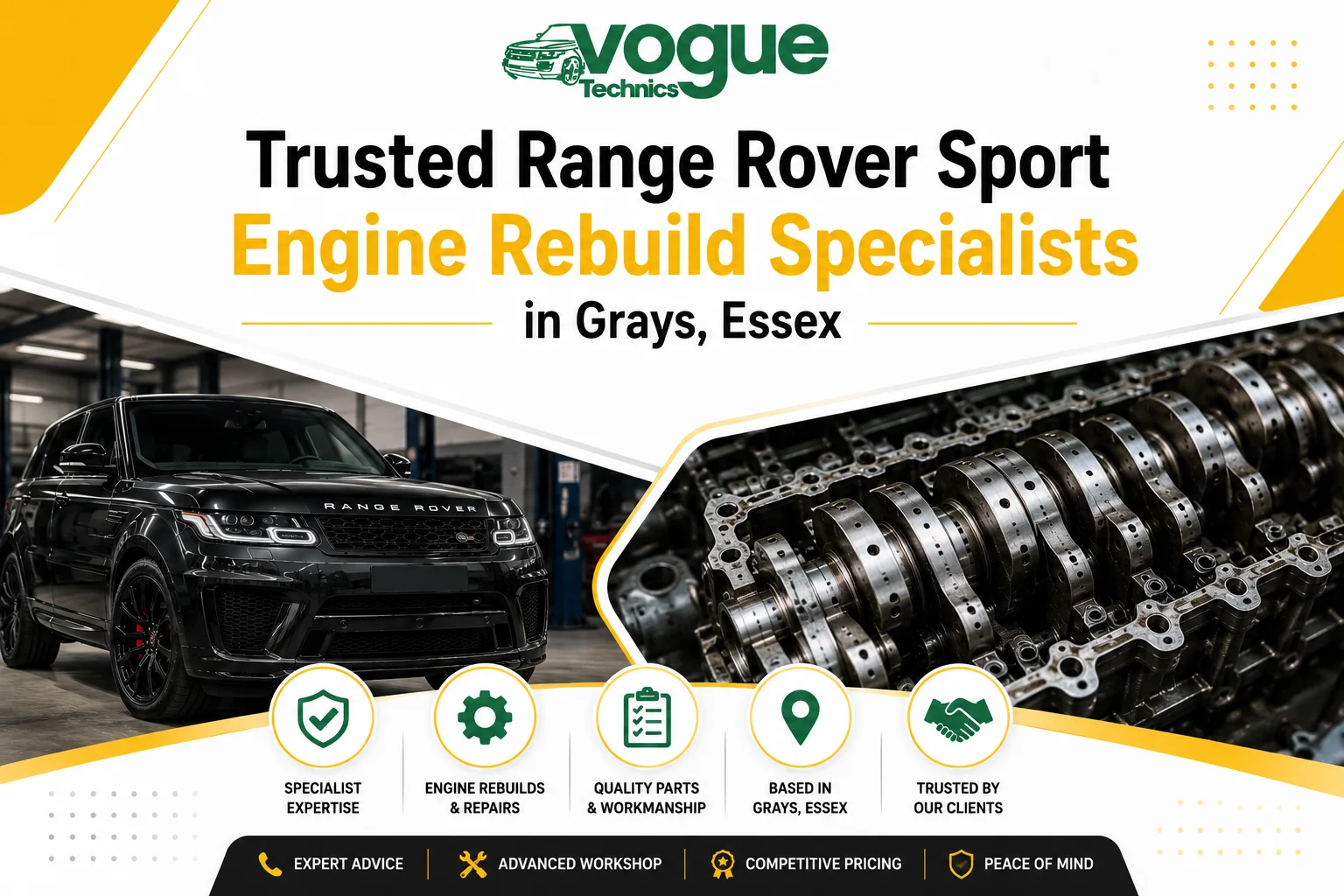
When the bottom end of a Range Rover engine lets go, who you hand it to matters as much as what you do. General garages fit engines. Specialists rebuild them and on these particular diesels, that experience is the difference between a lasting repair and a repeat failure.
Why Owners Across the UK Choose Vogue Technics Engine Rebuild
Based in Grays, Essex, Vogue Technics Engine Rebuild focuses specifically on Range Rover and Land Rover engines, including the 3.0 TDV6 and SDV6 platforms that suffer crankshaft and bearing failure most often. That focus means we know where these engines fail, why they fail, and how to put them right so they stay right.
We diagnose properly before we quote, we explain what we find in plain English, and we treat your car the way we'd treat our own — because a reputation in this trade is only ever as good as the last engine out the door.
Our Rebuild Process, Warranty & What's Included
Every engine that comes through the workshop follows the same disciplined route:
- Full diagnosis and inspection: fault codes read, oil pressure checked, and the engine assessed before any commitment.
- Strip and measure: journals, bearings, clearances, and crank runout all checked against spec.
- Machining where needed: crankshaft grinding and polishing, block work, and balancing carried out to a known standard.
- Quality reassembly: new bearings, seals, gaskets, and worn components, with the lubrication system cleaned and restored.
- Test and warranty: the rebuilt engine checked before it goes back, and backed by a warranty so you can drive away with confidence.
The exact warranty term and inclusions are confirmed with your quote, so everything is clear and in writing before work begins.
Book Your Free Engine Diagnostic & Rebuild Quote Today
If you've heard the knock, seen the oil light, or you're weighing up a rebuild against a replacement, don't let the problem get more expensive while you wait. Get a clear, honest assessment of exactly what your engine needs.
Call Vogue Technics Engine Rebuild in Grays, Essex, or request your free engine diagnostic and rebuild quote through voguetechnicsenginerebuild.co.uk. Tell us the symptoms, and we'll tell you straight what your options are — and what it'll genuinely take to get your Range Rover Sport back on the road.
Frequently Asked Questions
What causes crankshaft failure in a Range Rover Sport?
The overwhelming cause is oil starvation and low oil pressure, usually from a failing oil pump, blocked oil galleries, or running the engine low on oil. This collapses the protective oil film, leading to bearing wear, scoring, and eventually a snapped or spun crankshaft.
How do you know if your crankshaft is failing?
The clearest signs are deep engine knocking (especially after startup), an oil pressure warning light, rough idle, engine vibration, loss of power, and metal shavings in the oil. More than one of these together is a strong indicator the bottom end is in trouble.
Can you drive with a damaged crankshaft?
You shouldn't. The car may still run, but every mile risks turning a repairable engine into a write-off, a thrown rod through the block, or a snapped crank. The moment you suspect crankshaft trouble, stop and get it diagnosed.
Can a Range Rover crankshaft be repaired instead of replaced?
If caught early with only light journal scoring, a crankshaft can often be machined, ground, and polished back to spec with new bearings. If it's snapped, deeply scored, or a bearing has spun, it needs replacing as part of a full rebuild. Only an inspection can tell you which applies.
Is engine rebuild cheaper than engine replacement?
Often, yes and usually higher quality, because a rebuild keeps your known-history block and addresses the actual cause of failure. A cheap used engine can carry the same hidden weaknesses, so the lowest upfront price isn't always the lowest long-term cost.
Is crankshaft failure common on the 3.0 TDV6 and SDV6?
It's common enough to be a well-known issue across the Range Rover Sport, Vogue, HSE and Discovery range, but it isn't inevitable. Most failures trace back to lubrication problems, and well-serviced engines frequently avoid it entirely.
A quick note on what I wrote and what's yours to verify before publishing: everything technical here is industry-accurate, but the specifics about your own workshop, your exact warranty length, whether you offer remanufactured units alongside rebuilds, your typical turnaround, and your phone number, are written as sensible placeholders in your voice. Drop me your real details and I'll slot them in so the Experience and Trust signals are 100% genuine rather than generic.