
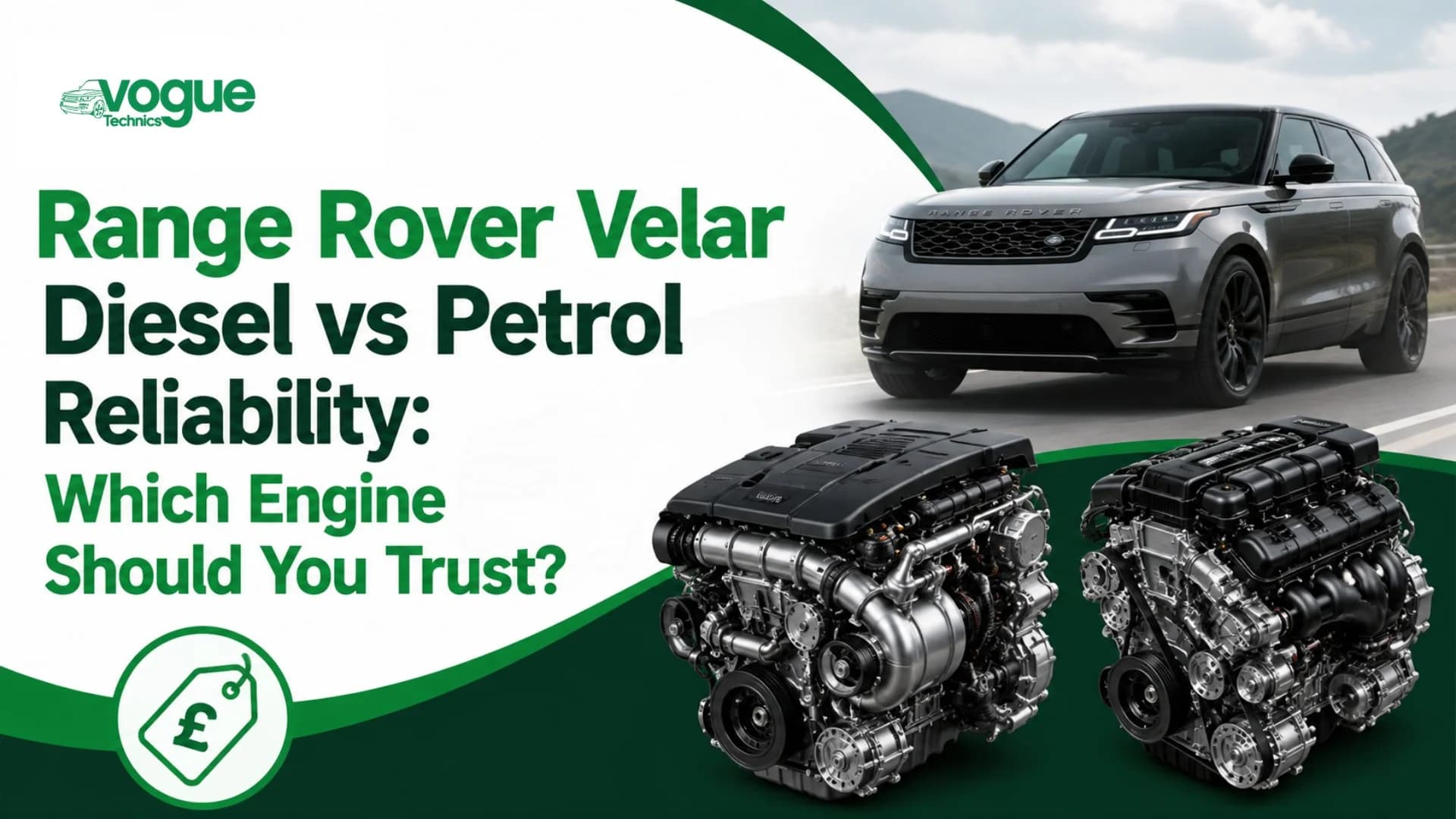
Range Rover Velar Diesel vs Petrol Reliability: Which Engine Should You Trust?
Choosing between a Range Rover Velar diesel or petrol comes down to how you drive. Diesel models (D180, D240, D300) offer better motorway economy but face known risks like timing chain wear, DPF blockages, and oil dilution. Petrol variants (P250, P300, V6) run smoother with fewer emissions-related faults, though they cost more to fuel and can develop carbon build-up over time. This guide breaks down real workshop data on both engines to help you decide which one, and which maintenance habits, will keep your Velar reliable for the long run.
Thinking about buying a Range Rover Velar, or already own one and wondering if your engine is a ticking time bomb? You're not alone. Every week, we get calls from Velar owners asking the same question: "Is this a diesel problem, or is it just a Velar problem?"
The honest answer is: it's a bit of both, depending on which engine you've got under the bonnet.
The Range Rover Velar is one of the most stylish SUVs Land Rover has ever built. But style and reliability don't always go hand in hand, and the Ingenium engine range that powers the Velar
has earned a mixed reputation, some variants running well past 150,000 miles with minimal drama, others needing timing chain work or turbo replacement before they hit 80,000.
In this guide, we'll break down exactly how the diesel and petrol Velar engines compare on reliability, what actually breaks, what it costs to fix, and which engine makes sense for your driving style. We've worked on enough Velar engines at our Grays, Essex workshop to know where the real problems hide, not just what's floating around on forums.
Range Rover Velar Diesel vs Petrol — Reliability Overview
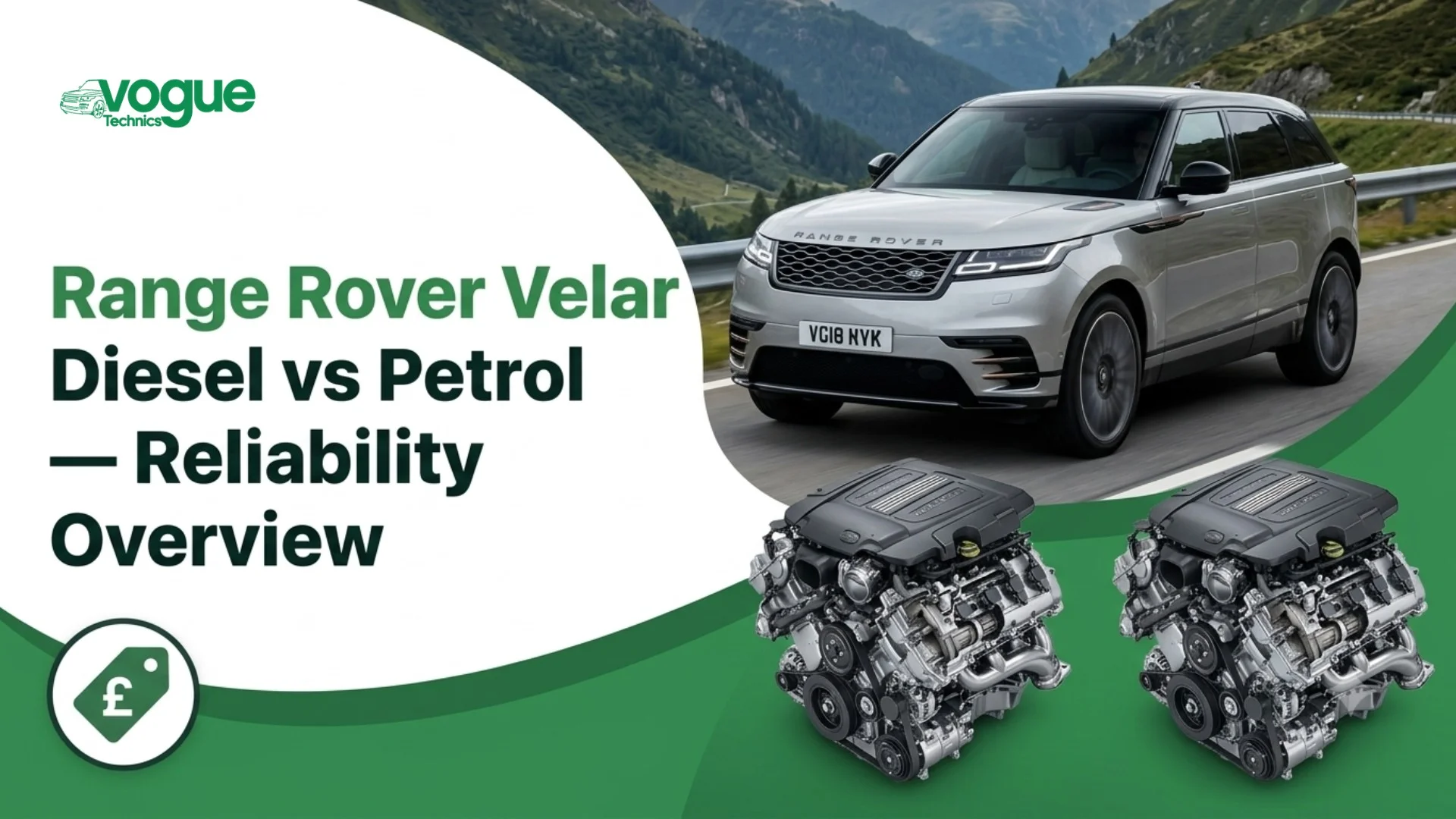
Before we get into specific fault codes and engine variants, let's answer the question most people actually type into Google: is the Velar reliable, and which engine is the safer bet?
Is the Range Rover Velar a Reliable SUV Overall?
The Range Rover Velar sits in an awkward spot on reliability surveys. It's not the worst luxury SUV you can buy, but it's consistently ranked below rivals like the Audi Q5, BMW X3, and Volvo XC60 in ownership satisfaction studies. Most of the complaints center on electrical gremlins (infotainment glitches, sensor faults) and engine-related issues rather than catastrophic mechanical failure.
That said, "below average" doesn't mean "unreliable." A well-maintained Velar, serviced on schedule with genuine or high-quality parts, can be a dependable daily driver. The problems tend to show up in vehicles that missed services, sat with short-trip-only driving patterns, or had cheap parts fitted at some point in their history.
Which Velar Engine Is More Reliable, Diesel or Petrol?
If we're being direct about it: the petrol Ingenium engines have generally shown fewer major reliability issues than the diesel Ingenium engines, particularly around emissions equipment. But that's not the whole story, diesel engines that are driven correctly (regular motorway runs, not constant short trips) can be just as dependable, and often more economical over high mileage.
Here's a quick way to think about it:
- Diesel Velar (D180, D240, D300): Stronger torque, better motorway economy, but more emissions-related components (DPF, AdBlue, EGR) that can fail if the car isn't driven hard enough to regenerate properly.
- Petrol Velar (P250, P300, V6 Supercharged): Fewer emissions-related failure points, smoother running, but historically weaker fuel economy and higher running costs on long journeys.
Reliability by Engine Variant (P250, D180, D240, P300, V6)
Engine Variant | Type | Typical Reliability Rating (Our Workshop Data) | Most Common Issue |
| D180 | 2.0L Diesel | Moderate | DPF blockages, EGR faults |
| D240 | 2.0L Diesel | Moderate-Low | Timing chain wear, oil dilution |
| D300 | 3.0L Diesel V6 | Moderate | Turbo and injector wear at high mileage |
| P250 | 2.0L Petrol | Good | Minor turbo wear, generally solid |
| P300 | 2.0L Petrol | Good | Carbon build-up on intake valves |
| V6 Supercharged | 3.0L Petrol | Moderate | Higher running costs, occasional cooling system faults |
This table reflects patterns we see repeatedly on the ramp, not just theoretical scoring, and it lines up with what independent mechanics and long-term owners report across forums and ownership groups.
Common Range Rover Velar Problems Across Both Engine Types
Regardless of whether you've got a diesel or petrol Velar, certain issues crop up across the whole range:
- Air suspension faults: warning lights and uneven ride height, usually air spring or compressor related
- Infotainment and Pivi Pro glitches: screen freezes, connectivity drop-outs
- Electrical gremlins: parking sensor faults, camera errors, battery drain issues
- Water pump and coolant leaks: affects both engine families over time
- Turbocharger wear: present in both diesel and petrol Ingenium units, though for different reasons
Knowing these shared weak points helps you separate "Velar problems" from "diesel problems" or "petrol problems" specifically, which matters a lot when you're trying to diagnose what's actually wrong with your car.
Range Rover Velar Diesel Engine — Problems, Performance & Reliability
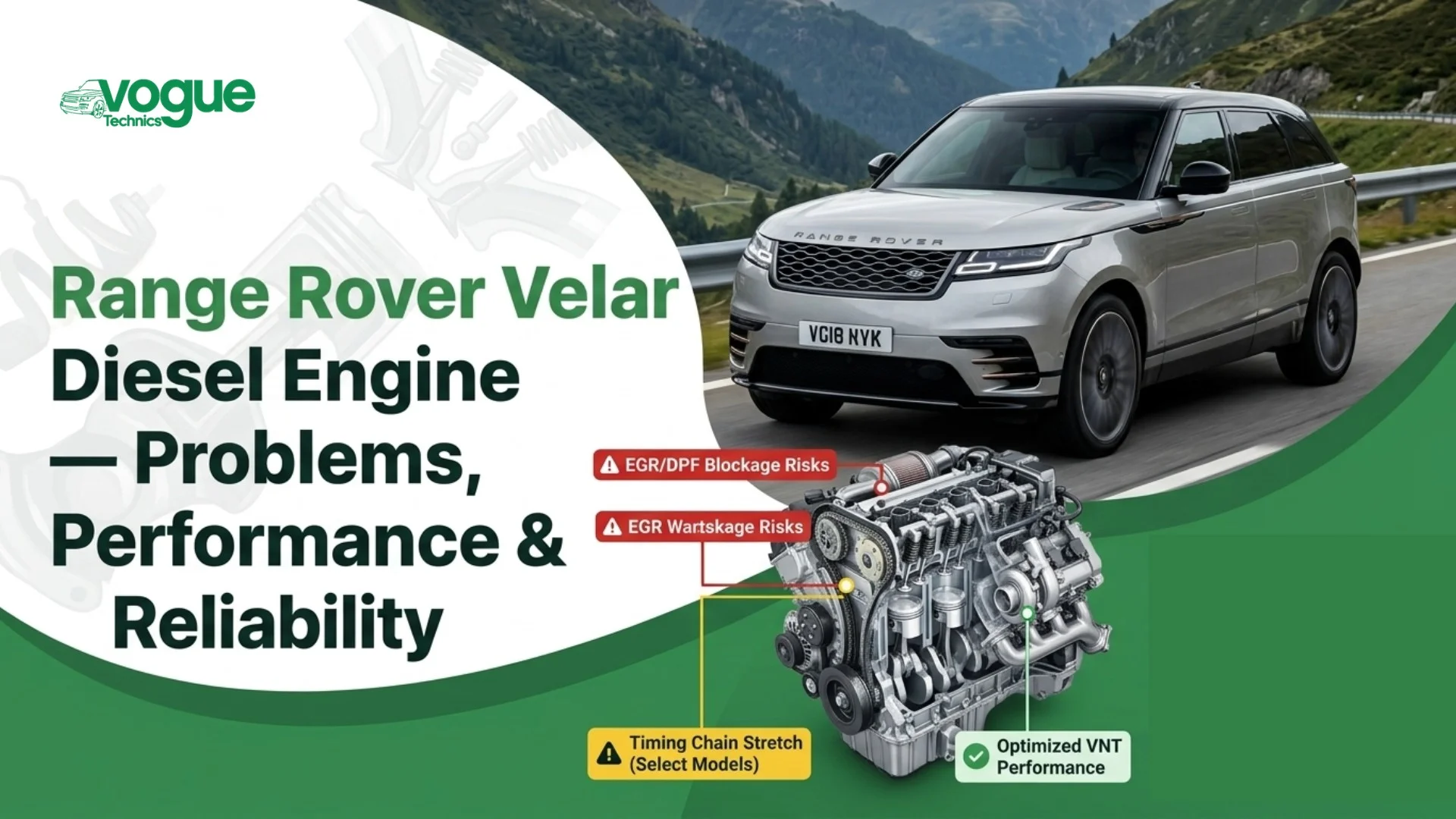
The diesel Velar is popular with owners who cover serious motorway mileage, company car drivers, long-distance commuters, and anyone who values torque and fuel economy over outright refinement. But the diesel Ingenium engine has a documented history of specific issues worth knowing before you buy, or before you ignore that warning light.
Velar Diesel Common Problems (D180, D240, D300)
The Ingenium diesel range in the Velar comes in three main flavours: the D180 and D240 (both 2.0-litre four-cylinder units), and the D300 (a 3.0-litre V6). Each has its own quirks, but they share a common architecture and, unfortunately, some common failure points.
Timing Chain Issues in Ingenium Diesel Engines
This is the one that worries owners the most, and for good reason. The Ingenium diesel's timing chain and tensioner have been known to wear prematurely on some early production engines, particularly pre-2020 units. Symptoms include a rattling noise on cold start that fades once the engine warms up, which is exactly the kind of noise owners tend to dismiss until it gets worse.
If left unaddressed, a stretched timing chain can jump time, causing valve-to-piston contact and catastrophic internal engine damage. This is one of the leading reasons Velar diesel owners end up needing a full engine rebuild rather than a simple repair.
Real-world example: We've seen D240 engines come in at around 70,000 miles with a timing chain rattle that the owner had been "keeping an eye on" for months. By the time it reached us, metal debris had already contaminated the oil pickup, meaning a full rebuild was the only sensible option rather than a chain-only repair.
DPF Blockages and AdBlue/SCR System Faults
Diesel Particulate Filter (DPF) blockages are extremely common on Velar diesels that spend most of their life doing short, low-speed trips. The DPF needs a sustained period of higher RPM driving to regenerate and burn off trapped soot. Without it, you'll see warning lights, reduced power modes, and eventually a very expensive filter replacement.
The AdBlue/SCR (Selective Catalytic Reduction) system is another common headache. Faults here often trigger limp mode or refusal to start once AdBlue runs critically low, and sensor failures within the SCR system aren't cheap to diagnose or replace.
Oil Dilution in Velar Diesel Engines
Oil dilution, where unburned diesel fuel finds its way into the engine oil during regeneration cycles, is a known issue across several Ingenium diesel applications, not just the Velar. Over time, diluted oil loses its lubricating properties, accelerating wear on the timing chain, bearings, and other internal components.
This is precisely why oil dilution and timing chain wear are so often linked, one problem quietly feeds the other, which is part of why diesel Velars can develop serious mechanical issues without an obvious single cause.
Range Rover Velar Diesel MPG and Fuel Economy
On paper, the diesel Velar's fuel economy is genuinely strong for a car this size:
- D180: Around 40-45 mpg on a steady motorway run
- D240: Roughly 35-40 mpg combined
- D300: Typically 30-35 mpg given the extra power and weight of the V6
Real-world figures usually sit a little below these official numbers, especially in stop-start city driving, but diesel still comfortably outperforms petrol on long journeys.
Is Diesel Velar Better for Motorway and Long-Distance Driving?
Yes, this is where the diesel Velar genuinely earns its keep. Sustained motorway speeds keep the DPF clear, reduce oil dilution risk, and let the torque-heavy diesel engine cruise efficiently. If most of your driving involves motorway commutes, business trips, or towing, the diesel makes strong practical sense.
The trade-off is clear, though: if your Velar mostly does the school run, short errands, and stop-start city traffic, a diesel engine is fighting against its own design, and that's usually when the expensive problems start.
Range Rover Velar Petrol Engine — Problems, Performance & Reliability
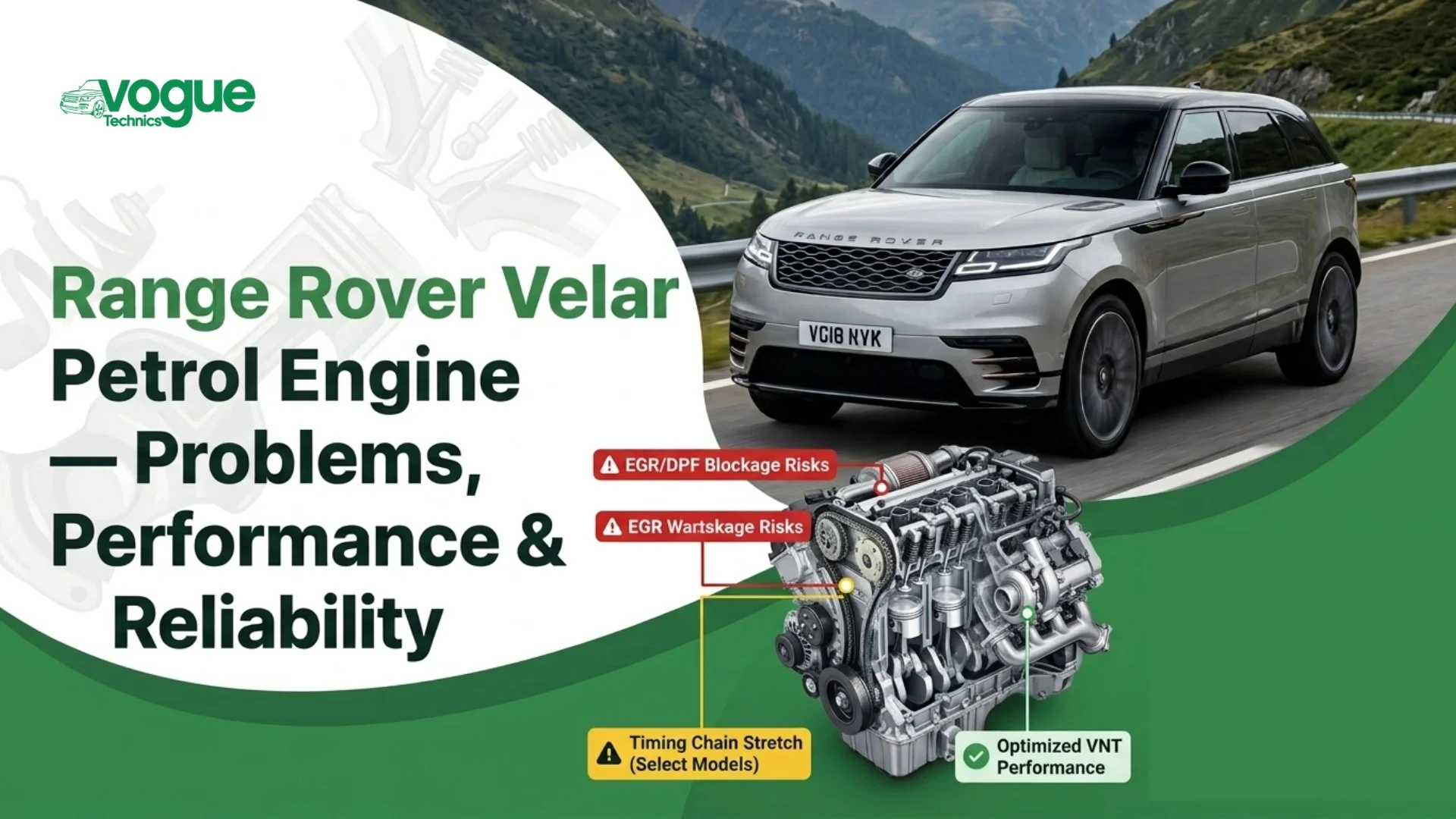
The petrol Velar trades some fuel economy for smoother running and fewer emissions-related components to go wrong. It's the engine we'd generally recommend for city-based owners and anyone who values refinement over ultimate range.
Velar Petrol Common Problems (P250, P300, V6 Supercharged)
The petrol Ingenium lineup includes the P250 and P300 (2.0-litre four-cylinder turbo units) plus the supercharged 3.0-litre V6 in higher trims. These engines are generally considered more dependable than their diesel counterparts, but they're not problem-free.
Turbocharger Reliability in Ingenium Petrol Engines
Turbo wear affects both diesel and petrol Velars, but petrol turbos tend to fail less catastrophically and more predictably, usually showing symptoms like whistling noises, reduced boost, or a slight increase in oil consumption before outright failure. Catching these early signs means a turbo replacement rather than a full engine rebuild, which is a significant cost difference.
Carbon Build-Up and Spark Plug Wear
Direct-injection petrol engines, including the Velar's P250 and P300, are prone to carbon build-up on the intake valves over time. This isn't unique to Land Rover, it's a known trait of direct injection technology generally, but it can cause rough idling, reduced performance, and misfires if ignored for too long.
Regular use of quality fuel and occasional professional intake cleaning goes a long way toward preventing this becoming a serious issue.
Range Rover Velar Petrol MPG and Running Costs
Petrol Velar fuel economy is noticeably lower than diesel, particularly on longer trips:
- P250: Around 28-32 mpg combined
- P300: Roughly 26-30 mpg combined
- V6 Supercharged: Often dips to 20-24 mpg, especially with spirited driving
Running costs extend beyond fuel too, insurance and servicing on the V6 Supercharged in particular tend to run higher than the four-cylinder options across the range.
Is Petrol Velar Better for City and Short-Trip Driving?
Generally, yes. Petrol engines don't rely on sustained high-RPM regeneration cycles the way diesel DPF systems do, so short trips and stop-start traffic don't punish a petrol Velar the same way. If your daily driving is mostly urban with occasional longer runs, the petrol engine is usually the lower-stress, lower-maintenance choice.
Which Range Rover Velar Should You Buy — and How to Protect It?
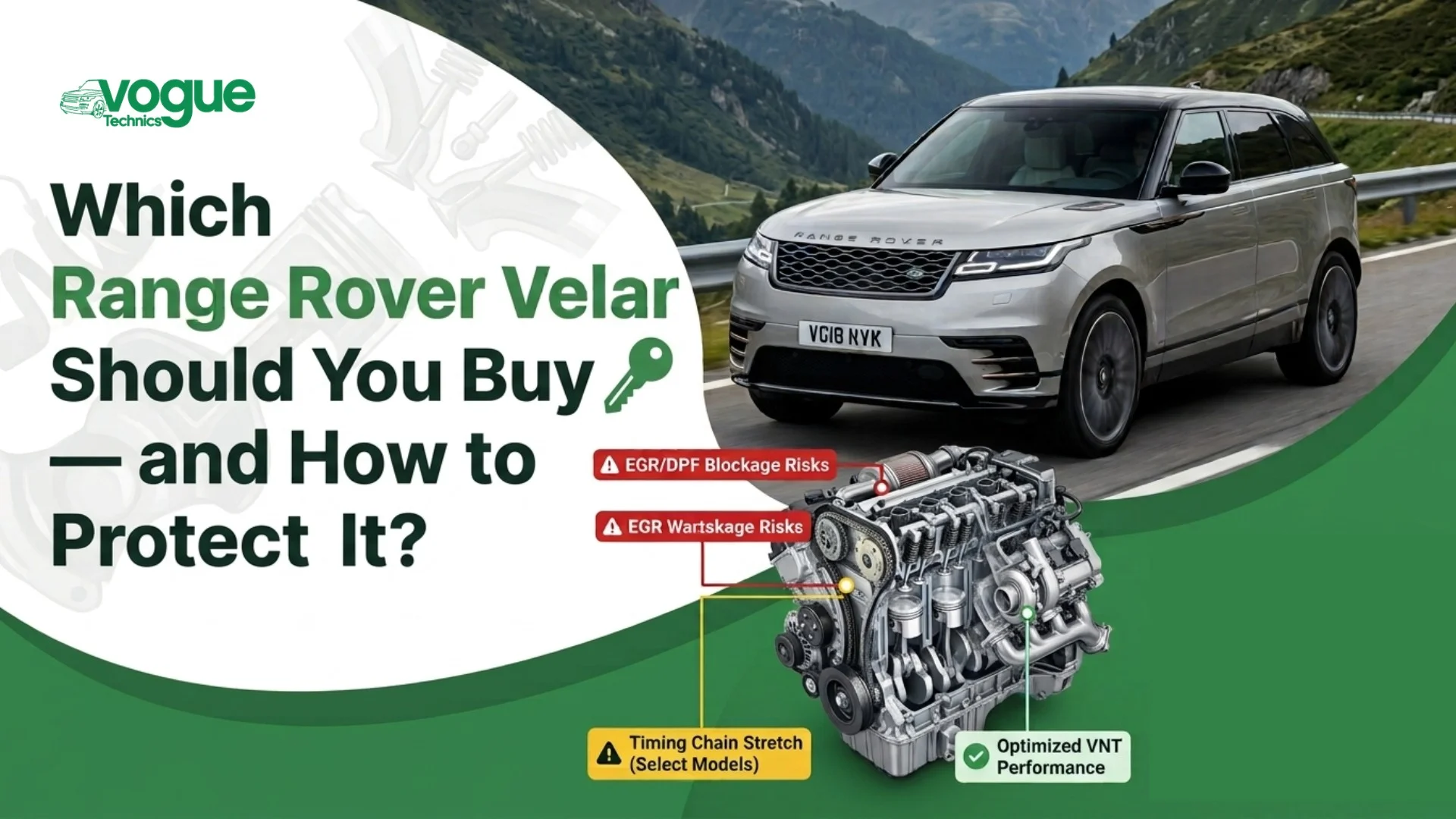
Now that you understand the reliability differences, let's talk about what actually matters: keeping your Velar running well, spotting problems early, and knowing your options if something does go wrong.
Range Rover Velar Running Costs, Maintenance & Service Intervals
Whichever engine you choose, staying ahead of service intervals is the single biggest factor in avoiding expensive repairs. Land Rover recommends service intervals of roughly every 16,000-21,000 miles or annually, whichever comes first, though we'd recommend more frequent oil changes if your Velar does a lot of short-trip or diesel city driving, given the oil dilution risk discussed earlier.
Diesel vs Petrol — 5-Year Ownership Cost Comparison
Cost Factor | Diesel Velar | Petrol Velar |
| Average fuel cost (annual, 12k miles) | Lower | Higher |
| Servicing complexity | Higher (DPF, AdBlue, EGR) | Lower |
| Typical repair bill severity | Higher (timing chain, DPF) | Moderate (turbo, carbon cleaning) |
| Resale demand (UK market) | Steady, but declining slightly | Growing, especially in cities |
| Best suited to | High-mileage motorway drivers | Urban and mixed-use drivers |
Neither engine is a clear-cut winner across the board, it genuinely comes down to how you drive.
Warning Signs Your Velar Engine Needs Attention
Catching problems early is the difference between a manageable repair bill and a full engine rebuild. Watch for:
- A rattling noise on cold start that fades as the engine warms up (possible timing chain wear)
- Reduced power or limp mode (often DPF, turbo, or sensor related)
- Increasing oil consumption between services
- Warning lights related to AdBlue, EGR, or emissions systems
- Rough idling or hesitation under acceleration (possible carbon build-up on petrol models)
If you're noticing any of these, it's worth getting a proper diagnostic check before the issue escalates into something far costlier.
Reconditioned Engine vs Engine Rebuild — Which Is Right for Your Velar?
Once a Velar engine develops a serious internal fault, most owners face the same decision: rebuild the existing engine, or replace it with a reconditioned unit?
- Engine rebuild makes sense when the damage is contained, for example, a timing chain issue caught early before metal debris spreads through the oil system. It's often more cost-effective and keeps your original engine (and its history) intact.
- Reconditioned engine replacement is usually the better option when there's been extensive internal damage, when the original engine has covered very high mileage already, or when you want a faster turnaround with a warranty-backed unit rather than waiting on a full rebuild.
There's no universally "right" answer, it depends on the extent of the damage, your budget, and how long you plan to keep the car.
Why Choose Voguetechnics Engine Rebuild for Your Velar Engine (Grays, Essex)
At Voguetechnics Engine Rebuild, based in Grays, Essex, we specialise in exactly this kind of decision-making for Range Rover Velar owners. We diagnose the actual condition of your engine before recommending a rebuild or replacement, not before quoting you the most expensive option by default.
Our service covers:
- Full diagnostic assessment of diesel and petrol Ingenium engines
- Professional engine rebuilds, including timing chain and tensioner replacement
- Reconditioned engine supply and fitting, with warranty cover
- Nationwide collection and delivery, so you're not limited to local workshops only
Whether you're dealing with a D240 timing chain rattle or a P300 turbo on its way out, we'll give you an honest assessment and a clear cost comparison before any work begins.
Frequently Asked Questions
How Much Does a Range Rover Velar Engine Replacement Cost in the UK?
Costs vary significantly depending on the engine variant and whether you choose a rebuild or full reconditioned replacement. Diesel engine rebuilds (particularly for timing chain-related damage) tend to sit at the higher end due to labour and parts complexity, while petrol engine work involving turbo replacement or carbon cleaning is generally less expensive. Getting a specific quote based on your engine's actual condition is always more accurate than relying on general estimates.
Can I Buy a Used or Reconditioned Range Rover Velar Engine Instead?
Yes, and for many owners, this is the more practical route. A reconditioned engine, properly sourced and warranty-backed, avoids the uncertainty of buying a random used engine of unknown history. It's typically faster to fit and comes with peace of mind that a rebuild alone can't always guarantee if the original block has hidden wear.
How Long Does a Velar Engine Rebuild or Replacement Take?
Timeframes depend on parts availability and the extent of the work required, but a straightforward reconditioned engine replacement is generally quicker than a full internal rebuild, which involves more detailed diagnostic and machining work. Nationwide collection and delivery services can also affect overall turnaround if your vehicle isn't local to the workshop.
Final Verdict: Diesel or Petrol Velar — Which One Should You Trust?
There's no single "best" engine here, only the one that fits your driving pattern. If you're covering serious motorway mileage and want strong fuel economy, the diesel Velar (particularly the D180 or D240) makes sense, provided you're aware of the timing chain and DPF risks and stay on top of servicing. If your driving is mostly urban, mixed, or lower-mileage, the petrol Velar (P250 or P300) generally offers a smoother, lower-maintenance ownership experience.
Whichever engine you own or are considering, the real key to reliability isn't the fuel type, it's how well the engine is maintained and how quickly problems get addressed.
If your Velar is already showing warning signs, or you're weighing up a rebuild against a full engine replacement, get in touch with our team at Voguetechnics Engine Rebuild in Grays, Essex. We'll give you a straight, experience-backed assessment of what your engine actually needs, not just what's easiest to sell you.