
Land Rover Oil Starvation: Causes, Symptoms and Engine Damage
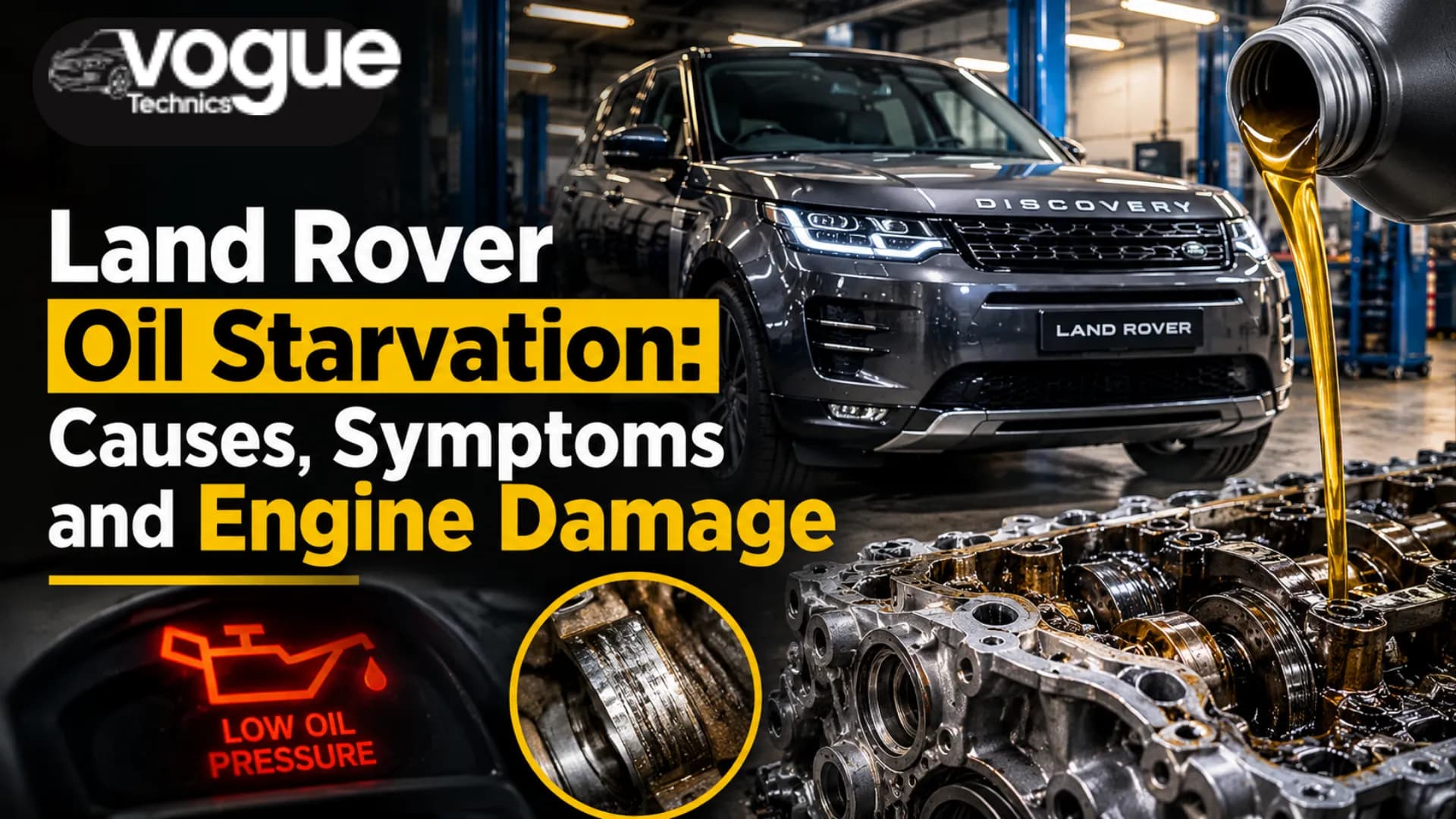
The oil pressure warning flickers on a cold morning, or a faint tapping starts when the engine is hot, and you tell yourself it can wait until the weekend. With Land Rover oil starvation, that delay is often what turns a repairable fault into a ruined engine. Land Rover engine oil starvation means the moving parts.
The oil pressure warning flickers on a cold morning, or a faint tapping starts when the engine is hot, and you tell yourself it can wait until the weekend. With Land Rover oil starvation, that delay is often what turns a repairable fault into a ruined engine.
Land Rover engine oil starvation means the moving parts inside your engine are not getting enough oil to keep metal from touching metal. It can come from a weak oil pump, a blocked pickup strainer, restricted oil galleries or a simple leak. Left alone, it wears the crankshaft bearings, scores the crankshaft journals and can end in complete engine seizure.
If a low oil pressure warning is on right now, stop the engine safely and do not restart it. Jaguar Land Rover's own guidance tells drivers to switch off and not run the engine until the cause has been found and fixed. Everything below explains why that advice matters, what is usually going wrong inside, and how a specialist engine rebuild workshop finds the answer.
If you already suspect damage, the team at Vogue Technics Engine Rebuild can talk through your symptoms and arrange a professional inspection before the problem gets worse.
What Causes Land Rover Oil Starvation, and How Do You Spot It?
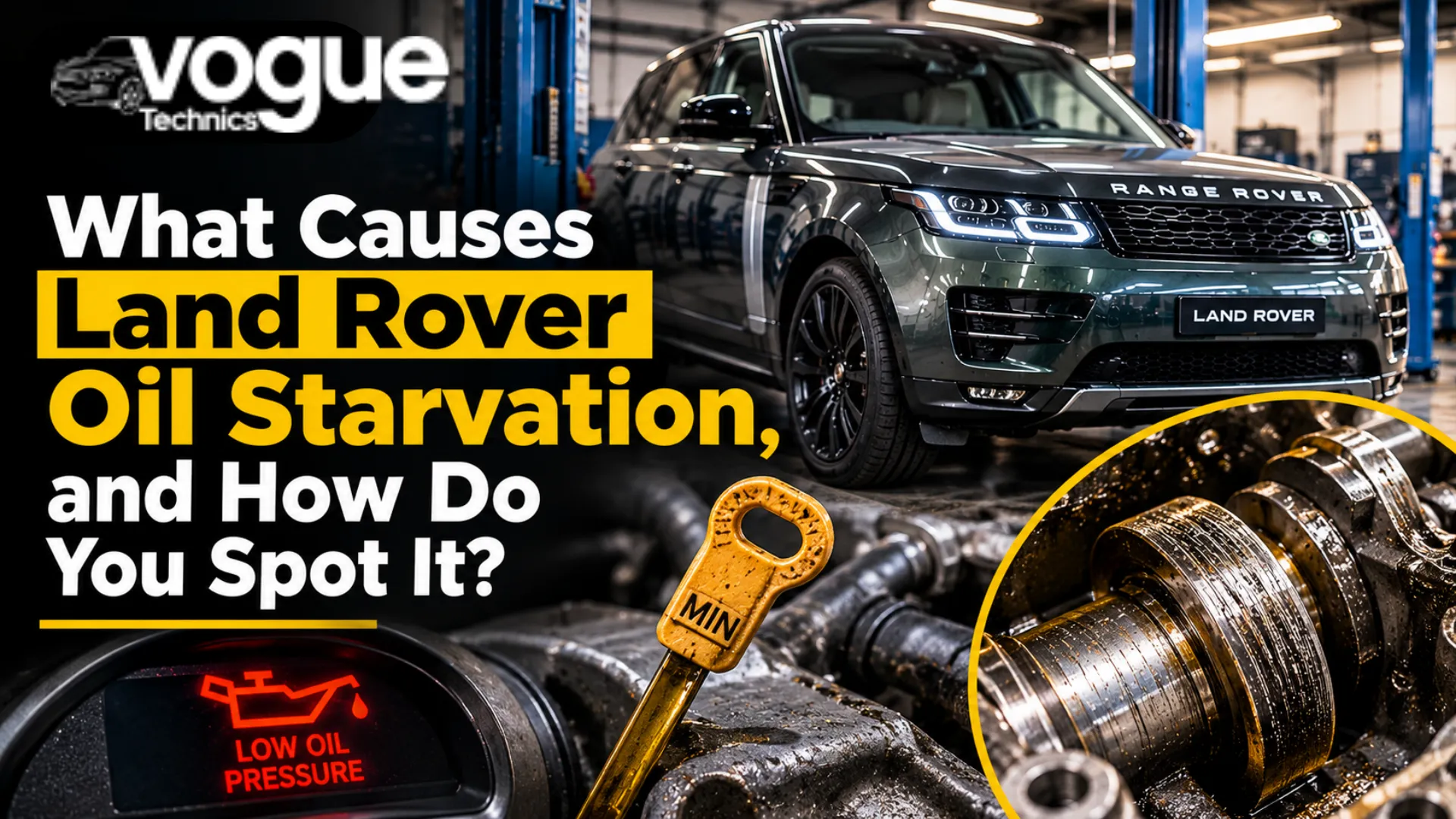
The causes and the warning signs belong together, because the earlier you connect a symptom to its cause, the more of the engine you can save. A Land Rover engine lubrication system is a chain, and a failure at any link reduces oil circulation to the bearings that need it most.
What Causes Oil Starvation in Land Rover Engines?
Oil starvation is an oil delivery problem, not only an oil quantity problem. A dipstick that reads full does not prove the engine is safe, because the oil still has to travel from the sump, through the pump and filter, along the oil galleries and into the bearings at the right pressure.
This is the most common point of confusion we see. Low oil level is one cause of starvation, but an engine can be starved with a healthy level in the sump. The main causes break down like this:
- Oil pump failure or reduced delivery. The pump creates the flow that feeds the whole engine. When it wears or its pressure relief valve sticks, oil pressure drops, often first at idle or when the engine is hot.
- Blocked oil pickup pipe or strainer. The strainer sits in the sump and filters larger debris before oil reaches the pump. If it clogs with sludge or fragments of material, the pump cannot draw enough oil.
- Restricted oil galleries. These internal passages carry oil to the crankshaft, camshaft and turbocharger. Deposits can narrow them, so a bearing may be starved even when the pump is working normally.
- Oil sludge and contamination. Neglected servicing, short trips and diesel dilution break down oil and leave deposits that restrict circulation. Sludge and degradation are related lubrication problems, but they are not the same thing as proven starvation, and a proper diagnosis separates them.
- Oil leaks and low level. Leaks from seals, gaskets or the oil cooler reduce the oil available. A slow leak that goes unnoticed for months is a classic starting point.
- Incorrect oil viscosity or specification. Oil that is too thick or too thin for your engine can struggle to reach tight bearing clearances, especially on a cold start.
A typical scenario shows how this plays out. A Discovery owner sees the oil level sitting just above minimum, tops it up and carries on. The real fault is a partly blocked pickup strainer, so the pump is quietly short of oil on every hard acceleration. The dipstick looked fine. The bearings were not.
If you are not sure whether your oil system is delivering properly, our Land Rover engine diagnostics can measure real pressure instead of guessing from a warning light.
What Are the Symptoms of Land Rover Oil Starvation, and Can You Keep Driving?
The short answer to the second half is no. Once oil pressure is genuinely low, every minute of running adds wear that cannot be undone. Here is what to watch for and what each sign usually points to:
Warning sign | What it may mean |
| Low engine oil pressure warning light | Oil pump fault, blocked pickup, severe leak or a failing sensor |
| Warning light but oil level is normal | Delivery problem such as a worn pump or restricted flow, or a faulty oil pressure sensor |
| Oil pressure drops at idle or when hot | Worn pump or bearing clearances opening up |
| Knocking or rattling from the bottom end | Main bearing or big-end bearing damage |
| Metal particles in engine oil or filter | Bearing shells or crankshaft journals already wearing |
| Loss of power and rising temperature | Increased internal friction |
| Engine seizure | Final stage of lubrication failure |
Two of these deserve extra attention. Metallic debris in the oil is a serious red flag, because it means material is already coming off the bearing surfaces. Engine knocking that follows an oil pressure warning usually means the damage has started.
A sensor fault can also trigger the light, so do not assume the worst or the best. What you must not do is keep driving to find out. Switch off, do not restart, and arrange recovery. Waiting to see if the warning clears is the single most expensive decision an owner can make.
Engine knocking after an oil pressure warning? Do not restart it. Contact Vogue Technics Engine Rebuild for a professional engine inspection.
Which Land Rover Engines Suffer Oil Starvation, and What Damage Does It Cause?
Any engine can be starved of oil, but certain Land Rover diesel engine families come up repeatedly in specialist workshops. Knowing which family sits under your bonnet helps you judge how seriously to take early warning signs.
Can Oil Starvation Cause TDV6 and SDV6 Crankshaft Failure?
It can contribute, and it is one of the factors specialists look for first. Crankshaft and bearing failures on these engines are rarely down to a single cause, so a responsible diagnosis looks at oil supply, servicing history and bearing condition together instead of blaming one component.
The engines owners ask about most are these:
- 2.7 TDV6. Found in the Discovery 3 and Range Rover Sport. It is known for bottom-end problems, and oil pump failure and previous periods of low lubrication are commonly raised as concerns.
- 3.0 TDV6. Fitted to the Discovery 4 and Range Rover models. Owners often report oil pressure problems and bearing wear on higher-mileage examples.
- 3.0 SDV6. Used in the Range Rover Sport and Discovery. Crankshaft and bearing damage is a recognised area of concern, and early diagnosis matters.
- 2.0 Ingenium. Found across Discovery Sport, Evoque, Velar and Defender. Here the lubrication story is different. Jaguar Land Rover issued a service action for accelerated oil degradation in certain 2.0 litre petrol versions under arduous use, with extra early oil and filter changes advised. A separate recall dealt with an incompletely drilled oil gallery in certain engines. These are oil degradation and gallery issues, not proof of oil starvation, though they show how closely lubrication and engine health are linked.
The practical point for owners is that the AJD-V6 family behind the TDV6 and SDV6 has well-documented bottom-end failure patterns. If your Range Rover Sport or Discovery 4 shows low oil pressure, knocking or metal in the oil, treat it as an engine-damage risk, not a minor fault.
If you drive one of these models, speak to our TDV6 and SDV6 engine specialists before a small symptom becomes a seized crankshaft.
How Does Oil Starvation Damage Main and Big-End Bearings and the Crankshaft?
Bearings live on a thin film of pressurised oil. They should never touch the crankshaft. Oil starvation removes that film, and failure tends to follow a predictable sequence:
- The oil film thins. Pressure drops, and the bearing shells begin to make contact with the crankshaft journals.
- Bearing shells wear. The soft bearing material heats up, smears and breaks down, shedding metallic debris into the oil.
- Clearances open up. Worn main bearings and big-end bearings let the crankshaft move more than it should, which causes knocking and dropping oil pressure.
- Journals are scored. Debris and metal-to-metal contact scratch or score the crankshaft journals, which may then need machining or replacement.
- A bearing spins. Heat and friction can cause a shell to rotate in its housing, damaging the connecting rod or the block bore.
- The engine seizes or the crankshaft fails. In the worst cases the rotating assembly locks, or the crankshaft breaks.
The damage rarely stays in one place. Metal debris travels through the engine, and the turbocharger bearings, camshaft bearings and oil pump can all be affected. This is why a specialist inspects the whole lubrication path, not just the part that failed first.
How Is Land Rover Oil Starvation Diagnosed, Repaired and Prevented?
Once you know what to look for, the next question is what a proper repair looks like and whether it is worth doing. This is where a specialist workshop separates a real fix from an expensive guess.
How Do Specialists Diagnose Oil Starvation in a Land Rover?
A warning light tells you something is wrong. It does not tell you what. A structured diagnosis moves from the simple checks to the deeper ones, and each step either rules something out or confirms damage. A typical sequence looks like this:
- Check oil level, condition and specification. We confirm the correct grade is in the engine and look for dilution, sludge or contamination.
- Read engine fault codes. A diagnostic scan shows stored oil pressure faults and related engine management data.
- Run a mechanical oil pressure test. A mechanical gauge measures actual pressure and ends the debate over whether the sensor is lying.
- Inspect the oil filter for metal debris. Fragments of bearing material here tell us a lot about how far the damage has progressed.
- Remove and inspect the sump and pickup strainer. Blockages, sludge and debris are easy to see once access is gained.
- Check the oil pump and pressure relief valve. Wear, scoring or a sticking valve explains many pressure faults.
- Inspect the oil galleries. Restrictions here can starve bearings even when the pump is healthy.
- Measure bearing clearances and examine the crankshaft. This is the stage that shows whether the bottom end can be saved.
Skipping steps is how engines get fitted with a new oil pump while the real problem sits in a blocked gallery, and then fail again. Careful diagnosis is also the honest way to give you a clear answer on repair, rebuild or replacement.
Book a Land Rover engine diagnostic with Vogue Technics Engine Rebuild, and you will know exactly where the fault lies before any repair decision is made.
Can a Land Rover Engine Be Repaired After Oil Starvation, and What Does It Cost?
Often yes, but it depends on how early the problem was caught and how far the damage spread. The repair path follows severity:
Option | Best suited to | What it involves |
| Oil pump or pickup repair | Caught early, no bearing damage | Replace or clean the faulty component, flush the system, replace the oil filter |
| Bearing and crankshaft replacement | Moderate bottom-end wear | Strip the engine, replace bearing shells, replace or machine the crankshaft |
| Full engine rebuild or reconditioning | Widespread internal damage | Complete strip-down, inspection, machining and rebuild with new components |
| Replacement engine | Severe damage or block failure | Fit a reconditioned or replacement engine |
Each route has trade-offs. A targeted repair costs less and takes less time, but only works if the bearings are genuinely undamaged. A full rebuild is more thorough and suits engines with widespread wear. A replacement engine can be the faster route when the block or cylinder head is beyond saving.
On cost, we do not quote blind. The final figure depends on these factors:
- Which engine you have, for example 2.7 TDV6, 3.0 TDV6 or 3.0 SDV6
- How much of the bottom end is damaged
- Whether the crankshaft can be machined or needs replacing
- The parts required and the labour involved
- The warranty and level of workmanship you want
Because every case differs, the only reliable way to get an accurate figure is a proper inspection. Request a Land Rover engine rebuild quote from Vogue Technics and you will get advice based on the actual condition of your engine.
Preventing it from happening again. Most oil starvation damage is avoidable. Use the correct Land Rover oil specification, change oil on time, and investigate leaks as soon as you see them. Pay attention to unusual noises, especially on a cold start. Drivers who mostly do short trips or stop-start journeys should service more often, because those conditions are harder on oil. If you ever see an oil pressure warning, stop immediately.
Frequently Asked Questions About Land Rover Oil Starvation
Can oil starvation destroy a Land Rover engine?
Yes. Without enough oil, the bearings, crankshaft and connecting rods wear rapidly. Severe cases lead to a spun bearing, crankshaft failure or complete seizure. Stopping immediately gives the engine its best chance of being repaired.
Why is my Land Rover oil pressure warning on when the oil level is normal?
The oil level only tells you how much oil is in the sump, not whether it is being delivered. A worn oil pump, blocked pickup strainer, restricted gallery or faulty sensor can all trigger the warning. A mechanical pressure test confirms which.
Can a faulty oil pressure sensor cause the warning?
It can, which is why testing matters. But never assume the sensor is at fault. Confirm the real pressure with a mechanical gauge before deciding the engine is safe.
How long can you drive with low oil pressure?
You should not drive at all. Even short distances can cause bearing damage. Switch off safely and arrange recovery to a specialist.
How often should Land Rover engine oil be changed?
Follow the interval for your specific model and engine, and shorten it if you do lots of short journeys, towing or stop-start driving. Always use the specification Land Rover recommends for your engine.
Oil starvation does its damage quietly and quickly, but the warning signs are usually there for those who act on them. A low pressure light, a new knock or metal in the oil are all reasons to stop and investigate, not to wait and hope.
If your Land Rover or Range Rover is showing any of these signs, contact Vogue Technics Engine Rebuild today. Our specialists will diagnose the fault, explain your repair and rebuild options clearly, and help you decide the right next step for your engine.