
Land Rover Engine Management Light Meaning: Causes, Warning Signs & What to Do
A Land Rover engine management light doesn't reveal the exact problem on its own, it simply signals that the ECU has logged a fault. This guide explains what a steady vs. flashing light means, common petrol and diesel causes (from fuel caps to EGR and DPF issues), and the fault codes behind them. It also covers when self-diagnosis is enough and when it's time to see a specialist. Voguetechnics in Grays, Essex offers expert diagnostics and full engine rebuilds for all Land Rover models.
That amber light just came on, and now you're wondering if you can still make it to work , or if your Land Rover is about to strand you on the A13.
Here's the honest answer: sometimes it's nothing more than a loose fuel cap. Other times, it's the first sign of a turbo, EGR, or DPF problem that gets more expensive the longer you ignore it.
This guide breaks down exactly what the engine management light means on a Land Rover, why it comes on, how to read what it's telling you, and when it's time to stop guessing and get a proper diagnosis. We'll cover every major model , Range Rover, Range Rover Sport, Evoque, Velar, Discovery, Discovery Sport, Defender, and Freelander , along with the petrol and diesel causes behind it, real fault codes, and what repair or engine rebuild costs typically look like.
What Does the Land Rover Engine Management Light Mean?
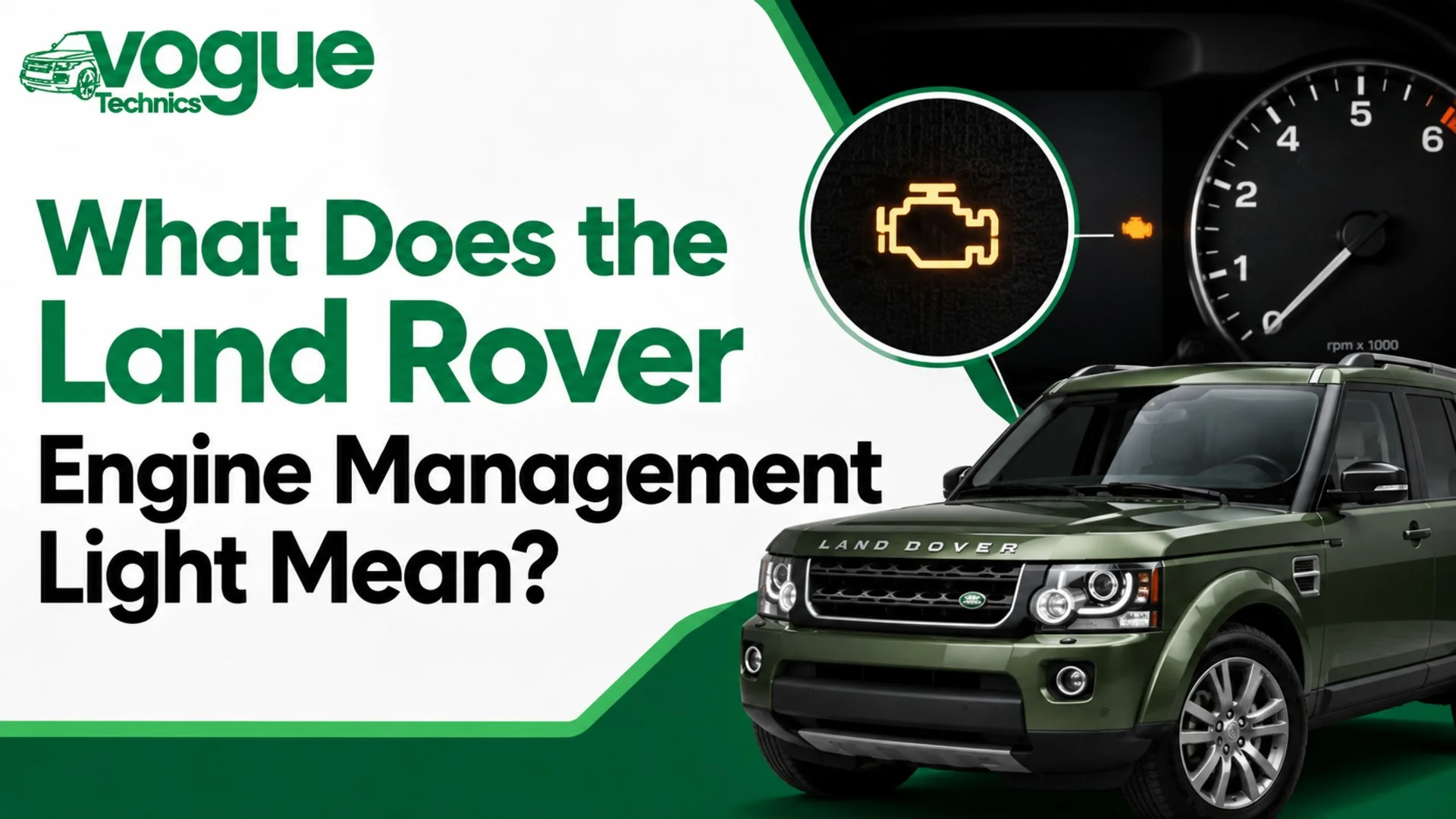
The engine management light (EML) is your Land Rover's way of saying the engine control unit (ECU) , sometimes called the powertrain control module (PCM) or engine control module (ECM) , has detected a reading outside its normal range.
It doesn't tell you exactly what's wrong on its own. It's a signal, not a diagnosis. Underneath that light sits a stored diagnostic trouble code (DTC), and that code is where the real answer lives.
Think of it like a smoke alarm. It tells you something triggered it , it doesn't tell you if it's burnt toast or an electrical fire. You need to look closer to know which one you're dealing with.
What's the Difference Between EML, MIL and Check Engine Light?
These three terms cause a lot of confusion, but they all refer to the same warning system:
- EML (Engine Management Light) , the term most commonly used in the UK and by Land Rover/Jaguar Land Rover technical documentation.
- MIL (Malfunction Indicator Lamp) , the formal, industry-wide term used in OBD/EOBD standards.
- Check Engine Light , the everyday term most drivers use, especially common in American usage.
Whichever name you've heard, they all point to the same thing: your engine management system has logged a fault and wants attention.
What Does a Steady Amber Engine Light Mean on a Land Rover?
A steady amber engine warning light usually means the fault is present but not immediately dangerous to drive with. It's your Land Rover telling you to get it checked soon , not necessarily today, but not next month either.
Common triggers for a steady amber light include:
- A loose or faulty fuel cap
- A failing oxygen sensor
- A developing EGR or DPF issue
- A sensor reading drifting slightly out of range
What Does a Flashing Engine Management Light Mean?
A flashing engine management light is a different story entirely. This usually indicates an active misfire , meaning fuel is potentially reaching the exhaust system unburned, which can quickly damage your catalytic converter.
If your light is flashing:
- Reduce speed and avoid heavy acceleration
- Avoid long journeys until it's checked
- Get it looked at as soon as possible, ideally the same day
Can You Drive With the Engine Management Light On?
It depends on the behaviour of the light and how the car is performing.
Situation | Can you drive? |
| Steady amber light, car drives normally | Yes, but get it diagnosed soon |
| Steady amber light + rough running or poor power | Drive cautiously, book diagnostics promptly |
| Flashing amber light | Avoid driving if possible, seek help urgently |
| Engine light + red warning light together | Stop the vehicle safely, do not continue driving |
| Engine light + visible smoke or overheating | Stop immediately, turn off the engine |
If in doubt, treat the situation with caution. A short-term inconvenience of booking a diagnostic check is far cheaper than driving through a developing fault and turning a sensor replacement into a full engine repair.
What Causes the Land Rover Engine Management Light to Come On?
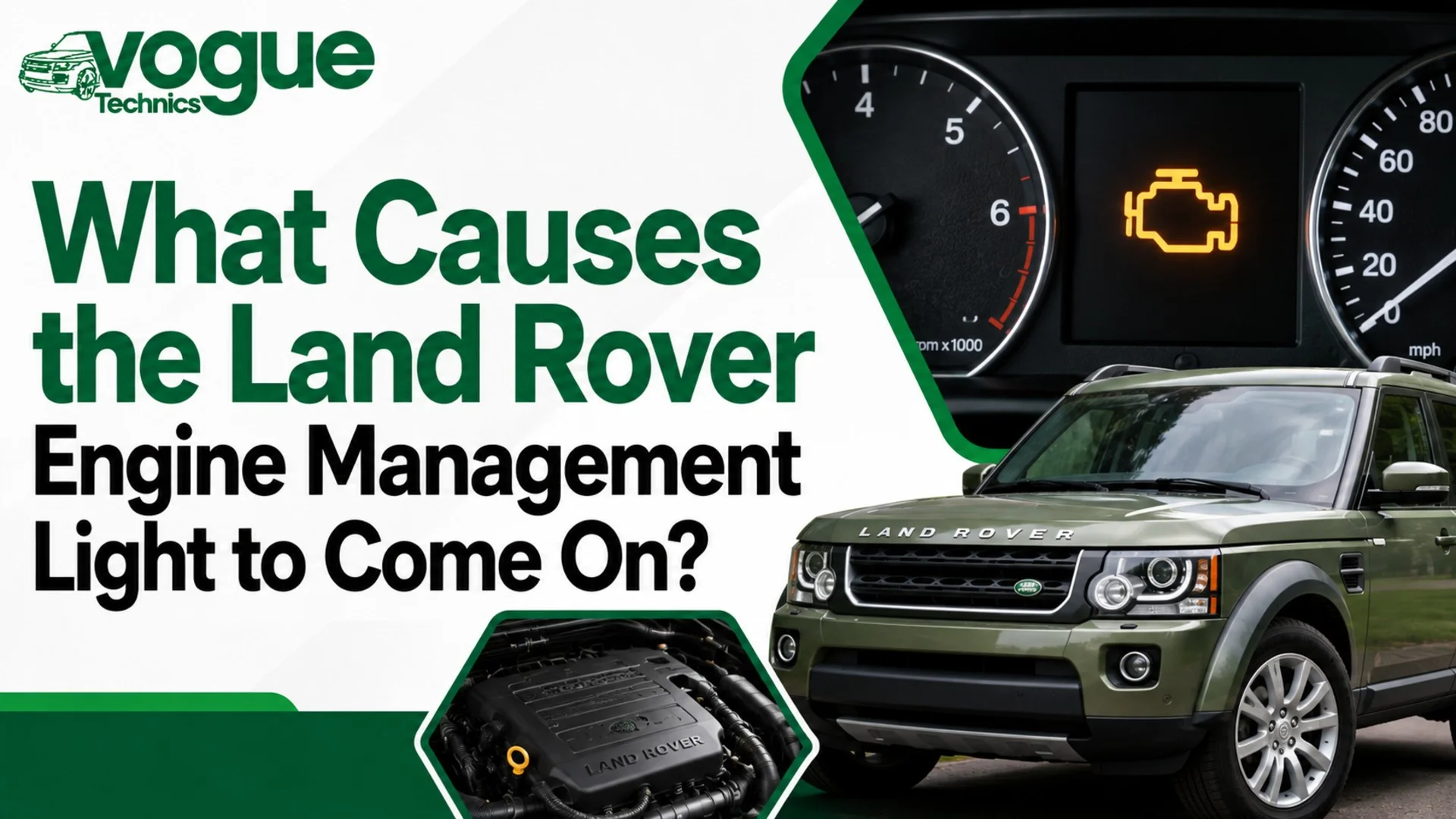
The causes behind an engine management light vary significantly between petrol and diesel Land Rovers, since the two engine types rely on different systems for combustion, emissions, and performance monitoring.
Common Causes in Petrol Engines
Petrol-powered Land Rovers , including many Evoque, Velar, and Range Rover Sport variants , tend to trigger the engine light through issues in the ignition and fuel-mixture systems.
- Spark plug or ignition coil failure , causes misfires, rough idle, and reduced power
- Oxygen (lambda) sensor failure , leads to an incorrect fuel mixture and poor fuel economy
- MAF (mass airflow) sensor problems , confuses the ECU about how much air is entering the engine, often causing hesitation or stalling
- Catalytic converter faults , usually triggered by prolonged misfires, showing up as reduced performance and a distinct smell
- EVAP system or fuel cap issues , one of the most common and least serious causes, often just requiring the cap to be tightened or replaced
Common Causes in Diesel Engines
Diesel Land Rovers , common across Discovery, Discovery Sport, and Defender ranges , more frequently trigger the light through emissions and boost-related systems.
- EGR valve problems , restricted exhaust gas flow can trigger reduced performance or limp mode
- DPF (diesel particulate filter) blockages , often caused by short journeys that prevent the filter from regenerating properly
- Turbocharger or boost pressure faults , including turbo underboost, a common trigger behind loss of power
- Glow plug failures , usually noticed as difficult cold starts alongside the warning light
- Injector faults , can cause rough idle, knocking noises, or excessive smoke
Which Land Rover Models Are Most Affected by This Warning?
While the engine management light appears across the entire range, certain models see it more frequently tied to specific systems, largely based on engine type and age.
Range Rover, Discovery & Defender Engine Warning Light Causes
- Range Rover and Range Rover Sport (diesel variants): commonly linked to EGR and DPF-related faults, particularly on vehicles used mostly for short urban trips
- Range Rover Evoque and Velar (petrol variants): more frequently tied to ignition coil, spark plug, and oxygen sensor faults
- Discovery and Discovery Sport: a mix of both, depending on engine , diesel models lean toward turbo and EGR issues, petrol models toward misfire-related causes
- Defender: newer Ingenium diesel engines can be sensitive to DPF regeneration issues, especially with frequent short-distance driving
- Freelander: older vehicles more commonly show oxygen sensor and MAF sensor wear due to overall vehicle age
How Do You Diagnose a Land Rover Engine Management Light?
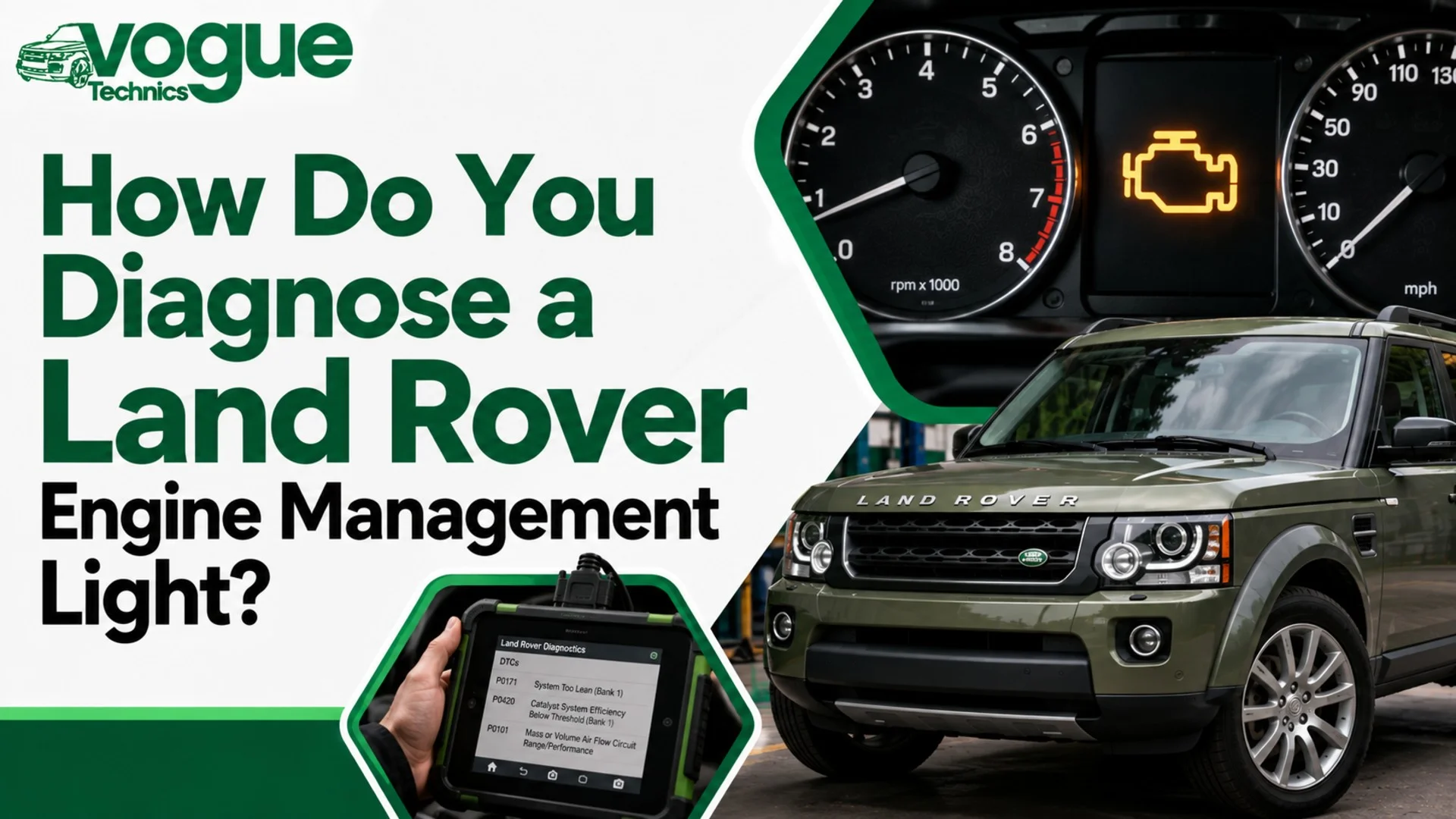
Guessing at parts and replacing them one by one is one of the most expensive ways to fix an engine fault. Proper diagnosis starts with reading the stored fault code, not swapping components and hoping.
How to Read Land Rover Engine Fault Codes
When the engine light comes on, the ECU stores a diagnostic trouble code that identifies the system involved. This is retrieved using an OBD-II or EOBD-compatible diagnostic scanner, plugged into the vehicle's diagnostic port.
A proper diagnostic session typically involves:
- Reading stored, pending, and permanent fault codes
- Reviewing live data (real-time sensor readings) to confirm the fault is active
- Checking freeze-frame data, which captures engine conditions at the exact moment the fault was logged
- Physically inspecting related components before any parts are replaced
Common Fault Codes That Trigger the Warning Light
Here are some of the most frequently seen fault codes behind a Land Rover engine management light:
Code | Meaning |
| P0171 | Fuel system too lean |
| P0172 | Fuel system too rich |
| P0299 | Turbo/supercharger underboost |
| P0300 | Random or multiple cylinder misfire |
| P0316 | Misfire detected on startup |
| P0401 | EGR flow insufficient |
| P0420 | Catalyst efficiency below threshold |
| P2002 | DPF efficiency below threshold |
| P0016 | Crankshaft/camshaft correlation fault |
| P0017 | Crankshaft/camshaft correlation fault |
These codes give a starting point, but they're not the full picture. A code like P0300, for example, points to a misfire , but the actual cause could be a spark plug, an injector, a vacuum leak, or a wiring fault. This is where experience with the specific engine matters.
When Should You See a Land Rover Specialist Instead of Self-Diagnosing?
A basic OBD scanner can tell you what code has been stored, but it won't tell you why. If any of the following apply, it's time to book a proper diagnostic session rather than continue guessing:
- The light keeps returning after you've cleared it
- You've replaced a part and the fault persists
- The vehicle has gone into limp mode or restricted performance
- You're hearing knocking, rattling, or unusual engine noises
- The light appeared alongside smoke, overheating, or a sudden loss of power
Clearing a fault code without fixing the underlying issue almost always brings the light straight back , often within a few miles.
How to Fix a Land Rover Engine Management Light (and What It Costs)
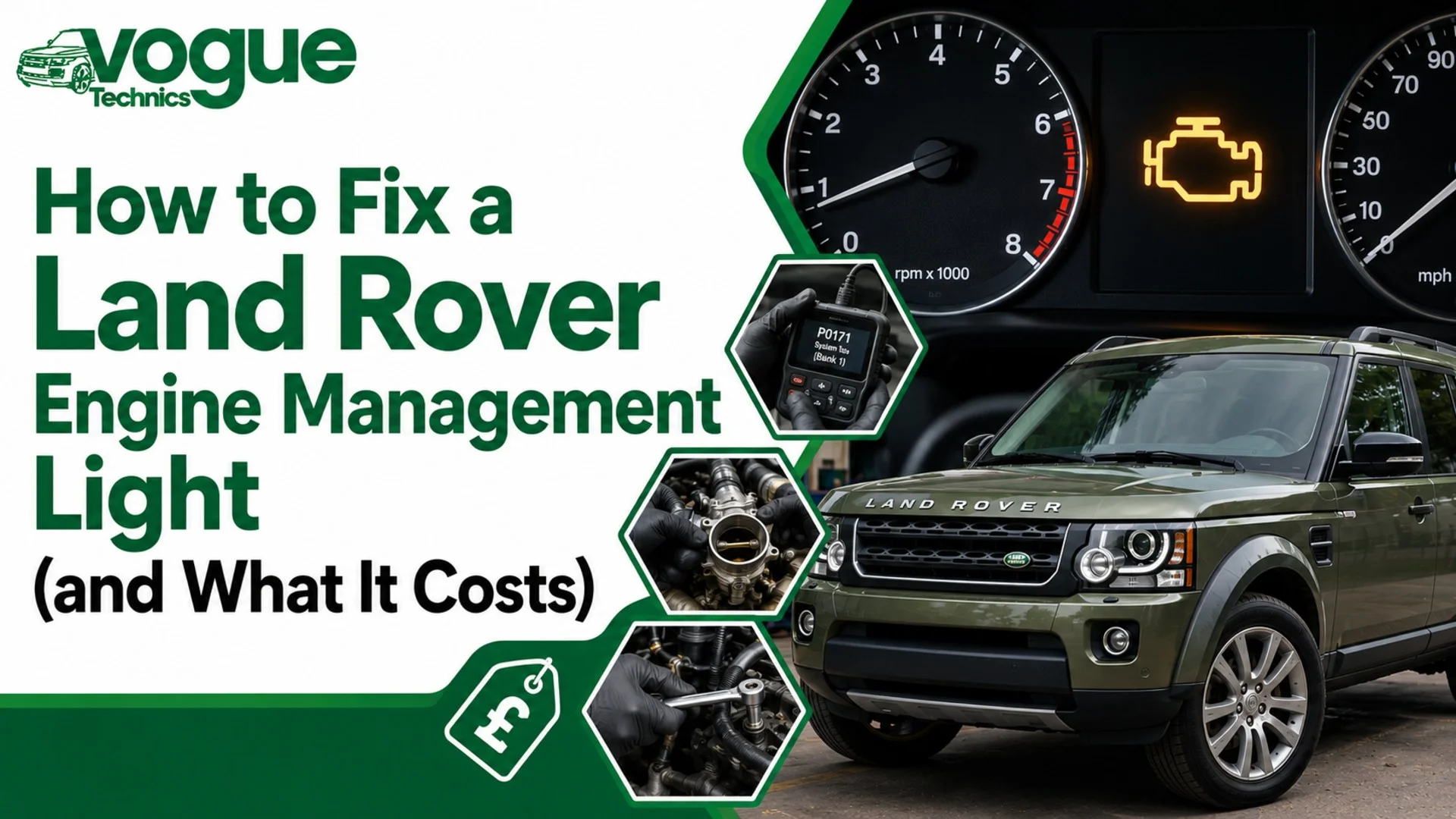
Once the cause is confirmed, the fix can range from a five-minute adjustment to a more involved repair. Cost depends entirely on what's actually wrong.
How Much Does Land Rover Engine Diagnostics Cost?
Diagnostic costs vary by garage and region, but as a general guide:
- Basic OBD fault code read: often low-cost or free at many garages
- Full diagnostic session (live data, freeze-frame analysis, sensor testing): typically a fixed diagnostic fee, which is usually credited toward the repair if you proceed
- Specialist Land Rover/JLR-approved diagnostic equipment: may cost more than a generic scan, but gives far more accurate results on newer Ingenium engines
It's worth asking upfront whether the diagnostic fee is deducted from the final repair bill , most reputable specialists do this.
When Does the Warning Light Mean You Need an Engine Repair or Rebuild?
Most engine management light triggers are fixable through sensor replacement, EGR cleaning, DPF regeneration, or coil/injector repair. But in some cases, the light is a symptom of deeper mechanical wear rather than a single failed part.
Signs the issue may go beyond a simple repair include:
- Persistent misfires that return despite ignition component replacement
- Metal particles or unusual debris found during an oil change
- Ongoing loss of compression across multiple cylinders
- Timing chain wear causing repeated crankshaft/camshaft correlation faults (P0016, P0017)
- A turbo that's failed more than once in a short period, suggesting oil supply or internal engine wear
In these situations, continuing to replace individual sensors treats the symptom, not the cause. At that point, a full engine diagnostic assessment , and potentially an engine repair or rebuild , becomes the more cost-effective long-term solution rather than repeated short-term fixes.
Why Choose Voguetechnics Engine Rebuild in Grays, Essex?
We work on Land Rover engines every day , not as a side job alongside general servicing, but as our core specialism. That means when a fault code points to something deeper than a sensor swap, we can tell the difference between a quick fix and a genuine engine condition issue, and explain exactly which one you're dealing with before any work begins.
Based in Grays, Essex, we handle everything from EGR and DPF-related diagnostics through to full engine rebuilds for petrol and diesel Land Rover models, including Range Rover, Discovery, Defender, and Evoque ranges. If your engine management light keeps coming back, or a previous repair hasn't solved the problem, we're happy to take a proper look and give you a straight answer.
Frequently Asked Questions
What does the Land Rover engine management light mean? It means your ECU has detected a fault somewhere in the engine management system and stored a diagnostic trouble code. It requires a scan to identify the exact cause, since the light itself doesn't specify which component is affected.
Why is my Land Rover engine management light on but the car drives normally? This is common with minor faults, such as a loose fuel cap or a slightly out-of-range sensor reading. The car can still run normally while the ECU logs the issue, but it's worth getting the code read to rule out anything more serious developing quietly.
Why does my engine light come on and then disappear? This usually means the fault was intermittent , the sensor briefly read outside its normal range and then returned to normal. The code is often still stored even after the light goes off, so it's worth having it checked rather than ignored.
Does a DPF problem cause the engine management light? Yes. DPF blockages are one of the most common causes on diesel Land Rovers, particularly those used mainly for short journeys that don't allow the filter to regenerate fully.
Can a bad oxygen sensor cause the engine light? Yes. A failing oxygen sensor is one of the more frequent triggers on petrol models, often accompanied by poor fuel economy and a rougher idle.
How do I turn off the Land Rover engine management light? Clearing the code with a diagnostic scanner will turn the light off temporarily, but unless the underlying fault is fixed, it will typically return. Clearing the code without addressing the cause isn't a real fix.
What does restricted performance or limp mode mean? This is a protective mode the ECU activates when it detects a fault serious enough to risk further damage if the engine keeps running normally. It limits power and speed until the issue is diagnosed and resolved.
How much does it cost to fix a Land Rover engine management light? It depends entirely on the cause , a fuel cap replacement costs very little, while a turbo or DPF repair costs considerably more. A proper diagnostic session is the only reliable way to know which category your fault falls into.
Final Thoughts
An engine management light on your Land Rover isn't something to panic over, but it's also not something to ignore. The difference between a five-minute fix and an expensive repair usually comes down to how quickly the fault gets properly diagnosed.
If your warning light has come on, keeps coming back, or you've already had it "fixed" without success, get in touch with our team at Voguetechnics Engine Rebuild in Grays, Essex. We'll read the fault codes properly, explain what they actually mean for your vehicle, and give you a clear, honest recommendation , whether that's a straightforward sensor repair or a full engine assessment.