
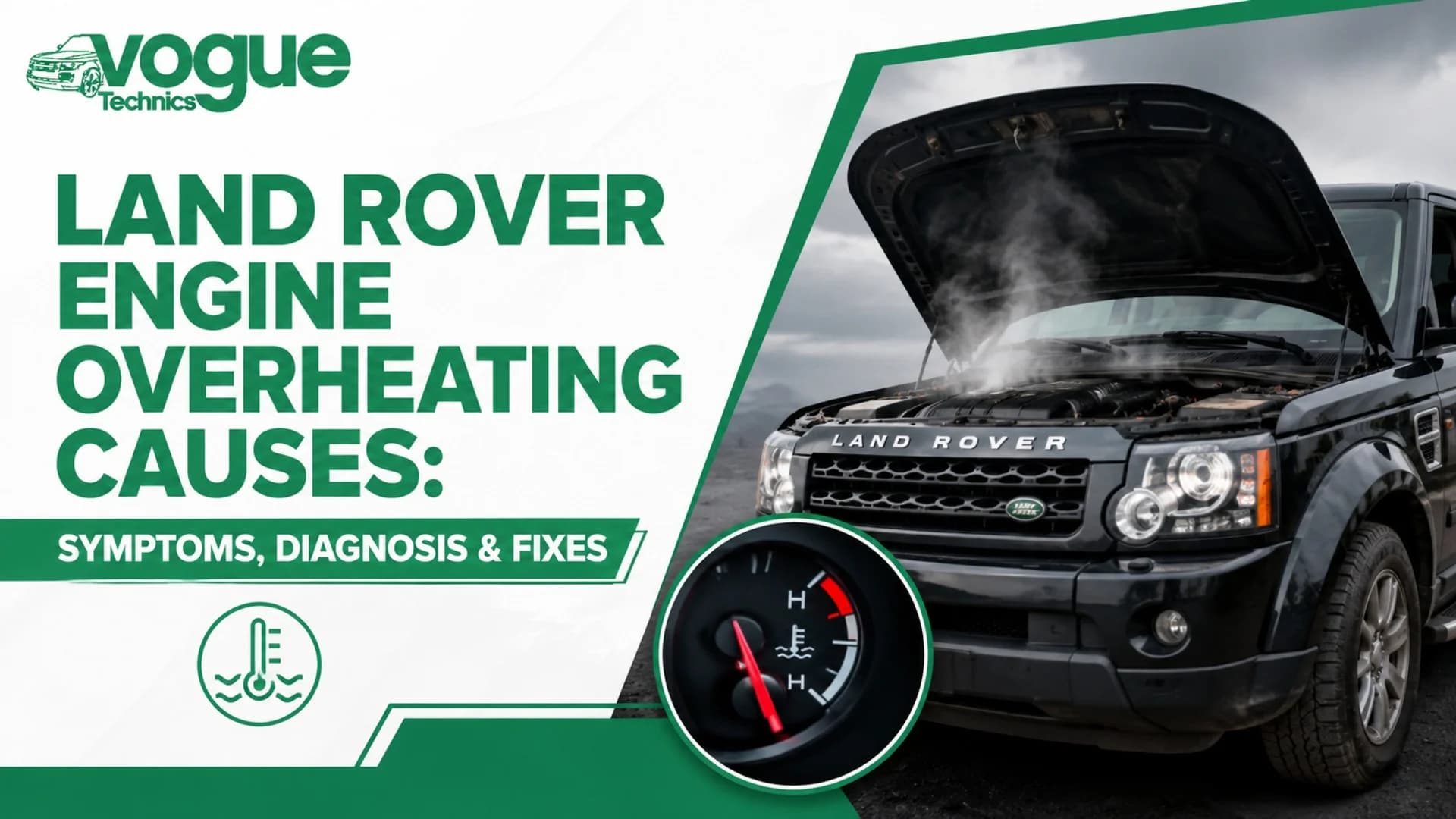
Land Rover Engine Overheating Causes: Symptoms, Diagnosis & Fixes
Land Rover engines can overheat due to several interlinked issues — from low coolant and leaking plastic pipework to failing thermostats, water pumps, and cooling fans. Left unresolved, these problems can progress to head gasket failure or serious engine damage. This guide breaks down the causes, situational symptoms, and diagnostic steps, plus what to do if your temperature gauge is climbing right now. Voguetechnics Engine Rebuild in Grays, Essex offers expert diagnosis and repair for all these cooling system faults.
Your temperature gauge is climbing, the warning light just flashed on, and you're not entirely sure whether to pull over now or try to make it to the nearest garage. If you're staring at a rising needle on your Land Rover, Range Rover, or Discovery right now, the short answer is: pull over safely, switch the engine off, and let it cool before you do anything else. We'll get to the step-by-step in a moment.
But first, let's answer the question that actually matters long-term: why does this keep happening, and what's really going on under the bonnet?
Land Rover engine overheating causes are rarely down to one single fault. In our experience working on Range Rovers, Discoverys, Defenders, and older LR3/LR4 models here in Grays, Essex, overheating is almost always the end result of a chain reaction, a small coolant leak that's gone unnoticed, a thermostat that's stuck at the wrong moment, or a cooling fan that's quietly stopped doing its job. The tricky part is that these faults often look identical on the dashboard but need completely different fixes.
This guide walks through the real causes, how to tell them apart, and what to actually do about it, whether that's a quick DIY check or a proper diagnostic at a workshop.
What Causes a Land Rover Engine to Overheat?
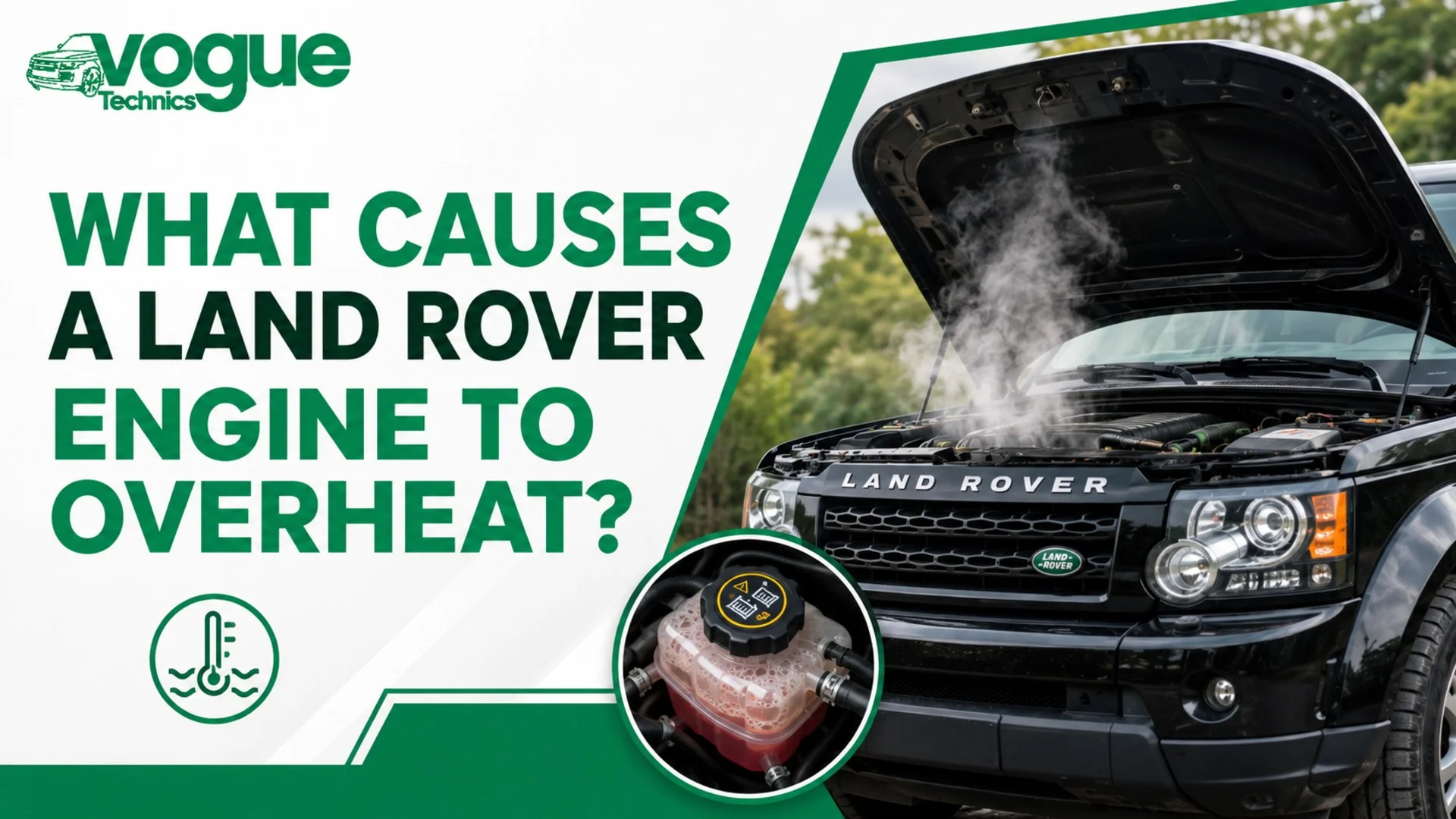
Land Rover's cooling systems are built to manage serious heat loads, especially on the larger V6 and V8 diesel and petrol engines. When that system fails at any point, even a small point, heat builds up faster than the engine can shed it, and your temperature gauge starts telling the story.
Here are the most common culprits we see on the ramp.
Low Coolant or a Coolant Leak
This is, by a wide margin, the most frequent cause of Land Rover overheating problems. Coolant does the heavy lifting of pulling heat away from the engine block and cylinder head. When the level drops, even by what seems like a small amount, the system loses its ability to regulate temperature properly.
Land Rovers, particularly Discovery and Range Rover models with plastic coolant pipework, are known for developing leaks at pipe joints and connectors as the plastic ages and becomes brittle. It's a well-documented weak point across the range rather than a one-off fault.
Where Land Rover coolant leaks commonly occur:
- Plastic coolant pipe connectors (a known issue on TDV6 and SDV6 diesel engines)
- The water pump housing and seal
- Radiator end tanks, where plastic meets the metal core
- Heater matrix connections behind the dashboard
- The expansion tank and its seams, especially on higher-mileage vehicles
If you're topping up coolant every few weeks with no visible puddle underneath the car, don't assume it's evaporating. It's more likely leaking internally or burning off, both of which need proper investigation, not just a top-up.
Faulty Thermostat (Stuck Open or Closed)
The thermostat is the traffic controller of your cooling system. It stays closed when the engine is cold to help it reach operating temperature quickly, then opens to let coolant flow through the radiator once things heat up.
When a thermostat fails stuck closed, coolant can't reach the radiator at all, and the engine temperature climbs rapidly, often within minutes of starting the car. When it fails stuck open, the engine may run cooler than normal or take a long time to warm up, which sounds harmless but can trigger its own set of running and emissions issues.
A useful diagnostic clue: if your upper radiator hose is hot but the lower hose stays cold, that's a strong sign the thermostat isn't opening and coolant isn't circulating through the radiator properly.
Failing Water Pump
The water pump physically drives coolant around the engine and through the radiator. If the impeller inside wears down, the pump loses its ability to circulate coolant fast enough, the coolant might be at the right level, but it's simply not moving where it needs to.
Common signs of a failing water pump include a high-pitched whining noise from the front of the engine, coolant leaking from the pump housing (often visible as a stain or drip near the pulley), and overheating that gets progressively worse the longer you drive.
Blocked or Damaged Radiator
The radiator is where heat actually leaves the system. Over time, radiators can clog internally with scale, corrosion, or old degraded coolant, or externally with road debris, insects, and mud, particularly relevant for Land Rovers that see genuine off-road use.
An internally restricted radiator often causes overheating that's worse at motorway speeds and under load, since the system is working hardest exactly when flow is most restricted.
Faulty Radiator Cooling Fan
The cooling fan pulls air through the radiator when the car isn't moving fast enough to do it naturally, think idling in traffic or crawling through a car park. If the fan motor, fan relay, or fan control module fails, the car can run perfectly fine on the motorway but overheat almost immediately at low speed or standstill.
This is one of the easier faults to diagnose from the driver's seat: if your Land Rover overheats mainly in traffic but seems fine once you're moving, the fan system is the first place to look.
Trapped Air in the Cooling System (Airlock)
This cause gets missed constantly, and it's one of the biggest gaps in most online advice about Land Rover overheating.
Why this happens after a coolant change or repair
If a cooling system has been drained and refilled, after a thermostat replacement, water pump job, or radiator swap, and it isn't bled correctly afterward, air pockets can get trapped in the system. That trapped air stops coolant from circulating properly through the highest points of the engine, even though the reservoir looks completely full.
Land Rover cooling systems, especially on V6 and V8 engines, are notoriously fussy about correct bleeding procedure. We regularly see vehicles come in overheating a few days after a DIY coolant top-up or a rushed repair elsewhere, purely because of trapped air rather than a new mechanical fault.
Head Gasket or Cylinder Head Damage
This is the cause nobody wants to hear, but it's important to flag honestly. If overheating has been ignored or gone undiagnosed for a while, the extreme heat can warp the cylinder head or blow the head gasket. Once that happens, you're often looking at combustion gases entering the cooling system, coolant loss with no external leak, and in more serious cases, coolant mixing with engine oil.
Signs to watch for include white smoke from the exhaust, a sweet burning smell, a milky residue under the oil filler cap, and coolant that disappears with no visible external leak. If any of these apply, this isn't a DIY fix, it needs a proper compression and combustion-gas test before anything else is touched.
Why Is My Land Rover Overheating in Specific Situations?
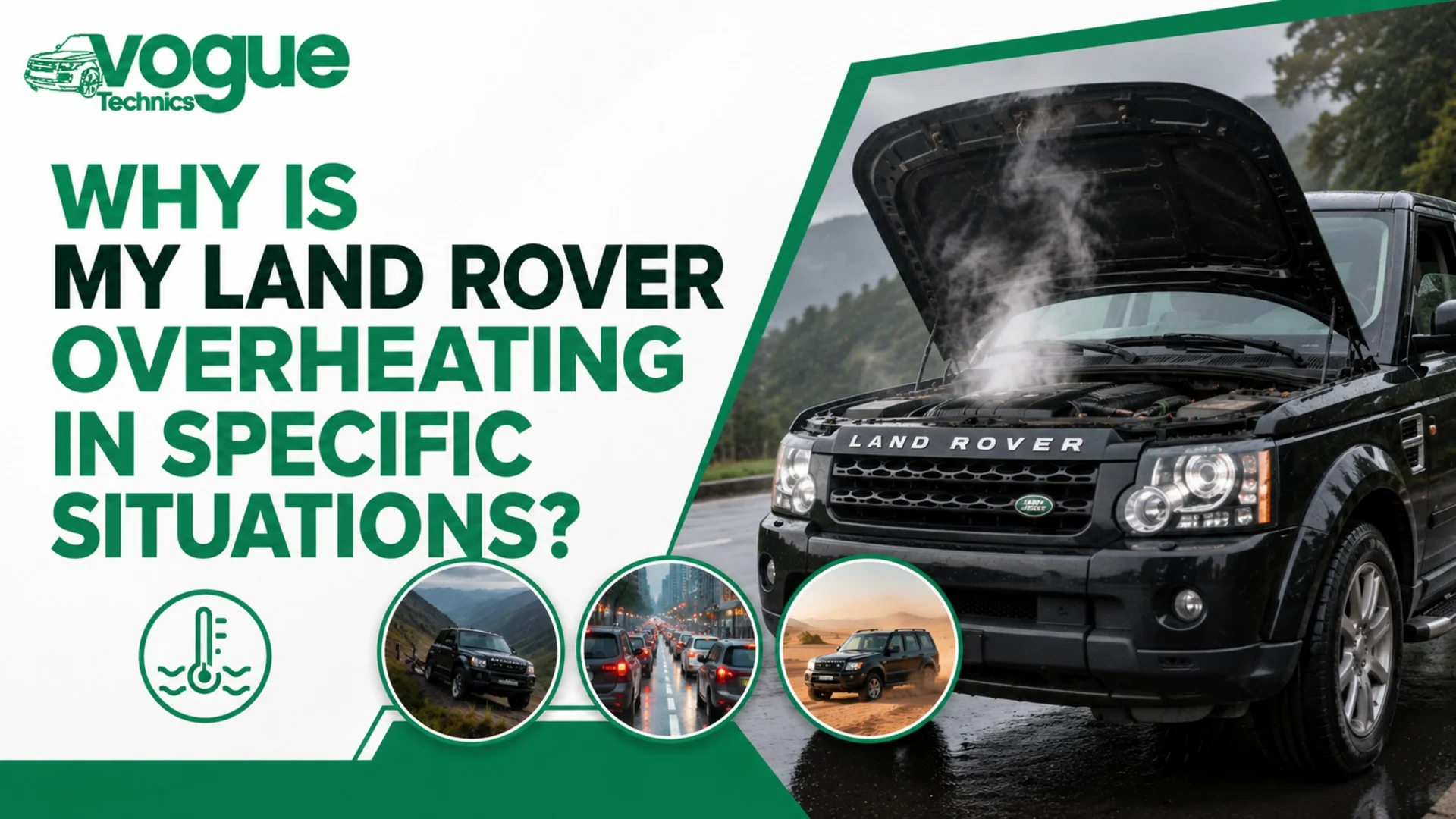
Not all overheating happens the same way, and when it happens tells you a lot about why it's happening. Below are the three scenarios we get asked about most.
Why Does My Land Rover Overheat at Idle or in Traffic?
If your temperature gauge climbs while you're stationary or crawling in traffic but drops back down once you're moving, the fault is almost always airflow-related, usually the cooling fan, fan relay, or fan control module. At speed, air is forced through the radiator naturally. At idle, the car depends entirely on the fan, so any fault there shows up immediately in exactly this scenario.
Why Does My Land Rover Overheat at High Speed or Under Load?
Overheating that gets worse at motorway speed, when towing, or when climbing hills points toward a different set of causes: restricted coolant flow, a partially blocked radiator, a weakening water pump, or the engine simply working harder than the cooling system can currently keep up with. This pattern suggests the system has reduced capacity rather than a complete failure, it copes fine under light load but can't handle sustained demand.
Why Is My Land Rover Overheating With a Full Coolant Level?
This one catches a lot of owners out, because the instinct is to assume "the coolant's full, so it can't be a coolant problem." In reality, a full reservoir doesn't guarantee proper circulation. This pattern is most often caused by a stuck thermostat, trapped air after a repair, or a water pump that's turning but not moving coolant efficiently. It's a good reminder that the coolant level and the coolant flow are two completely different things.
How to Diagnose a Land Rover Overheating Problem
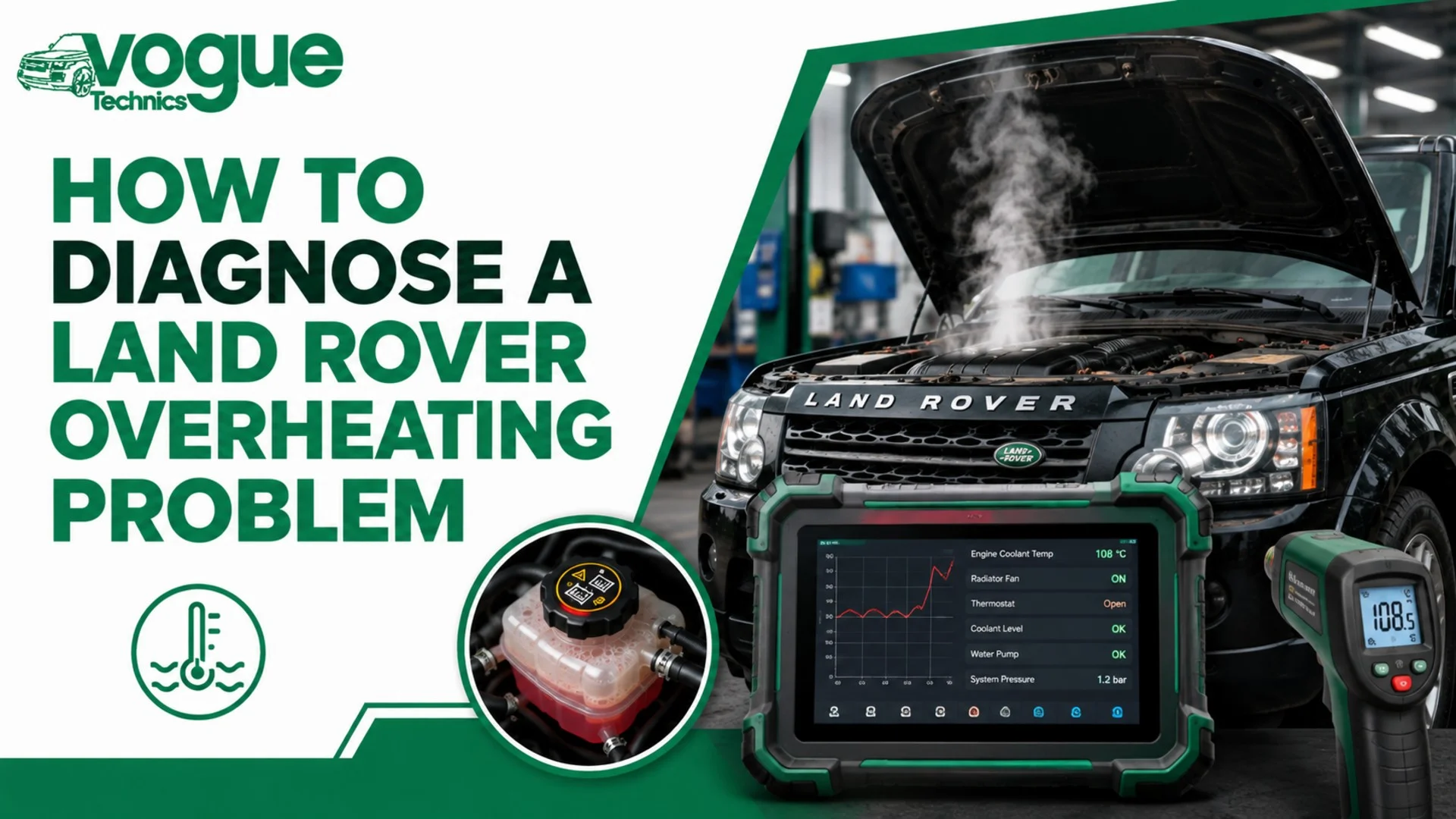
Before booking anything in, there are a few safe checks worth doing yourself. Beyond that, proper diagnosis needs the right tools, guessing at parts rarely fixes overheating for good and often costs more in the long run.
Quick Checks You Can Do Safely
Checking the coolant level and reservoir With the engine cold, check the coolant level against the min/max markers on the expansion tank. Never open a coolant cap on a hot engine, the system is pressurised and it can cause serious burns.
Inspecting hoses and the radiator cap for leaks Look along the visible coolant hoses, the radiator itself, and the areas around the water pump and heater matrix connections for staining, crustiness, or damp patches. A worn radiator cap that isn't holding pressure properly can also cause slow coolant loss and reduced boiling point.
A short visual check like this takes five minutes and can already point you toward whether you're dealing with a leak or something else entirely.
Professional Diagnostic Tests We Use
When a Land Rover comes into our workshop with an overheating complaint, we don't start by guessing and replacing parts one at a time. We work through a structured diagnostic process.
Cooling system pressure test We pressurise the cooling system to check whether it holds pressure. A system that loses pressure quickly points to an external or internal leak that might not be visible during a simple visual check.
Checking for combustion gases (head gasket test) Using a chemical block test, we check whether combustion gases are present in the coolant. This is one of the most reliable ways to confirm or rule out head gasket failure before recommending any major work.
When these tests point to a head gasket, not a thermostat If the block test comes back positive, replacing a thermostat or water pump won't solve the underlying problem, the head gasket itself needs attention, and depending on how long the engine has been running hot, the cylinder head may need to be checked for warping too. This is exactly why proper testing matters: it stops customers paying for the wrong repair twice.
Here's a quick reference for matching symptoms to likely causes:
Symptom | Most Likely Cause |
| Overheats at idle, fine at speed | Cooling fan or fan relay |
| Overheats at motorway speed or towing | Radiator restriction, water pump, coolant flow |
| Coolant disappears, no visible puddle | Internal leak, head gasket, or plastic pipe failure |
| Upper hose hot, lower hose cold | Thermostat stuck closed |
| Overheats days after a coolant top-up or repair | Trapped air / airlock |
| White smoke, sweet smell, milky oil cap | Head gasket / cylinder head damage |
This table isn't a substitute for proper testing, but it's a useful starting point for understanding what your Land Rover might be telling you.
Land Rover Overheating Repairs & Servicing in Grays, Essex
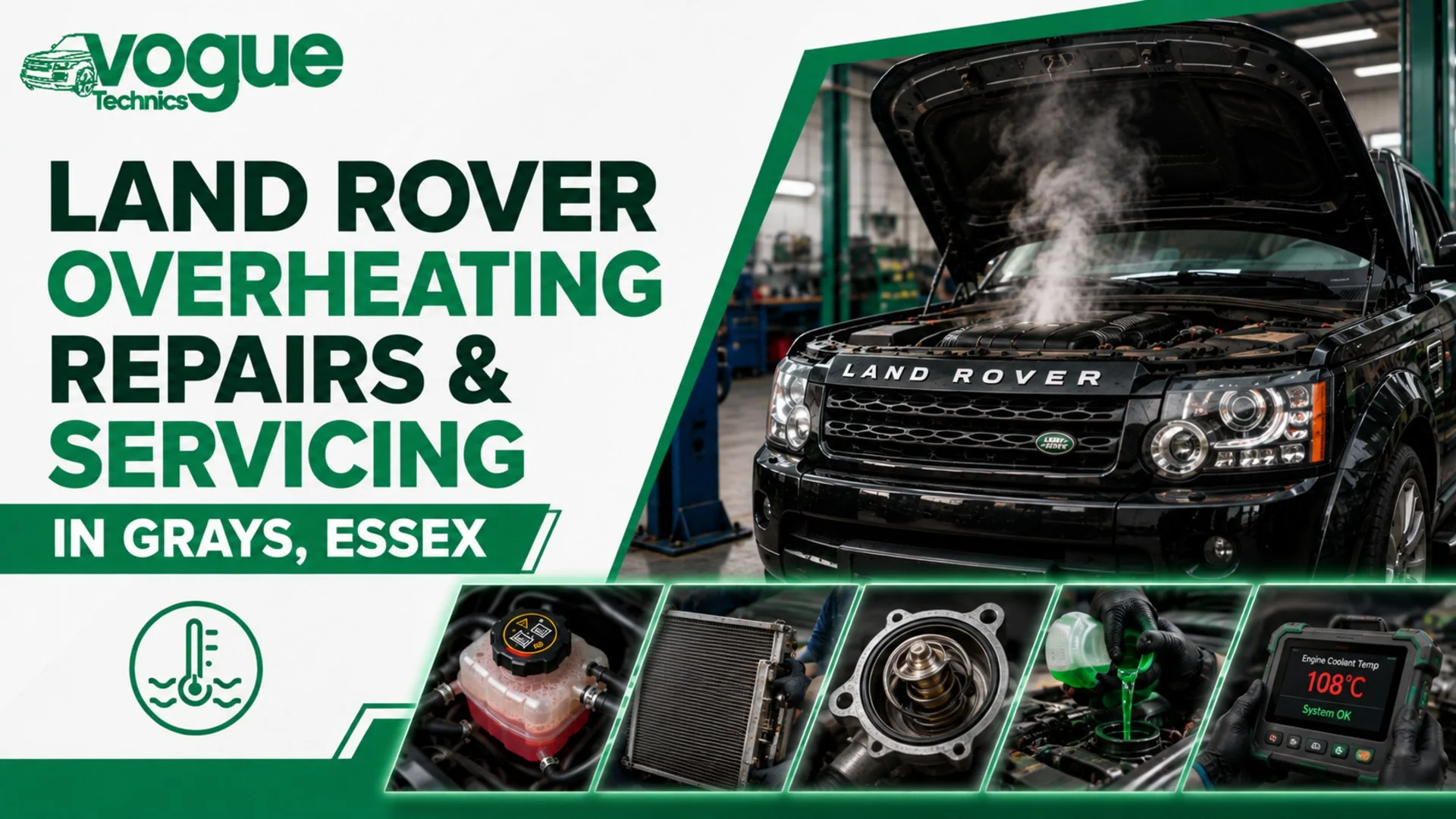
What to Do If Your Land Rover Overheats Right Now
If your temperature gauge is climbing while you're reading this in the car, here's the safe order of operations:
- Turn off the air conditioning and, if you can, turn the heater on full, it draws heat away from the engine
- Pull over safely as soon as possible and switch the engine off
- Don't open the coolant cap while the engine is hot
- Wait at least 20–30 minutes before checking anything under the bonnet
- Avoid driving further once the warning light has appeared, even if the temperature seems to be dropping, continuing to drive is what turns a repairable fault into head gasket damage
Once it's cooled and you've had a chance to check coolant levels safely, get it looked at properly rather than just topping up and hoping.
Our Land Rover Cooling System & Engine Repair Services
At Voguetechnics Engine Rebuild, based in Grays, Essex, we work specifically on Land Rover and Range Rover cooling and engine faults, not as a small side job, but as a core part of what we do day to day.
Thermostat, water pump & radiator replacement We carry out full diagnostic testing before any parts are replaced, so you're not paying for guesswork. Whether it's a straightforward thermostat swap or a full radiator and water pump replacement, we use quality parts suited to the specific engine variant rather than generic aftermarket substitutes.
Engine rebuilds for overheating-related damage When overheating has already caused damage, a blown head gasket, a warped cylinder head, or more extensive internal wear, we carry out full engine rebuilds rather than just patching the symptom. This is genuinely where a lot of our experience comes from: taking on Land Rover engines that have already suffered heat damage and rebuilding them properly, rather than fitting a head gasket and hoping the head itself is still true.
Book a Diagnostic With Voguetechnics Engine Rebuild
If your Land Rover, Range Rover, or Discovery has been running hot, losing coolant, or throwing an overheating warning, it's worth getting it checked before it turns into a head gasket or engine rebuild situation. We're based in Grays, Essex, and we specialise in exactly this kind of diagnostic and repair work on Land Rover engines. Get in touch to book a cooling system diagnostic and we'll tell you honestly what's going on, and what it'll take to fix it properly.
Frequently Asked Questions About Land Rover Overheating
Why is my Land Rover overheating but not leaking coolant? This usually points to an internal issue rather than an external leak, trapped air after a repair, a stuck thermostat, or in more serious cases, coolant being lost internally through a failing head gasket. A pressure test and block test will usually confirm which one it is.
Can low coolant cause a Land Rover to overheat? Yes. Even a partial drop in coolant level reduces the system's ability to absorb and transfer heat effectively, and it's one of the most common and easiest-to-miss causes of overheating.
Can a bad thermostat cause Land Rover overheating? Yes, and it's one of the more common causes. A thermostat stuck closed blocks coolant from reaching the radiator, causing rapid temperature increases, often within a few minutes of driving.
Why does my Land Rover overheat in traffic but not on the motorway? This pattern almost always points to the cooling fan, fan relay, or fan control module, since the car relies on the fan (rather than natural airflow) to cool the radiator at low speeds.
Is it safe to keep driving a Land Rover that's overheating? No. Continuing to drive once the warning light appears risks turning a simple, repairable fault into head gasket or cylinder head damage. Pull over, let it cool, and get it checked.
How much does it cost to fix a Land Rover overheating problem? It depends entirely on the cause, a thermostat or coolant leak repair is a relatively modest job, while head gasket failure or engine rebuild work is a bigger investment. Proper diagnosis before any repair is the best way to avoid paying for the wrong fix.
Why is my Land Rover overheating after a coolant change? This is often down to trapped air (an airlock) rather than a new mechanical fault. Land Rover cooling systems need to be bled correctly after a refill, and skipping or rushing that step is a common cause of overheating that appears a few days after otherwise straightforward work.
Overheating on a Land Rover is rarely just bad luck, it's almost always a specific, identifiable fault working its way through the cooling system, and the sooner it's properly diagnosed, the less it tends to cost to put right. If you're seeing any of the warning signs above, get it looked at before a coolant issue turns into a head gasket or engine rebuild job. Voguetechnics Engine Rebuild in Grays, Essex, is here to diagnose it properly the first time, get in touch to book your Land Rover in.