
Range Rover Velar Engine Problems: Symptoms, Causes & Trusted Repair Solutions in Essex
Range Rover Velar owners often face a familiar set of Ingenium engine issues — from timing chain wear and turbocharger failure to coolant leaks and oil dilution. This guide breaks down the most common symptoms, what triggers them, and what repair or replacement typically costs in the UK. It also explains when a full engine rebuild makes more financial sense than a like-for-like replacement, helping owners catch problems early before they become expensive.
Your Range Rover Velar just flashed a warning light, and now it's stuck in what feels like slow motion. Maybe it's losing power on the motorway. Maybe there's a rattle on cold mornings that wasn't there last winter. If you're searching for answers right now, you're probably not looking for a lecture on engineering, you want to know what's wrong, whether it's serious, and what it's going to cost you.
We get it. We've rebuilt more Ingenium engines than we can count, and the same handful of issues show up again and again. This guide walks through exactly what tends to go wrong with the Velar's engine, why it happens, and what your realistic options are repair, rebuild, or replacement.
What Are the Most Common Range Rover Velar Engine Problems?
The Range Rover Velar is a genuinely impressive vehicle to drive, but its engine lineup — built around Jaguar Land Rover's Ingenium platform, has a documented history of specific mechanical weak points. Whether you're running a 2.0 diesel D180, a D240, or a P250 petrol, the failure patterns tend to cluster around a few core systems.
Here's what we see most often on the ramp:
- Timing chain stretch and failure arguably the most notorious Ingenium issue
- Turbocharger wear, leading to power loss or complete failure
- Coolant loss and overheating, often from cracked housings or failed water pumps
- Oil dilution, where unburnt diesel contaminates the engine oil
- Diesel-specific emissions faults DPF blockages, AdBlue/SCR malfunctions, and EGR valve failures
Each of these can present differently depending on mileage, service history, and which engine variant you're driving. Let's break them down one at a time.
Why Does the Timing Chain Fail on Ingenium Engines?
This is the issue most Velar owners have heard about, and for good reason. The timing chain keeps your camshaft and crankshaft rotating in perfect sync. On several Ingenium diesel variants, the factory chain guides and tensioners were prone to premature wear, sometimes well before 100,000 miles.
When the chain stretches, timing drifts out of alignment. In mild cases, that shows up as a rattling noise on cold start-up that fades once oil pressure builds. In severe cases, the chain can jump a tooth or snap entirely and on an interference engine, that means bent valves, damaged pistons, and a very expensive repair bill.
Real-world example: We recently had a 2018 Velar D240 come in with a cold start rattle the owner had noticed for a few weeks but assumed was "just a diesel thing." On inspection, the timing chain had already stretched close to its tolerance limit. Caught early, it was a chain and guide replacement. Left another few thousand miles, it could easily have taken the whole engine with it.
What Causes Turbocharger Failure and Loss of Power?
Turbo failure on the Velar usually isn't sudden, it builds gradually, which is why so many owners ignore the early signs. Common causes include:
- Oil starvation from blocked or restricted oil feed lines
- Worn turbo bearings causing excessive shaft play
- Carbon build-up restricting the variable geometry vanes on diesel units
Symptoms typically include a whining or whistling noise under acceleration, visible smoke from the exhaust (blue for oil, black for excess fuel), and a noticeable drop in power that many owners describe as the car feeling "strangled."
Why Is My Velar Overheating or Losing Coolant?
Coolant leaks on the Velar are frustratingly common, and they're rarely dramatic, they tend to be slow, creeping losses rather than sudden geysers. The usual suspects are:
- A failing water pump (common on both 2.0 and 3.0 diesel variants)
- Cracked plastic coolant housings, which become brittle with age and heat cycling
- A sticking thermostat that either won't open or won't close properly
Ignoring a slow coolant leak is one of the most expensive mistakes we see. Persistent overheating warps cylinder heads and can lead to head gasket failure, a repair bill that's several times higher than fixing the original leak would have been.
What Triggers Oil Dilution and Excessive Oil Consumption?
Oil dilution is specific to diesel Ingenium engines and happens during the DPF regeneration process. Extra fuel is injected late in the combustion cycle to burn off soot in the particulate filter but on engines doing mostly short journeys, unburnt fuel can find its way past the piston rings and into the sump, thinning the oil.
The result: reduced lubrication, increased wear on bearings and the timing chain, and in worst cases, a rising oil level on the dipstick that actually signals a problem rather than good news.
Diesel-Specific Issues: DPF, AdBlue & EGR Faults
Diesel Velar owners face an additional layer of complexity from the emissions system:
Component | Common Fault | Typical Symptom |
| DPF (Diesel Particulate Filter) | Blockage from incomplete regeneration | Reduced power, warning light, black smoke |
| AdBlue/SCR system | Sensor failure or contamination | Car won't start, or excessive AdBlue consumption |
| EGR valve | Carbon build-up causing it to stick | Rough idle, misfires, reduced fuel economy |
If your Velar is a diesel and you're doing mostly short, low-speed trips, these systems are under more strain than JLR's official service schedule assumes, regardless of what the maintenance book says.
How Do You Know If Your Velar's Engine Warning Means Trouble?
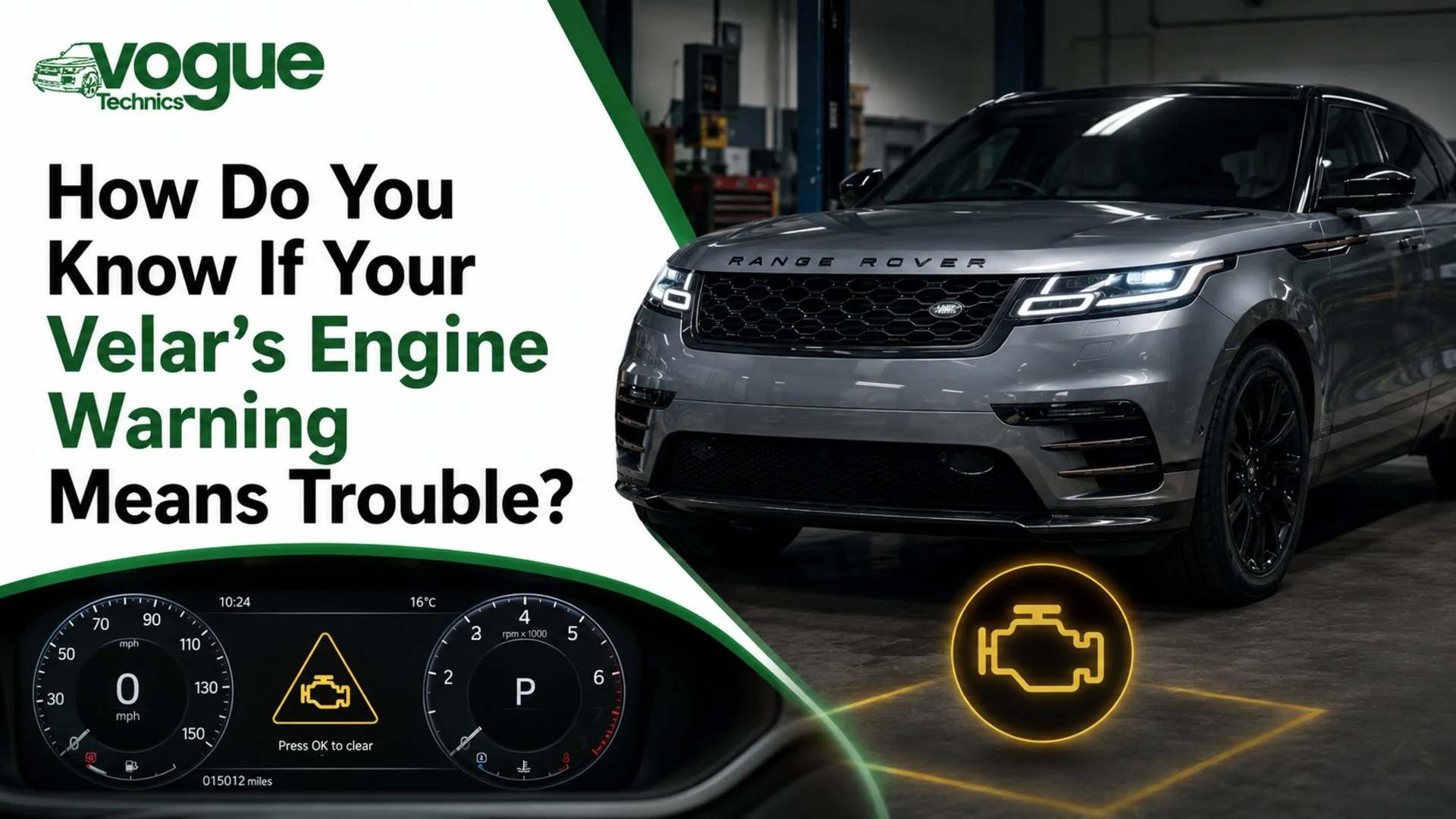
Not every warning light means imminent engine failure, but ignoring the wrong one can turn a £300 fix into a £5,000 one. Understanding what your Velar is actually telling you matters.
What Does "Restricted Performance" Mode Actually Mean?
This is one of the most common messages Velar owners see, and it's essentially the car's way of protecting itself. When the ECU detects a fault, low oil pressure, a turbo boost anomaly, an emissions sensor out of range, it deliberately limits power and throttle response to prevent further damage.
It's not something to drive through and hope clears itself. Restricted Performance mode is a symptom, not a diagnosis, and the underlying cause needs a proper diagnostic scan to identify.
Common Fault Codes and What They Indicate
A diagnostic scan will usually return one or more OBD-II codes pointing toward the affected system, things like fuel trim irregularities, boost pressure deviations, or NOx sensor faults on diesel models. Codes alone don't tell the full story, though; they point toward a system, not always the exact component. This is where experience matters, cross-referencing the code against mileage, service history, and physical inspection is what separates an accurate diagnosis from a guess (and an unnecessary parts replacement).
Cold Start Rattle — Should You Be Worried?
A brief rattle for a second or two on a cold morning, especially in freezing weather, isn't automatically a red flag on every engine. But on Ingenium units specifically, given the known timing chain history, it's worth getting checked rather than assumed. The earlier a stretched chain is caught, the cheaper the fix.
Should You Repair or Replace Your Range Rover Velar Engine?
This is usually the question that actually brought you here. Once a fault is diagnosed, you're weighing up cost, longevity, and whether the car is worth the investment.
Engine Repair Costs vs. Full Replacement Costs in the UK
Costs vary considerably depending on the fault, the engine variant, and whether parts are sourced new or reconditioned. As a general guide:
Repair Type | Typical Cost Range (UK) | Notes |
| Timing chain & guide replacement | £900 – £1,800 | Cost rises significantly if damage has occurred |
| Turbocharger replacement | £1,200 – £2,500 | Diesel units often cost more than petrol |
| Water pump / coolant housing repair | £400 – £900 | Cheap if caught early, costly if it causes overheating |
| DPF cleaning or replacement | £300 – £1,500 | Cleaning is far cheaper than full replacement |
| Full engine rebuild | £3,500 – £6,000 | Cost-effective vs. replacement on otherwise sound vehicles |
| Full engine replacement (reconditioned) | £5,000 – £9,000+ | Depends on engine variant and warranty included |
These figures are general UK market ranges, for an accurate quote based on your specific Velar's engine code, mileage, and fault, a proper inspection is the only reliable way to price it.
How Long Do Ingenium Engines Really Last?
With consistent servicing, short-trip diesel owners avoiding excessive idling, and timing chain issues addressed early, Ingenium engines can comfortably reach 150,000+ miles. The engines that fail prematurely are almost always ones where early warning signs rattles, minor oil dilution, small coolant losses, were ignored rather than investigated.
Signs It's Time for a Reconditioned Engine
A reconditioned or rebuilt engine becomes the sensible option when:
- The timing chain has already jumped or snapped, causing valve or piston damage
- Oil starvation has caused bearing failure throughout the engine
- Multiple systems are failing simultaneously, making component-by-component repair less cost-effective than a full rebuild
- The vehicle still has strong resale or personal value worth protecting
D240 vs. P250 vs. D300 — Which Engine Holds Up Best?
Broadly speaking, the petrol P250 tends to show fewer timing chain complaints than the diesel variants, largely because it isn't subject to the same oil dilution risk from DPF regeneration. The D300 (3.0 litre) has a different engine architecture to the smaller 2.0 diesel units and carries its own specific issues around the timing belt and inlet manifold, rather than the chain problems associated with the 2.0. If you're buying used, checking full service history against the specific engine code fitted to that VIN is far more useful than relying on generalisations about "the diesel" or "the petrol."
Why Choose Voguetechnics Engine Rebuild for Your Velar Repair?
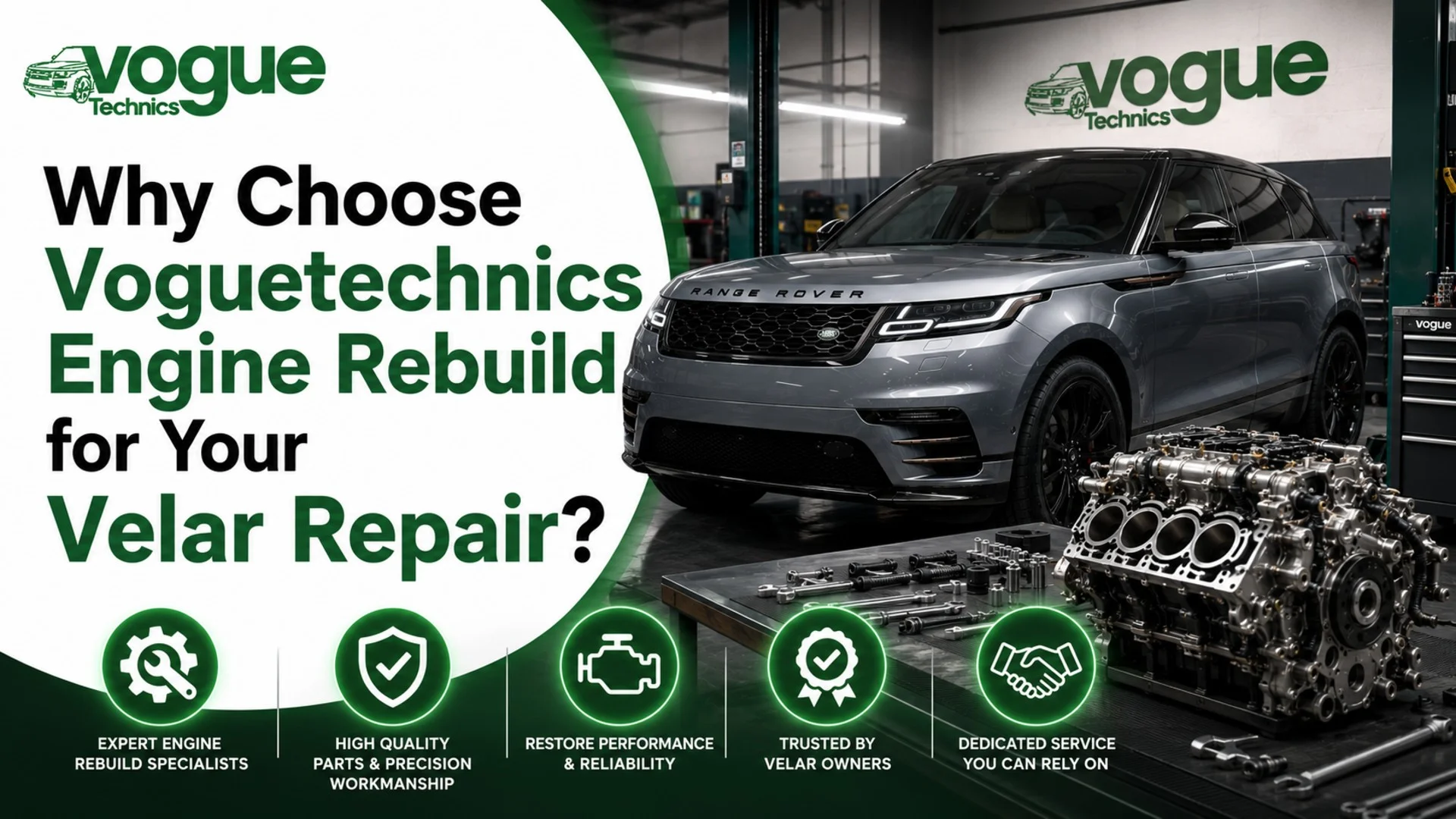
Our Experience with Range Rover & Ingenium Engines
We specialise specifically in engine rebuilds and replacements for Land Rover and Range Rover models, including extensive hands-on work with Ingenium diesel and petrol units. That focus means we're not learning on your car, we've already seen the timing chain patterns, the oil dilution cases, and the turbo failures that come through week after week from Velar owners across Essex and the wider UK.
What's Included in Our Engine Rebuild Service?
Every rebuild we carry out includes:
- Full diagnostic assessment before any work begins, so you know exactly what's being fixed and why
- Genuine or OEM-quality replacement parts, matched to your specific engine variant
- Transparent, itemised pricing with no surprise add-ons
- Post-rebuild testing to confirm performance before the car goes back to you
Get a Quote or Book a Diagnostic Check Today
If your Velar is showing any of the symptoms covered above a warning light, a rattle, reduced power, or rising oil levels, the earliest possible diagnosis is what protects your wallet. Based in Grays, Essex, we work with Velar owners across the region who'd rather get an honest answer than gamble on ignoring it.
Get in touch with Voguetechnics Engine Rebuild today for a diagnostic booking or a straightforward repair quote.
Frequently Asked Questions
Are Range Rover Velars reliable?
Reliability varies by engine variant and how the car has been used. Petrol engines generally show fewer of the specific faults associated with diesel emissions systems, but any Velar with consistent servicing and prompt attention to early warning signs can be a dependable vehicle well past 100,000 miles.
What is the most common Range Rover Velar engine problem?
Timing chain wear on the diesel Ingenium engines is the most widely reported issue, followed closely by turbocharger wear and coolant system leaks.
How much does it cost to replace a Range Rover Velar engine?
Full engine replacement typically ranges from £5,000 to £9,000+ depending on the engine variant and whether a reconditioned unit is used, while a rebuild on an existing engine is often more cost-effective at £3,500–£6,000.
Is the D240 engine reliable?
The D240 has faced the same industry-known timing chain and oil dilution concerns as other Ingenium diesel variants. With proactive servicing and early attention to warning signs, it can perform reliably, but it's not immune to the platform's known weak points.
What does Restricted Performance mode mean on a Velar?
It's a protective measure the ECU triggers when it detects a fault, deliberately limiting power to prevent further damage until the underlying issue is diagnosed and resolved.
Should I buy a used Range Rover Velar?
A used Velar can be a great purchase if you check the full service history, confirm the timing chain has been inspected or replaced where relevant, and have a pre-purchase inspection carried out by a specialist familiar with Ingenium engines.
If you're dealing with any of the symptoms above, don't wait for a small issue to become an expensive one. Contact Voguetechnics Engine Rebuild for an honest diagnostic assessment and a clear, no-pressure quote on your Range Rover Velar's engine.