
Range Rover Velar D180 Timing Chain Problems: Symptoms, Costs & Trusted Repair in Essex
The Range Rover Velar D180's Ingenium diesel engine is known for timing chain problems, often triggered by oil dilution from frequent DPF regeneration cycles. Common warning signs include a metallic cold-start rattle and fault codes P0016 or P0341, typically appearing between 40,000–100,000 miles. Caught early, repairs cost £600–1,600, but ignoring the issue risks catastrophic engine damage costing £3,500–6,000+. This guide from Voguetechnics Engine Rebuild in Grays, Essex covers causes, symptoms, diagnostic steps, and prevention tips for Velar and Ingenium diesel owners.
That metallic rattle you hear every cold morning isn't your imagination. If you're sitting in your Range Rover Velar D180, engine idling, wondering why it sounds like a diesel from decades ago rather than a premium SUV, you've likely stumbled onto one of the most widely reported issues affecting the Ingenium diesel engine range: timing chain wear.
You're not alone. Owners across the UK have reported the same pattern, a faint rattle on cold start, a warning light that appears out of nowhere, or a garage bill that arrives far heavier than expected. The good news is that this is a well-understood problem with a clear diagnostic path and, in most cases, a manageable fix, provided it's caught early.
At Voguetechnics Engine Rebuild, based in Grays, Essex, we've stripped down more Ingenium engines than most owners will ever see in a lifetime. This guide walks you through exactly why the Range Rover Velar D180 timing chain fails, how to spot it before it becomes catastrophic, and what real repair costs look like in 2025, no dealer jargon, no scare tactics.
What Causes the Range Rover Velar D180 Timing Chain to Fail?
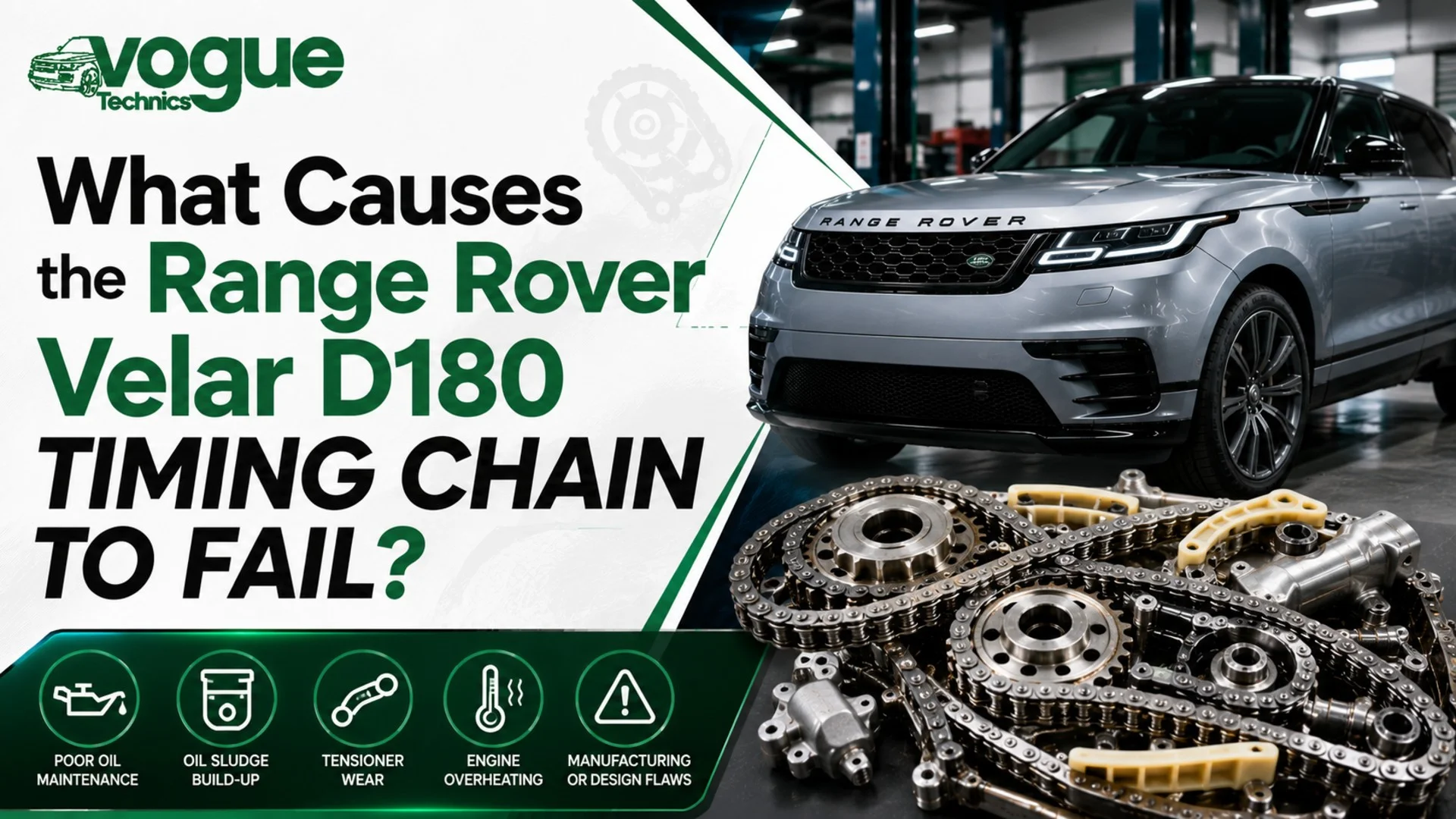
Before you can fix a problem, it helps to understand it. The D180 sits within Jaguar Land Rover's Ingenium diesel family, and its timing chain issues aren't random bad luck, they stem from a specific design and maintenance combination that's now well documented across the industry.
How Does the Ingenium 2.0 Diesel Timing Chain Work?
Unlike older Land Rover diesel engines that used a timing belt, the Ingenium 2.0 diesel, badged variously as D180, D200, AJ200D, AJ20D4, or 204DTD depending on model year and market, relies on a timing chain to keep the crankshaft and camshaft perfectly synchronised.
The chain runs from the crankshaft sprocket up through the timing cover, driving the camshafts via a series of guide rails and a hydraulic tensioner. This tensioner is critical, it keeps the chain under constant, correct tension. When it fails or the chain guides wear down, the chain develops slack. That slack is what you hear as rattle, and it's what eventually throws your engine's valve timing out of sync.
In theory, a timing chain should outlast the engine. In practice, on many Ingenium diesels, it doesn't, and the reason usually isn't the chain itself. It's what's happening around it.
Why Does Oil Dilution Damage the Timing Chain?
This is the part most owners never hear about until it's too late, and it's arguably the single biggest contributor to premature timing chain failure on these engines.
Ingenium diesels use active DPF regeneration to burn off soot trapped in the diesel particulate filter. During regeneration, the engine injects extra fuel into the cylinders to raise exhaust temperature. Some of that unburned fuel inevitably works its way past the piston rings and into the engine oil.
Over time, particularly on cars used mostly for short journeys, this diluted, thinned-out oil loses its lubricating properties. The hydraulic tensioner relies on correct oil pressure and viscosity to function properly. When oil is diluted with fuel:
- Oil pressure drops, reducing the tensioner's ability to maintain correct chain tension
- Lubrication of the chain and guides weakens, accelerating wear on the plastic guide rails
- Chain stretch accelerates, because metal-on-metal contact increases without a proper oil film
- Sludge can form, further starving critical components of clean oil
Does DPF Regeneration Cause Oil Dilution?
Yes, regeneration cycles are the primary mechanism. A car that regularly completes long motorway journeys can burn off diluted fuel through natural engine heat before it accumulates. A car used mainly for short school runs or city driving, however, often can't reach regeneration temperature efficiently, so dilution builds up cycle after cycle. This is why we see disproportionately more chain failures in Velars used predominantly for short trips.
At What Mileage Do Range Rover Velar Timing Chains Usually Fail?
There's no single mileage that guarantees failure, and any specialist claiming otherwise is oversimplifying. That said, patterns from real workshop data are consistent enough to be useful.
Mileage Range | Failure Risk | What We Typically See |
| Under 40,000 miles | Low | Rare, usually linked to a manufacturing defect or early tensioner fault |
| 40,000–70,000 miles | Moderate | Early cold-start rattle begins appearing; oil dilution history often present |
| 70,000–100,000 miles | High | Most common window for chain replacement bookings we receive |
| 100,000+ miles | Very high if unaddressed | Advanced chain stretch, guide wear, and in worst cases, engine damage |
The takeaway: mileage matters, but oil change history, journey type, and how quickly a rattle was investigated matter more. We've repaired 45,000-mile cars with advanced wear and inspected 95,000-mile examples that were still within tolerance, the difference almost always comes down to maintenance discipline.
Signs of a Failing Timing Chain in Your Range Rover Velar
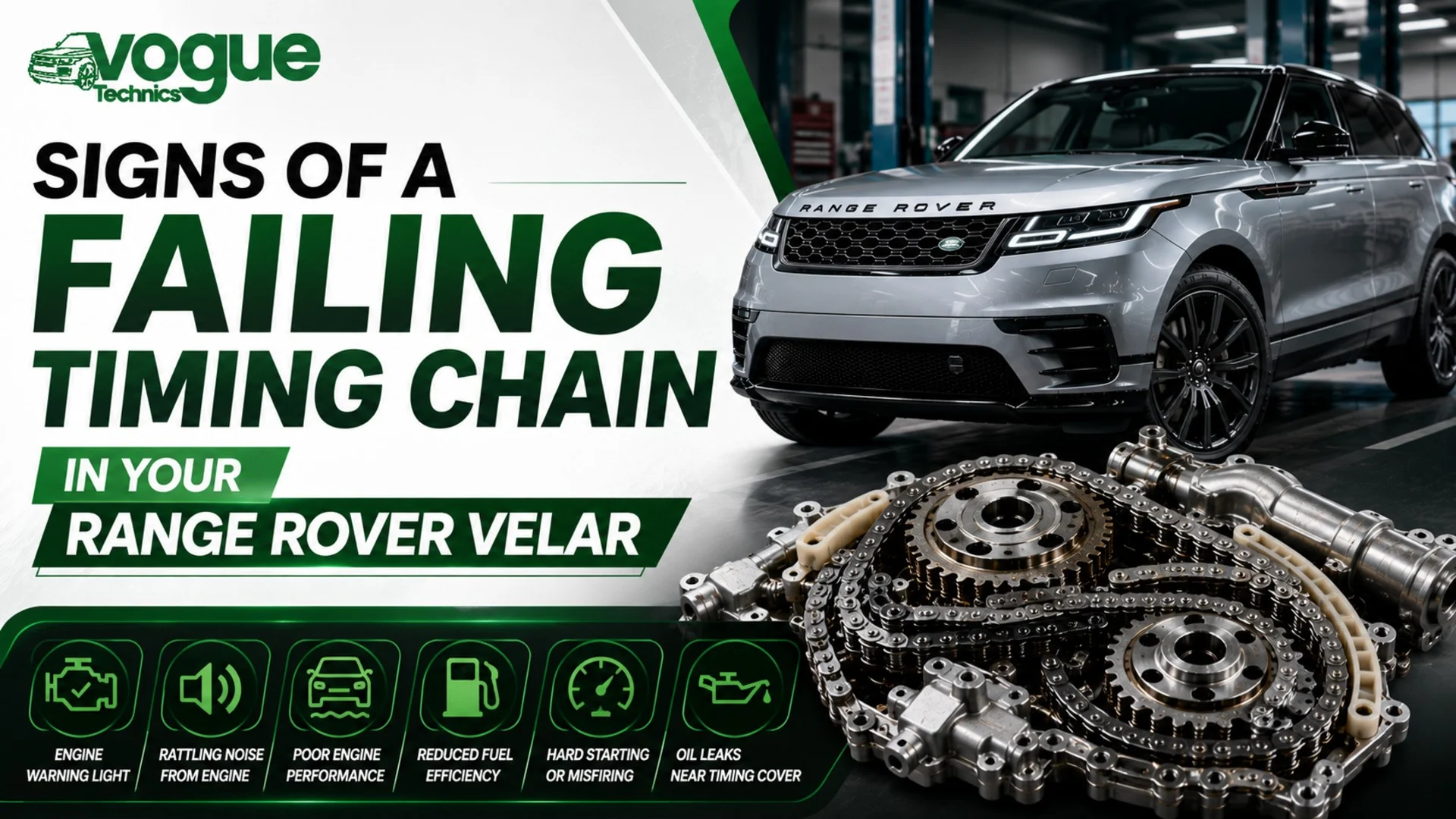
Catching this early is the single biggest factor in keeping repair costs down. Most owners describe the same handful of warning signs, here's what to actually listen and look for.
Is Cold Start Rattle Normal on a Velar D180?
No, and this is worth stating plainly, because some owners are told otherwise. A brief, very faint tick for a second on cold start can be normal on some diesel engines. A distinct, rattly, metallic noise lasting several seconds, especially one that's grown louder over weeks or months, is not.
Typical description from owners: a "diesel tractor" sound on first start-up that fades within a few seconds as oil pressure builds. If this noise is present every morning and getting progressively worse, book a diagnostic. Ignoring it doesn't make the underlying wear go away, it accelerates it.
What Fault Codes Indicate Timing Chain Failure?
Your Velar's ECU is often the first to notice a problem, sometimes before you do. Two fault codes come up repeatedly during our diagnostic scans:
Understanding P0016 and P0341 Fault Codes
- P0016 – Crankshaft/Camshaft Position Correlation Fault: This code means the ECU has detected that the camshaft and crankshaft are no longer rotating in the expected relationship to one another, a direct symptom of chain stretch or slack.
- P0341 – Camshaft Position Sensor Circuit Range/Performance: Often appears alongside P0016. It indicates the camshaft sensor is reading a timing signal outside expected parameters, again pointing to chain elongation affecting valve timing.
Either code alone is worth investigating immediately. Both together, combined with an engine warning light, should be treated as urgent, this is the point where TOPIx diagnostics and a full timing deviation scan become essential, not optional.
Can a Stretched Timing Chain Destroy Your Engine?
Unfortunately, yes, and this is where the cost conversation changes dramatically. A chain that's been allowed to stretch significantly can eventually skip a tooth on the sprocket, throwing valve timing out completely. In the worst-case scenario, this leads to valve-to-piston contact, which can bend valves, damage pistons, or in severe cases, cause complete engine failure requiring a full rebuild or replacement.
This is precisely why we always recommend early inspection over waiting for the noise to "see how it goes." A £600–900 chain replacement caught early is a very different conversation to a £4,000+ engine rebuild caught late.
Range Rover Velar Timing Chain Replacement — Cost & Process
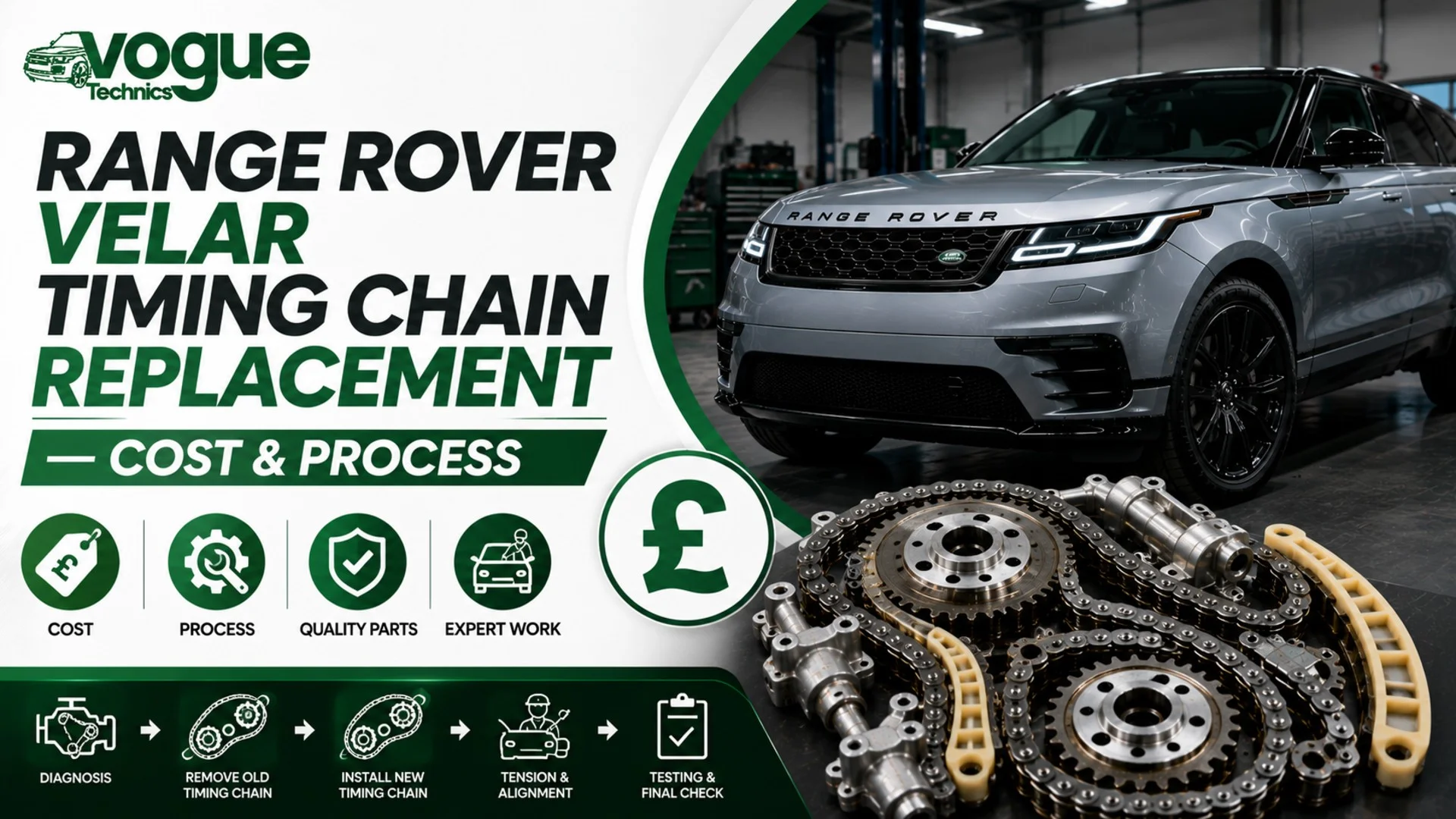
This is usually the question owners actually came here for, so let's be direct about it.
How Much Does Range Rover Timing Chain Replacement Cost in the UK?
Costs vary based on chain position (upper vs lower), extent of damage, and whether related components, guides, tensioner, sprockets, need replacing alongside the chain itself. As a general guide based on current UK independent specialist pricing:
Repair Type | Typical Cost Range | Notes |
| Timing chain inspection & diagnostic | £80–150 | Includes scan, live data check, visual inspection |
| Upper timing chain replacement | £600–1,100 | Most common repair; parts + labour |
| Full timing chain kit (chain, guides, tensioner) | £900–1,600 | Recommended over chain-only replacement |
| Engine rebuild (chain failure caused internal damage) | £3,500–6,000+ | Required if valves/pistons are damaged |
Main dealer pricing for the same work is typically 30–50% higher, largely due to labour rates and OEM-only parts policies, even when a genuine Land Rover timing chain kit from an independent supplier meets the same specification.
Repair vs Full Engine Rebuild — Which Do You Need?
This depends entirely on how far the problem has progressed:
- Choose chain/kit replacement if: you've caught the rattle early, fault codes are present but no misfire or power loss has occurred, and a compression test shows healthy cylinders.
- Consider a rebuild if: the engine has run with a stretched chain for an extended period, you're experiencing misfires or reduced power alongside the rattle, or a borescope inspection reveals valve or piston damage.
We always inspect before quoting, no specialist should recommend a rebuild without first confirming internal damage through proper diagnostics.
What Does Our Timing Chain Diagnostic & Repair Process Involve?
A proper diagnosis isn't just "listen to the engine and guess." Here's what a thorough inspection should include:
- Live data scan using TOPIx-level diagnostics to check for stored and pending fault codes
- Timing deviation analysis, comparing actual cam/crank correlation against manufacturer tolerance
- Oil analysis or visual oil check, since diluted, dark, or thin oil is a strong indicator of the root cause
- Physical chain stretch measurement where accessible, rather than relying on codes alone
- Turbo and oil pressure check, since chain wear and oil dilution often affect turbo lubrication too
Once diagnosed, replacement involves removing the timing cover, releasing chain tension, swapping the chain, guides, and tensioner as a full kit, resetting timing to manufacturer spec, and clearing fault codes before a full road test.
Why Choose an Independent Land Rover Specialist Over a Main Dealer?
Independent specialists who work exclusively on Land Rover and Range Rover models, like our team in Grays, typically offer three practical advantages: lower labour rates without cutting corners on parts quality, faster turnaround since we're not booking around dealer service volume, and direct communication with the technician actually working on your car rather than a service desk relaying information.
Genuine OEM Parts vs Aftermarket Timing Chain Kits
Not all aftermarket kits are created equal. Genuine Land Rover parts (such as part numbers referenced under LR139320/LR132675 for related timing chain components) guarantee exact specification, but reputable aftermarket manufacturers producing OEM-equivalent kits can offer comparable durability at a lower price point. What matters most is metallurgy and tolerance accuracy, this is something we assess before recommending any kit to a customer, rather than defaulting to the cheapest option available.
Protecting Your Ingenium Engine — Maintenance & Buying Advice
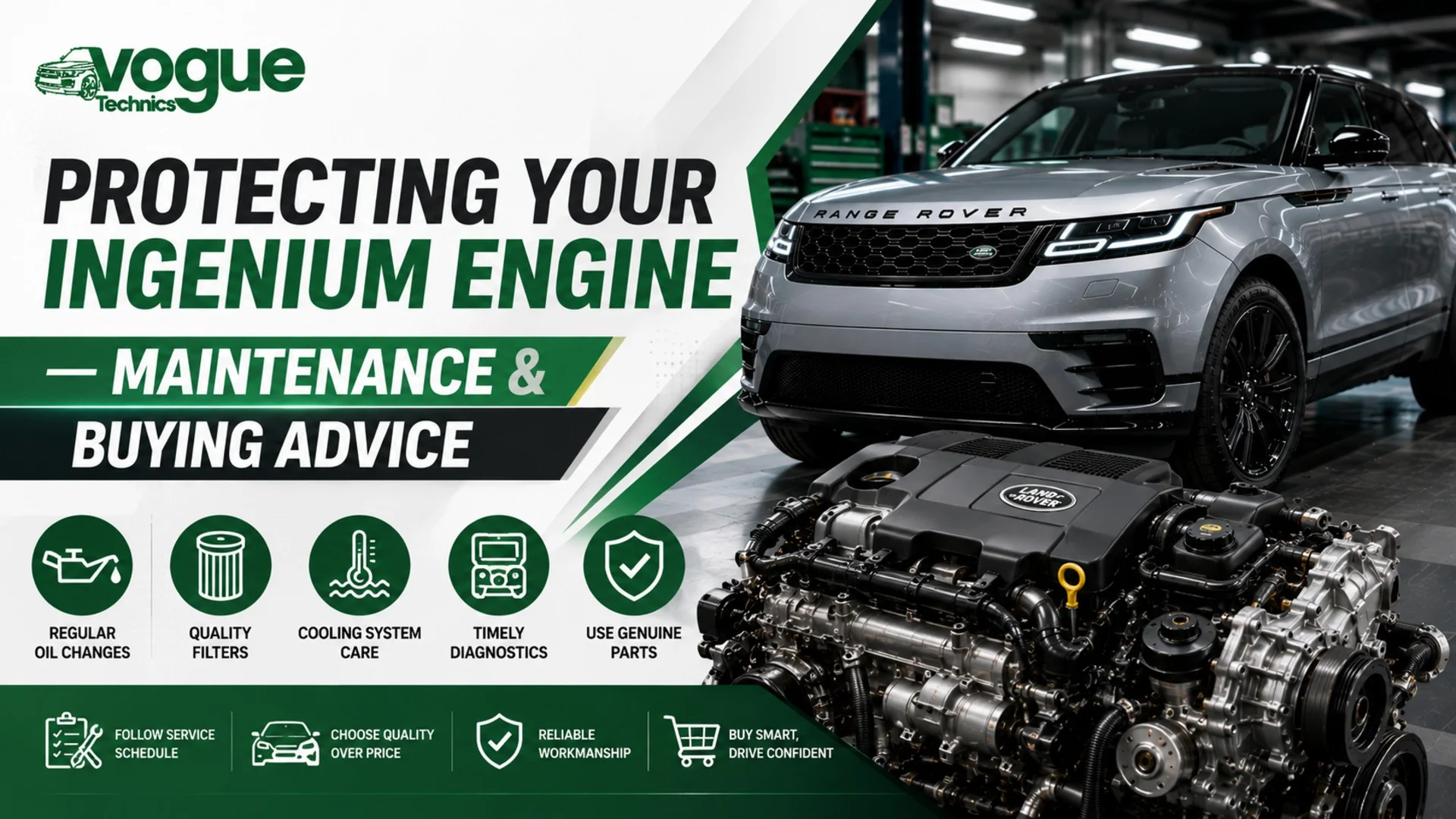
Whether you've just had your timing chain replaced or you're trying to avoid the problem altogether, prevention is far cheaper than repair.
How Can You Prevent Premature Timing Chain Wear?
A few consistent habits make a measurable difference to timing chain longevity:
- Stick to (or shorten) service intervals especially if most of your driving is short journeys under 10 miles
- Occasionally take longer motorway drives to allow the DPF to regenerate fully and burn off diluted fuel from the oil
- Use the correct specification oil every single service, without exception
- Don't ignore early noise a same-day diagnostic scan costs a fraction of a full rebuild
- Have oil condition checked at each service, not just oil level
Best Engine Oil for Ingenium Timing Chain Longevity
This is a genuinely debated topic among specialists, and the honest answer is: follow Jaguar Land Rover's specified viscosity (typically 0W20 or 5W30 depending on model year and market), but prioritise oil change frequency over oil brand. On engines prone to dilution, we generally recommend servicing at 7,500–10,000 miles rather than stretching to the manufacturer's full interval, particularly for vehicles doing predominantly urban driving.
Buying a Used Range Rover Velar D180? What to Check First
If you're shopping for a used Velar D180, a pre-purchase inspection isn't a luxury, it's essential given how common this issue is. Before you commit:
- Ask for a cold start never view a car with the engine already warmed up, since this is exactly when rattle is most audible
- Request full service history, specifically checking oil change frequency rather than just mileage
- Have a diagnostic scan run before purchase to check for stored P0016 or P0341 codes, even if the engine warning light isn't currently illuminated
- Ask directly whether the timing chain has already been replaced many well-maintained examples on the market have already had this work done, which is a strong selling point worth paying slightly more for
A car with documented timing chain replacement and consistent oil change history is a meaningfully safer buy than an identical car without that history, even at the same mileage and price point.
Frequently Asked Questions
Does the Range Rover Velar D180 have a timing chain or timing belt? The D180 uses a timing chain, not a timing belt. This is a common point of confusion since many owners search for "range rover timing belt" out of habit from older petrol engines, the Ingenium diesel range, including the D180, is chain-driven.
What mileage do timing chains fail on the Ingenium diesel engine? Most failures we see occur between 40,000 and 100,000 miles, though this varies significantly based on service history and driving style. Short-journey use accelerates the risk considerably.
How long does timing chain replacement take? A standard upper timing chain replacement typically takes one full working day. More extensive jobs, including guide and tensioner replacement or engine rebuild work, can take several days depending on parts availability.
Is timing chain replacement covered under warranty? This depends entirely on the age of your vehicle and warranty type. Vehicles still within Jaguar Land Rover's original warranty period may be covered, though some owners report disputes if oil change history can't be fully evidenced. Extended and third-party warranties vary, check your specific policy wording.
Can I still drive my Velar if I hear a timing chain rattle? Short journeys to a specialist for diagnosis are generally fine. We wouldn't recommend continuing normal daily driving with an untreated rattle, as chain wear typically worsens progressively rather than staying static.
Is the Ingenium diesel engine reliable overall? Outside of the timing chain and oil dilution issues discussed here, the Ingenium platform is generally regarded as a competent, efficient engine. The timing chain issue is well-documented but manageable with proper maintenance and early intervention, it isn't a reason to avoid the model outright, particularly on examples with strong service history.
Get Your Range Rover Velar Timing Chain Inspected Properly
A rattling timing chain doesn't fix itself, and it rarely stays a small problem for long. Whether you've just noticed that first cold-start noise or you're already looking at fault codes on the dash, the earlier it's properly diagnosed, the more options and the lower the cost, you'll have.
At Voguetechnics Engine Rebuild in Grays, Essex, we diagnose and repair Range Rover Velar D180 timing chain issues using proper diagnostic equipment, genuine and OEM-equivalent parts, and pricing that's transparent from the first conversation. No guesswork, no unnecessary upsells, just an honest assessment of what your engine actually needs.
Book a timing chain diagnostic today and get a clear, no-obligation quote before any work begins.