
Range Rover Ingenium 2.0 Diesel Timing Chain Failure: Symptoms, Causes and Repair in Essex
You start the engine on a cold morning and hear a metallic rattle from the back of the engine bay. It fades after a few seconds, so you tell yourself it's nothing. Then a warning light appears, or the car feels flat on the motorway, and the worry sets in.
You start the engine on a cold morning and hear a metallic rattle from the back of the engine bay. It fades after a few seconds, so you tell yourself it's nothing. Then a warning light appears, or the car feels flat on the motorway, and the worry sets in.
If that sounds familiar, you're reading about Range Rover Ingenium 2.0 diesel timing chain failure at the right time. This guide explains what goes wrong, what the warning signs look like, and how to choose between a chain repair and an engine rebuild. It comes from Vogue Technics, an engine rebuild and repair specialist in Grays, Essex, that works on Range Rover and wider Jaguar Land Rover Ingenium diesels.
The short version is that acting early is far cheaper than acting late. A rattle caught at the right stage can mean a timing chain kit. A rattle ignored until the chain jumps can mean a full engine rebuild.
What Causes Timing Chain Failure on the Range Rover 2.0 Ingenium Diesel?
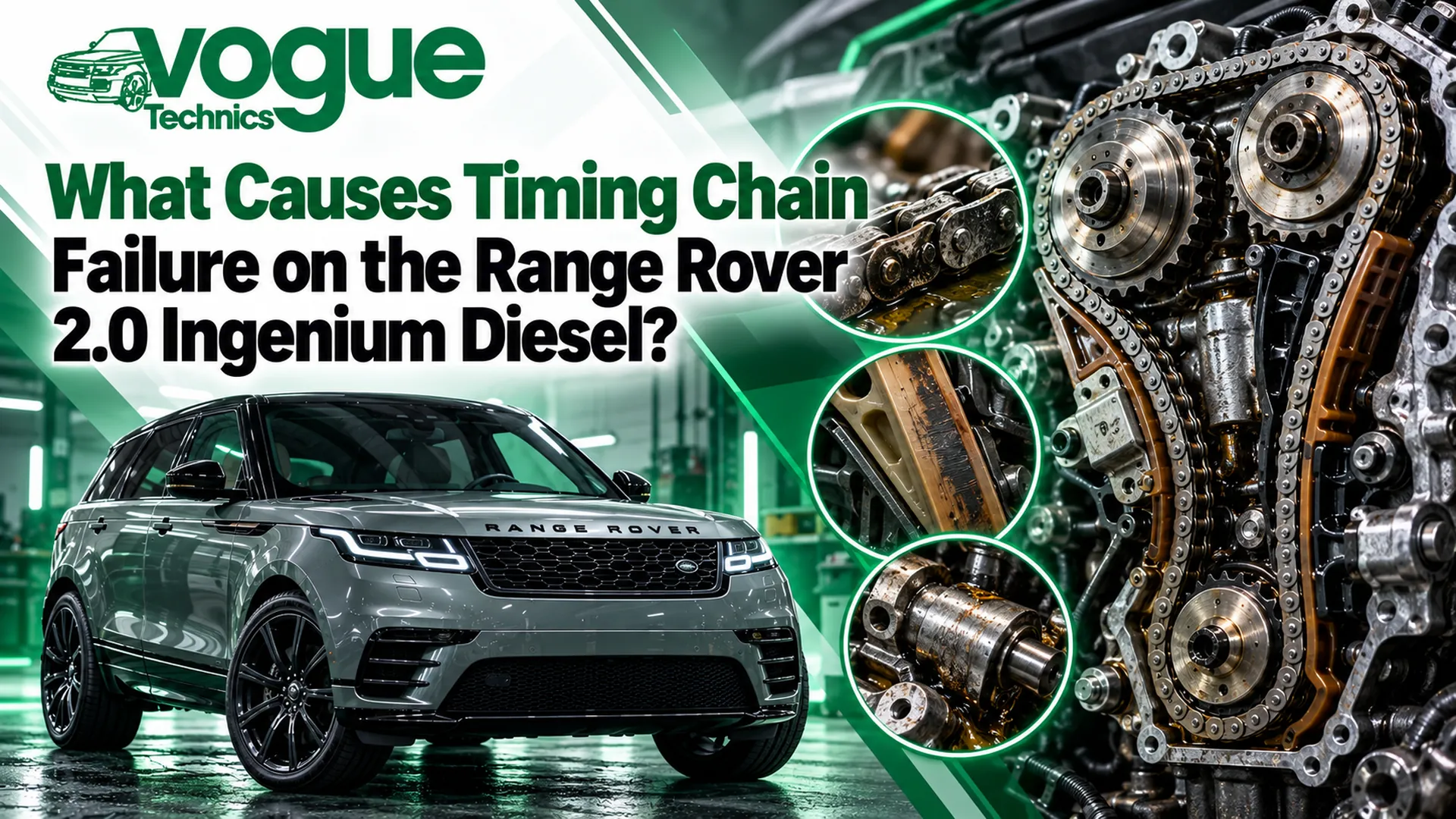
The Ingenium 2.0 diesel (a turbocharged four-cylinder, often referred to by codes such as AJ200D, 204DTD and 204DTA) uses a timing chain to keep the crankshaft and camshafts in step. Every valve opens and closes at exactly the right moment because of that link. If the chain, its tensioner or its guide rails stop doing their job, the timing drifts.
One thing is unusual about this engine. The timing chain sits at the rear of the engine, on the gearbox side, rather than at the front where most owners and even many mechanics expect it. That layout is a big part of why the repair is labour-heavy, and it makes it harder to inspect the chain casually.
No single fault explains every failure. Workshops usually see a combination of the factors below.
Why Does the Ingenium Timing Chain Stretch and Wear Out?
Chains don't literally stretch like elastic. The pins and plates wear, the gaps between links grow, and the chain becomes longer and looser. This is chain elongation, and it's the root of most timing complaints.
Three components work together to control it:
- The chain itself: Wear on the links lets the chain slacken, which shows up as chain rattle and timing deviation.
- The hydraulic tensioner: It uses oil pressure to keep the chain taut. If pressure is low or the tensioner wears, slack builds up quickly.
- The plastic chain guides (guide rails): These wear and can break down, allowing the chain to move about and hit the surrounding parts.
Once one part weakens, it pushes extra load onto the others. A tired tensioner lets the chain whip, the whipping wears the guides, and worn guides loosen the chain further. It's a slow cascade, and it's why we check the whole timing system rather than only the chain when an engine comes in.
Lubrication is the common thread. Timing components rely on clean oil at the right pressure and viscosity, so anything that degrades the oil raises the risk.
Can Oil Dilution and DPF Regeneration Damage the Timing Chain?
This is a mechanism that many technical and workshop sources describe, so it deserves a fair explanation. It doesn't cause every chain failure, but it's worth understanding.
Diesel particulate filters (DPFs) clean themselves through a process called regeneration. To do it, the engine injects extra fuel to raise exhaust temperatures. If regeneration is interrupted, which often happens on short journeys and urban driving, some of that unburned fuel can reach the sump and mix with the engine oil.
The chain of events described looks like this:
- DPF regeneration adds extra fuel.
- Short trips interrupt the process.
- Fuel contaminates the engine oil (oil dilution).
- Diluted oil has lower viscosity, which can reduce lubrication and oil pressure.
- The tensioner, guides and chain face more wear.
A quick check you can do yourself: Look at the dipstick or oil level reading. If the level has risen above maximum, or the oil smells of diesel, get it checked. Rising oil level is one of the clearest signs of fuel dilution. Regular oil changes, especially for cars that mostly do short runs, are a sensible defence.
Which Range Rover Models and Engine Codes Are Affected?
Range Rover models with the 2.0 Ingenium diesel are the main focus here, alongside other Land Rover and Jaguar applications that share the engine family.
Model | Generation | Engine | Typical Engine Codes | Notes |
| Range Rover Evoque | L538 / later generation | 2.0 diesel | 204DTD, 204DTA | Engine code depends on build date |
| Range Rover Velar | L560 | 2.0 diesel | 204DTA (variant dependent) | Confirm code from the engine, not just the badge |
| Range Rover Sport | L494 | Mostly other engines | Check the individual car | Not generally associated with this 2.0 diesel, so verify before assuming |
| Discovery Sport / Defender | Various | 2.0 diesel | 204DTD, 204DTA | Same engine family, similar timing layout |
| Jaguar XE, XF, F-PACE, E-PACE | Various | 2.0 diesel | 204DTD, 204DTA | Shared Ingenium architecture |
Please don't rely on registration year alone. Published advice disagrees about which years are affected, and manufacturers have revised components over time. Build date, engine code and the specific revisions fitted matter more. The reliable way to find out is to have the engine code and history checked by a specialist.
What Are the Signs of a Failing Ingenium Timing Chain?
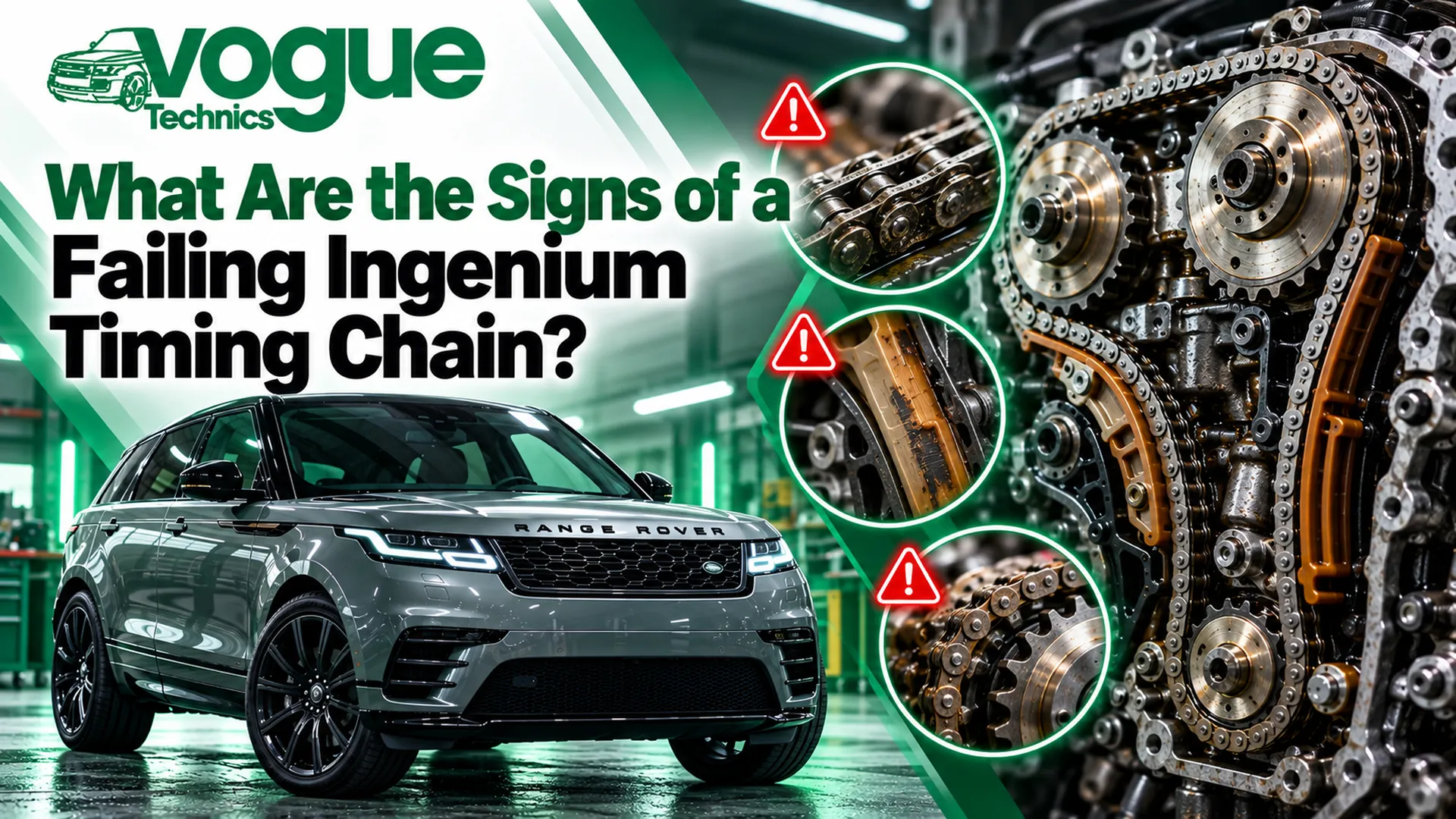
Most owners notice a change before anything breaks. Learning to recognise the early signs gives you time to act while the repair is still manageable.
Common Range Rover Ingenium timing chain failure symptoms include:
- A metallic rattle, ticking or clatter, especially on cold start
- Rough idle or uneven running
- Engine management light or a restricted performance warning
- Loss of power or sluggish acceleration
- Difficult starting
- Camshaft timing fault codes stored in the ECU
What Does an Ingenium Timing Chain Rattle Sound Like on Cold Start?
It's a short, sharp metallic noise from the rear of the engine, often described as rattling, clattering or ticking. It's usually loudest for a few seconds after a cold start, when oil pressure hasn't fully built up, and it tends to fade as the engine warms.
A cold-start rattle alone does not confirm a failing chain. Other things can make similar noises. But it shouldn't be dismissed either. If the sound is new, getting louder, or lasting longer each week, treat it as a warning and book an inspection.
Do P0016 and P0017 Fault Codes Mean the Chain Has Stretched?
They can, though they don't prove it on their own.
- P0016 relates to a correlation problem between the crankshaft position and the camshaft position.
- P0017 is a related correlation code for the second camshaft.
When the chain has stretched or jumped a tooth, the ECU sees the crankshaft and camshaft signals out of step and logs these codes. Sensors, wiring and oil-related faults can also trigger them, so a scan is only the first step. A proper diagnosis compares the code with a mechanical inspection.
Here is a simple way to think about what to do next:
What You Notice | What It May Point To | Sensible Next Step |
| Rattle only | Early wear or a tensioner issue | Diagnostic inspection |
| Rattle plus fault code (P0016/P0017) | Possible timing deviation | Timing investigation |
| Rattle plus rising oil level or diesel smell | Oil dilution plus wear | Oil and DPF investigation, then timing inspection |
| Chain has jumped | Possible internal damage | Compression, timing and internal inspection |
| Bent valves or piston contact | Serious engine damage | Rebuild or replacement engine assessment |
How Much Does Ingenium Timing Chain Replacement Cost and Is It Worth Repairing?
Cost is the question most owners ask first, and honesty matters here. Prices depend on the model, the engine code, whether anything else is damaged, and which parts you choose. Any specialist quoting a firm figure without inspecting the car is guessing.
What we can say is that the rear position of the chain drives most of the cost. The labour is heavy, and that is why a quote can look high compared with a front-chain engine.
[Insert verified "from" pricing and typical turnaround here if you can confirm real figures before publishing.]
What Is Involved in Replacing an Ingenium Timing Chain?
A proper repair goes well beyond swapping the chain. Typically it includes:
- Diagnosis: Scan for fault codes, check oil condition, and inspect for timing deviation.
- Access: Because the chain sits at the rear, the gearbox and often the flywheel have to come out of the way. In some cases engine removal is the more practical route.
- Replacement of the timing chain kit: Chain, tensioner, guides and sprockets, not the chain alone.
- Correct timing procedure: Crankshaft and camshaft locking with the right tools, then careful alignment.
- Oil and filter service: Fresh oil of the correct specification.
- DPF and oil checks: To address any dilution that contributed to the wear.
Should the tensioner and guides be replaced with the chain? In our experience, yes. Fitting a new chain onto worn guides and a tired tensioner means paying for the same access labour twice. Replacing the full set once is the sounder investment.
Timing Chain Repair or Engine Rebuild: Which Is Right After Chain Jump or Valve Damage?
The right answer depends on how far the damage has gone. This engine is an interference design, meaning that if the timing slips far enough, valves and pistons can collide.
Condition | Likely Route | Why |
| Chain intact, noise or code only | Timing chain kit replacement | Caught early, no internal damage |
| Chain jumped, no confirmed damage | Compression and internal inspection first | Confirms whether valves or pistons were hit |
| Bent valves or piston damage | Engine rebuild or reconditioned/replacement engine | Internal parts need repair or a fresh unit |
Two practical points help owners decide. A rebuild lets us inspect bearings, oil pump and pickup, and other internals while the engine is apart. A reconditioned or replacement engine can be quicker where damage is extensive. We'll give you the honest comparison for your car rather than steering you to the dearer option.
Real-world example: An owner brings in a Velar with a cold-start rattle and a stored P0016 code. Inspection shows a stretched chain and worn guides, with no valve contact. A full kit replacement plus an oil service solves it. Compare that with the owner who keeps driving for another few weeks: the chain jumps, valves bend, and the job becomes a rebuild. The rattle was the same in both cases. The timing of the decision made the difference.
Why Choose Vogue Technics for Range Rover Ingenium Timing Chain Repair in Grays, Essex?
You want a specialist who knows this engine, explains the problem plainly, and doesn't push you toward a bigger bill than the car needs. That's how we work.
Do You Offer Range Rover Timing Chain Repair, Engine Rebuilds and Nationwide Delivery?
Yes. Our services cover:
- Diagnostic inspection and fault code investigation
- Ingenium timing chain replacement, including tensioner and guide rails
- Engine rebuilds after chain failure
- Reconditioned and replacement engine options
- Nationwide collection and delivery from our base in Grays, Essex
We give you a clear quote after inspection, explain each step in plain language, and tell you if a cheaper route will do the job properly.
How Can I Get a Timing Chain Diagnosis or Quote Today?
Call us, email us or send the car's details through our quote form. Tell us the model, engine code if you have it, and what you're hearing or seeing. We'll advise on the next step.
Frequently Asked Questions
Can an Ingenium timing chain snap?
It can, although more often the chain stretches and the timing jumps first. Either event can cause valve and piston contact, which is why early inspection matters.
Can I keep driving with a rattling timing chain?
We wouldn't recommend it. A short drive to a workshop is reasonable, but continued daily use risks turning a repairable fault into engine damage.
How long does timing chain replacement take?
Because of the rear chain position and the drivetrain removal involved, it's a multi-day job rather than a quick service. Confirm the current timescale with us when you book.
How do you check Ingenium timing chain stretch?
Through a diagnostic scan, a review of timing deviation data, an oil check, and where needed a mechanical inspection.
Does the gearbox need to be removed?
In most cases, yes, because the chain is at the gearbox end of the engine.
Can oil dilution cause timing chain failure?
Diluted oil can reduce lubrication and add wear to the chain, tensioner and guides. It's one contributing factor among several, not the cause of every failure.
How much does Range Rover Ingenium timing chain replacement cost in the UK?
It varies with the model, the parts and whether other damage is found. Send us your details for a quote based on your car.
Conclusion: Don't Wait for the Rattle to Become a Rebuild
Range Rover Ingenium 2.0 diesel timing chain failure rarely arrives without warning. Cold-start rattle, fault codes, rising oil level and rough running are all signals worth acting on. Catch it while the chain is intact and a kit replacement usually resolves it. Leave it too long and you're looking at internal damage.
If your car is making the noise, showing the codes, or you're buying a used 2.0 diesel Range Rover and want peace of mind, get in touch with Vogue Technics in Grays, Essex. We'll inspect it, tell you what we find, and explain your options clearly.
Call or message us today to book a timing chain diagnosis.