

Range Rover Evoque Engine Seizure Causes: What Every Owner Must Know
Range Rover Evoque engine seizure is one of the most costly failures an owner can face but it rarely happens without warning. From oil starvation caused by diesel dilution to timing chain stretch triggering piston-to-valve contact, the causes are well-documented and largely preventable. This guide covers every major seizure cause, the early symptoms to watch for, and what your repair options look like when the damage is already done. Whether your engine is still running or already locked up, knowing this information could save you thousands.
You notice a faint rattle on a cold morning start. The engine management light flickers. A week later, your Range Rover Evoque refuses to start and a mechanic delivers the words no owner wants to hear: "Your engine has seized."
This is not a rare scenario. Across the UK, Evoque owners, particularly those running the 2.0 Ingenium and 2.2 diesel variants are experiencing premature engine failures that could have been prevented with the right knowledge. The troubling part? Most of these failures don't happen without warning. The warning signs were simply misread, ignored, or dismissed as minor quirks.
This guide breaks down every significant cause of Range Rover Evoque engine seizure, explains the symptoms that precede catastrophic failure, and tells you exactly what your options are when the worst has already happened. Whether you're trying to protect an engine that's still running or dealing with one that's already locked up, the information here could save you thousands.
What Actually Causes a Range Rover Evoque Engine to Seize?
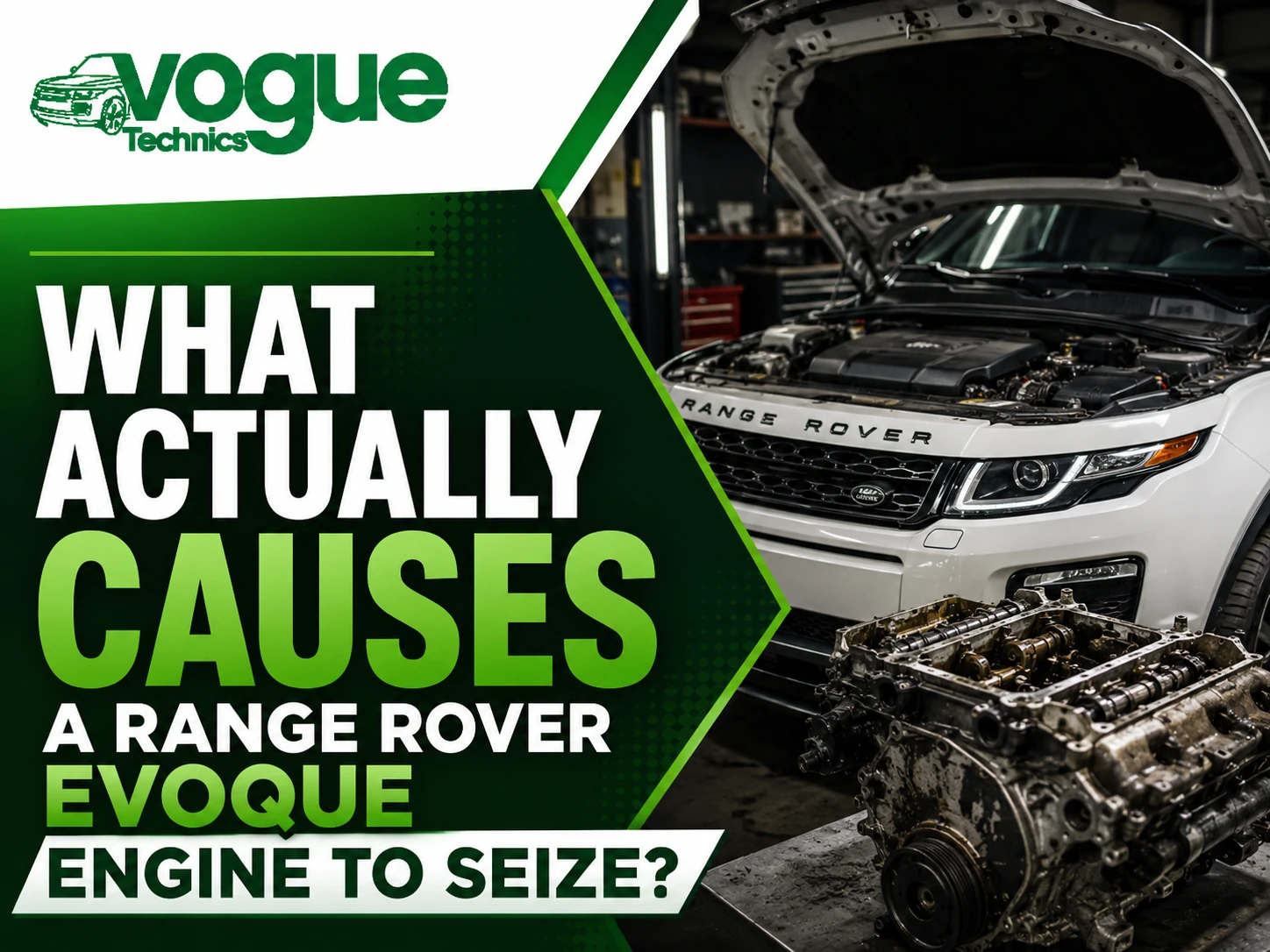
Engine seizure doesn't happen in an instant. It's almost always the result of a chain of events, mechanical, chemical, or operational, that builds over time until the engine can no longer function. Understanding the root causes is the first step toward prevention or an informed repair decision.
Oil Starvation — The Silent Killer of Ingenium Engines
Of all the causes of engine seizure in the Range Rover Evoque, oil starvation is the most destructive and, unfortunately, one of the most common. When engine components bearings, camshaft lobes, crankshaft journals are deprived of adequate lubrication, the metal-on-metal friction generates heat rapidly. Within minutes, internal components begin to weld themselves together.
What makes oil starvation particularly dangerous in the Evoque is how quietly it develops.
How Diesel Dilution Destroys Oil Viscosity
One of the most well-documented issues affecting the 2.0 Ingenium diesel engine is diesel dilution, a process where unburnt fuel enters the engine's oil supply through the cylinder walls or via the fuel injectors during short, stop-start journeys.
When diesel mixes with engine oil, it thins the oil and reduces its viscosity. The oil looks full on the dipstick, so owners assume everything is fine. In reality, the lubricating film protecting your crankshaft bearings and camshaft has been compromised. Over time, this leads to accelerated bearing wear, reduced oil pressure, and eventually, bottom-end failure.
Diesel dilution is significantly worsened in vehicles that:
- Complete predominantly short urban journeys without reaching full operating temperature
- Have delayed oil service intervals beyond manufacturer recommendations
- Are driven in heavy traffic where DPF regeneration cycles are incomplete
How Oil Pickup Tube Blockage and Sump-Related Failures Develop
Even when oil levels appear normal, a blocked oil pickup tube can starve the engine of lubrication just as effectively as having no oil at all. Carbon deposits, engine sludge, and metal particles from worn components can accumulate in the sump and restrict flow through the pickup tube to the oil pump.
Once oil pressure drops, the ECU may trigger a low oil pressure warning but by this point, damage to bearings and the crankshaft is already underway. In severe cases, the oil pump itself sustains damage, accelerating the failure completely.
This is why routine oil changes with the correct specification oil and at the correct intervals are not optional for Evoque owners. They are the single most effective defence against engine seizure.
Timing Chain Failure in the 2.0 Ingenium Engine
The timing chain in a Range Rover Evoque synchronises the rotation of the crankshaft and camshaft. When it's working correctly, you never think about it. When it begins to fail, it sends very clear signals, signals that, if missed, lead directly to catastrophic internal engine damage.
Cold Start Rattle — The Warning You Should Never Ignore
A cold start rattle that disappears after a few seconds of running is one of the earliest and most telling symptoms of timing chain wear. This happens because a stretched or worn chain loses tension during cold starts, when oil pressure is lowest and the chain tensioner hasn't fully pressurised.
Many Evoque owners dismiss this rattle as normal "diesel clatter." It isn't. If your engine rattles for three to ten seconds on a cold start and then quietens down, have the timing chain inspected immediately. Do not delay.
Fault Codes P0016 and P0017 — What They Really Mean
If your engine management light is on and a diagnostic scan returns fault codes P0016 or P0017, these indicate a camshaft-to-crankshaft correlation fault, which directly points to timing chain stretch or timing chain guide failure.
These codes should never be cleared and ignored. They are the ECU's direct communication that the valve timing is no longer accurate, meaning:
- The engine is running inefficiently
- Fuel combustion timing is compromised
- The risk of piston-to-valve contact is escalating with every engine revolution
How a Stretched Timing Chain Leads to Piston-to-Valve Contact
As the timing chain stretches beyond its serviceable limit, the camshaft timing retards relative to the crankshaft. In an interference engine which the Ingenium is the pistons and valves share the same space at different moments in the combustion cycle. Accurate timing ensures they never meet.
When timing slips due to a worn chain or failed chain tensioner, the pistons can physically strike the open valves. The result is bent valves, damaged pistons, and in severe cases, a destroyed cylinder head, all from what began as a chain that simply needed replacing.
Crankshaft Bearing Wear and Bottom-End Failure
The crankshaft sits at the heart of the engine's bottom end, converting the linear force of the pistons into rotational power. It rides on a series of plain bearings — thin shells of soft metal that depend entirely on a continuous film of pressurised oil to prevent metal contact.
What Causes Premature Bearing Wear in the Evoque?
Crankshaft bearing failure in the Range Rover Evoque is rarely sudden. It develops through a combination of:
- Prolonged low oil pressure from diluted or degraded oil
- Extended service intervals that leave contaminated oil circulating longer than it should
- Cold starts without adequate warm-up time, repeatedly subjecting bearings to friction before oil pressure builds
- Metal particle contamination from earlier component wear, creating a cycle of internal abrasion
When bearings wear past their tolerance, the crankshaft begins to move laterally and vertically within its journals. The engine produces a deep, rhythmic knocking sound, sometimes described as a "bottom-end knock." At this stage, engine seizure is not a possibility; it's a scheduled event.
The critical point: a bearing replacement at the early stage of wear is a manageable repair. Allowing it to progress to crankshaft seizure turns a £600–£900 repair into a full engine rebuild or replacement.
Evoque Engine Seizure Symptoms — Spot the Warning Signs Early
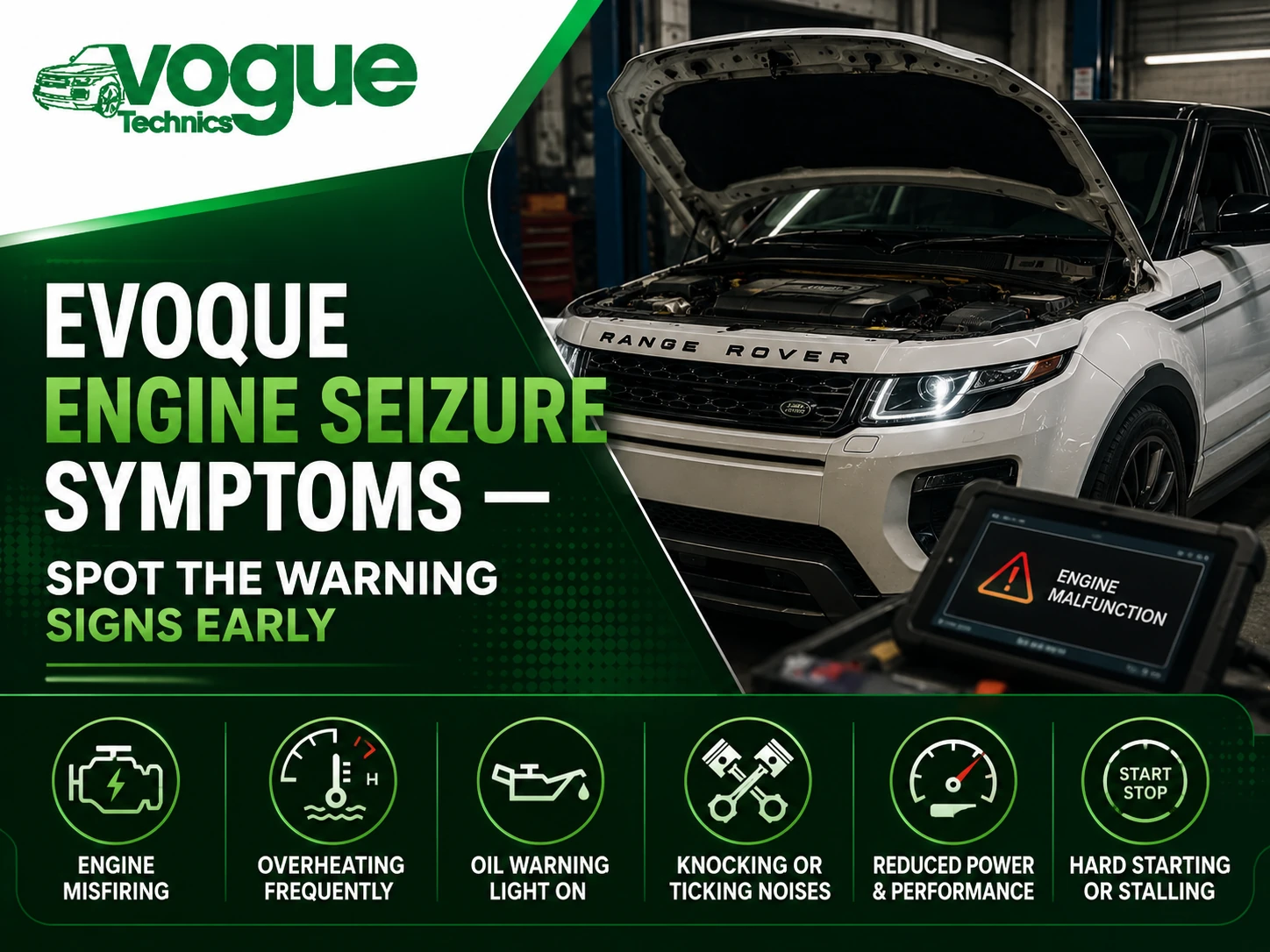
The human body sends symptoms before a serious illness takes hold. An engine does the same. The difference is that engine symptoms are measurable, codeable, and diagnosable — if you know what to look for.
Dashboard Warning Lights and Fault Codes to Watch
Modern Evoque models are equipped with sophisticated engine management systems. When something goes wrong internally, the ECU logs fault codes and activates warning indicators on the dashboard. Ignoring these lights is the most common reason engine damage escalates from repairable to catastrophic.
Restricted Performance Message and Engine Management Light
A Restricted Performance warning on the Evoque's instrument cluster means the ECU has detected a fault serious enough to limit engine output to protect itself. This is not a minor inconvenience, it is the vehicle actively preventing further damage while signalling that professional diagnosis is required immediately.
Common triggers include:
- Turbocharger boost pressure faults
- Severe misfires or combustion irregularities
- Low oil pressure thresholds being breached
- MAF sensor or MAP sensor faults affecting fuelling
P0299, P0401 and What These Codes Signal
Fault code P0299 indicates turbocharger underboost, the turbo is not producing the expected level of boost pressure. This can stem from a failing turbocharger, a boost leak, or a damaged turbo oil feed pipe restricting lubrication to the turbo's bearings.
P0401 relates to insufficient EGR flow, which can contribute to carbon buildup, elevated combustion temperatures, and long-term wear on piston rings and valve seats.
Neither code alone indicates imminent seizure, but both, left unresolved, contribute to the progressive internal deterioration that makes seizure more likely.
Unusual Noises, Rough Idle, and Loss of Power
Beyond warning lights, the engine itself communicates through sound and behaviour. Learning to distinguish between different noises can tell you a great deal about where a problem originates.
Engine Knock vs Timing Chain Rattle — Know the Difference
These two sounds are often confused, but they have distinct characteristics:
Symptom | Timing Chain Rattle | Engine Knock (Bearing Failure) |
| When it occurs | Cold start, first few seconds | At idle and under load |
| Sound character | High-pitched rattling or clattering | Deep, rhythmic thudding or knocking |
| Location | Upper engine / front cover | Lower engine / bottom end |
| Disappears when warm? | Often yes, initially | No — worsens under load |
| Urgency level | High — act within days | Critical — stop driving immediately |
A rough idle accompanied by loss of power and excessive exhaust smoke, particularly blue or white smoke, indicates oil burning, coolant ingress, or fuelling issues, all of which stress the engine severely if left unaddressed.
Diesel vs Petrol Evoque — Are Engine Seizure Risks Different?
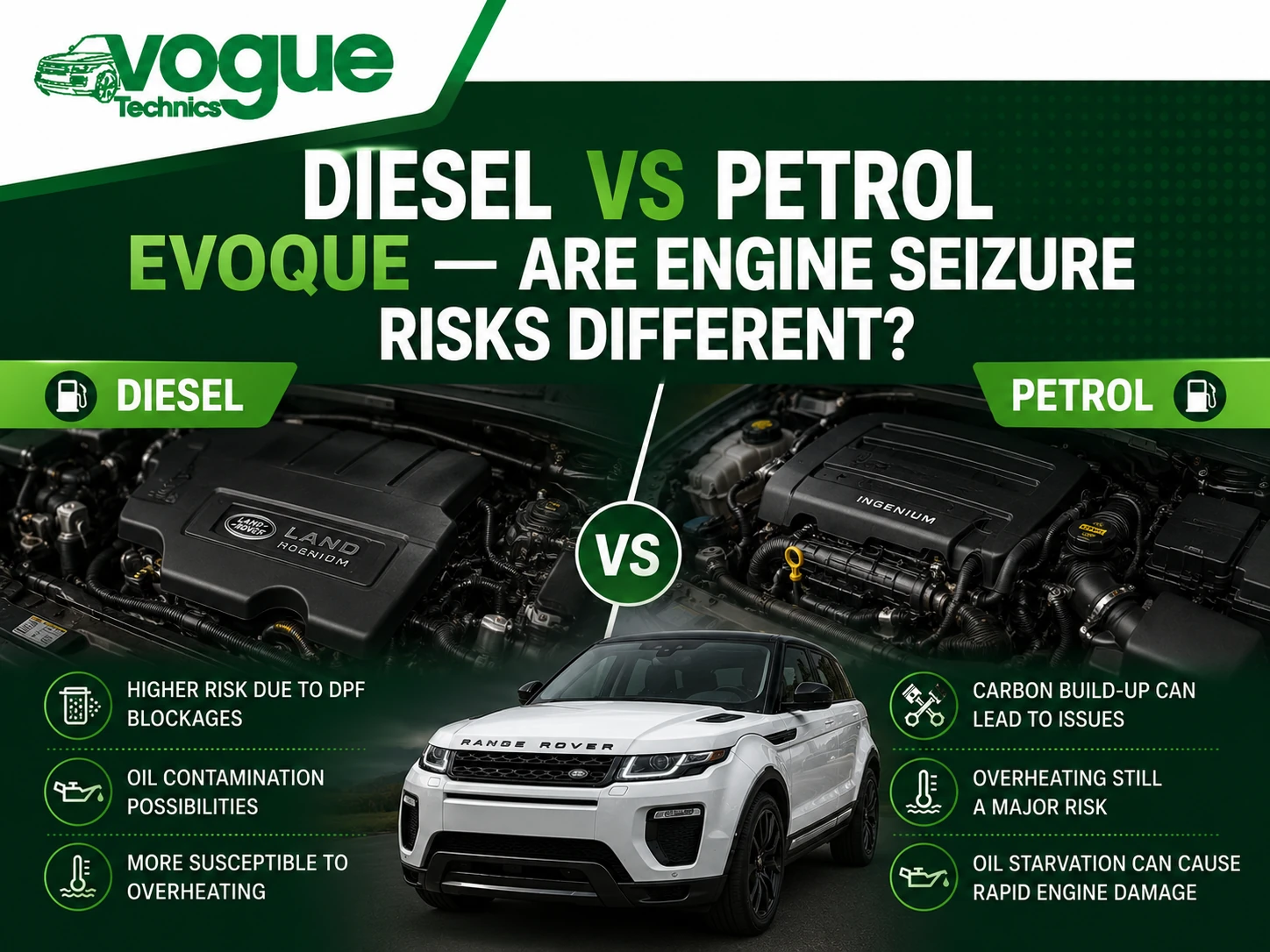
The Range Rover Evoque has been sold with several engine variants over the years. The seizure risks differ meaningfully between the diesel and petrol configurations, and understanding which engine you own changes the specific maintenance priorities.
2.2 Diesel Evoque Engine Problems and DPF Complications
The older 2.2-litre diesel engine, fitted to earlier Evoque models, carries its own set of known weaknesses. While mechanically different from the later Ingenium units, it shares the diesel dilution vulnerability and introduces an additional concern: DPF (Diesel Particulate Filter) complications.
How DPF Regeneration Failure Accelerates Engine Wear
The DPF captures soot from exhaust gases. Periodically, it performs a regeneration cycle, burning off accumulated soot by injecting additional fuel into the exhaust stream at high temperatures. This is normal and necessary.
The problem arises when regeneration cycles are repeatedly interrupted typically by short journeys, causing the DPF to become blocked. A blocked DPF forces the engine to work harder, raises exhaust back pressure, increases fuel consumption, and critically causes additional fuel to enter the oil, worsening diesel dilution.
Evoque owners using their vehicles predominantly for short urban trips should:
- Use a fuel additive to assist DPF regeneration
- Undertake a 20–30 minute motorway run periodically to allow full regeneration
- Monitor oil levels and quality more frequently than standard intervals suggest
2.0 Ingenium Petrol Engine Seizure Causes
The 2.0-litre Ingenium petrol engine faces a different set of vulnerabilities. While free from diesel dilution concerns, it is more susceptible to issues relating to the turbocharger and oil system under performance driving conditions.
Turbocharger Oil Feed Failure and Its Role in Engine Lockup
The turbocharger spins at speeds exceeding 100,000 RPM. Its central bearing shaft relies entirely on a pressurised oil feed pipe to maintain lubrication. If this pipe becomes restricted, through sludge, carbon deposits, or a collapsed internal bore the turbo bearing runs dry.
A failing turbo bearing generates metal particles that circulate through the oil system, contaminating the oil supply to every other lubricated component in the engine. The turbo itself can disintegrate, sending fragments of the compressor wheel into the intake manifold and intercooler.
In extreme cases, turbocharger failure directly initiates engine lockup particularly if the debris restricts oil circulation or if the seizure creates an imbalance severe enough to damage the crankshaft.
The tell-tale signs of impending turbo failure include:
- Blue or grey smoke from the exhaust under acceleration
- A high-pitched whining or grinding from the turbo under boost
- Fault code P0299 (underboost condition)
- Increased oil consumption without visible external leaks
Evoque Engine Seized? Here's What Voguetechnics Can Do for You

Discovering your Evoque's engine has seized is stressful but it isn't necessarily the end of the vehicle. The right specialist, with the right technical knowledge of Land Rover and Ingenium engines, can assess the true extent of the damage and present you with a clear, honest path forward.
At Voguetechnics Engine Rebuild, based in Grays, Essex, we specialise exclusively in engine rebuilds and replacements for Range Rover and Land Rover vehicles. We've stripped, assessed, and rebuilt Evoque engines that other garages had written off and we've saved owners thousands compared to main dealer replacement costs.
Engine Rebuild vs Engine Replacement — Which Option Is Right?
This is the first and most important question after a seizure diagnosis. The answer depends entirely on the extent of internal damage, which is only determinable after a thorough strip-down and assessment.
Option | Best For | Approximate Cost (UK) | Turnaround |
| Engine Rebuild | Repairable internal damage — bearings, timing chain, head | £1,800 – £3,500 | 5–10 working days |
| Remanufactured Engine | Severe block or crankshaft damage | £2,500 – £4,500 | 3–7 working days |
| Engine Replacement (Used) | Budget-conscious, lower-mileage donor available | £1,200 – £2,800 | 3–5 working days |
Note: Costs vary based on engine variant, extent of damage, and parts availability. Contact Voguetechnics for an accurate assessment.
What's Included in a Professional Evoque Engine Rebuild
A professional engine rebuild at Voguetechnics is not a patch-up job. Every rebuild includes:
- Full strip-down and internal inspection of all engine components
- Replacement of timing chain, tensioners, and guides as standard
- New crankshaft bearings and thrust washers
- Cylinder head inspection, skim, and pressure test where required
- Oil pump replacement or inspection and clearance check
- Replacement of all gaskets, seals, and oil-way plugs
- Post-build engine running and pressure testing before vehicle fitment
- Full diagnostic scan post-fitment to clear fault codes and verify operation
Why Essex and UK-Wide Evoque Owners Trust Voguetechnics
We're not a general garage that occasionally works on Land Rovers. Engine rebuilding for Range Rover and Land Rover vehicles is what we do, every day, for customers across Essex, London, and the wider UK.
Our workshop in Grays, Essex is equipped with Land Rover-specific diagnostic tooling, including JLR-compatible diagnostic software capable of reading manufacturer-level fault codes beyond what generic OBD readers can access. This matters because Evoque faults, particularly those related to camshaft timing and turbocharger operation, often store manufacturer-specific codes that generic tools miss entirely.
Our Diagnostic Process — From Fault Code to Fixed Engine
We follow a structured, transparent process for every Evoque engine we receive:
- Initial diagnostic scan: full fault code read including JLR-specific codes
- Mechanical assessment: oil condition check, compression test, turbo inspection
- Strip-down and internal inspection: identifying primary failure and secondary damage
- Written report and itemised quote: no hidden costs, no surprises
- Agreed rebuild or replacement: using quality components with documented provenance
- Post-build testing and road verification: engine verified before collection or delivery
We believe every customer deserves to understand exactly what happened to their engine and exactly what was done to fix it. That transparency is what has built our reputation across Essex and beyond.
Frequently Asked Questions
Can a Seized Range Rover Evoque Engine Be Repaired?
In many cases, yes. The repairability of a seized Evoque engine depends on the extent of internal damage. If the seizure was caused by oil starvation and caught at an early stage, the damage may be limited to bearings and possibly the crankshaft, both replaceable within a rebuild. If the engine seized due to timing chain failure with piston-to-valve contact, the damage is more extensive but a full rebuild is still often viable. A thorough strip-down assessment is the only way to determine this accurately.
How Much Does an Evoque Engine Rebuild Cost in the UK?
A professional Evoque engine rebuild in the UK typically ranges from £1,800 to £3,500, depending on the engine variant and the extent of damage found during strip-down. A full engine replacement using a remanufactured unit ranges from £2,500 to £4,500 including fitment. Main dealer quotes for the same work are often considerably higher. Contact Voguetechnics in Grays, Essex for a no-obligation assessment and transparent quote.
How Long Does a Timing Chain Last in a Range Rover Evoque?
Jaguar Land Rover designed the Ingenium engine's timing chain to last the vehicle's lifetime under ideal conditions. In practice, premature wear is well-documented, particularly in vehicles used predominantly for short journeys, those with extended service intervals, or those affected by diesel dilution reducing oil quality. Cold start rattles appearing before 60,000–80,000 miles are a known concern and should be investigated promptly rather than monitored.
What Causes Low Oil Pressure in the Range Rover Evoque?
Low oil pressure in the Evoque typically stems from one of four causes: degraded or diluted oil that has lost its viscosity, a blocked oil pickup tube restricting flow to the pump, a worn oil pump unable to maintain adequate pressure, or excessive bearing clearance from worn crankshaft bearings. Each of these has a different repair path, which is why diagnostic accuracy matters before any work begins.
Does DPF Regeneration Damage the Engine?
Successful DPF regeneration does not damage the engine. The problem arises when regeneration is repeatedly interrupted, as happens with predominantly short journeys, causing fuel injected during regeneration to wash down into the sump and dilute the engine oil. Over time, this diesels the oil's lubricating properties and accelerates internal wear. Regular longer drives and timely oil changes significantly reduce this risk.
Final Thoughts
A Range Rover Evoque engine seizure is rarely an event that arrives without warning. Oil pressure alerts, cold start rattles, dashboard fault codes, and subtle changes in engine behaviour all precede catastrophic failure, often by weeks or months.
The cost of acting on those warnings early is measured in hundreds of pounds. The cost of ignoring them is measured in thousands.
If your Evoque is showing any of the symptoms described in this article, or if you're already facing a seized engine, Voguetechnics Engine Rebuild in Grays, Essex is ready to help. We offer honest assessments, transparent pricing, and specialist-level expertise in Range Rover and Land Rover engines that general garages simply cannot match.
Call us today or visit voguetechnicsenginerebuild.co.uk to book your engine diagnostic or discuss your rebuild options. Don't wait for a complete failure, the earlier we assess it, the more options you have.