
Land Rover Ingenium Engine Problems: Causes, Symptoms & Repair Options in Essex
Land Rover Ingenium engines, especially the 2.0-litre diesel variants, follow a well-documented failure chain: short journeys interrupt DPF regeneration, causing diesel to dilute the engine oil. This diluted oil starves the rear-mounted timing chain and turbocharger of proper lubrication, leading to rattling, wear, and eventually costly engine damage. Catching early warning signs, like a cold-start rattle or rising oil level, can save owners from a full rebuild. Vogue Technics in Grays, Essex specialises in diagnosing and repairing these Ingenium-specific issues.
Your Land Rover just started rattling on cold mornings, or the oil level keeps creeping up between services, and you're starting to wonder if you're looking at a repair bill with four figures attached. You're not being paranoid. If your vehicle runs an Ingenium engine, you've landed in the right place, because these engines have a well-documented pattern of failure that owners across the UK are dealing with right now.
At Vogue Technics Engine Rebuild, based in Grays, Essex, we see Ingenium engines on our ramps every week. Some come in for a simple diagnostic check. Others arrive on a flatbed after a timing chain has already let go. What we've learned from hands-on work with these engines is that the problems rarely appear in isolation, one issue tends to trigger the next, and understanding that chain reaction is the key to catching failure early rather than paying for a full rebuild later.
This guide walks through exactly why Ingenium engines fail, what the warning signs look like in real driving conditions, which models and variants carry the highest risk, and what your realistic repair options are if you're already dealing with a fault.
Why Do Land Rover Ingenium Engines Fail?
Jaguar Land Rover introduced the Ingenium engine family to replace older Ford- and BMW-derived units with an in-house design built for efficiency and emissions compliance. On paper, it was a step forward. In practice, particularly in the 2.0-litre diesel variants (engine codes like 204DTD and 204DTA), a specific combination of design choices has created a recurring failure pattern that independent specialists now recognise instantly.
The problems aren't random. They follow a chain reaction that starts with something as ordinary as short daily journeys and ends, if left unaddressed, with catastrophic internal engine damage.
What Causes Oil Dilution in Ingenium Engines?
Oil dilution happens when unburnt diesel fuel finds its way into the engine oil instead of being burned off in the combustion cycle. In Ingenium diesel engines, this is closely tied to the DPF (diesel particulate filter) regeneration process.
During regeneration, the engine injects extra fuel into the cylinders to raise exhaust temperatures and burn off trapped soot. If a regeneration cycle is interrupted, which happens frequently on short trips or stop-start city driving, some of that extra diesel doesn't burn cleanly. Instead, it washes past the piston rings and ends up mixing with the engine oil in the sump.
Once diesel contaminates the oil, its viscosity drops. Thin, diluted oil can't lubricate moving parts the way it's designed to, and that's where the real damage begins.
Why Does the Ingenium Timing Chain Wear Out So Fast?
Here's where the design of the Ingenium engine becomes a genuine liability. Unlike many engines that mount the timing chain at the front, Ingenium units use a rear-mounted timing chain, positioned between the engine block and the bulkhead.
This location makes sense from a packaging and NVH (noise, vibration, harshness) perspective, but it creates a serious problem: when the oil supply feeding the chain tensioner and guides becomes diluted and loses viscosity, the chain doesn't get properly lubricated. Chain stretch follows, then rattle, then, without intervention, the chain can jump time or fail outright.
And because it's mounted at the rear, replacing it isn't a quick job. In most cases, the engine has to come out of the car entirely, which is a major reason timing chain repairs on these engines carry such a steep labour cost compared with front-mounted chain designs.
How Does DPF Regeneration Lead to Engine Damage?
It's worth mapping out the full sequence, because this is the single most important thing to understand about Ingenium reliability:
- Short journeys prevent the DPF from completing a full regeneration cycle
- Incomplete regeneration means excess diesel fuel enters the combustion chamber
- That unburnt fuel washes down the cylinder walls into the engine oil
- The oil becomes diluted and its lubricating properties break down
- Reduced oil viscosity starves the timing chain tensioner and guides
- The timing chain stretches, rattles, and wears prematurely
- Poor lubrication also affects turbocharger bearings and internal components
- Left unresolved, this progresses to reduced power, limp mode, or full engine failure
Understanding this sequence changes how you should think about "Ingenium engine problems." They're rarely one-off faults. They're usually downstream symptoms of oil dilution that started weeks or months earlier.
Common Ingenium Engine Problems & Warning Signs
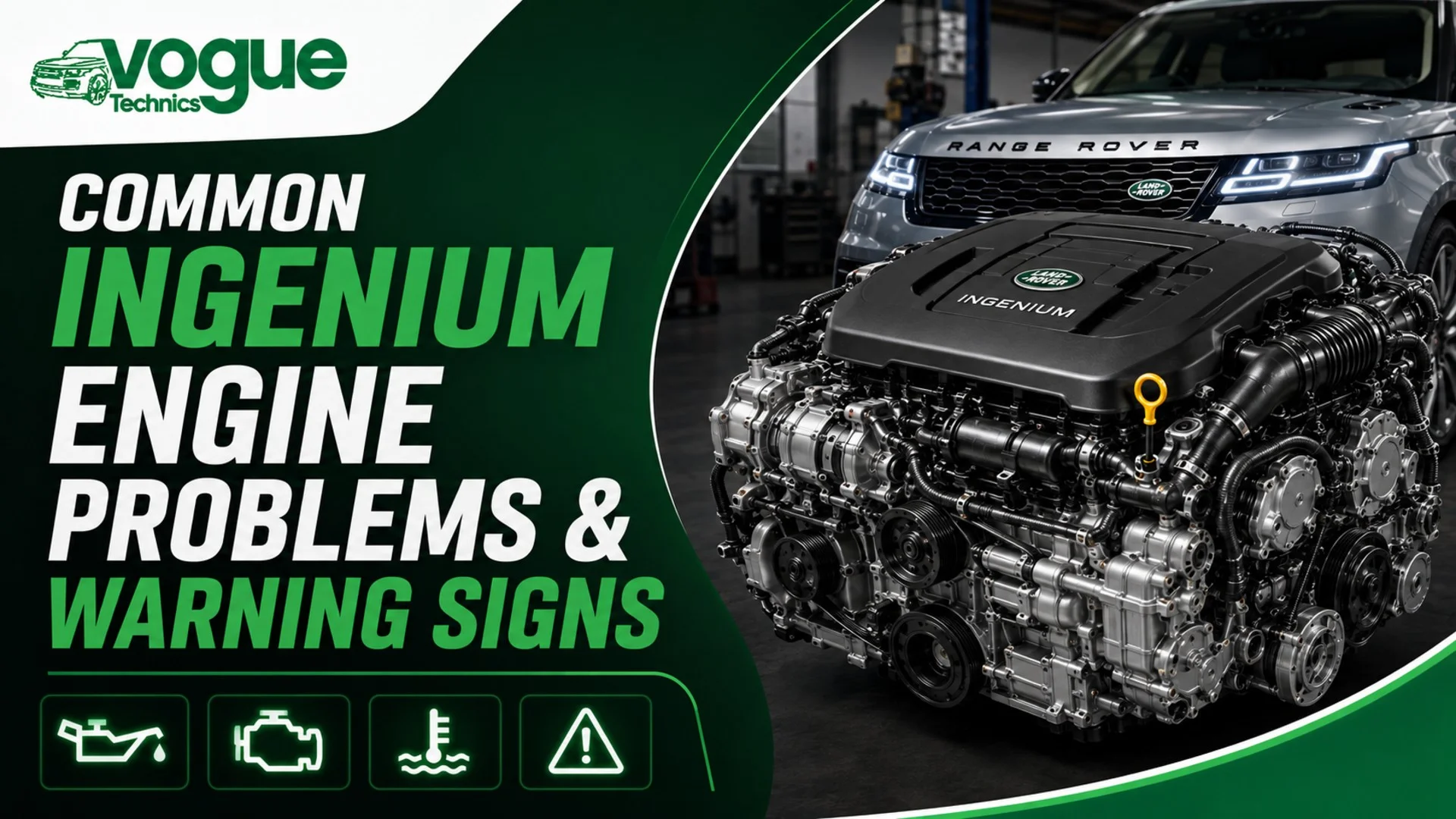
Catching an Ingenium fault early is almost always cheaper than waiting for it to escalate. Below are the warning signs we tell every customer to watch for, based on the failures we diagnose most often in our Essex workshop.
Timing Chain Rattle: What It Sounds Like and What It Means
A cold-start rattle is one of the earliest and most reliable indicators of timing chain wear on an Ingenium engine. It typically sounds like a metallic, chattering noise that lasts a few seconds on startup and then fades once oil pressure builds.
Don't dismiss this as normal engine noise. On a healthy Ingenium engine, you shouldn't hear any chain rattle at all. If it's happening consistently, it usually means the tensioner is already struggling to keep the chain under proper tension, and that's not a fault that improves on its own.
Turbocharger and Fuel Injector Failure Symptoms
Turbo and injector problems on Ingenium engines often trace back to the same root cause: oil starvation from dilution, or excessive heat from repeated regeneration cycles. Watch for:
- A noticeable whining or whistling noise under acceleration
- Delayed throttle response or turbo lag that wasn't there before
- Visible blue or black smoke from the exhaust
- Rough idle or misfire, particularly on cold starts
- Reduced fuel economy without a change in driving habits
Any of these on their own could point to a minor issue. Two or three appearing together is a strong signal that it's time for a proper diagnostic scan rather than guesswork.
Signs Your Engine Oil Is Diluted With Diesel
Oil dilution is sneaky because it doesn't always trigger a warning light immediately. The clues tend to be physical rather than digital:
- Oil level rising above the maximum mark between services
- A strong diesel smell on the dipstick or oil filler cap
- Oil that looks thinner or darker than usual
- Reduced oil pressure readings on a diagnostic scan
If you notice your oil level going up rather than down between changes, that's not a good sign, it almost always means fuel is getting into the sump.
DPF Warning Lights and What They're Telling You
A DPF warning light means the filter has detected soot loading beyond its normal threshold and needs a regeneration cycle to clear it. If the light comes on repeatedly, especially if you mostly drive short distances or in stop-start traffic, it's worth taking seriously rather than clearing it and moving on.
A genuine 15–20 minute motorway run at consistent speed can often trigger a successful passive regeneration. But if the light keeps returning, or if it's paired with reduced power or limp mode, the underlying cause needs a diagnostic check, not just a longer drive.
Which Ingenium Engines Are Most at Risk?
Not every Ingenium engine carries the same level of risk. Fuel type, displacement, and model year all affect reliability, and knowing where your vehicle sits on that spectrum is genuinely useful whether you're troubleshooting an existing car or shopping for a used one.
2.0 Diesel vs 2.0 Petrol vs 3.0 Ingenium: Reliability Compared
Engine Variant | Common Issues | Relative Risk | Notes |
| 2.0 Diesel (204DTD/204DTA) | Oil dilution, timing chain wear, DPF faults | High | Most-reported failure pattern, especially pre-2020 |
| 2.0 Petrol | Timing chain wear, less oil dilution risk | Lower–Medium | No DPF-related dilution, but chain design shared |
| 3.0 Straight-Six Diesel/Petrol | Different chain layout, MHEV complexity | Variable | Newer design, fewer reported cases so far, but MHEV adds electrical complexity |
| Post-2020 Updated Diesel | Revised DPF/regeneration software | Medium | JLR made running changes; still worth inspecting |
The pattern that emerges clearly from real-world cases is that diesel variants carry more risk than petrol, primarily because petrol engines don't rely on the same DPF regeneration cycle that drives oil dilution. That said, petrol Ingenium engines aren't immune to timing chain wear, they just tend to reach that point later and less severely.
Which Land Rover Models Are Affected?
The Ingenium engine has been fitted across most of the current Land Rover and Range Rover lineup, so this isn't a niche issue affecting one model. Vehicles commonly affected include:
- Land Rover Defender (2020 onwards)
- Land Rover Discovery and Discovery Sport
- Range Rover Evoque
- Range Rover Velar
- Range Rover Sport
- Range Rover (full-size)
If you're driving any of these with a 2.0-litre diesel badge, the failure pattern described above applies directly to your vehicle.
Which Ingenium Engine Should You Avoid?
If you're buying used, the 2016–2019 2.0-litre diesel variants (particularly early 204DTD units) carry the strongest documented history of oil dilution and timing chain failure. That doesn't mean every example will fail, but it does mean you should insist on seeing full service history, DPF regeneration history, and ideally a pre-purchase inspection before handing over a deposit. Later revisions and the 3.0-litre straight-six have a comparatively better track record so far, though "better" doesn't mean "problem-free."
Ingenium Engine Repair, Rebuild & Replacement in Essex
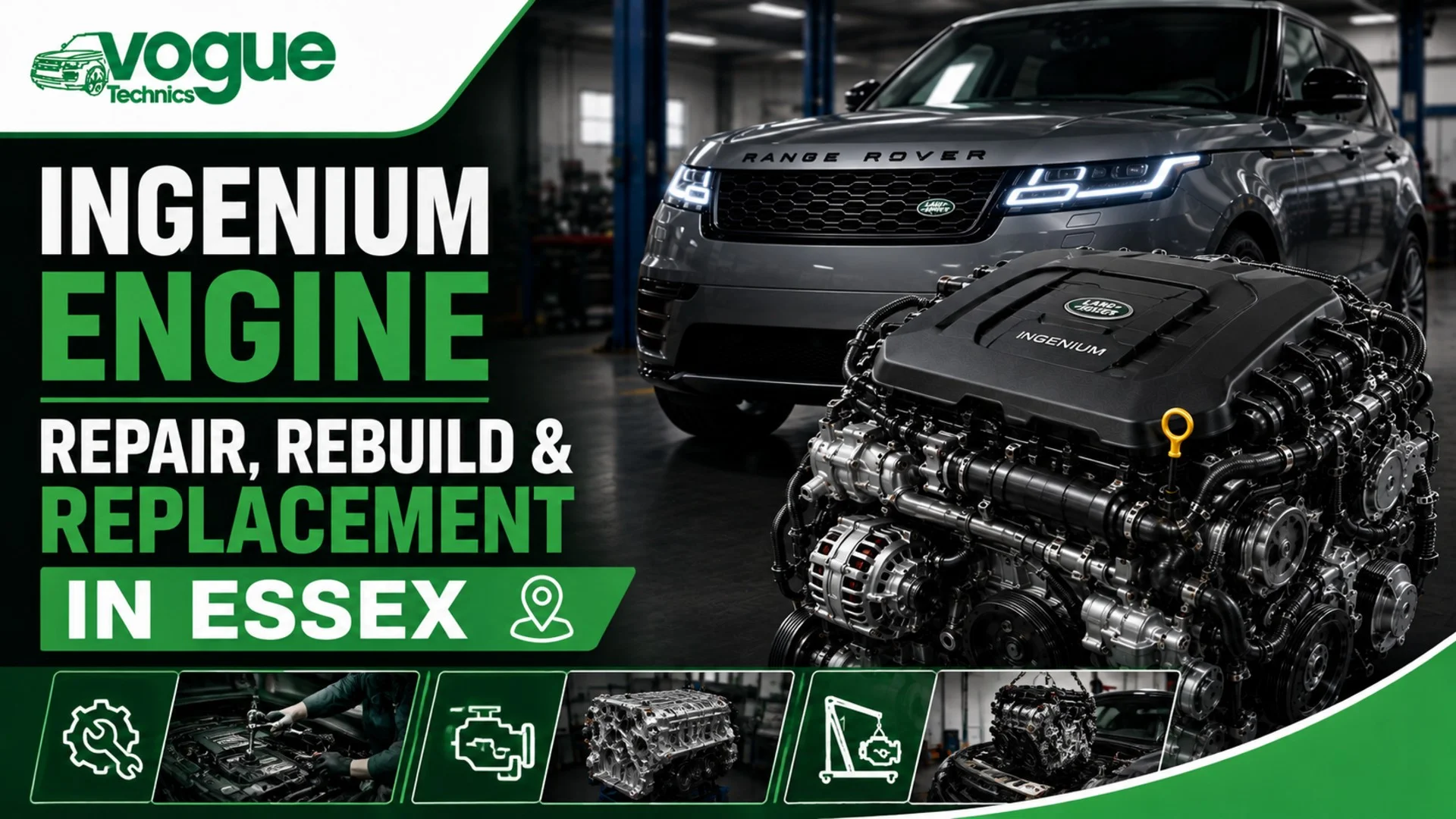
If you're already dealing with symptoms, rattle, rising oil, a limp mode warning, the question becomes practical: what's it going to cost, and what's actually worth doing?
How Much Does an Ingenium Engine Rebuild Cost?
Costs vary depending on how far the damage has progressed, but as a general guide:
- Timing chain and tensioner replacement: Because the chain is rear-mounted, this typically requires engine removal, which pushes labour costs well above what you'd pay on a front-chain engine
- Turbocharger replacement: Varies depending on whether it's a like-for-like OEM unit or a reconditioned alternative
- Full engine rebuild: Covers internal components affected by prolonged oil starvation, pistons, bearings, cylinder walls, and is the most involved (and most expensive) option
- Full engine replacement: Sometimes more cost-effective than a rebuild if damage is extensive, particularly with a reconditioned unit
We always provide a written quote after diagnostics, because giving a number before we've actually looked at the engine does nobody any favours.
Repair vs Rebuild vs Replacement: Which Is Right for You?
This decision usually comes down to how early the problem was caught and the overall condition of the vehicle:
- Repair makes sense if you've caught the issue early, a timing chain rattle diagnosed before it's caused knock-on damage, for example
- Rebuild is the right call when internal components (bearings, cylinder walls, pistons) have been damaged by oil starvation but the block itself is salvageable
- Replacement becomes the more sensible option when damage is extensive, or when the cost of a rebuild starts approaching the cost of a reconditioned engine
There's no universal answer here. It depends on mileage, the vehicle's overall condition, and frankly what you plan to do with the car long-term.
Why Choose Vogue Technics Engine Rebuild, Grays, Essex?
We specialise specifically in Land Rover and Jaguar Ingenium engine diagnostics, rebuilds, and replacements, working on the exact failure patterns covered in this guide day in and day out. That focus matters, an Ingenium engine doesn't behave like a generic diesel, and treating it like one leads to misdiagnosis and repeat failures.
Based in Grays, Essex, we work with both individual owners and independent garages across the region who need a specialist to handle Ingenium-specific rebuild work properly the first time.
Get a Free Diagnostic Quote Today
If you're hearing a rattle, watching your oil level creep up, or dealing with a DPF light that won't stay off, don't wait for it to turn into a full engine failure. Get in touch with our team for a proper diagnostic assessment and an honest, itemised quote, no guesswork, no unnecessary upselling.
Frequently Asked Questions
Are Ingenium engines reliable?
Reliability varies significantly by variant. Petrol Ingenium engines and the newer 3.0-litre straight-six units have shown fewer widespread issues, while early 2.0-litre diesel variants (2016–2019) have a well-documented history of oil dilution and timing chain failure. With regular maintenance and awareness of the warning signs, many owners run these engines without major issues, but the risk is real enough that it shouldn't be ignored.
How long do Ingenium engines last?
With good maintenance, an Ingenium engine can comfortably reach 100,000–150,000 miles. However, diesel variants affected by oil dilution have, in some documented cases, suffered timing chain or turbo failure well before that, sometimes as early as 60,000–80,000 miles, particularly in vehicles used mainly for short journeys.
Is it worth repairing an Ingenium engine?
In most cases, yes, particularly if the fault is caught early. A timing chain replacement or turbo repair is almost always more cost-effective than a full rebuild or replacement, provided the underlying oil dilution issue is also addressed so the problem doesn't recur.
What is the best or most reliable Ingenium engine to buy?
Based on current data, the newer 3.0-litre straight-six diesel and petrol variants, along with post-2020 2.0-litre diesel units with revised regeneration software, show the strongest reliability track record so far.
Does Land Rover still use the Ingenium engine?
Yes, Ingenium engines remain in production and continue to power most current Land Rover and Range Rover models, though JLR has made ongoing software and hardware revisions to address earlier reliability concerns.
Can DPF regeneration really cause engine damage?
Yes, indirectly. It's not the regeneration process itself that damages the engine, but incomplete regeneration cycles (common with frequent short journeys) that lead to fuel dilution in the oil, which then starves the timing chain and other components of proper lubrication.
Final Thoughts
Ingenium engine problems aren't a mystery, and they're not unavoidable bad luck either. They follow a predictable pattern: short journeys interrupt DPF regeneration, unburnt fuel dilutes the oil, diluted oil starves the timing chain and turbo of proper lubrication, and, without intervention, that leads to expensive internal damage.
The good news is that every stage of this chain gives you a warning if you know what to look for. A cold-start rattle, a rising oil level, a diesel smell on the dipstick, these are your engine telling you something before it becomes a five-figure repair bill.
If you're noticing any of these signs, or you simply want peace of mind with a proper diagnostic check, get in touch with Vogue Technics Engine Rebuild in Grays, Essex. We work on Ingenium engines specifically, and we'd rather catch a problem at the rattle stage than the roadside-recovery stage.