
Land Rover Engine Recon vs Repair: Which Is the Right Choice for Your Vehicle?
Choosing between an engine repair and a full reconditioning job can cost you hundreds or thousands of pounds — and getting it wrong means paying twice. This guide breaks down exactly what separates a targeted repair from a complete engine recon, what each genuinely costs, and how symptoms like oil contamination, bearing wear, or timing chain failure point to the right fix. Whether you drive a 2.0 Ingenium, 3.0 TDV6/SDV6, or a V8 diesel, the goal is simple: diagnose properly first, then choose the option your engine actually needs — not the one that costs more.
Your Land Rover engine has just failed a compression test, or worse, it's making a noise you've never heard before. Now you're stuck with a decision that could cost you anywhere from a few hundred pounds to several thousand: do you repair what's there, or do you go for a full engine recon?
This isn't a decision to rush. Get it wrong and you could end up paying for a repair that doesn't hold, or spending on a full reconditioning job when a targeted fix would have done the job just as well. This guide walks through exactly how engine repair and reconditioning differ, what each one actually costs, and how to work out which one your Land Rover genuinely needs, not just what a workshop wants to sell you.
What's the Real Difference Between Engine Repair and Reconditioning?
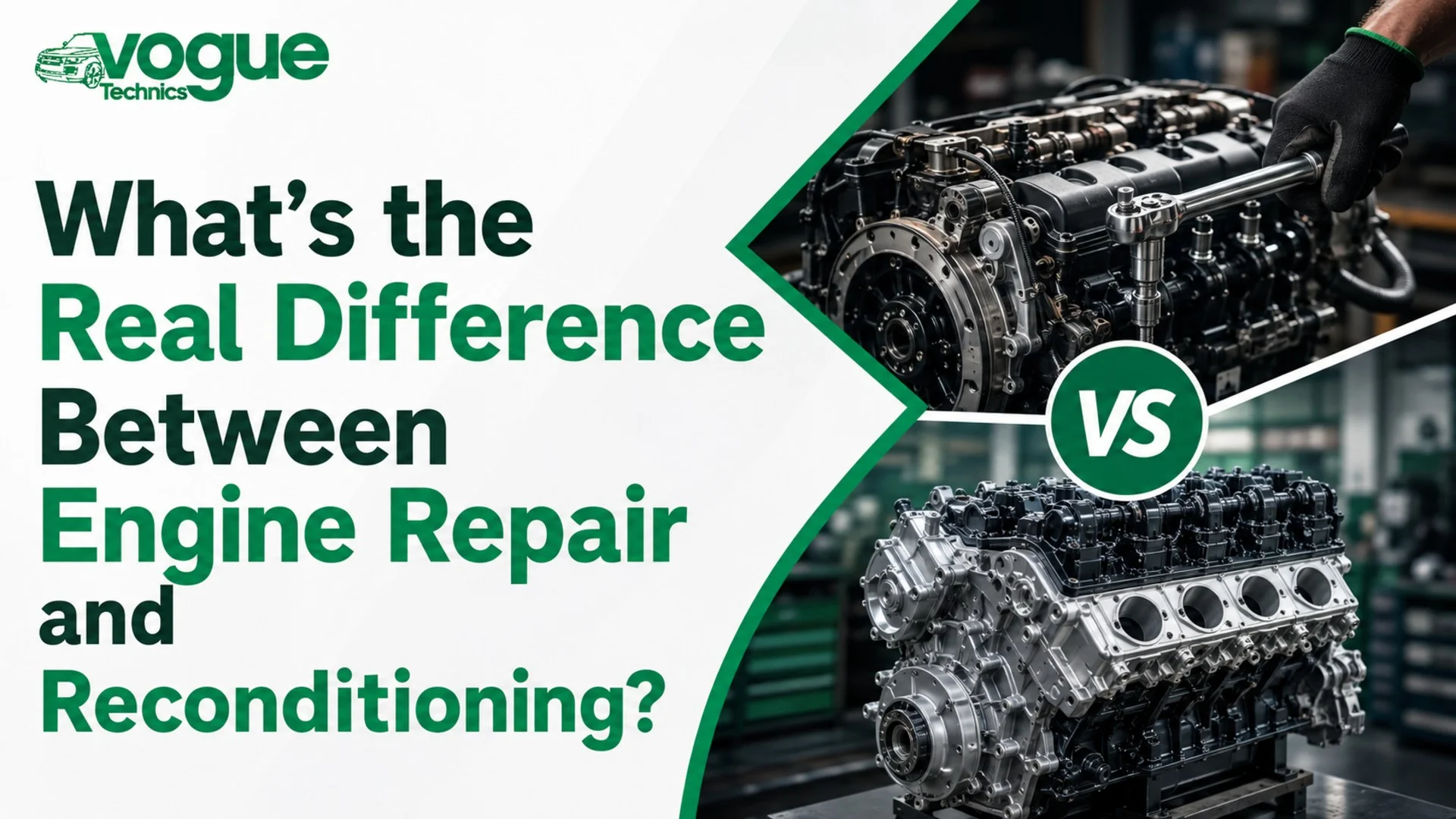
The terms "repair," "recon," "rebuild," and "replacement" get thrown around loosely in the trade, and that's part of the problem. Owners often get quoted for one thing and assume they're getting another. Before you compare costs or make any decisions, it helps to know exactly what each term means.
What Counts as an Engine Repair?
An engine repair is a targeted fix. The engine itself stays in the vehicle (or comes out only briefly), and a specialist addresses a specific fault rather than stripping the whole unit down.
Typical repair work includes:
- Gasket replacement, most commonly the head gasket, often linked to overheating or coolant loss
- Seal replacement, oil seals and other seals that have started to weep or fail
- Timing chain replacement, a common and serious issue on several Land Rover engine families
- Turbocharger replacement or repair, particularly relevant on the 2.0 Ingenium and 3.0 TDV6/SDV6 units
- Injector replacement, where fuel injectors have failed or are underperforming
A repair is the right call when the damage is contained. If the core internals, crankshaft, bearings, cylinder bores, are still within tolerance, there's often no need to go further.
What Does "Engine Reconditioning" Actually Involve?
Engine reconditioning is a different scale of job entirely. This is where the engine comes out of the vehicle completely and goes through a full strip-down, inspection, and rebuild process using precision engine machining.
A genuine reconditioning job typically includes:
- Complete engine strip-down and component inspection
- Ultrasonic cleaning of the engine block and all major components
- Crankshaft grinding and polishing where wear is found
- Cylinder honing or reboring to restore correct bore geometry
- Replacement of all bearings, main bearings and big-end bearings, as standard, regardless of visual condition
- Fitting of new piston rings, gaskets, and seals throughout
- Full engine assembly and torquing to manufacturer specification
- Post-build testing, including pressure testing and, in some workshops, dyno testing before the engine goes back in
This is a far more thorough process than repair, and it's priced accordingly. But it also resets the engine's internal tolerances back to something close to factory-spec, which a repair, by its nature, doesn't do.
Recon vs Rebuild vs Replacement, Are They the Same Thing?
Not quite, and the differences matter when you're comparing quotes.
Term | What It Means | What Stays, What Changes |
| Repair | Fixes a specific fault | Only the faulty component is addressed |
| Rebuild | Strips, cleans, and reassembles the engine | Reusable parts go back in if within spec |
| Reconditioning | Rebuild plus precision machining and metrology | Worn parts are machined back to tolerance, not just cleaned |
| Replacement | Swaps the whole engine for a new, used, or reconditioned unit | Nothing from the old engine is reused |
A used engine is simply a second-hand unit pulled from another vehicle, with no guarantee of its internal condition beyond mileage and a basic check. A reconditioned engine has been through the machining and rebuild process described above. That difference alone explains why reconditioned units cost more than used ones, and why they're the more reliable buy.
How Do You Know Which One Your Land Rover Needs?
In practice, the right choice comes down to what a proper diagnostic inspection finds. Compression testing, oil analysis, and a visual inspection of the internals (where accessible) will usually tell a specialist whether you're looking at a contained fault or something that's damaged the bottom end.
As a general rule:
- If the fault is isolated to a single system (cooling, timing, turbo, injectors), repair is usually the more economical and sufficient option.
- If there's evidence of bearing damage, crankshaft scoring, cylinder bore wear, or the engine has suffered oil starvation or catastrophic failure, reconditioning is the only way to guarantee reliability going forward.
Land Rover Engine Recon vs Repair, Cost, Reliability & Warranty Compared
This is usually where the decision actually gets made. Cost matters, but so does what you're getting for that cost, and a cheaper repair that fails again in six months isn't actually cheaper at all.
Land Rover Engine Repair Cost vs Reconditioning Cost
Land Rover engine repair cost varies enormously depending on what's actually wrong. A gasket or seal job might run to a few hundred pounds in parts and labour. A timing chain replacement, turbo replacement, or injector set is a bigger job, often running into four figures once labour is included, particularly on models where the engine has to come partially or fully out to access the components.
Reconditioning cost sits higher because you're paying for a complete rebuild, not a single fix. It reflects the machining work, the parts (bearings, rings, gaskets, and seals are replaced as standard), and the labour of a full strip-and-rebuild.
What affects the price:
- Model and engine type, a 2.0 Ingenium recon is generally less involved than a 4.4 SDV8 V8 rebuild, simply due to size and component count
- Severity of damage, a worn but intact engine costs less to recon than one that's suffered a seizure or catastrophic failure
- Parts specification, genuine Land Rover parts versus quality aftermarket equivalents affects both cost and long-term reliability
- Labour and access, some Land Rover engines are more labour-intensive to remove and refit than others
The honest way to think about it: repair costs less upfront but only fixes what's broken. Reconditioning costs more upfront but addresses wear across the whole engine, not just the fault that brought the car in.
Which Option Lasts Longer, A Repaired or Reconditioned Engine?
A well-executed repair on an engine with no underlying internal wear can last as long as the rest of the car, provided the original fault, and nothing else, was the problem.
A reconditioned engine, done properly with correct machining tolerances and quality bearings, effectively resets the engine's internal wear. Many specialists expect a properly reconditioned Land Rover engine to deliver comparable mileage to a new unit, assuming normal maintenance from that point forward.
The risk with repair-only work is that it doesn't catch problems that haven't shown symptoms yet. If bearing wear or bore scoring is present but hasn't caused a fault code, a repair won't touch it, and it can resurface later, sometimes taking the newly repaired component down with it.
Warranty Cover: What's Included With Repair vs Recon?
Warranty terms vary by specialist, so this is genuinely worth asking about directly rather than assuming. As a general pattern across the trade:
- Repairs typically carry a warranty covering the specific part and labour involved
- Reconditioned engines typically carry a longer, more comprehensive warranty, since the whole unit has been rebuilt and tested to a known standard
Always ask what the warranty actually covers, parts only, parts and labour, or the full engine, and get it in writing before work starts.
Is a Reconditioned Land Rover Engine Worth the Investment?
For an engine with genuine internal damage, bearing failure, crankshaft damage, bore wear, or the aftermath of oil starvation or overheating, reconditioning is very often worth it, particularly on a vehicle you intend to keep for several more years. It's a significant spend, but it's typically still considerably less than a main dealer replacement engine, and it comes with a rebuild standard you can verify.
For a vehicle nearing the end of its practical life, or where the fault is isolated and contained, a straightforward repair is usually the more sensible spend.
When to Repair and When to Recon, By Symptom and Land Rover Model
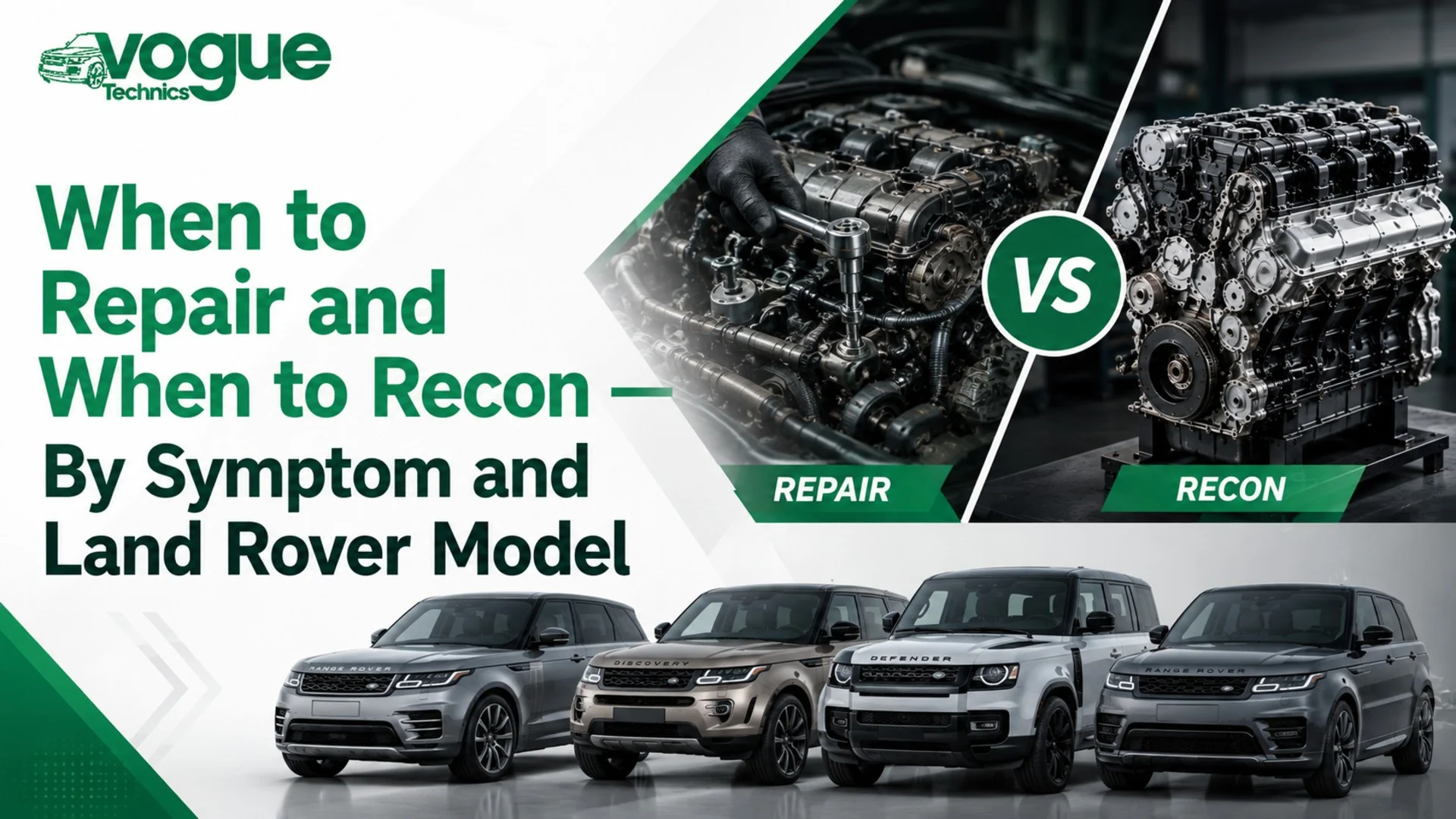
Symptoms point toward the likely cause, and the likely cause points toward the right solution. Here's how that typically plays out in practice.
Signs Your Land Rover Engine Needs Repair, Not a Full Recon
- A single warning light or fault code with no accompanying performance loss
- Oil or coolant leaks with no evidence of contamination between the two systems
- Rough idle or reduced power traced to a specific component (injector, turbo, sensor)
- Timing chain rattle caught early, before it's caused knock-on damage
When a Full Engine Recon Is the Only Sensible Option
- Persistent low oil pressure or evidence of oil starvation
- Engine seizure, partial or complete
- Metal contamination found in the oil (a strong sign of internal wear affecting bearings or the crankshaft)
- Overheating severe enough to have warped the head or damaged the block
- A history of ignored faults that have likely caused knock-on internal damage
Timing chain failure, bearing failure, and oil starvation are worth calling out specifically, because they're among the most common reasons Land Rover owners end up choosing reconditioning over repair. A timing chain that's failed completely can cause valve-to-piston contact, which damages far more than the chain itself. Bearing failure and oil starvation both point directly at internal wear that a surface-level repair simply can't resolve.
Model-Specific Considerations
Not every Land Rover engine behaves the same way under stress, and a specialist familiar with the specific unit will make a better call than a generalist.
2.0 Ingenium (Petrol & Diesel) The Ingenium range has been fitted across Discovery Sport, Range Rover Evoque, and Velar models. Diesel variants in particular have had well-documented timing chain and oil pump concerns on certain production years, which makes early diagnosis important before a contained issue turns into something that requires a full recon.
3.0 TDV6 / SDV6 Common across Discovery 4, Discovery 5, and Range Rover Sport, this unit is generally robust when maintained, but neglected servicing can lead to timing chain and turbo issues that, left too long, escalate into bottom-end damage.
3.6 TDV8 / 4.4 SDV8 Fitted to larger Range Rover and Range Rover Sport models, these V8 diesel units are more labour-intensive to work on due to size and access, which affects both repair and reconditioning costs. Reconditioning is comparatively more common on these engines when problems do reach the internals, given the cost gap to a full dealer replacement.
Why Choose Voguetechnics for Your Land Rover Engine Recon or Repair?
Every Land Rover engine that comes through the workshop gets assessed on its own merits, not pushed toward whichever option is more profitable. That distinction matters, because the right advice here should always follow the diagnostic findings, not the invoice total.
Our Engine Reconditioning Process, Step by Step
- Diagnostics and strip-down, full assessment before any decision is made
- Cleaning, ultrasonic cleaning of the block, head, and all major components
- Inspection and machining, crankshaft grinding, cylinder honing or reboring, and metrology checks against manufacturer tolerances
- Replacement of wear parts, bearings, rings, gaskets, and seals fitted as standard on every recon
- Assembly and testing, engine rebuilt, torqued to specification, and tested before it goes back into the vehicle
Genuine Parts, Manufacturer-Spec Tolerances & Testing
Every reconditioning job is machined and assembled to manufacturer specification, using genuine or genuine-equivalent parts throughout. That's not a marketing line, it's the difference between an engine that lasts and one that fails again within a year. Compression and pressure testing are carried out before any engine is signed off.
Trusted Land Rover Engine Specialists Based in Grays, Essex
Voguetechnics is based in Grays, Essex, working with Land Rover and Range Rover owners across the region who want a straight answer on repair versus reconditioning, not a hard sell. Whether it's a Discovery, Defender, Range Rover Sport, or Evoque, the same principle applies: diagnose properly first, then recommend the option that actually fits the damage.
Get a Quote, Repair or Recon, We'll Tell You Honestly Which You Need
If your Land Rover engine has thrown a fault, is running rough, or has already been flagged for internal damage, get it properly diagnosed before committing to either option. Reach out to Voguetechnics for an honest assessment and a clear quote, no pressure toward the more expensive job if a repair will genuinely do the work.
Frequently Asked Questions
Is it cheaper to repair or replace a Land Rover engine?
Repair is almost always cheaper than full replacement, provided the damage is contained to a specific component. Full replacement, particularly through a main dealer, is typically the most expensive route, with reconditioning sitting as the middle-ground option that addresses more than a repair but costs considerably less than a brand-new or dealer-supplied unit.
How long does a reconditioned Land Rover engine last?
A properly reconditioned engine, built to correct tolerances with quality bearings and components, can be expected to perform comparably to a new engine over its remaining service life, assuming normal servicing and maintenance continue afterward.
Can a seized or overheated Land Rover engine be repaired?
It depends on the extent of the damage. A seizure or severe overheating event often causes internal damage, to bearings, the crankshaft, or the cylinder bores, that goes beyond what a repair can fix. In most cases, this level of damage points toward reconditioning rather than repair.
Does a recon engine come with a warranty?
Reputable specialists back reconditioned engines with a warranty covering the rebuilt unit, though terms vary between workshops. Always confirm exactly what's covered, parts, labour, or both, before work begins.
How do I know if my Land Rover engine needs rebuilding or just a repair?
Only a proper diagnostic inspection, compression testing, oil analysis, and physical inspection where possible, can answer this with any confidence. Symptoms like a single fault code or an isolated leak often point to repair; symptoms like metal in the oil, prolonged low oil pressure, or a seizure point toward reconditioning.
What's the difference between a used engine and a reconditioned engine?
A used engine is a second-hand unit taken from another vehicle with no guarantee of internal condition beyond its recorded mileage. A reconditioned engine has been fully stripped, machined, and rebuilt with new wear parts, and is tested before being fitted, making it the more reliable of the two.
Final Thoughts
The repair-versus-reconditioning decision isn't really about which option sounds better on paper, it's about what your specific engine actually needs, based on what a proper diagnostic turns up. A contained fault deserves a contained fix. Genuine internal wear or damage deserves a full recon, because anything less is likely to bring you back to the workshop sooner than you'd like.
If you're weighing this decision right now, don't guess. Get your Land Rover engine properly diagnosed by a specialist who'll tell you which option it genuinely needs, get in touch with Voguetechnics in Grays, Essex, for an honest assessment and a clear, no-pressure quote.