
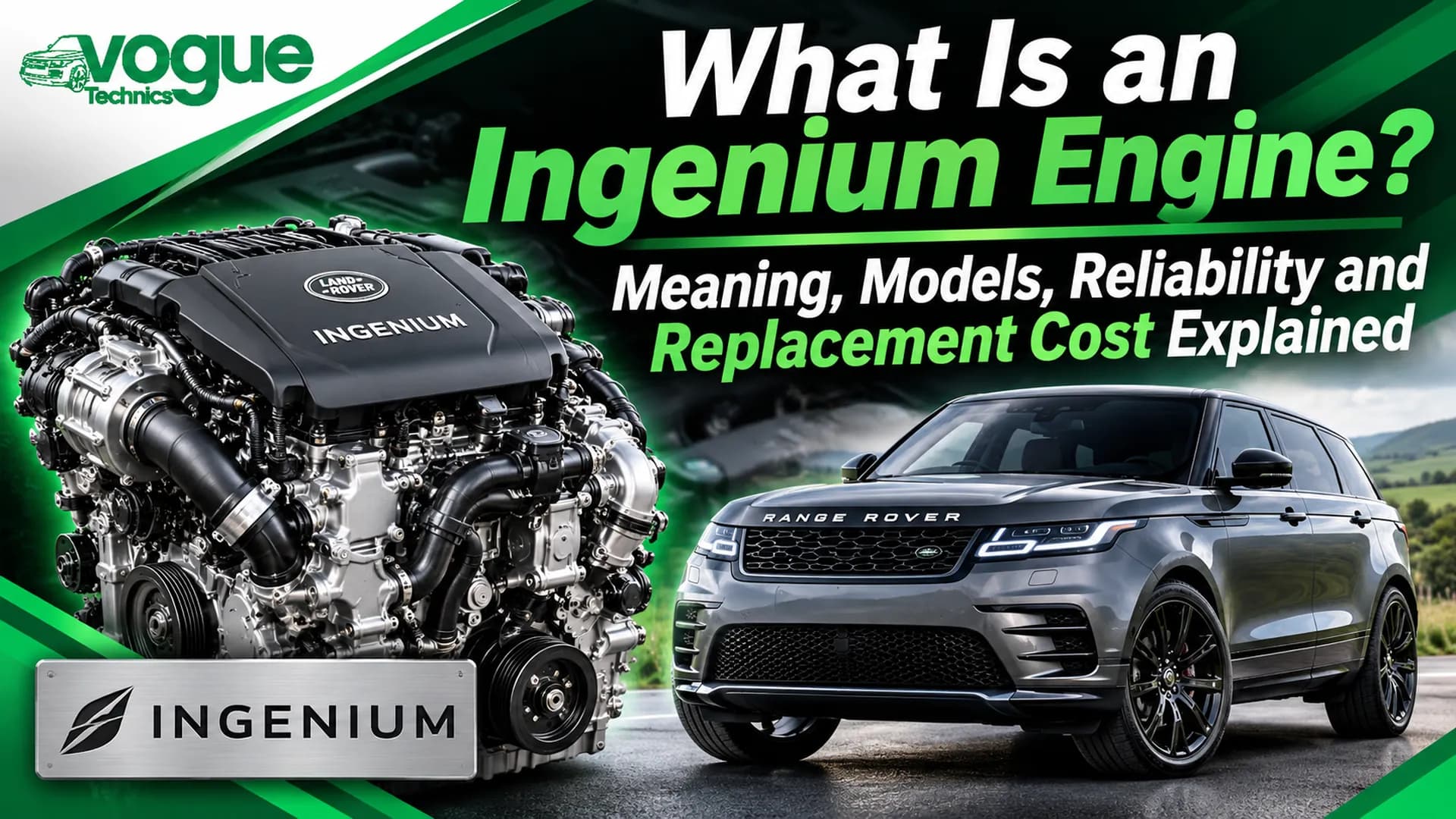
What Is an Ingenium Engine? Meaning, Models, Reliability and Replacement Cost Explained
The Ingenium is Jaguar Land Rover's in-house family of petrol and diesel engines, built in the UK since 2015 and fitted to many Jaguar and Land Rover models. This guide explains who makes it, how to tell whether your car has one and why the 2.0-litre diesel has drawn the most complaints. It also compares used, reconditioned and rebuilt options with indicative replacement costs.
You've seen the badge on the engine cover, or a mechanic has said the word with a slight wince. Now you're searching "what is an Ingenium engine" and finding forum threads that range from praise to horror stories.
Here is the short answer. The Ingenium is Jaguar Land Rover's in-house engine family. It powers a large share of modern Jaguars and Land Rovers, and it is neither a disaster nor flawless. This guide covers what it is, who makes it, which models use it, where it goes wrong and what replacement really costs.
What Is an Ingenium Engine and Which JLR Models Use It?
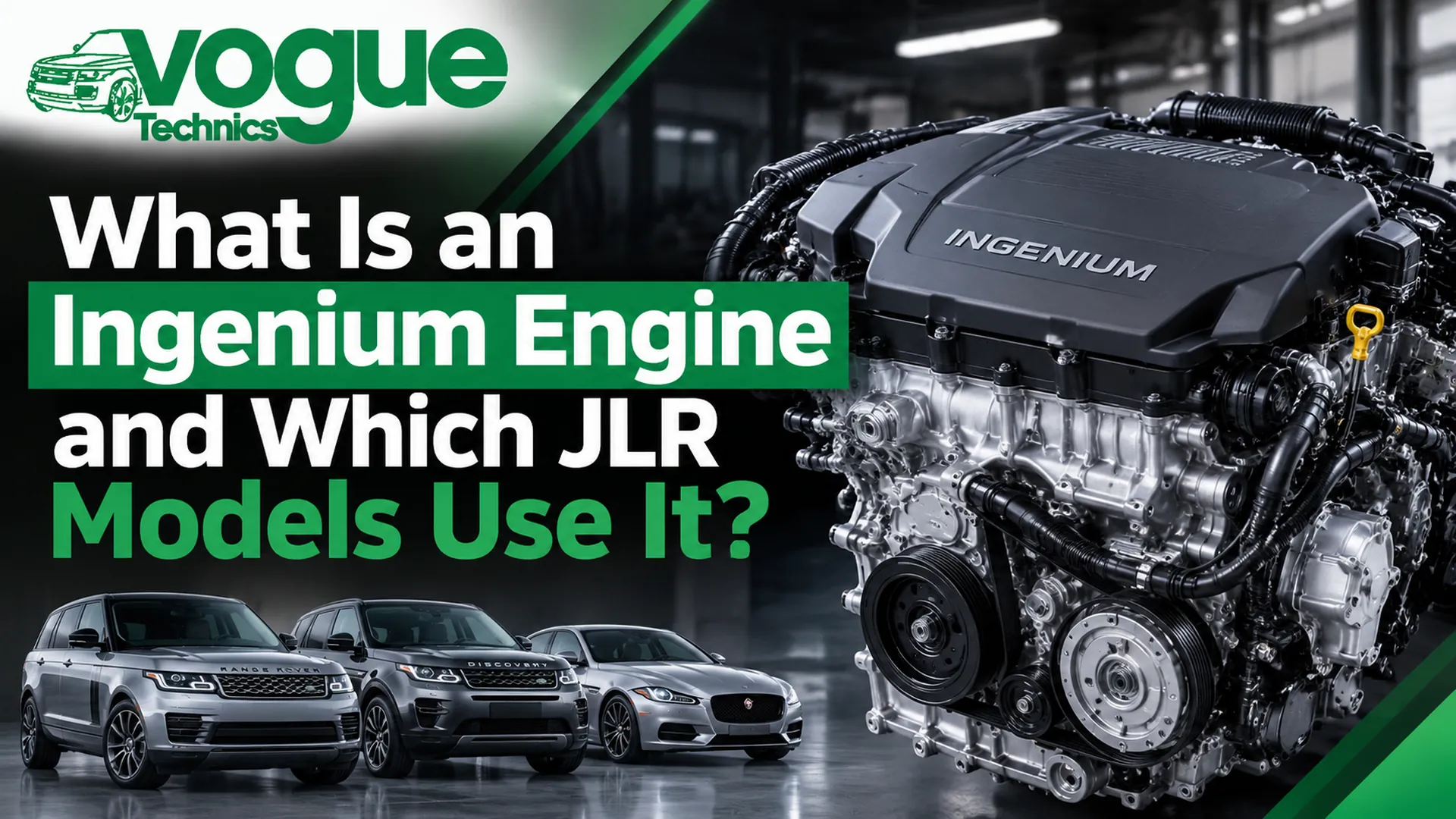
Ingenium is a family of premium petrol and diesel engines designed, engineered and built by Jaguar Land Rover, with volume production starting in early 2015 at a new plant near Wolverhampton. In plain terms, it is a modular set of turbocharged engines that JLR can adapt across many vehicles.
What Does Ingenium Mean, and Who Makes the Ingenium Engine?
"Ingenium" comes from Latin, where it means natural talent or ingenuity. JLR chose it as a name for an engine family meant to show off its own engineering.
On the question of who makes the Ingenium engine, the answer is JLR itself, at its Engine Manufacturing Centre near Wolverhampton. The engine family is built around an aluminium block with 500cc per cylinder, so the same design can scale to different cylinder counts. That is why one family covers a 2.0-litre four-cylinder and a 3.0-litre six-cylinder.
For the "what year Ingenium engine" crowd: the family debuted in the Jaguar XE saloon, and JLR was replacing the Ford-derived engines left over from the Blue Oval's ownership of the company. So when people ask "what is a Jaguar Ingenium engine", it is the same engine family that Land Rover uses.
It has also grown. JLR has built more than 1.5 million of them, covering four- and six-cylinder petrol and diesel units, and a mild-hybrid six-cylinder diesel joined the range later.
Which Land Rovers Have the Ingenium Engine, and How Do I Know If My Car Has One?
Most modern Land Rover and Jaguar models have used an Ingenium engine at some point, depending on year and trim. Here is a quick guide:
Brand | Models that have used Ingenium engines (varies by year and trim) |
| Land Rover | Discovery Sport, Discovery, Defender |
| Range Rover | Evoque, Velar, Range Rover Sport, Range Rover |
| Jaguar | XE, XF, E-Pace, F-Pace, F-Type |
Not every engine in those cars is an Ingenium. Older V6 diesels and the earlier Ford-derived 2.2 diesel are not part of the family, so check before you assume.
How do I know if my car has an Ingenium engine? Use this checklist:
- Year: Ingenium engines arrived in 2015, so a car built before then almost certainly has something else.
- Engine code: Common Ingenium codes include 204DTD, 204DTA and 204PT. The code is stamped on the engine and recorded in the car's paperwork.
- VIN check: A JLR dealer or specialist can decode your VIN and confirm the engine fitted.
- Service history: Invoices usually name the engine type and oil specification.
If you are still unsure, send us the registration and we can confirm it for you.
Is the Ingenium Engine Any Good? Reliability, Problems and Which Version to Avoid
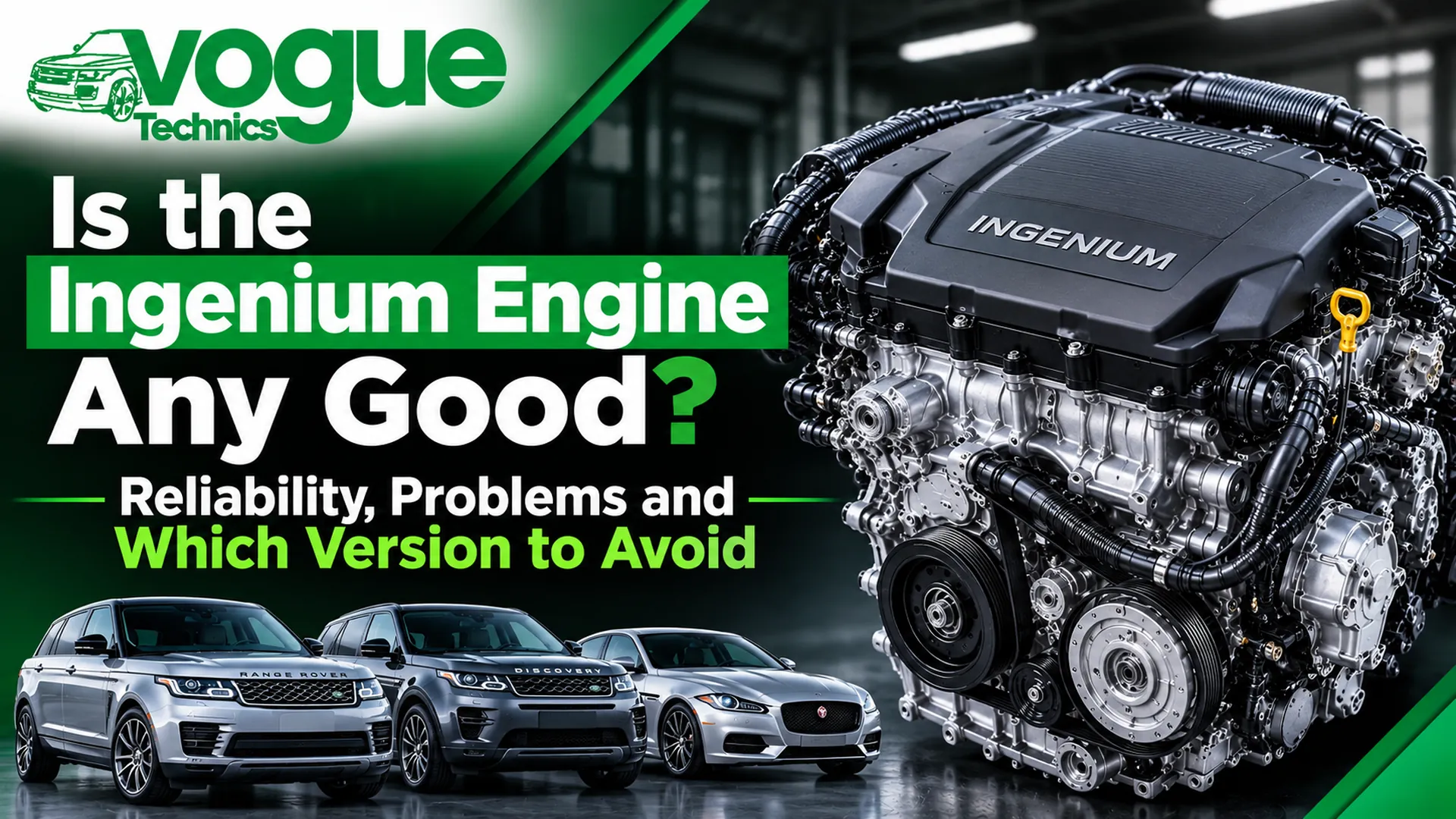
Honestly, it depends on which Ingenium you mean. The 2.0-litre diesel has drawn the most complaints, and most reliability stories trace back to it.
Are Ingenium Engines Reliable, and Why Do Some Owners Call Them Bad?
Owner and press criticism concentrates on a handful of faults. One motoring report says the engine's poor name rests mainly on timing chain failures and DPF problems. These faults are often linked, which is why a small issue can snowball.
Problem | What causes it | Typical warning signs |
| Timing chain wear | Chain stretch, tensioner wear, often worsened by dirty or diluted oil | Cold-start rattle, camshaft correlation codes such as P0016 and P0017, rough idle |
| Oil dilution | Short city trips interrupt DPF regeneration, so diesel fuel ends up in the sump | Rising oil level, fuel smell on the dipstick |
| DPF problems | Filter that never gets hot enough to regenerate fully | Warning lights, limp mode |
| Turbo failure | Often caused by oil starvation from chain problems or oil dilution | Whistling, power loss, smoke |
| Petrol-engine faults | Documented cases of stretched chains, VVT solenoid faults and high oil consumption | Rattles, oil top-ups |
One more detail matters for repair bills. On the 2.0 diesel, the timing chain sits at the rear of the engine, next to the gearbox and firewall, which is why chain jobs tend to be labour-heavy.
The age of the car matters too. Pre-2020 models with the 2.0-litre diesel are more prone to chain and oil-dilution issues, and later updates tackled some problems without removing them all.
The practical lesson is that how you use the car matters as much as which engine it has. Regular short hops are hard on any modern diesel. Longer runs, correct low-ash oil and prompt attention to warning lights make a real difference.
Which Ingenium Engine Should You Avoid, and Which Is the Best?
I'd rank them by what the evidence supports, with a caveat that servicing history can outweigh engine choice.
- Approach with care: Early (2015 to 2019) 2.0-litre diesels, especially with patchy service history, short-trip use or any rattle on a cold start.
- Reasonable with good servicing: The 2.0-litre petrol, provided oil changes are on time and the car isn't burning oil.
- Generally the strongest reputation: The 3.0-litre six-cylinder units. They are newer, so there is less high-mileage evidence, but they have drawn fewer complaints so far.
So the best Ingenium engine is usually a well-serviced later unit, and the one to avoid is a high-mileage early diesel with no paperwork. A pre-purchase engine check costs little compared with a rebuild.
How Much Does It Cost to Replace an Ingenium Engine, and Who Can Help in Essex?
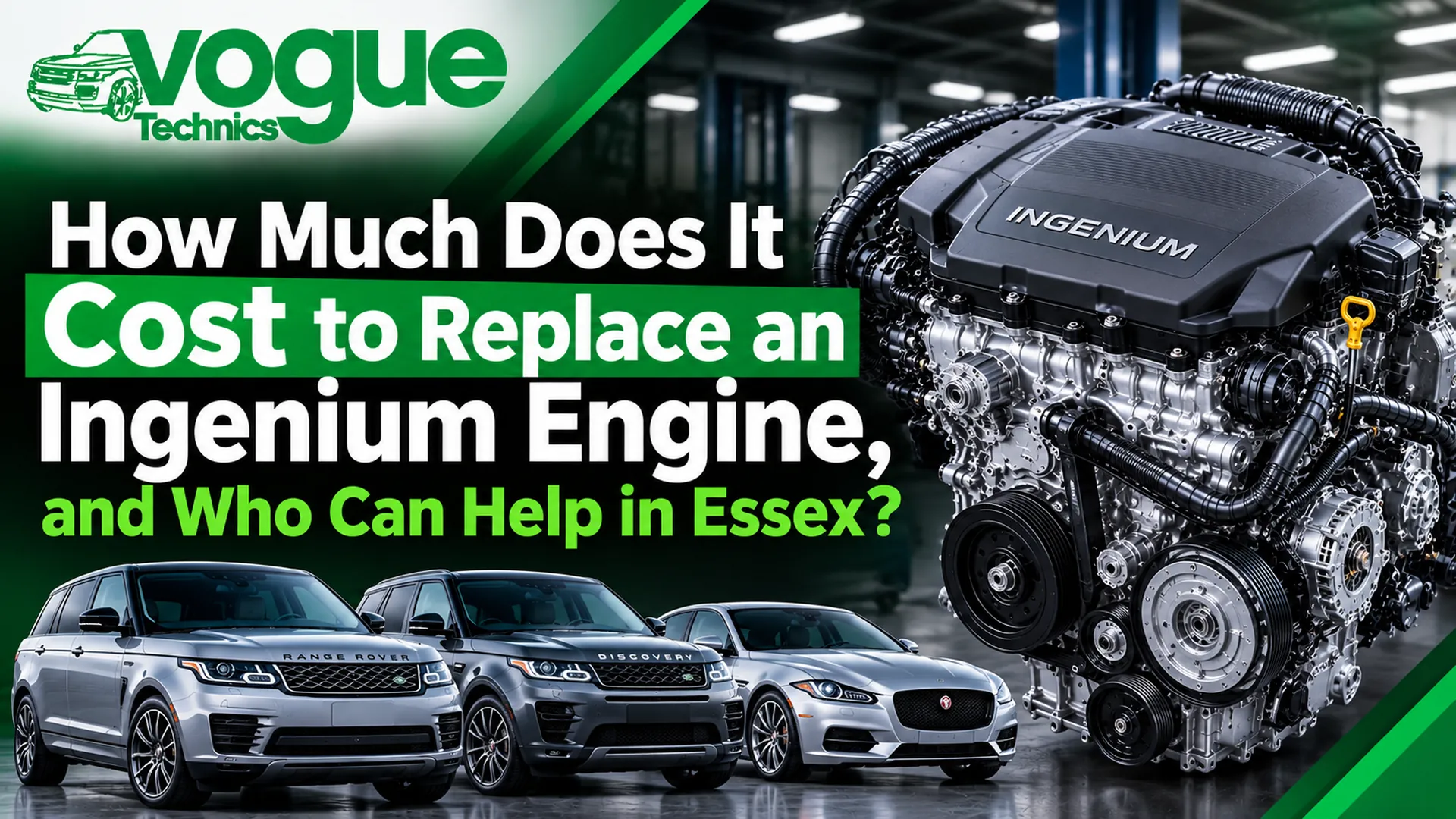
It depends on the engine, the model and the condition of the car. Labour is a big part of the bill, and one UK guide puts labour at roughly 40 to 60 per cent of the total cost of a replacement.
How Much Does It Cost to Replace an Ingenium Engine: Used, Reconditioned or Rebuilt?
Here is how the main routes compare. The figures are indicative market ranges, not quotes.
Option | Typical cost (2.0 four-cylinder, supply and fit) | Warranty | Best for |
| Used engine | Around £1,800 to £2,800 | Usually limited | Lower-value cars, tight budgets |
| Reconditioned engine | Around £2,500 to £4,500 | Usually longer, tested unit | Cars you plan to keep |
| Rebuild of your own engine | Depends on damage found | Workshop-dependent | Cases where the block and head are sound |
| New engine from JLR | Typically the highest | Manufacturer terms | Newer cars still under warranty |
Twin-turbo and six-cylinder engines cost more. As one example, an owner on a Land Rover forum reported a quote of about £12,000 for a reconditioned engine with twin turbo for a Discovery 5. Treat that as an upper-end data point.
Four things push the price up or down:
- Engine type: Twin-turbo and six-cylinder units cost more than a standard 2.0-litre.
- Source: New, reconditioned, used or rebuilt each carry different parts costs and warranties.
- Extent of damage: If a turbo or chain has failed, debris can spread, so ancillaries often need replacing too.
- Labour and extras: One-use bolts, gaskets, fluids and diagnostic time all add up.
Before spending anything, ask whether the engine really needs replacing. Many Ingenium faults, such as a chain and tensioner, a turbo or an EGR valve, can be repaired. Replacement makes sense when internal damage is severe or repeated repairs would cost more than the car is worth.
Need Ingenium Engine Rebuild or Replacement in Grays, Essex?
At voguetechnicsenginerebuild.co.uk, we work on Land Rover, Range Rover and Jaguar engines from our workshop in Grays, Essex. Send us your model, year, engine code and symptoms, and we'll tell you honestly whether it needs a repair, a rebuild or a replacement before you commit.
Frequently Asked Questions
What is an Ingenium engine?
It is Jaguar Land Rover's in-house family of modular petrol and diesel engines, in production since 2015.
Who makes the Ingenium engine?
JLR designs and builds it at its Engine Manufacturing Centre near Wolverhampton.
What does Ingenium mean?
It is a Latin word for natural talent or ingenuity, chosen as the name for the engine family.
What year was the Ingenium engine introduced?
Production began in early 2015, first in the Jaguar XE.
Is the Ingenium engine any good?
It can be, particularly the later units and the 3.0-litre sixes. The 2.0-litre diesel has had the most reported problems.
Why is the Ingenium engine so bad, according to some owners?
Complaints usually trace back to timing chain wear and oil dilution linked to DPF regeneration, with turbo failures often following.
Which Ingenium engine should I avoid?
Be wary of early 2.0-litre diesels with a poor service history, short-trip use or a cold-start rattle.
How much does it cost to replace an Ingenium engine?
Roughly £1,800 to £4,500 for a used or reconditioned 2.0-litre supply and fit, and considerably more for twin-turbo or six-cylinder units. Get a written quote for your car.
Conclusion
So, what is an Ingenium engine? It is JLR's modern engine family, and a capable one when looked after properly. Its reputation has been dented mainly by the 2.0-litre diesel and its chain, oil dilution and turbo troubles.
If you own one, servicing on time, using the right oil and watching for a cold-start rattle will protect you best. If you are buying one, check the history before the badge. If something has already gone wrong, talk to our Essex team at voguetechnicsenginerebuild.co.uk before you accept a replacement quote.