
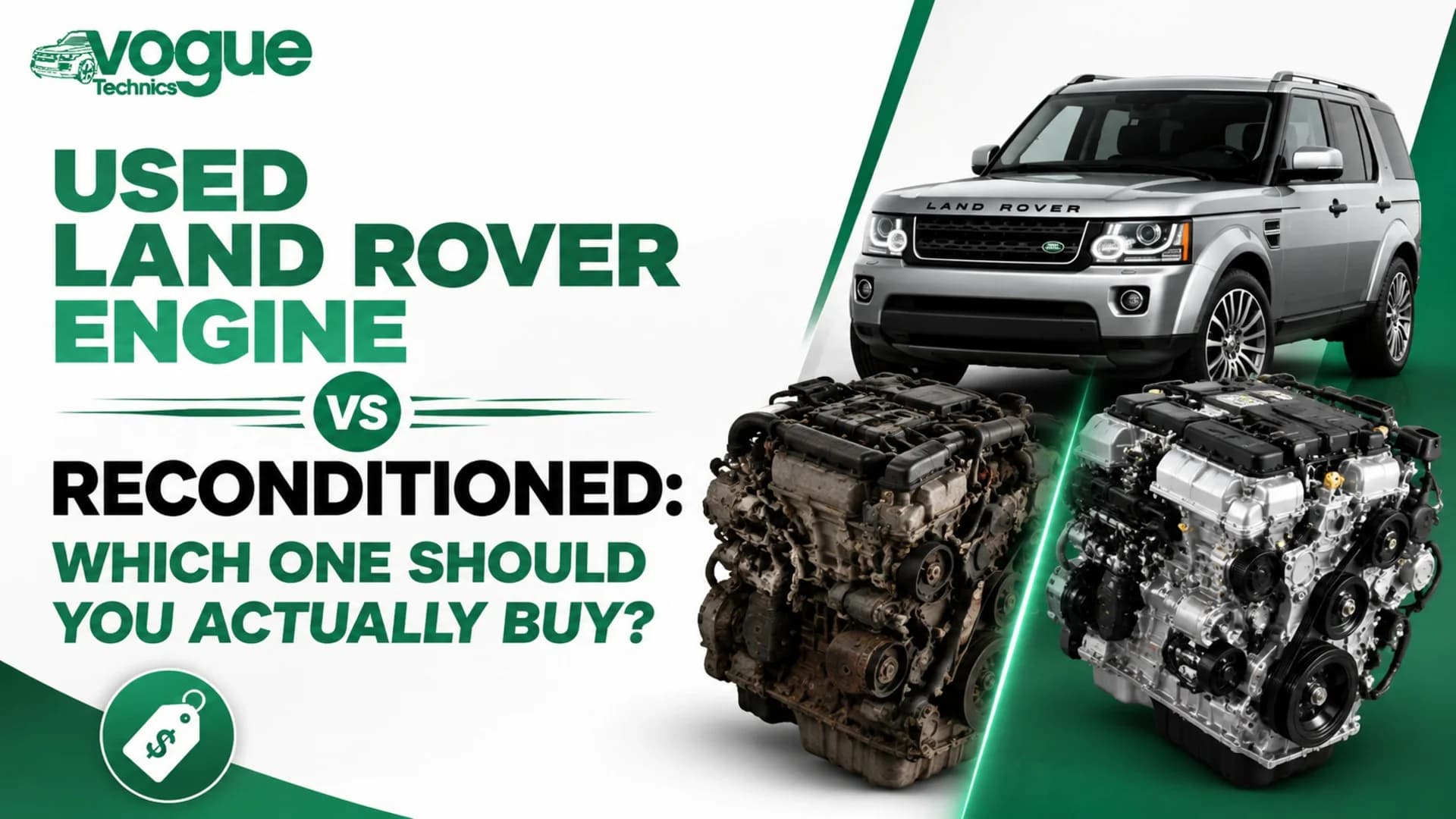
Used Land Rover Engine vs Reconditioned: Which One Should You Actually Buy?
Choosing between a used and reconditioned Land Rover engine can mean a difference of thousands of pounds and years of reliability. This guide breaks down cost, warranty, mileage, and risk for both options, comparing them across Ingenium, TDV6, SDV6, and V8 engines. Whether you're on a tight budget or planning long-term ownership, it explains exactly which choice fits your situation and why the cheaper engine isn't always the cheaper option in the long run.
Your Land Rover's engine has failed, and now you're staring down a decision that could cost you anywhere from £1,500 to well over £5,000 depending on which route you take. That's not a small choice to get wrong.
Maybe your mechanic has already used the words "reconditioned" or "used replacement" and you're not entirely sure what separates the two, or why one costs so much more than the other. Maybe you've seen a "cheap Land Rover engine for sale" online and you're wondering if it's actually a good deal or a problem waiting to happen six months down the line.
This guide answers the question properly. Not with sales language, but with the actual differences in cost, reliability, warranty, mileage, and long-term value, so you can make a decision you won't regret.
Used vs Reconditioned Land Rover Engine, The Quick Comparison
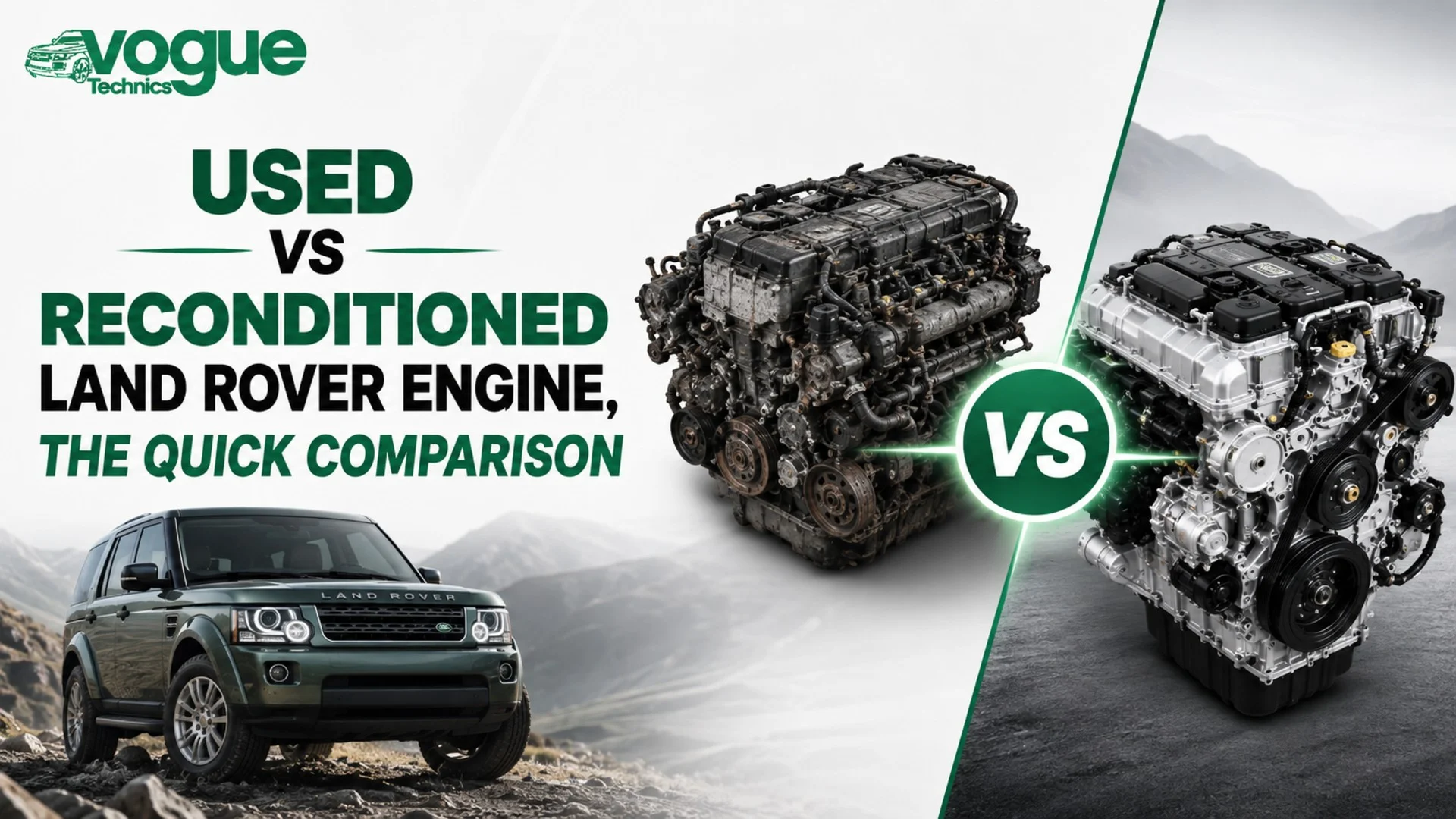
Before we get into the detail, let's settle the basic question most people are actually asking.
What's the Real Difference Between a Used and a Reconditioned Land Rover Engine?
A used Land Rover engine is a running engine taken out of another vehicle, usually one that's been written off, scrapped, or dismantled for parts. It hasn't been rebuilt. It's simply been removed, tested to confirm it runs, and sold as-is. What you're buying is largely an unknown quantity in terms of internal wear, even if the exterior and compression numbers look fine.
A reconditioned Land Rover engine (also called a recon engine or rebuilt engine) has been fully stripped down, inspected component by component, and had its worn parts replaced, bearings, seals, gaskets, and often more, before being reassembled and bench tested. You're not buying someone else's mileage and history. You're buying an engine that's been rebuilt to work like new again.
Think of it like buying a second-hand car versus a fully restored one. Both might look similar in a photo. Only one has had every mechanical weak point addressed before it reaches you.
Used vs Reconditioned Land Rover Engine, Side-by-Side Comparison Table
Factor | Used Engine | Reconditioned Engine |
| Initial price | Lower | Higher |
| Internal condition | Unknown / variable | Fully inspected and rebuilt |
| History available | Often limited | Documented rebuild process |
| Mileage | A major risk factor | Less relevant, worn parts replaced |
| Warranty | Usually 3–6 months | Usually 12 months or more |
| Internal wear components | Not addressed | Bearings, seals, gaskets replaced |
| Reliability | Variable, depends on donor engine | Generally more predictable |
| Risk level | Higher | Lower, when professionally rebuilt |
| Best suited for | Tight budgets, older vehicles | Long-term ownership, higher-mileage plans |
Which One Is Right for You? (Quick Verdict)
If your Land Rover is older, close to the end of its practical life, or you're planning to sell it soon, a used engine can make financial sense, provided it's properly tested and comes with at least some warranty.
If you're planning to keep the vehicle for years, drive it hard (towing, off-roading, high mileage), or simply want peace of mind, a reconditioned engine is almost always the better long-term investment. The higher upfront cost is usually offset by fewer repeat failures and a longer warranty period.
There's no universally "correct" answer here, it depends on your budget, your vehicle's age, and how long you intend to keep it. The rest of this guide will help you work out which side of that line you fall on.
What Is a Used Land Rover Engine?
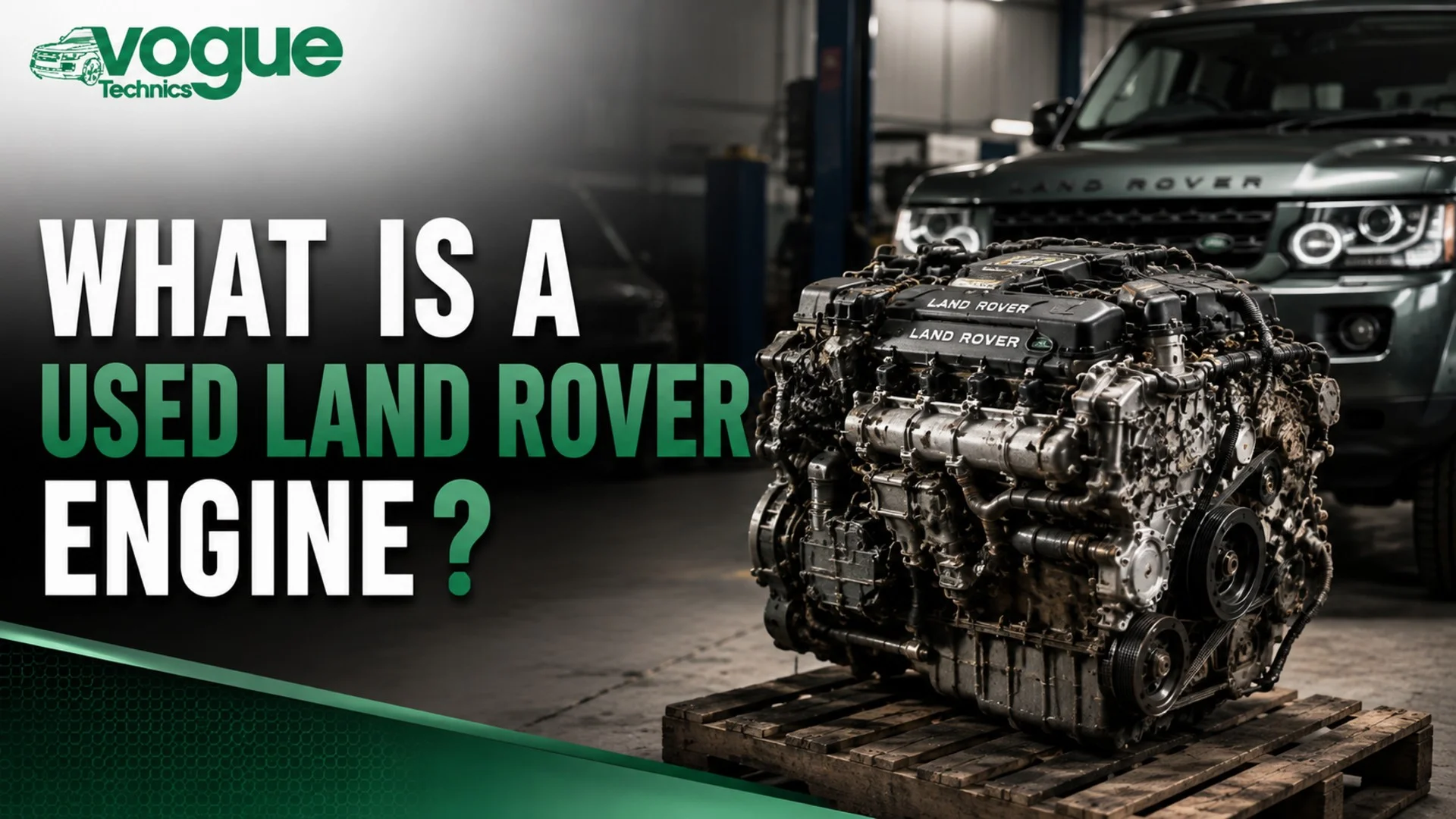
A used engine, sometimes called a second-hand Land Rover engine or salvage engine, is exactly what it sounds like. It's a complete engine assembly removed from a donor vehicle and sold as a replacement unit, with no internal rebuild work carried out.
Where Do Used Land Rover Engines Actually Come From?
Most used engines come from one of three sources:
- Insurance write-offs, vehicles damaged beyond economical repair (often from accidents) where the engine itself is undamaged and still viable
- Vehicle breakers and dismantlers, end-of-life vehicles broken down for usable parts
- Fleet or trade-in vehicles, occasionally sold on for parts rather than repair
A reputable supplier will be able to tell you the donor vehicle's mileage, and ideally some service history. If a seller can't tell you where the engine came from or what mileage it covered, that's a red flag worth taking seriously.
How Is a Used Land Rover Engine Tested Before It's Sold?
Not every used engine on the market has been properly tested, and this is exactly where quality varies wildly between suppliers.
A properly checked used engine should have gone through:
- A compression test on each cylinder, to check internal wear
- A leak-down test, which identifies exactly where compression is being lost (piston rings, valves, head gasket)
- A visual inspection for oil leaks, coolant contamination, and physical damage
- A running test, ideally recorded, to confirm the engine starts, idles, and runs without unusual noise
If a supplier can't confirm these checks were carried out, you're buying blind. This is one of the biggest gaps between low-cost "as removed" engines and properly vetted ones, and it's worth asking about directly before you commit.
Does Mileage Matter When Buying a Used Engine?
Yes, significantly. Mileage is one of the strongest indicators of remaining engine life on a used unit, because nothing internal has been renewed.
A diesel Land Rover engine (TD5, TDV6, SDV6, or Ingenium diesel) with 150,000+ miles has already gone through significant wear on bearings, piston rings, and the timing chain, even if it currently runs fine. A petrol V6 or V8 with similar mileage carries the same concern.
What Counts as "Low Mileage" for a Used Land Rover Engine?
As a general guide:
- Under 60,000 miles, genuinely low mileage, lower risk
- 60,000–100,000 miles, moderate, still viable but ask about condition reports
- 100,000+ miles, higher risk of near-term wear-related issues, particularly on diesel variants with heavy towing or motorway use
Mileage alone doesn't tell the whole story, a well-serviced 120,000-mile engine can outlast a neglected 70,000-mile one, but it remains one of the most useful screening tools available before you buy.
What Warranty Should You Expect on a Used Land Rover Engine?
Most used Land Rover engines come with a warranty of 3 to 6 months, sometimes shorter. This reflects the fact that suppliers genuinely don't know the full internal condition, they're covering against early, obvious failures rather than promising long-term durability.
Before buying, always ask:
- What exactly does the warranty cover, parts only, or labour too?
- Is there a mileage limit attached to the warranty period?
- Does the warranty become void if you don't use an approved fitter?
A used engine with no warranty at all should be treated as a serious risk, regardless of how low the price looks.
What Is a Reconditioned Land Rover Engine?
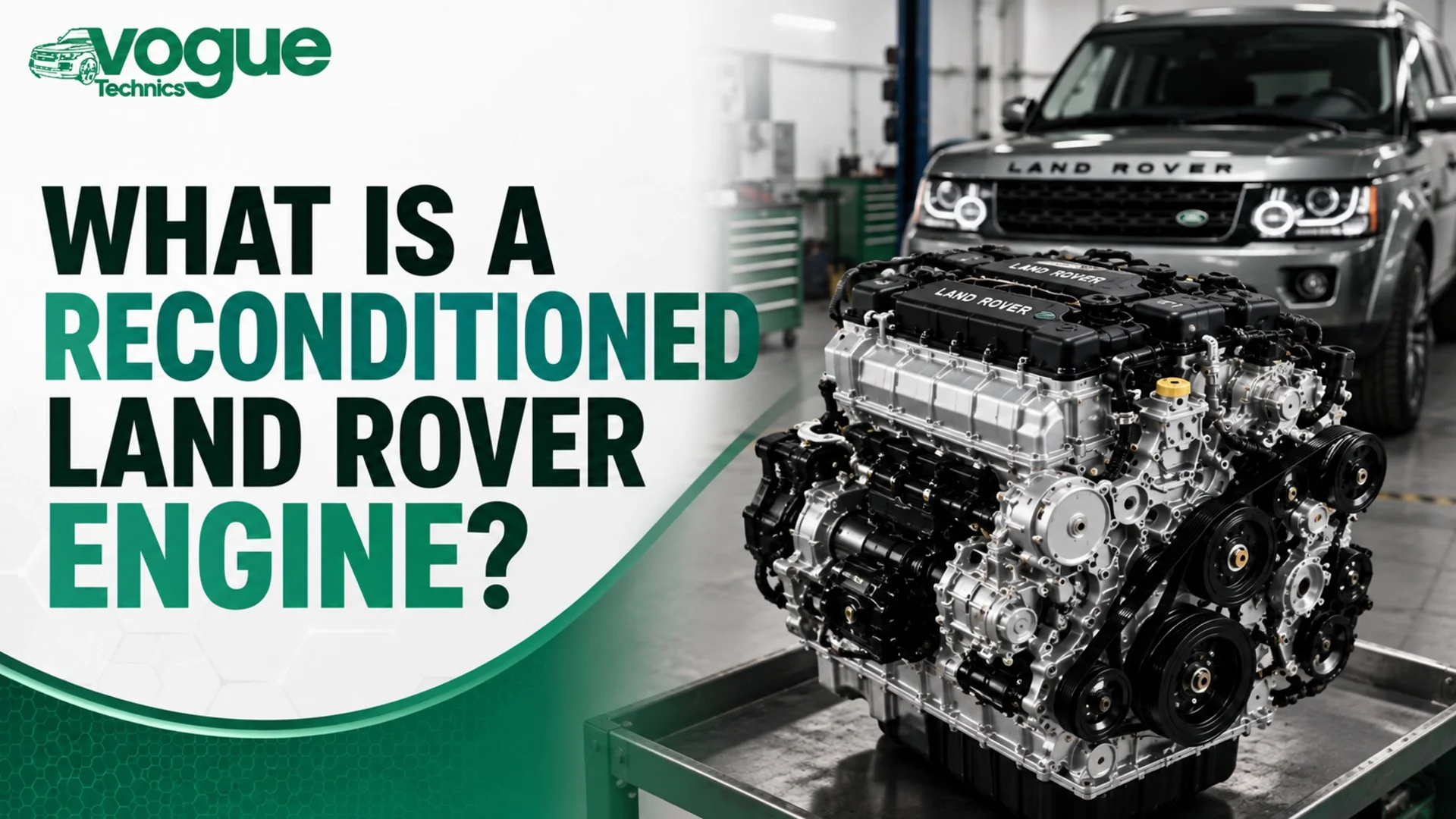
A reconditioned engine, also referred to as a recon Land Rover engine, rebuilt engine, or in some cases remanufactured engine, starts life the same way a used engine does. The difference is everything that happens next.
How Is a Land Rover Engine Reconditioned, Step by Step?
This is the part most competitor pages gloss over, and it's exactly where the real value of a reconditioned engine becomes clear.
Strip-Down, Cleaning and Inspection
The engine is fully dismantled down to its individual components. Every part, the crankshaft, cylinder head, pistons, con rods, block, is cleaned and visually inspected for cracks, scoring, or excessive wear. This is where hidden problems that a used engine would never reveal actually get found.
Machining, Re-Boring and Component Replacement
Where measurements fall outside tolerance, machining work is carried out, this can include re-boring cylinders, skimming the cylinder head, and reconditioning the crankshaft journals. Wear components are replaced as standard rather than reused, including:
- Main and big-end bearings
- Piston rings
- Oil seals and gaskets (including the head gasket)
- Valve seats, where worn
- Timing chain and associated components, where applicable
This is the single biggest difference between a reconditioned engine and a used one. A used engine keeps its original bearings and seals no matter their condition. A reconditioned engine doesn't.
Bench Testing and Final Quality Control
Once reassembled, a properly reconditioned engine is bench tested before it's released, checking oil pressure, compression, and running behaviour under controlled conditions, rather than simply being bolted into a vehicle and hoped for the best.
What Parts Are Actually Replaced During Reconditioning?
As a baseline, expect the following to be replaced on any genuinely reconditioned Land Rover engine:
- Main bearings and big-end bearings
- Piston rings
- Oil seals and gaskets
- Head gasket
- Oil pump (in many cases)
Beyond this baseline, quality varies between suppliers, which is exactly why it's worth asking for a written breakdown of what work was actually carried out, rather than accepting "fully reconditioned" as a vague marketing label. A supplier confident in their process will have no issue explaining this in detail.
What Warranty Comes With a Reconditioned Land Rover Engine?
Reconditioned engines typically carry a longer warranty, commonly 12 months, and sometimes longer depending on the supplier, reflecting the fact that the internal wear components have already been addressed and tested.
As with used engines, read the terms carefully:
- Confirm whether both parts and labour are covered
- Check for exclusions around overheating, oil starvation, or incorrect installation
- Ask whether professional fitting is a condition of the warranty remaining valid
A longer warranty period is one of the clearest practical advantages a reconditioned engine holds over a used one, and it's a direct reflection of the supplier's confidence in their own rebuild work.
Used vs Reconditioned Land Rover Engine, Cost, Reliability & Final Verdict
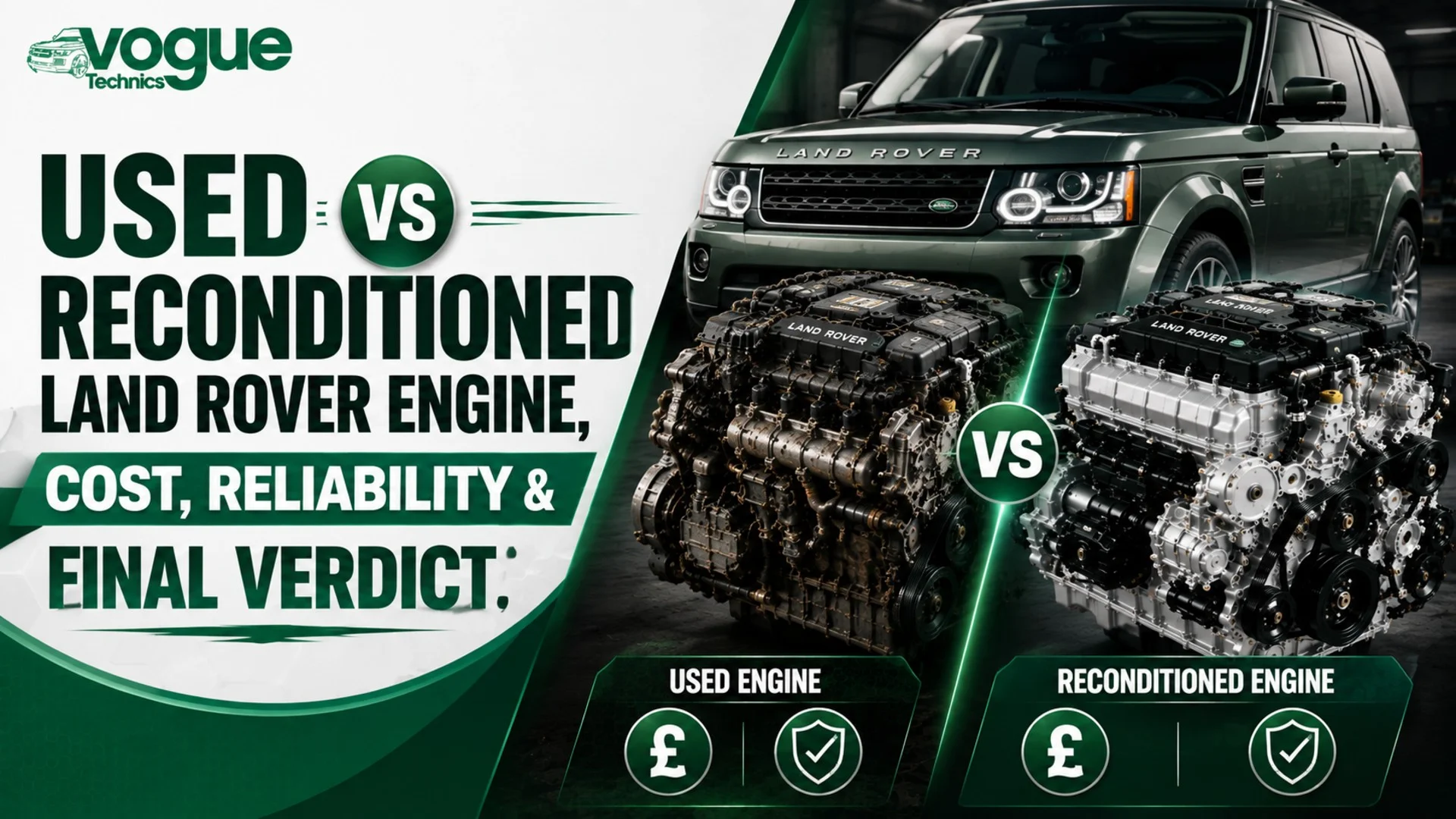
This is where the decision actually gets made. Numbers on a page rarely tell the full story, so let's break down what you're really paying for.
Used vs Reconditioned Land Rover Engine, Cost Compared
As a general guide across the UK market:
- Used Land Rover engines typically range from around £1,200–£2,800, depending on model, engine variant, and mileage
- Reconditioned Land Rover engines typically range from around £2,200–£5,500+, depending on engine type (Ingenium, TDV6, SDV6, V6, V8) and the extent of the rebuild
On paper, the used engine looks like the cheaper option every time. In practice, that price gap narrows, and sometimes reverses, once you factor in the full picture, which we cover below.
Which Is More Reliable: Used or Reconditioned?
Reliability comes down to one simple fact: a used engine's internal wear components are whatever they were the day it was removed from the donor vehicle. A reconditioned engine's wear components have been replaced.
That doesn't mean every used engine will fail, or that every reconditioned engine is faultless, quality of workmanship still matters enormously on the reconditioned side. But statistically, an engine with new bearings, seals, and gaskets, tested on a bench before release, carries substantially lower risk of early failure than one that's simply been unbolted from a scrapped vehicle and resold.
A useful real-world example: a Discovery owner replacing a failed TDV6 with a low-mileage used engine might get several trouble-free years, or might find a worn oil seal starts leaking within months, because that seal was never inspected or replaced. The same engine, reconditioned, would have had that exact seal renewed as standard.
Total Cost of Ownership, Why the Cheaper Engine Isn't Always the Cheaper Option
The price on the engine itself is only one part of the bill. A fair comparison needs to include:
- Engine price
- Delivery
- Removal of the old engine
- Fitting/installation labour
- Fluids, filters, and ancillary parts
- Risk cost, the likelihood and cost of early failure
A £1,500 used engine with a 3-month warranty that fails at month 8 doesn't just cost £1,500, it costs £1,500 plus a second removal and fitting job, plus whatever replacement engine you choose next. A £2,800 reconditioned engine with a 12-month warranty that runs reliably for years works out considerably cheaper across the vehicle's remaining life, even though the sticker price was higher on day one.
This is the calculation most comparison guides skip entirely, and it's usually the deciding factor for anyone planning to keep their Land Rover for more than a year or two.
Used vs Reconditioned for Ingenium, TDV6, SDV6 and V8 Engines
The used-vs-reconditioned decision plays out slightly differently depending on your engine family:
- Ingenium (2.0/3.0 diesel and petrol), a relatively modern engine platform; reconditioned units are increasingly available and worth prioritising given the cost of Ingenium-specific components if something goes wrong later
- TDV6, a well-understood engine with a strong reconditioning market; specific attention should go to timing chain condition, whether used or reconditioned
- SDV6, similar considerations to TDV6, with turbo and timing components being key inspection points
- V8 (petrol and diesel), higher rebuild cost due to parts pricing, but also higher failure cost if a used unit goes wrong, which tilts the value case toward reconditioned for long-term ownership
If you're unsure which engine variant your vehicle uses, your registration number, VIN, or engine code will confirm it, and any reputable supplier should ask for one of these before quoting, to guarantee compatibility.
Frequently Asked Questions
Is a reconditioned Land Rover engine worth it? For most owners planning to keep their vehicle long-term, yes. The higher upfront cost is generally offset by replaced wear components, a longer warranty, and lower risk of early failure, which usually works out cheaper over the vehicle's remaining life.
How long does a used Land Rover engine last? This varies enormously and depends on the donor engine's condition and mileage at the point of removal. A well-tested, lower-mileage used engine can last many years; a higher-mileage unit with unknown internal wear may need attention much sooner.
Are reconditioned Land Rover engines reliable? Generally, yes, provided the rebuild was carried out to a proper standard with genuine component replacement and bench testing. Reliability depends heavily on the quality of the specialist carrying out the work, so it's worth asking exactly what was replaced and tested.
Does the replacement engine need to match my VIN or engine code? Yes. Engine compatibility is confirmed through your vehicle's registration, VIN, or specific engine code, not just the model name, Land Rover models often ran multiple engine variants across the same production years, so this step is essential before any purchase.
How much does a Land Rover engine replacement cost in total, including fitting? Alongside the engine price itself, budget for removal of the old unit, fitting labour, delivery, and ancillary parts such as fluids, filters, and gaskets. A supply-and-fit quote from your engine specialist will give you the full, accurate figure rather than just the engine cost alone.
Get a Free Land Rover Engine Quote, Supplied & Fitted in Grays, Essex
If you're weighing up a used versus reconditioned Land Rover engine and want a straight answer rather than a sales pitch, that's exactly the conversation we have every day at Vogue Technics Engine Rebuild, based in Grays, Essex.
We supply and fit both used and professionally reconditioned Land Rover engines, covering Defender, Discovery, Discovery Sport, Range Rover, Range Rover Sport, Evoque, and Velar, across Ingenium, TDV6, SDV6, V6, and V8 variants. Every reconditioned unit we supply goes through full strip-down, machining where required, component replacement, and bench testing before it's fitted, backed by a warranty that reflects the quality of that work.
Get in touch with your registration number or engine code, and we'll match the right replacement engine to your vehicle, give you a genuine supply-and-fit price, and talk you through which option, used or reconditioned, actually makes sense for how long you're planning to keep your Land Rover on the road.