
Range Rover Velar vs Evoque Reliability: Which Land Rover Holds Up Better?
Deciding between a used Range Rover Velar and Evoque comes down to more than looks. This guide breaks down real workshop data on common faults, engine reliability, and repair costs for both models. Learn which one holds up better long-term, which years and engines to avoid, and what to check before you buy. Written from hands-on experience rebuilding Land Rover engines, not just spec sheets.
If you're cross-shopping a used Range Rover Velar against an Evoque, you've probably already fallen in love with both. They look the part, the interiors feel special, and either one will turn heads on the school run. But looks don't tell you what happens at 60,000 miles when a warning light appears on the dash and you're staring down a repair bill.
We rebuild Land Rover engines for a living at our workshop in Grays, Essex, and we see both of these models come through our doors regularly, sometimes for routine maintenance, sometimes for faults that could have been caught earlier. This guide is built from that hands-on experience, not just spec sheets, so you can make a decision based on what actually goes wrong, what it costs to fix, and which model is the safer long-term buy.
Which Is More Reliable — Range Rover Velar or Evoque?
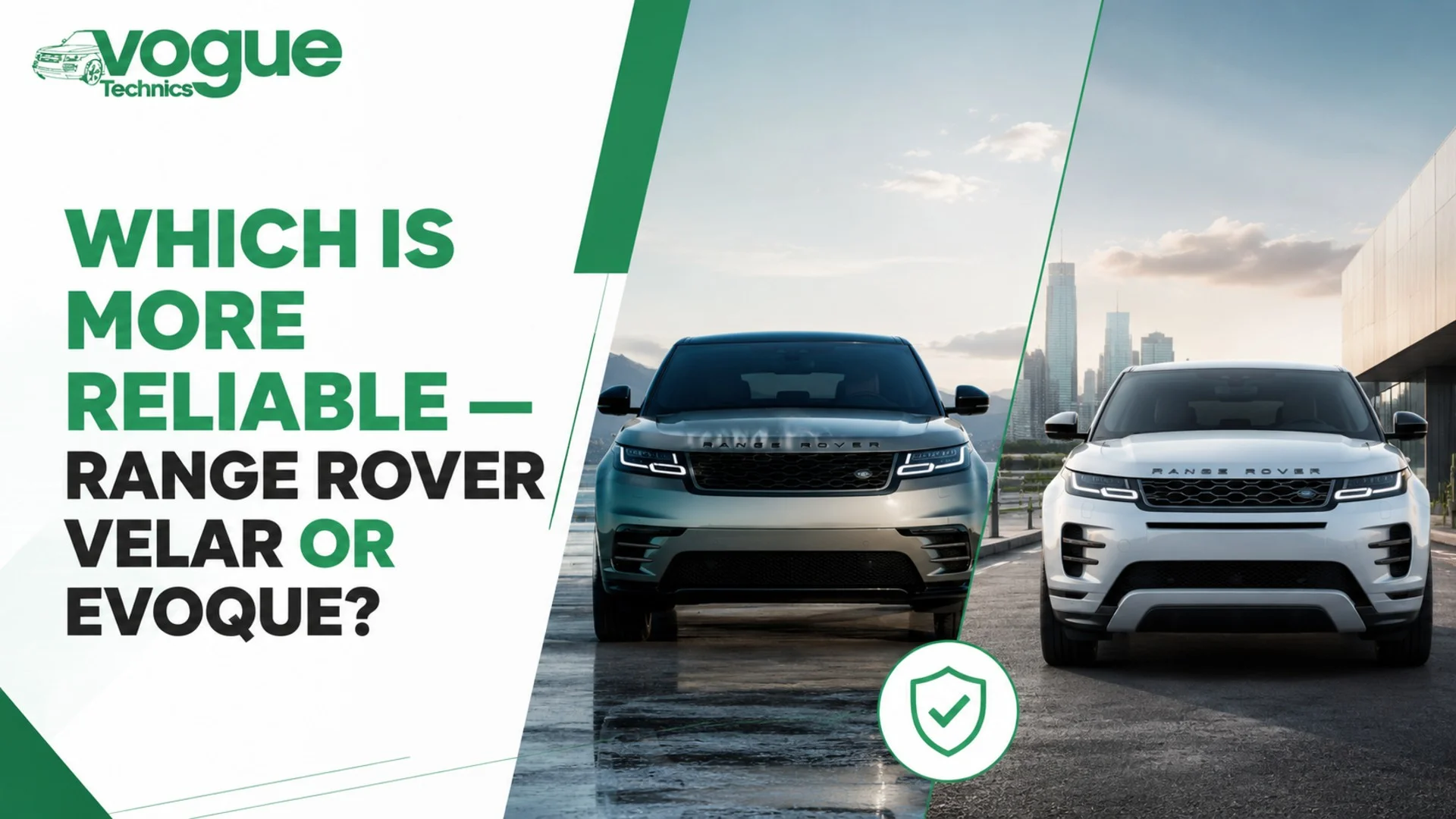
Neither model has a perfect reliability record, and if a listing promises otherwise, treat it with caution. Both the Velar and Evoque share much of their underlying engineering with the wider Jaguar Land Rover (JLR) family, including many of the same Ingenium engines, so their reliability profiles overlap more than you'd expect from two "different" models.
That said, there are real differences worth knowing before you commit.
Reliability Ratings and Owner Satisfaction Compared
Owner satisfaction surveys and independent reliability studies have consistently placed Land Rover and Range Rover models below the industry average for dependability, and both the Velar and Evoque have featured in these rankings at various points. The Evoque, being the older, smaller, and mechanically simpler of the two, tends to have a slightly more predictable fault pattern, largely because it's been in production longer and most of its weak points are now well documented.
The Velar, as a larger and more technologically dense vehicle, carries more electronic systems, which means more potential failure points, particularly around infotainment and sensor-based features. In our workshop experience, Velar owners report a marginally higher rate of electrical gremlins, while Evoque owners more often deal with engine and emissions-related faults, especially on earlier diesel variants.
Neither is dramatically "more reliable" outright. The real difference comes down to which type of fault you're more willing to deal with.
Most Common Faults in Each Model
Every used SUV has a fault profile. Knowing it in advance means you're negotiating from a position of strength, not getting blindsided six months into ownership.
Velar Common Problems
- Air suspension faults: compressor and air spring failures are the most frequent suspension-related complaint, particularly on higher-mileage cars
- Infotainment glitches: Touch Pro Duo and later Pivi Pro systems have both suffered from freezing screens and software bugs, especially on pre-2021 models
- Electrical faults: intermittent dashboard warning lights, sensor errors, and battery drain issues are commonly reported
- Turbocharger wear: most noticeable on higher-mileage petrol variants driven hard or used mainly for short journeys
Evoque Common Problems
- Timing chain wear: early Ingenium diesel engines are known for premature timing chain stretch, which can trigger rattling on cold starts
- Oil dilution: a well-documented issue on certain diesel Ingenium units, where unburnt fuel contaminates the engine oil and reduces lubrication
- DPF (Diesel Particulate Filter) blockages: common on Evoques used mainly for short, low-speed journeys rather than motorway driving
- Gearbox hesitation: some ZF automatic transmission units have exhibited jerky or delayed shifts, particularly in stop-start traffic
Engine Reliability — Petrol, Diesel, and Hybrid Compared
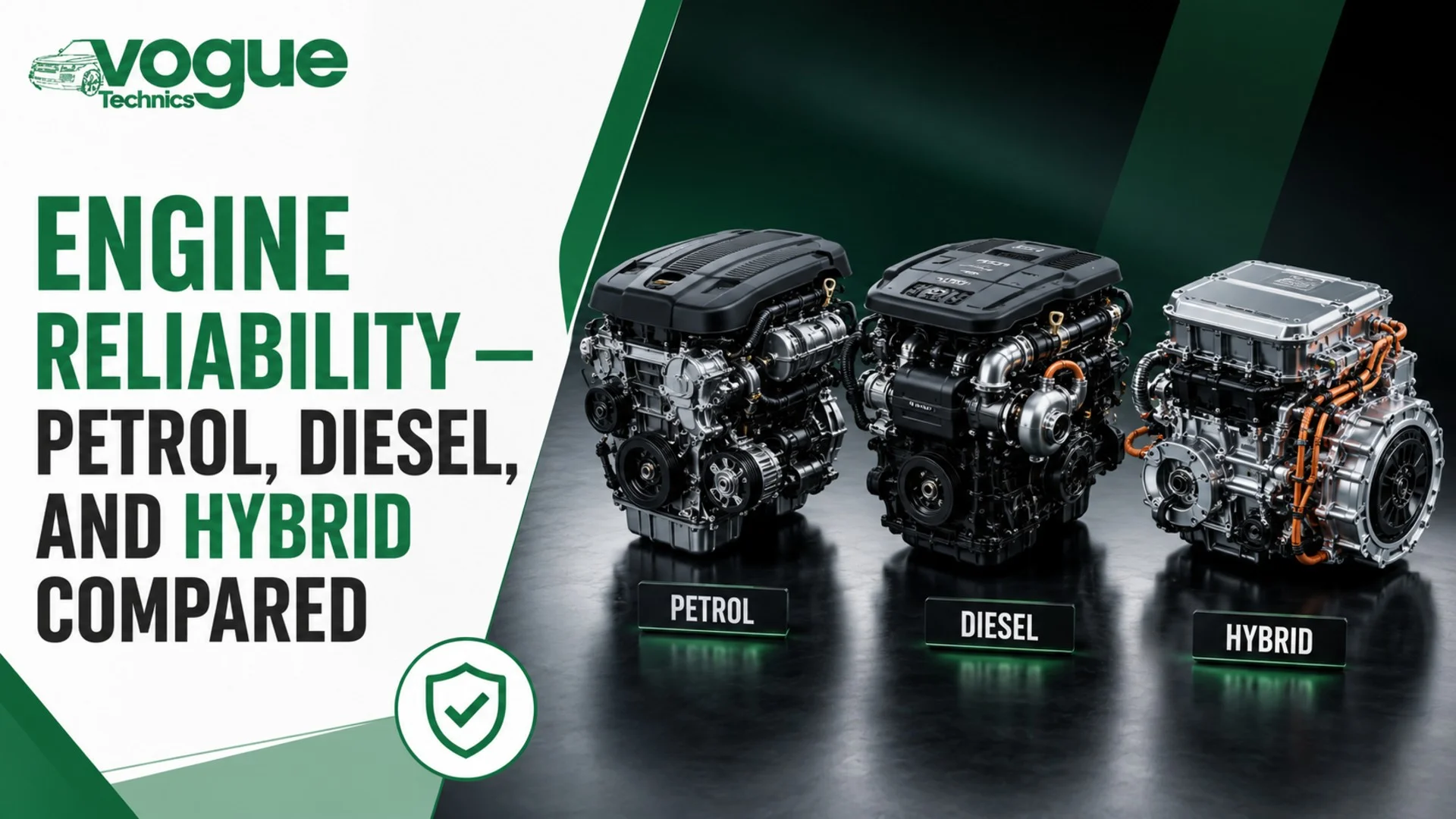
The engine under the bonnet matters more than the badge on the boot. Both models share the Ingenium engine family across petrol, diesel, and hybrid variants, so engine choice often has a bigger impact on long-term reliability than which of the two models you pick.
Are Ingenium Engines Reliable?
Ingenium engines represented a major step forward for Jaguar Land Rover in terms of efficiency and refinement, but the early years of production, roughly 2015 to 2019, were dogged by the timing chain and oil dilution issues mentioned above. JLR has since made running production updates to address both problems, and later engines (particularly post-2019 revisions) are noticeably more dependable.
If you're comparing engines rather than just badges, the production year of the engine often matters more than whether it's fitted to a Velar or an Evoque.
Most Reliable Velar Engine
Among Velar buyers, the P250 petrol has generally proven to be one of the steadier options, offering a good balance of performance without the emissions-system complexity that diesel variants carry. The mild hybrid P300 MHEV variants, built on updated architecture, have also shown improved reliability over earlier non-hybrid petrol units.
Most Reliable Evoque Engine
For the Evoque, the P200 petrol tends to be the safer long-term bet, largely because it avoids the DPF and oil dilution risks associated with diesel Ingenium units entirely. Buyers who need diesel for towing or high-mileage motorway use should prioritize post-2019 D180/D200 units, where the known early production issues have largely been resolved.
Petrol vs Diesel vs Hybrid — Which Is More Dependable?
Here's a straightforward comparison based on typical fault patterns we see across both models:
Engine Type | Main Reliability Strengths | Main Reliability Risks |
| Petrol | No DPF/AdBlue complexity, fewer emissions faults | Higher fuel costs, turbo wear on high-mileage examples |
| Diesel | Strong for motorway/towing use, good fuel economy | Timing chain wear, oil dilution, DPF blockages on short trips |
| Mild Hybrid (MHEV) | Smoother running, reduced strain on the engine | Additional battery/electrical components to maintain |
| Plug-in Hybrid (PHEV) | Lowest running costs for short commutes | Complex system with more components that can fail; battery degradation over time |
If most of your driving is short urban trips, petrol or hybrid variants are usually the safer reliability choice. If you're regularly covering motorway miles, a post-2019 diesel is still a solid option.
Timing Chain, Oil Dilution and Turbo Issues Explained
These three issues come up more than any others in our workshop, so it's worth understanding what actually causes them.
Timing chain wearturbo issues happens when the chain tensioner fails to keep proper tension, leading to a rattling noise on cold start. Left unaddressed, it can eventually cause the chain to skip, which risks serious internal engine damage. Early diagnosis is inexpensive; ignoring it isn't.
Oil dilution occurs when the engine's active regeneration cycle (used to clean the DPF) injects extra fuel that isn't fully burnt, and some of it ends up in the engine oil. Over time, this thins the oil and reduces its ability to lubricate properly, accelerating wear on other components. It's largely a short-journey problem, engines that get regular motorway runs to reach full operating temperature are far less affected.
Turbo issues on both models are usually the result of poor maintenance history rather than a fundamental design flaw, skipped oil changes and using the wrong oil grade are common culprits. A turbo replacement on a well-maintained example is rare before 100,000 miles.
Ownership, Maintenance and Repair Costs Compared
Reliability and running costs go hand in hand. A car that rarely breaks down but costs a fortune when it does isn't necessarily cheaper to own than one with more frequent, minor issues.
Average Maintenance Costs — Velar vs Evoque
Routine servicing costs are broadly similar between the two models, since they share many components and both require specialist attention rather than a standard high-street garage. Expect annual servicing costs to run higher than a comparable BMW X3 or Audi Q5, largely due to parts and labour rates associated with the Range Rover badge.
The Velar, being the larger and newer platform, typically costs slightly more to maintain overall, driven mainly by its more complex air suspension and additional electronic systems, which the Evoque either doesn't have or uses in simpler form on lower trims.
Repair Costs by Component
Some repairs are minor annoyances. Others are the kind of bill that makes you question the whole purchase. Here's what to budget for.
Air Suspension Repair Costs
Air suspension faults are almost exclusively a Velar concern, since most Evoque trims use conventional coil suspension. A single air spring replacement typically costs several hundred pounds, while a full compressor failure can run into four figures if multiple components need replacing at once. This is one of the most common reasons Velar owners bring their cars to us for inspection before symptoms even become obvious.
Gearbox and Transmission Repair Costs
ZF automatic transmission issues affect both models, though they're more commonly reported on the Evoque. Software recalibration can sometimes resolve hesitation issues at relatively low cost, but a full transmission rebuild or replacement is a significant expense, one of the costliest single repairs either model is likely to need.
Which Is Cheaper to Run Long-Term?
On balance, the Evoque tends to be cheaper to run long-term, mainly because it's a smaller, lighter vehicle with simpler suspension on most trims and slightly lower parts costs across the board. The Velar isn't dramatically more expensive, but its additional technology and air suspension system mean the potential ceiling for a big repair bill is higher.
If low running costs are your priority, an Evoque with a well-documented service history, ideally a post-2019 engine, is generally the safer long-term bet.
Buying Guide — Which Model Should You Choose?

By this point, you should have a clear picture of the trade-offs. Now it's about applying that knowledge to an actual used car listing.
Best Years to Buy (and Years to Avoid)
- Avoid pre-2018 diesel Evoques unless you have documented evidence the timing chain and oil dilution issues have been addressed
- Post-2019 models of both the Velar and Evoque benefit from JLR's production updates and generally show improved reliability
- 2020 onward is a strong starting point for either model if budget allows, particularly for Pivi Pro-equipped cars, which resolved many of the earlier infotainment complaints
- Facelift Evoque models (2019+) are a meaningful step up from the original generation in terms of build quality and electrical reliability
Pre-Purchase Inspection Checklist
Before you hand over a deposit, it's worth working through this list, or better still, having a specialist do it for you:
- Check for cold-start rattling, which can indicate timing chain wear
- Ask for a full service history and confirm oil changes were done at the correct intervals with the right specification oil
- Test the air suspension through a full cycle (Velar) and listen for compressor noise
- Run the infotainment system through its full menu, checking for freezing or lag
- Check for any active or historic dashboard warning lights using a diagnostic scan
- Verify DPF health and check if the vehicle has done meaningful motorway mileage
- Inspect for oil leaks around the timing chain cover and water pump, both known weak points
Get an Expert Reliability Check Before You Buy
A visual inspection and a test drive will only tell you so much. Many of the faults covered in this guide, oil dilution, early-stage timing chain wear, suspension compressor strain, don't show obvious symptoms until they've already caused damage.
At voguetechnicsenginerebuild.co.uk, we carry out pre-purchase inspections and engine health checks on Velars and Evoques for buyers across Grays, Essex and the surrounding area, using the same diagnostic approach we apply when we rebuild these engines. If you're serious about a specific car, having it properly checked before you buy is far cheaper than discovering a problem after the sale is done. And if you already own one and are noticing early warning signs, our engine rebuild service is built specifically around the faults covered in this guide.
Frequently Asked Questions
Is the Range Rover Velar reliable? The Velar is reasonably reliable when well maintained, though it's more prone to air suspension and infotainment issues than mechanically simpler SUVs. Petrol and mild hybrid variants tend to be more dependable than early diesel versions.
Is the Range Rover Evoque reliable? The Evoque is broadly reliable, particularly post-2019 models, though early diesel versions are known for timing chain and oil dilution issues. Petrol variants generally have fewer reported problems.
Which is more reliable, Velar or Evoque? Overall, the Evoque has a slightly more predictable and lower-cost fault profile, mainly due to its simpler suspension setup. The Velar isn't inherently less reliable, but its added technology increases the range of things that can go wrong.
Can a Velar or Evoque reach 200,000 miles? Yes, with consistent maintenance and correct oil servicing, both models can comfortably exceed 150,000–200,000 miles. Engine longevity depends far more on maintenance history than on the model itself.
Are Ingenium engines reliable? Ingenium engines are generally reliable from 2019 onward, once JLR resolved early timing chain and oil dilution issues. Pre-2019 diesel units carry a higher risk of these specific faults.
What is the best engine to choose for reliability? Petrol and mild hybrid variants tend to have fewer emissions-related faults than diesel engines, making them a safer choice if most of your driving is short journeys around town.
Which model has lower running costs? The Evoque typically has lower running costs, largely due to simpler suspension on most trims and generally lower parts and labour costs compared to the Velar.
Final Verdict
There's no single "winner" between the Range Rover Velar and Evoque, the right choice depends on how you drive and what kind of maintenance risk you're comfortable with. If you want the safer, lower-cost option with a well-understood fault history, the Evoque, ideally a post-2019 petrol, is the more forgiving buy. If you want the extra space, technology, and presence of the Velar and you're prepared to budget for its air suspension and electronics, it remains a genuinely impressive SUV as long as it's been properly maintained.
Whichever one you're considering, the service history matters more than the badge. A well-cared-for example of either model will outlast a neglected one from the "more reliable" list every time.
If you'd like a professional inspection before you commit, or you're already noticing warning signs on a Velar or Evoque you own, get in touch with our team at voguetechnicsenginerebuild.co.uk in Grays, Essex. We'll tell you exactly what you're dealing with, no guesswork, no upselling, just an honest assessment from people who work on these engines every day.