
Range Rover Sport 3.0 SDV6 Engine Problems: A UK Owner's Guide to Faults, Costs & Rebuilds
The Range Rover Sport 3.0 SDV6 engine is powerful but known for serious reliability issues, especially crankshaft and bearing failures. This guide explains the most common engine faults, early warning signs, and why oil pressure problems can lead to catastrophic damage. It also covers real UK repair and rebuild costs, plus when to choose replacement over a full engine rebuild. Ideal for owners facing engine noise, warning lights, or major SDV6 failures.
You bought a Range Rover Sport for the refinement, the towing muscle, and that effortless motorway stride. Then came the knocking sound on a cold morning or worse, a flickering oil pressure light and a sudden loss of power on a slip road. If that's where you are right now, you're not imagining things, and you're certainly not alone.
The 3.0-litre SDV6 diesel is one of the most capable engines Land Rover ever fitted to the Sport. It's also one of the most talked-about for the wrong reasons. Range Rover Sport 3.0 SDV6 engine problems have filled owner forums, workshop diaries and recovery-truck call-outs for over a decade, and the most serious of them can write off an otherwise immaculate car in seconds.
This guide cuts through the noise. We'll walk through exactly what goes wrong, why it happens, which model years to watch, what a fix realistically costs in 2026, and how to decide between a rebuild, a replacement and a reconditioned engine written from the perspective of a workshop that strips these units down for a living.
What Are the Most Common Range Rover Sport 3.0 SDV6 Engine Problems?
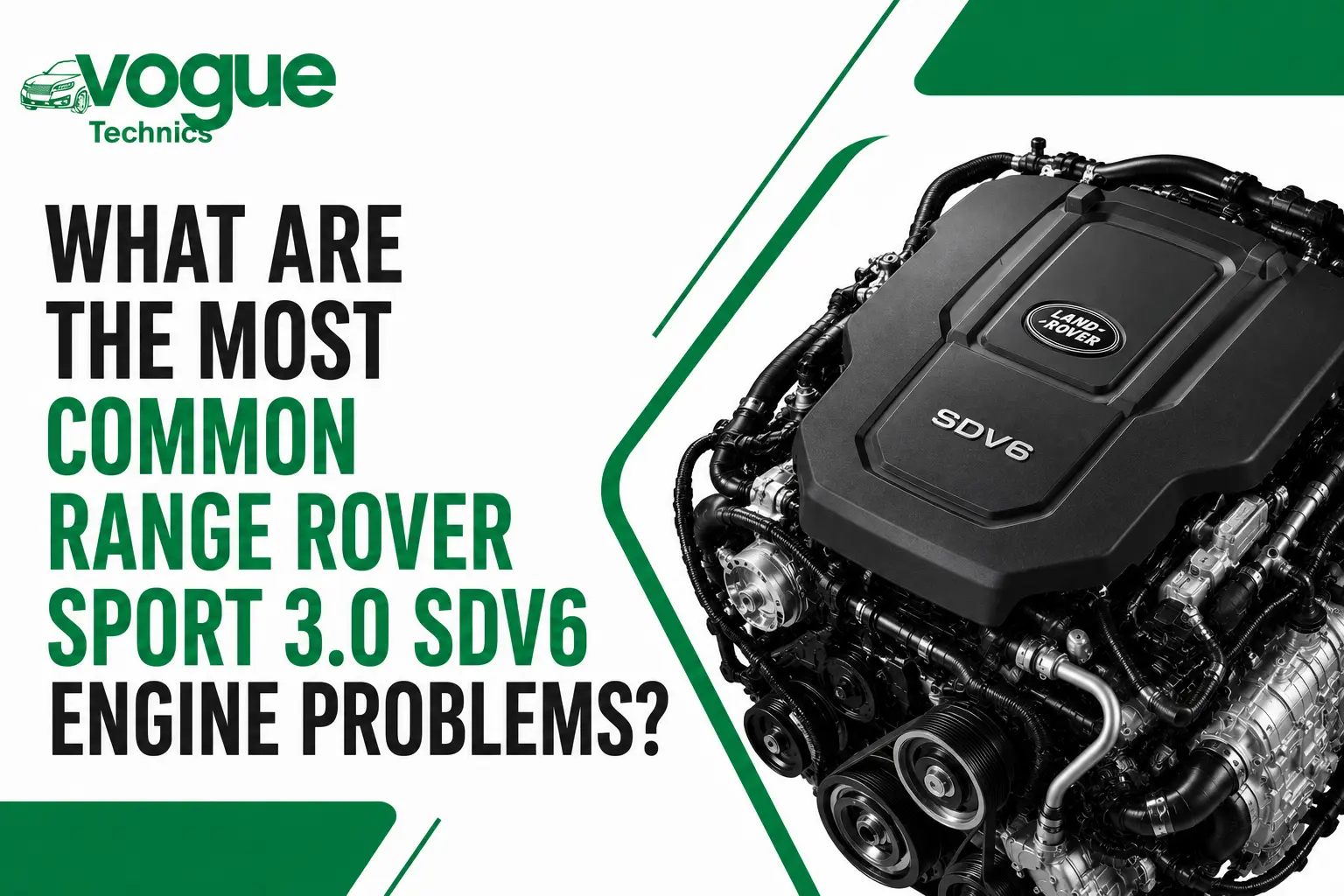
The SDV6 (factory code 306DT, part of the AJD-V6 / Lion family co-developed by Ford and PSA) is a twin-turbocharged diesel that produces strong torque and smooth power. It delivered up to 306 bhp and 600 Nm, which made it a favourite for towing and long motorway runs. But that capability sits on a bottom end with a known weakness.
A handful of faults come up again and again. Some are inconvenient. One is catastrophic. Here's the honest hierarchy of what fails:
- Crankshaft and main bearing failure: the headline problem, and the one that ends engines.
- Timing chain stretch: usually announced by a rattle on cold start, more common on higher-mileage units.
- Turbocharger failure: Sometimes a primary fault, often a knock-on effect of oil starvation.
- EGR cooler leaks and DPF blockage: emissions-system faults driven heavily by short-trip, stop-start UK driving.
- Oil pump and oil pressure loss: frequently the first measurable symptom of deeper crankshaft trouble.
The emissions and turbo issues are expensive but survivable. The crankshaft issue is the one that turns a £40,000 SUV into a non-runner, so it deserves the most attention.
Why Do SDV6 Crankshafts Fail? (The Most Serious Fault Explained)
This is the fault that built the engine's reputation. The crankshaft is compact and narrow by design, which creates vulnerable points between the rod bearing journals and the counterweights. Under sustained load, exactly the kind this engine sees when towing or cruising fully laden, those weak points are put under real strain.
The failure usually follows a chain reaction. A bearing seizes on the journal, the next combustion stroke drives down with enormous force, and the crankshaft snaps at its weakest point. Workshops sometimes call this "torque twist." Once a bearing spins, it can block the oil gallery, oil flow collapses, and the rest happens in minutes.
Land Rover itself acknowledged the root cause in an internal service bulletin. The 2014 bulletin attributed crankshaft and bearing failure mainly to incorrect location of the main bearing shells during assembly, or to the shells rotating during normal use. In plain terms: a known manufacturing and design sensitivity, never escalated to a full public recall.
What makes it frightening is the lack of warning. When the bearing shells spin and oil flow is lost, the crank can fracture without any warning at all. Plenty of meticulously serviced cars have still let go.
Early Warning Signs of Crankshaft & Bearing Failure
Although some engines fail instantly, many give you a short window. The trouble is that the signs are easy to dismiss until it's too late. Catching them early is the difference between a bearing repair and a holed block.
Watch and listen for these:
- A deep, rhythmic knocking or rumbling from the lower part of the engine, especially under load.
- The oil pressure warning light flickering or staying on, often worst at idle or low revs.
- Metallic debris or swarf found in the oil filter or sump during a service.
- A drop in oil pressure readings where your tools or gauge allow you to see them.
- Stored fault codes such as P06DD (oil pressure control), P1335 (crank sensor) or P132A (turbo boost correlation).
If you see swarf in the oil or hear a developing knock, the safest move is to stop driving immediately. Once a knock develops, continued running usually destroys the engine within minutes.
The Engine Knock, Vibration and Low Oil Pressure Light to Never Ignore
There's one mistake we see more than any other: owners hearing a slightly longer rattle on startup, or feeling a faint new vibration at idle, and deciding to "keep an eye on it." With most engines that's reasonable. With the SDV6 it can be a very expensive gamble.
Treat any new lower-end knock, idle vibration, or oil pressure light on this engine as a stop-driving event until it's been scanned and inspected. The cost of a tow and a diagnostic is trivial next to the cost of a block that's been hammered into scrap by a spun bearing.
Turbocharger, EGR and DPF Faults That Trigger Limp Mode
Not every SDV6 problem is terminal. The emissions and forced-induction systems generate their own steady stream of faults, and these are where most "engine system fault" messages and limp-mode events actually come from.
The turbochargers wear over time and can also fail as a secondary casualty. When oil pressure drops during a knock, a turbo running on starved oil will almost certainly fail too if the car keeps being driven. So a "turbo problem" sometimes hides a crankshaft problem underneath, which is exactly why proper diagnosis matters before you spend on a turbo alone.
On the emissions side, two faults dominate:
- EGR cooler leaks and cracks, common enough that Land Rover issued a technical bulletin and remanufactured coolers often use upgraded aluminium cores.
- DPF blockage, driven by short urban journeys that never let the filter regenerate, throwing codes like P2453 and triggering limp mode.
These are real costs EGR coolers and turbo actuators run into several hundred pounds each, but they're repairs, not write-offs. The key is making sure you're not pouring money into emissions parts while a bottom-end fault quietly worsens.
Which Model Years (2009–2020) Are Most Affected?
The 3.0 SDV6 and its TDV6 sibling were fitted widely across the Jaguar Land Rover range. On the Sport, that means the L320 (2009–2013) and the L494 (2013–2020), with the same engine family also appearing in the full-size Range Rover (L405), Discovery 4 and Discovery 5.
Failures aren't neatly tied to a single year, but a few patterns are worth knowing:
- Reports of catastrophic crankshaft failure picked up noticeably from around 2013 onwards across the range.
- Many crankshaft failures cluster between 80,000 and 120,000 miles, though plenty occur earlier.
- Later engines received revised parts, updated tensioners, oil-feed modifications and a crankshaft upgrade referenced in a 2016 technical bulletin, so a well-documented later unit is generally the safer bet.
The blunt takeaway: full service history helps your odds, but it doesn't make any SDV6 immune. We've seen low-mileage, dealer-serviced cars fail and high-mileage owner-maintained ones soldier past 180,000.
Why Do These SDV6 Engine Failures Happen, and How Reliable Is the Engine Really?
To make a smart decision about repair, it helps to understand why this engine behaves the way it does. The reliability story isn't "bad engine." It's "strong engine with one unforgiving design sensitivity that punishes the wrong oil, the wrong intervals, and ignored warnings."
The Lubrication & Oil Pressure Design Flaw Behind Bearing Wear
Everything traces back to oil and the bottom end. The narrow crankshaft leaves little margin around the bearings, so consistent, clean, correctly specified oil pressure is non-negotiable.
Three things repeatedly tip the balance toward failure:
- Extended oil change intervals. Long intervals, a blocked oil pick-up strainer, or low-quality servicing all accelerate bearing wear.
- The wrong oil spec. Some failures appear shortly after a service where incorrect oil went in.
- A partially blocked oil pick-up pipe, which starves the very bearings already running on a tight tolerance.
It's worth being fair to the engine here: experienced owners often say the single biggest factor within your control is the oil, its quality, its spec, and how often it's changed. The design sets the trap; servicing decides whether you fall into it.
TDV6 vs SDV6 Reliability: Is One Diesel Engine Better Than the Other?
This question comes up constantly, usually from people deciding which used Sport or Discovery to buy. The honest answer is that they're far more alike than different.
Factor | 3.0 TDV6 | 3.0 SDV6 |
| Engine family | AJD-V6 / 306DT (Lion) | AJD-V6 / 306DT (Lion) |
| Output | Lower (single/sequential turbo, ~245 bhp) | Higher (sequential twin-turbo, up to 306 bhp) |
| Crankshaft vulnerability | Shares the same narrow-crank weakness | Shares the same narrow-crank weakness |
| Timing chain risk | Yes | Yes |
| Durability tweaks | Earlier spec | Slightly revised for durability on later units |
| Real-world verdict | Reliable if serviced strictly | Reliable if serviced strictly |
The SDV6 is essentially the higher-output, twin-turbo development of the same engine, and it carries slight upgrades for durability while sharing the same core crankshaft and timing-chain vulnerabilities as the TDV6. Choosing between them on reliability alone is largely a wash — service history and how the car was driven matter far more than the badge on the cover.
How Long Does a 3.0 SDV6 Engine Actually Last?
There's no fixed expiry mileage, which frustrates buyers wanting a clean number. What we can say from the workshop floor and the wider data is this: a strictly maintained unit can be genuinely long-lived. A well-looked-after Range Rover engine can pass 200,000 miles.
The flip side is that a neglected one or simply an unlucky one with a marginal bearing from the factory, can fail well before 100,000. The engine doesn't really have a lifespan so much as a maintenance dependency. Look after the oil and listen to the car, and the odds shift heavily in your favour.
SDV6 Engine Rebuild vs Replacement: What Should UK Owners Do?
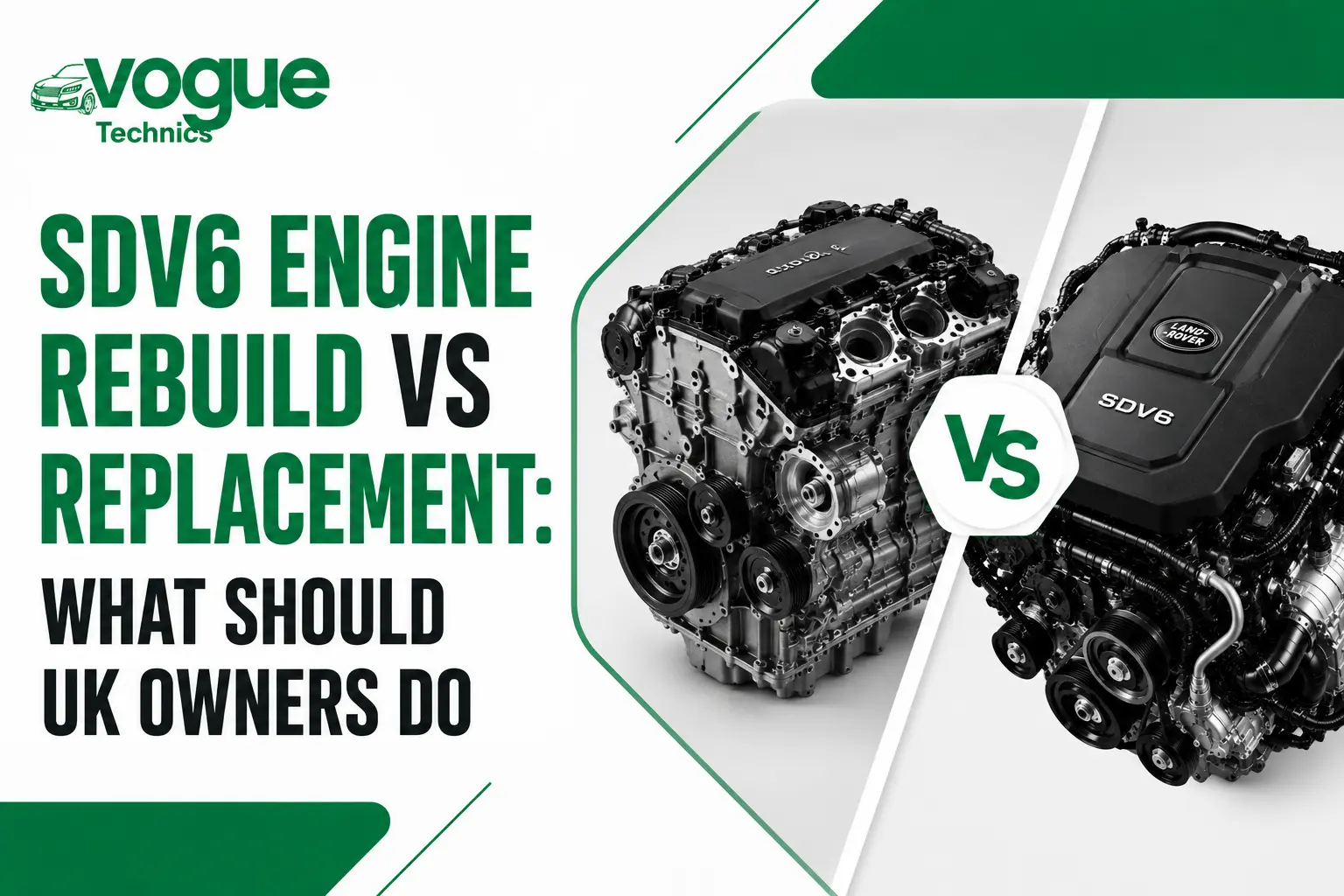
If your engine has already failed, or a knock is telling you it's about to, the decision tree narrows quickly. A spun bearing or snapped crank is not a patch-up job. When the crank snaps or the bearings spin, the only dependable fix is a full long-engine solution rather than a partial repair.
The worst thing you can do is chase symptoms, a turbo here, an EGR cooler there, while the bottom end is already compromised. That's how owners end up spending the price of a proper rebuild on parts that were never the real problem.
How Much Does a 3.0 SDV6 Engine Rebuild Cost in the UK?
Costs vary with the extent of the damage, your location's labour rates, and whether you go specialist or main dealer and the gap between those two routes is enormous.
Here's the realistic 2026 picture:
- Main dealer / OEM replacement: A brand-new engine from a franchised dealer typically runs £10,000–£18,000 or more. One owner was quoted around £19,000 by a main dealer for a complete engine and components after a crankshaft failure.
- Specialist reconditioned engine, supplied and fitted: A reconditioned 3.0 TDV6/SDV6 (306DT) typically costs around £3,500–£6,500 fully fitted.
- The job itself is substantial: a full long-engine replacement is roughly 16 hours of skilled labour, usually with the body lifted from the chassis for access.
One important warning from the trade: avoid crankshaft-only "quick fixes." Crank-only rebuilds frequently fail again within 10,000 miles because they leave the underlying causes and the surrounding wear, unaddressed.
Rebuild vs Replacement vs Reconditioned: Which Is the Smarter Choice?
These three terms get used loosely, so here's how they actually differ and when each makes sense:
Option | What it means | Best for | Typical UK cost (fitted) |
| Repair | Fixing a specific component (turbo, EGR, injector) | Confirmed isolated fault, healthy bottom end | Several hundred to ~£2,000 |
| Rebuild | Engine stripped, machined, rebuilt with new crank, bearings, pistons, pump, seals | A failed engine you want restored properly | ~£3,000–£6,500 |
| Reconditioned (exchange) | A professionally rebuilt, tested unit fitted in place of yours | Fast, warranty-backed return to the road | ~£3,500–£6,500 |
| New OEM | Brand-new engine from the dealer | Cars under manufacturer warranty | £10,000–£18,000+ |
For most out-of-warranty SDV6 owners, a properly reconditioned or rebuilt engine from a specialist is the sweet spot: dealer-grade reliability at a fraction of dealer cost, ideally with a 12-month-plus warranty and compression testing as standard.
Can SDV6 Crankshaft Failure Be Prevented? (Maintenance That Matters)
You can't redesign the crankshaft, but you can dramatically improve your odds. Prevention on this engine isn't optional housekeeping on a unit this sensitive, it genuinely decides whether you reach 200,000 miles or 90,000.
The fundamentals are simple and cheap relative to a rebuild:
- Change oil and filters more often than the long-life schedule suggests, using the correct synthetic spec.
- Inspect and clean the oil pick-up pipe so the bearings never run starved.
- Keep the EGR and breather systems free of carbon build-up.
- Never ignore a new noise, a longer cold-start rattle is not "just one of those things" on an SDV6.
- Avoid prolonged idling and let the engine warm before working it hard.
Do these consistently and you remove most of the controllable risk. The engine's weakness is real, but neglect is what usually pulls the trigger.
The Service Intervals, Oil Spec and Checks That Extend Engine Life
To put numbers on it: specialists commonly recommend oil and filter changes every 6,000 miles using a synthetic-based oil, replacing both oil filters at every service, inspecting the oil pick-up pipe, and keeping the EGR and breather systems clean. Maintaining clean turbo oil feeds and avoiding extended idling rounds it out.
If you're buying a used Sport rather than maintaining your own, build this into your pre-purchase checks: ask for evidence of frequent oil changes, scan for stored fault codes, and listen carefully on a genuine cold start. A car with thin service history and a faint bottom-end knock is a liability, not a bargain.
Get Your Range Rover Sport SDV6 Engine Rebuilt by Vogue Technics, Grays, Essex
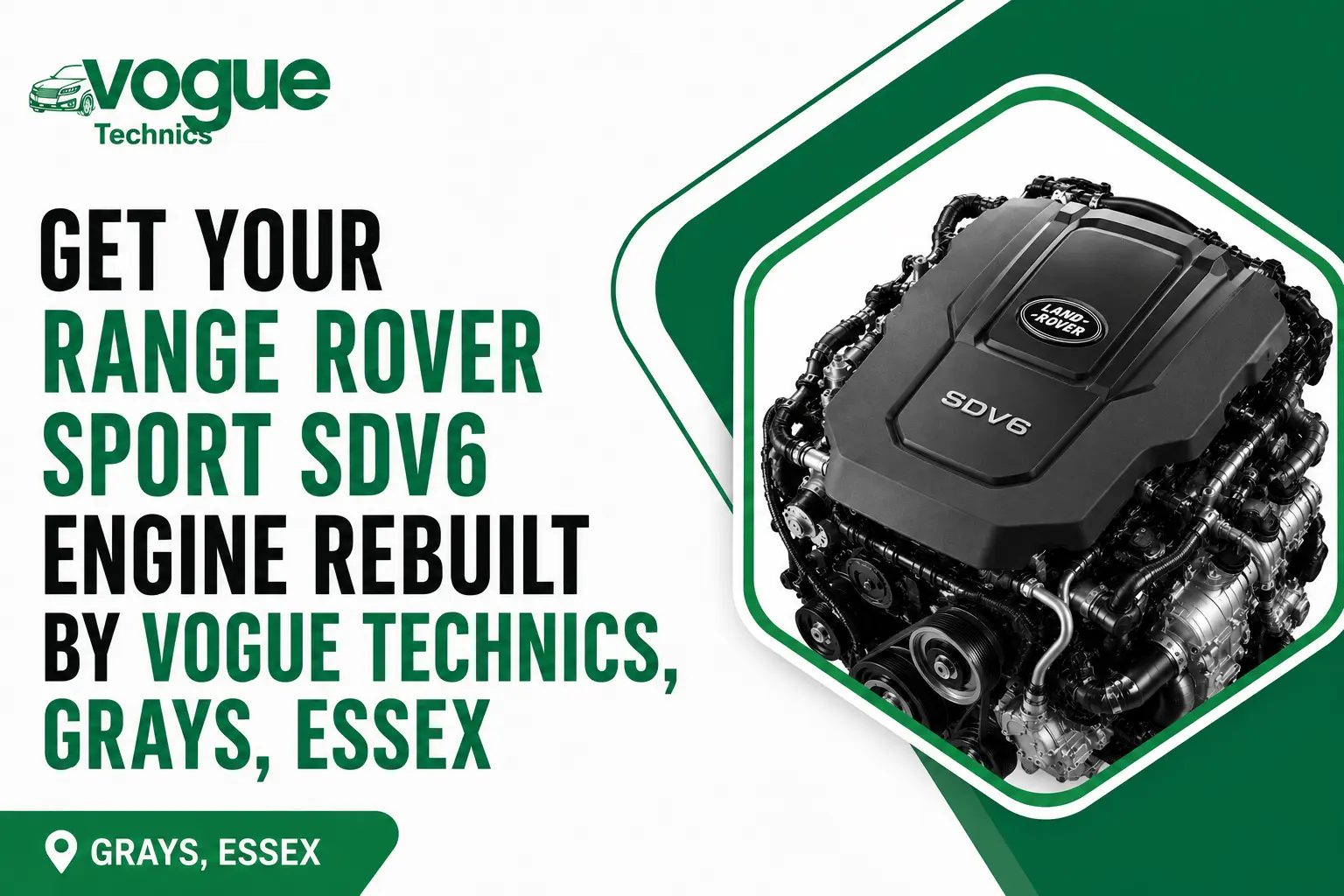
When an SDV6 lets go, you want specialists who know this exact engine's failure modes, not a general garage learning on your car. At Vogue Technics, based in Grays, Essex, rebuilding and replacing Range Rover and Land Rover engines is what we do every week.
Why Choose Our Specialist SDV6 Rebuild Service?
We approach every SDV6 as a root-cause job, not a parts swap. That means diagnosing why yours failed before we quote, so you're not back in the same position in 10,000 miles. Our work centres on the things that actually keep these engines alive:
- Full strip, clean, machine and rebuild with new or reground crankshaft, bearings, pistons, oil pump, seals and timing components, the complete bottom end, not a shortcut.
- Compression and pressure testing before the engine goes anywhere near your car, to confirm oil flow and sealing.
- Honest diagnosis of secondary damage to turbos, EGR and DPF, so nothing rotten gets bolted back on.
- A warranty that reflects our confidence, plus transparent, fixed pricing including labour and VAT, no surprises after the work starts.
- Up to around 60% saving versus main-dealer engine prices, with the same goal: a Sport that drives like it should.
The result is a car returned to dependable, long-term service for a fraction of the dealer quote you may already be holding.
Get a No-Obligation SDV6 Engine Rebuild Quote Today
If your Range Rover Sport is knocking, smoking, flashing an oil pressure light, or sitting on a recovery truck right now, talk to us before you commit to anything. A quick conversation about your symptoms, mileage and model year is usually enough for us to tell you whether you're looking at a repair, a rebuild or a full replacement and what it will realistically cost.
Get in touch with Vogue Technics in Grays, Essex for a clear, no-obligation quote on your Range Rover Sport 3.0 SDV6 engine. Send your reg, mileage and a description of the fault, and we'll give you a straight answer and a fixed price.
(Internal linking opportunities: link "reconditioned engine" to your engine-rebuild service page; link the TDV6/SDV6 comparison to a dedicated TDV6 problems article; link the maintenance section to a servicing/oil-change page; link the quote CTA to your contact/quote form.)
Frequently Asked Questions About SDV6 Engine Problems & Rebuilds
Is the Range Rover Sport 3.0 SDV6 reliable?
It can be, with strict servicing. The engine produces excellent torque and refinement, but its narrow crankshaft is sensitive to oil quality and intervals. Looked after properly, many pass 200,000 miles; neglected, some fail before 100,000.
What are the symptoms of SDV6 crankshaft failure?
A deep knocking or rumbling from the lower engine (worse under load), an oil pressure warning light at idle, metallic swarf in the oil or filter, and stored codes like P06DD or P1335. Any of these means stop driving and get it scanned.
How much does it cost to replace a 3.0 SDV6 engine in the UK?
A reconditioned unit supplied and fitted by a specialist typically lands around £3,500–£6,500, against £10,000–£18,000+ for a new engine at a main dealer. Crank-only rebuilds are a false economy and often fail again quickly.
Did Land Rover recall the SDV6 for crankshaft failure?
No full public recall was issued, but Land Rover acknowledged the crankshaft and bearing issue internally in a 2014 service bulletin, attributing it largely to bearing-shell positioning and rotation. Later engines received revised parts.
Can I prevent SDV6 engine failure?
You can't eliminate the design risk, but frequent oil and filter changes with the correct synthetic spec, a clean oil pick-up pipe, carbon-free EGR/breather systems, and never ignoring new noises remove most of the controllable danger.
Is the TDV6 or SDV6 more reliable?
They're the same engine family and share the same core weaknesses. The SDV6 is the higher-output twin-turbo version with minor durability revisions on later units. Service history and driving style matter far more than which of the two you choose.
My SDV6 has failed — should I rebuild or scrap the car?
For most well-kept Sports, a professional rebuild or reconditioned engine restores the car for a fraction of its value and can actually protect resale, since a documented, warranty-backed engine reassures cautious buyers. Vogue Technics in Grays, Essex can assess yours and quote before you decide.