
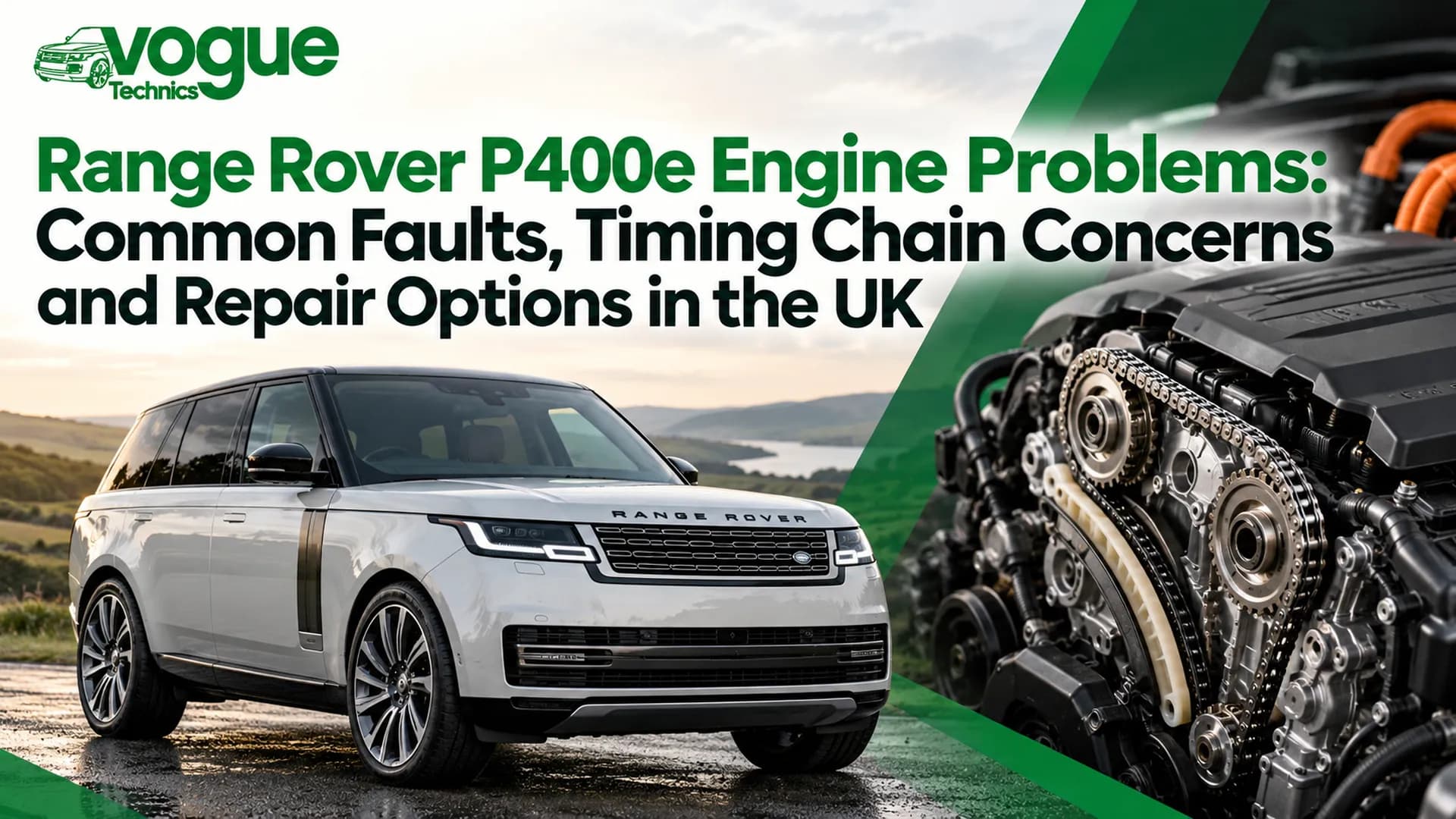
Range Rover P400e Engine Problems: Common Faults, Timing Chain Concerns and Repair Options in the UK
Most range rover p400e engine problems give warnings before they become expensive: a rattle at startup, a falling coolant level, an odd warning light. Act on those signs, keep the servicing up to date and use a specialist who understands hybrid-era engines. That is the best way to protect both the car and your wallet.
A dashboard warning, a rough start or a hybrid system message can ruin your day when you own a car this expensive. If you are searching for range rover p400e engine problems, you probably want three answers: what is going wrong, how serious it is, and what the fix will cost.
This guide covers all three. It explains the faults owners report most often, how the P400e differs from the P400, what a realistic engine lifespan looks like, and when repair, rebuild or replacement makes financial sense.
What Are the Most Common Range Rover P400e Engine Problems?
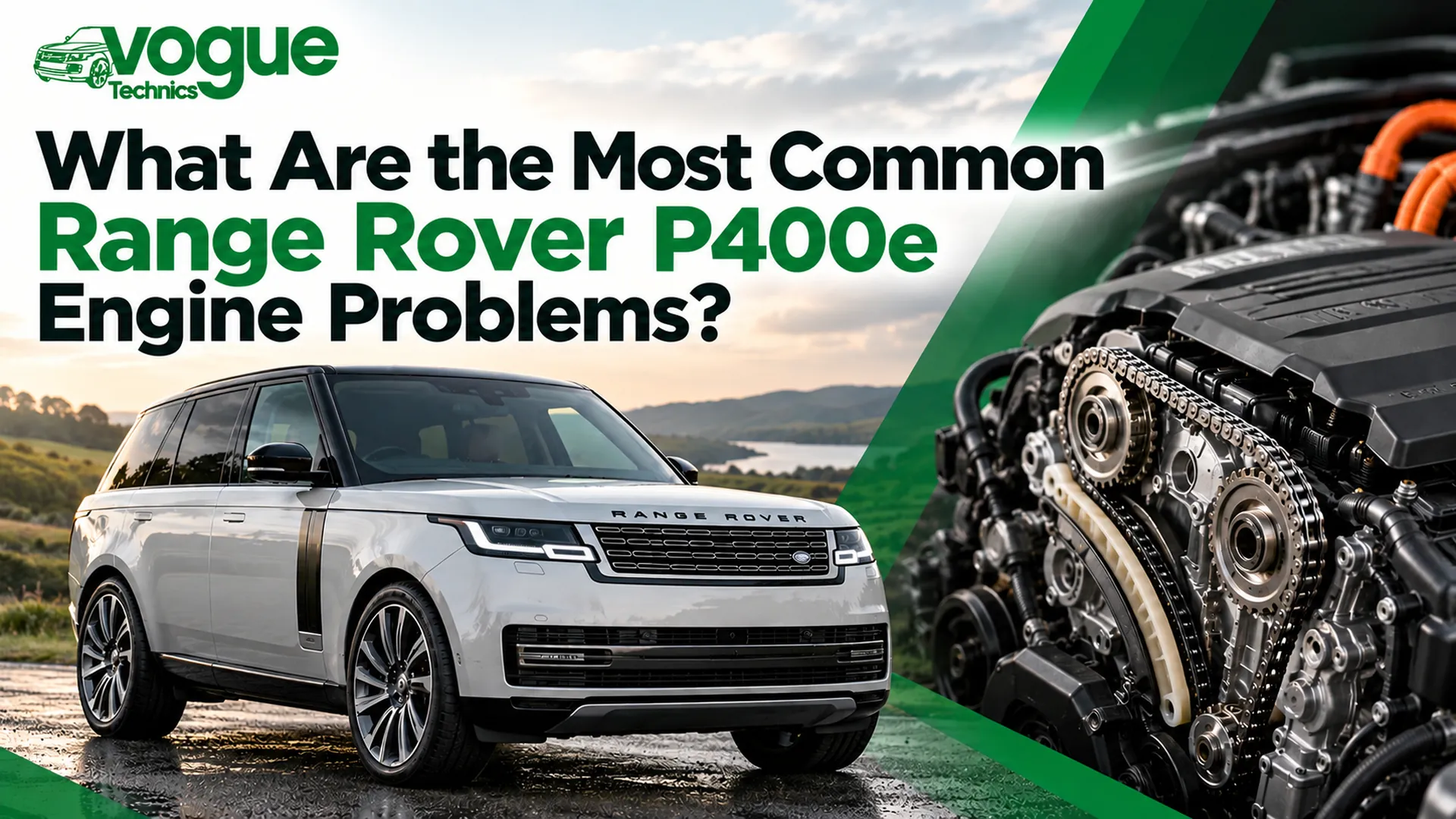
The P400e pairs a 2.0-litre turbocharged Ingenium petrol engine with an electric motor and a high-voltage battery. That setup is clever, but it adds complexity. Most faults trace back to a handful of areas: the engine itself, the cooling system, the emissions hardware and the hybrid electronics.
Do Range Rovers Have Engine Problems, and Are Range Rover P400e Engines Reliable?
Short answer: yes, some do, and the P400e is no exception. But "unreliable" is too blunt a verdict.
Land Rover's Ingenium engines are generally sound when serviced on time. Trouble tends to appear in cars with patchy service histories, short-journey use or deferred maintenance. The P400e also leans heavily on its electrical systems, so some "engine problems" turn out to be hybrid faults in disguise.
So are Range Rover engines reliable? Reliability depends on how the car was cared for far more than on the badge. A well-maintained P400e can be a satisfying car. A neglected one can become expensive quickly.
Range Rover Sport P400e Timing Chain, Oil, Cooling and Emissions Faults
The Range Rover Sport P400e uses the same powertrain as the Range Rover P400e, so the faults below apply to both. These are the problems owners and independent specialists mention most.
1. Timing chain wear. The Range Rover Sport P400e timing chain is a frequent search for good reason. Chain stretch or tensioner trouble can cause rattling on cold start, rough running or a check-engine light. Dirty or overdue oil is a common contributor. Ignore the noise and a repair can become an engine rebuild.
2. Oil dilution and condensation. The petrol engine in a plug-in hybrid starts and stops constantly and often runs short cycles. It can seldom reach full temperature, so fuel and moisture can build up in the oil. This is one reason shorter oil-change intervals make sense on this car.
3. Cooling system leaks. A PHEV cools more than the engine. The battery and power electronics have their own cooling needs. Coolant loss, weeping hoses or a failing pump or thermostat should never be left to "see how it goes".
4. Petrol particulate filter issues. Short trips can stop the filter regenerating properly. Look for reduced power, warning lights or a poorly idling engine.
5. Hybrid and charging faults. Charging failures, "hybrid system" messages and a drained 12V battery are widely reported. They are not strictly engine faults, but they often get blamed on the engine.
Warning signs worth acting on:
- A rattle or tick from the front of the engine at startup
- Coolant level dropping with no visible leak
- Oil level rising, which can signal fuel dilution
- Hesitation, rough idle or limp mode
- Amber or red hybrid system warnings
These are warnings, not diagnoses. Any of them calls for a proper scan and inspection, because several different faults can produce the same symptoms.
2018, 2021 and 2022 Range Rover P400e Engine Problems: Does the Model Year Matter?
Somewhat, yes. The P400e arrived on the L405 Range Rover and Range Rover Sport in 2018 and stayed on sale until the later models moved to a new generation and powertrain.
Model Year | What to Watch For |
| 2018 | First-year car. Check charging behaviour, software updates and hybrid warnings. Age and mileage matter most here. |
| 2021 | A more mature build, but still check the full service history and any recall work. |
| 2022 | Among the last of this version. Lower mileage and warranty status may apply, but engine servicing still matters. |
Searches for 2018 range rover p400e engine problems, 2021 range rover p400e engine problems and 2022 range rover p400e engine problems are popular, but a car's history counts for more than its year. Two cars of the same age can be in very different condition.
Before you buy or book a repair, run the registration through the official GOV.UK recall checker and ask a main dealer or specialist to confirm that any outstanding recall or software work has been completed.
(Internal link suggestion: "Range Rover Engine Rebuild Services in Essex")
Range Rover P400 Engine Specs and How Long Do Range Rover Engines Last?
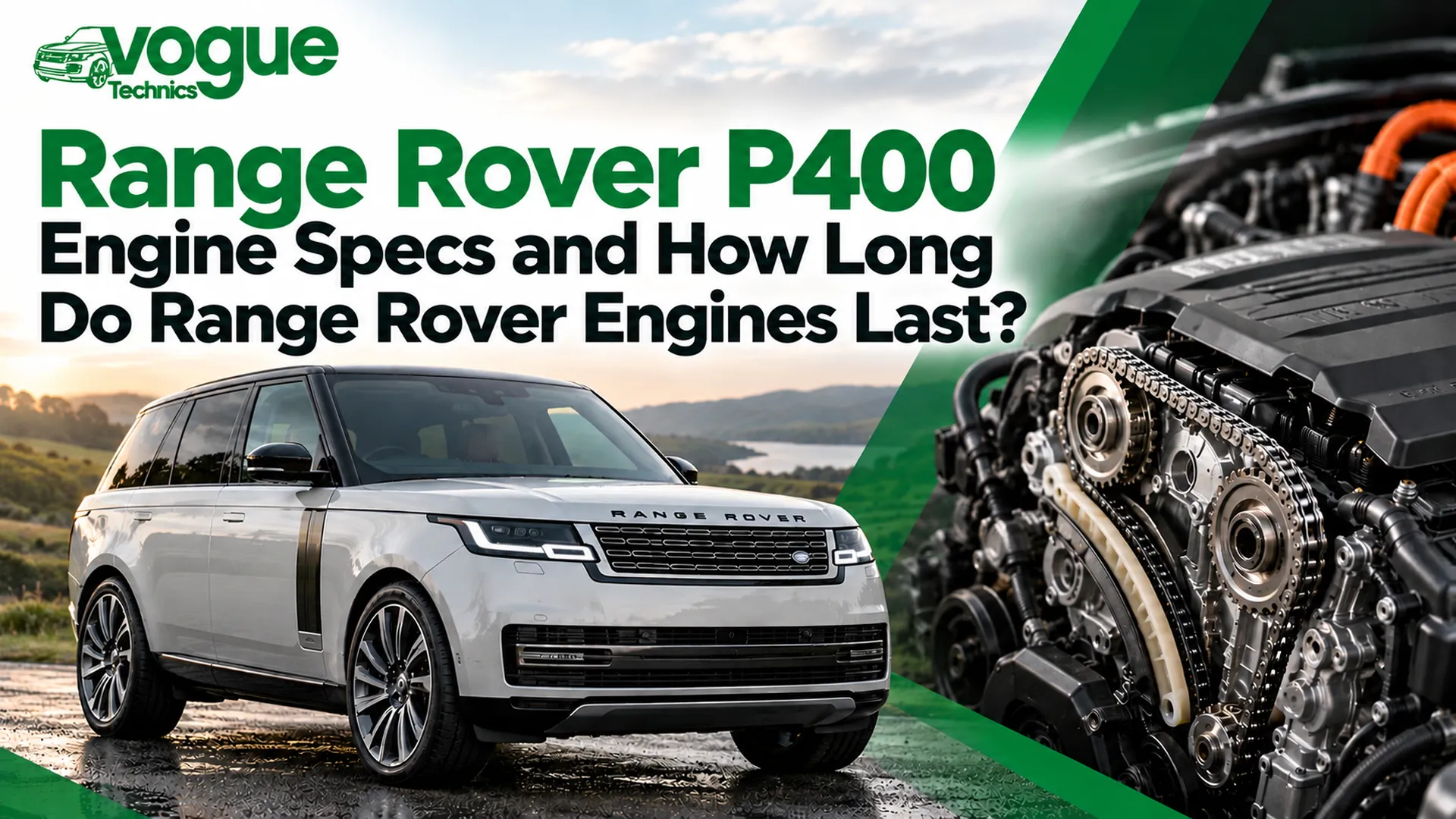
Buyers often mix up the P400e and the P400. They sound alike but are very different engines.
What Are the Range Rover P400 Engine Specs, and What Changed on the 2020 Model?
The P400e is a plug-in hybrid. The P400 is a 3.0-litre petrol six-cylinder with mild-hybrid assistance. Here is how they compare:
Feature | Range Rover P400e | Range Rover P400 |
| Engine | 2.0-litre turbo petrol, 4-cylinder | 3.0-litre petrol, 6-cylinder |
| Hybrid type | Plug-in hybrid (PHEV) | 48V mild hybrid |
| Battery | High-voltage, chargeable | Small 48V system, not plug-in |
| Power | Around 404PS combined | Around 400PS |
| Charging | Yes, via charge port | No |
| Typical focus | Lower tax, short electric range | Smooth, strong long-distance performance |
If you are researching the range rover p400 engine, range rover p400 engine specs or the range rover p400 engine 2020, confirm which version you actually mean. The range rover p400 engine issues people report are different from P400e faults, since the P400 has no plug-in battery or charging hardware. Always check the figures against the car's handbook or the manufacturer's data before ordering parts or quoting.
How Long Do Range Rover Engines Last, Including the 3-Litre Diesel?
Most Range Rover engines can pass 100,000 to 150,000 miles when serviced properly, and some go well beyond. Without regular oil changes, cooling system care and quick attention to warning lights, that figure drops sharply.
The range rover 3 litre diesel engine problems you read about online usually involve timing chain components, injectors, turbo wear or EGR-related faults, especially on higher-mileage cars. Diesel and petrol engines fail in different ways, so a P400e owner should not assume a diesel horror story applies to their car, or the reverse.
Habits that extend engine life:
- Change oil on time, and more often if you do mostly short trips
- Fix coolant leaks as soon as you notice them
- Let the engine reach temperature occasionally on longer drives
- Use a specialist who understands PHEV systems
- Never ignore a cold-start rattle
P400e Engine Failed or Failing? Repair, Rebuild or Replace in the UK
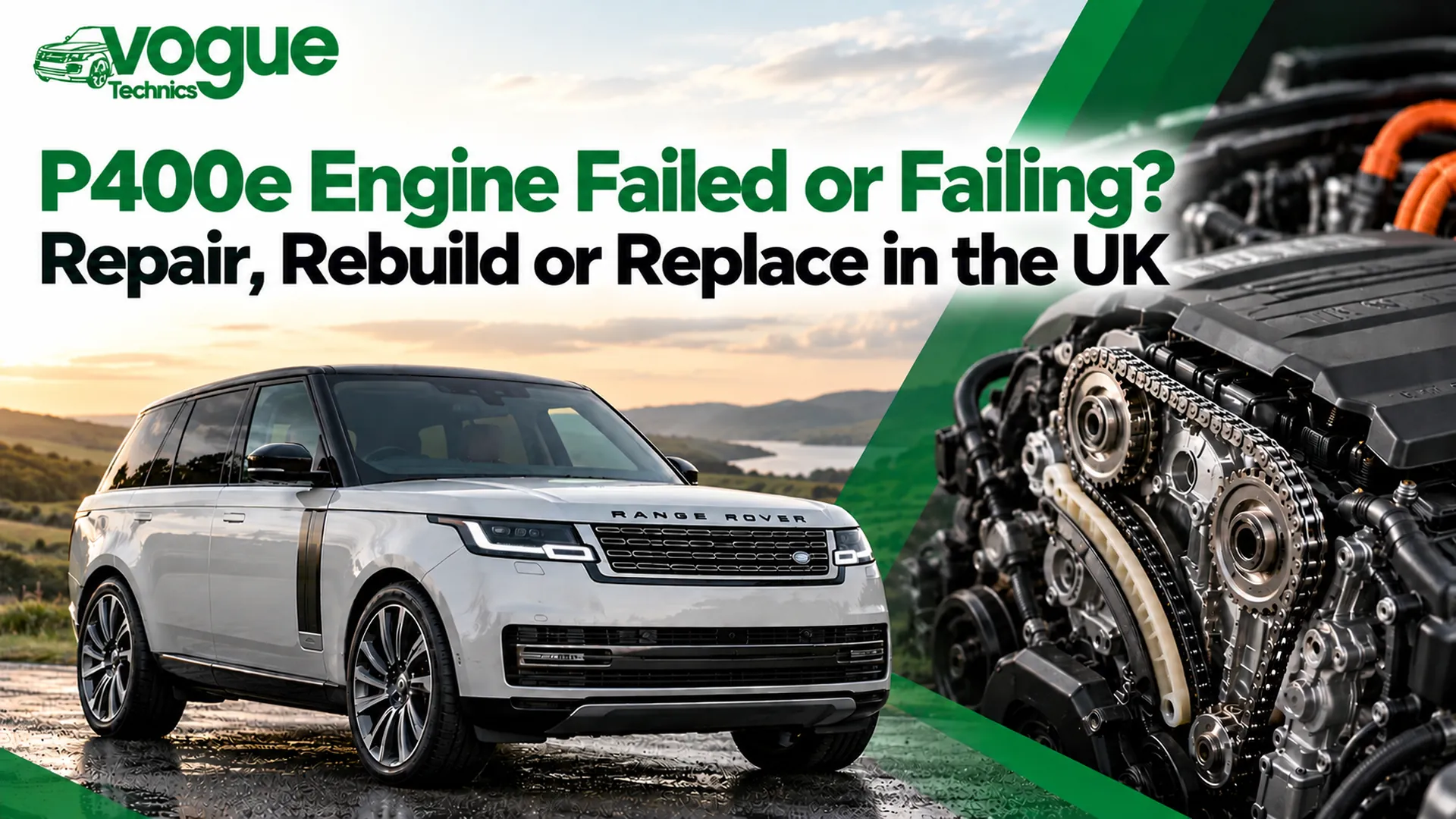
When a diagnosis points to serious engine damage, you generally have three routes. The right one depends on the damage, the car's value and how long you plan to keep it.
How Much Does a Range Rover P400e Engine Repair or Rebuild Cost, and When Is Replacement Worth It?
Costs vary widely, so treat any online figure as a rough guide. What drives the bill:
- The fault itself. A timing chain job costs far less than a full engine failure.
- Parts availability. New, reconditioned and used units are priced very differently.
- Labour time. Removing a modern engine from a hybrid takes real hours.
- Related damage. A failed chain can damage valves, pistons or cylinder heads.
A simple way to decide:
- Repair if the damage is limited and caught early.
- Rebuild if the block is sound but major internal components are worn or damaged.
- Replace if the damage is extensive and a quality replacement unit costs less than a full rebuild.
Weigh the quote against what the car is worth. If it costs more to fix than the car is worth, think carefully before committing.
Real-world example: An owner notices a faint rattle on cold starts and puts it off for a few months. The chain finally jumps, bending valves. What might have been a manageable repair becomes a full engine job. Early inspection is nearly always cheaper.
Why Choose Voguetechnics Engine Rebuild in Grays, Essex?
If your Range Rover is showing any of the signs above, a specialist assessment before the damage spreads can save serious money. Voguetechnics Engine Rebuild, based in Grays, Essex, focuses on engine diagnosis, rebuild and replacement for premium vehicles like yours.
What to expect when you get in touch:
- A clear explanation of what is wrong, in plain English
- A straightforward comparison of repair, rebuild and replacement options
- Honest advice, including when an engine is not worth saving
- A written quote before work begins
Ask about warranty terms, turnaround time and parts sources before you agree to anything. Any good workshop will answer those questions openly.
Ready to find out what's wrong? Visit voguetechnicsenginerebuild.co.uk to request a quote, and have your registration number to hand.
Frequently Asked Questions
What are the most common Range Rover P400e problems?
Timing chain wear, cooling system leaks, oil dilution from short journeys, petrol particulate filter issues and hybrid or charging faults are the most reported. Condition and servicing history decide which, if any, affect a particular car.
Is the Range Rover P400e reliable?
It can be, with careful maintenance. It is more complex than a conventional petrol Range Rover, so neglected cars tend to show problems sooner.
Do Range Rovers have engine problems?
Some do, depending on engine type, age and care. Petrol, diesel and hybrid versions each have their own typical weak points.
How long do Range Rover engines last?
Often 100,000 to 150,000 miles or more with proper maintenance. Mileage alone is a poor guide. Service history tells you more.
Does the Range Rover Sport P400e have a timing chain problem?
Chain wear is a commonly raised concern on the Ingenium petrol engine. Listen for cold-start rattles and keep oil changes on schedule.
What is the difference between the P400e and the P400?
The P400e is a 2.0-litre plug-in hybrid. The P400 is a 3.0-litre six-cylinder petrol with mild-hybrid assistance. They share a badge style but not an engine.
Are there P400e recalls I should check?
Possibly. Enter the registration on the GOV.UK recall checker, or ask a Land Rover dealer to confirm any outstanding recalls and software updates.
Conclusion: Catch Range Rover P400e Engine Problems Early
Most range rover p400e engine problems give warnings before they become expensive: a rattle at startup, a falling coolant level, an odd warning light. Act on those signs, keep the servicing up to date and use a specialist who understands hybrid-era engines. That is the best way to protect both the car and your wallet.
If you suspect something is wrong with your P400e, contact Voguetechnics Engine Rebuild in Grays, Essex for a clear diagnosis and a no-nonsense quote before a small fault becomes a big one.