
Range Rover P0087 Fault Code: Meaning, Causes, Fixes & Expert Fuel System Repair in Grays, Essex
The Range Rover P0087 fault code means fuel rail pressure is too low, and it can cause hesitation, limp mode or a no-start. This guide explains the common causes on the Evoque and Range Rover Sport diesel, from a failing fuel pump to leaking injectors. It covers how the fault is fixed, whether it's safe to drive, and typical UK repair costs. It also shows how our Grays, Essex workshop diagnoses and repairs it.
The engine light comes on, the car hesitates under acceleration, and a scan tool shows P0087. Some owners get limp mode, a rough idle or a no-start on top of it.
Take it seriously, but don't panic. P0087 is a fuel pressure warning, and it is usually fixable once you find where the pressure is being lost.
This guide explains what the Range Rover P0087 fault code means, what causes it on diesel models like the Evoque and Range Rover Sport, how it's fixed, whether it's safe to drive, and what it costs in the UK. It comes from the fuel system faults we see in our Grays, Essex workshop.
What Does the Range Rover P0087 Fault Code Mean, and What Causes It?
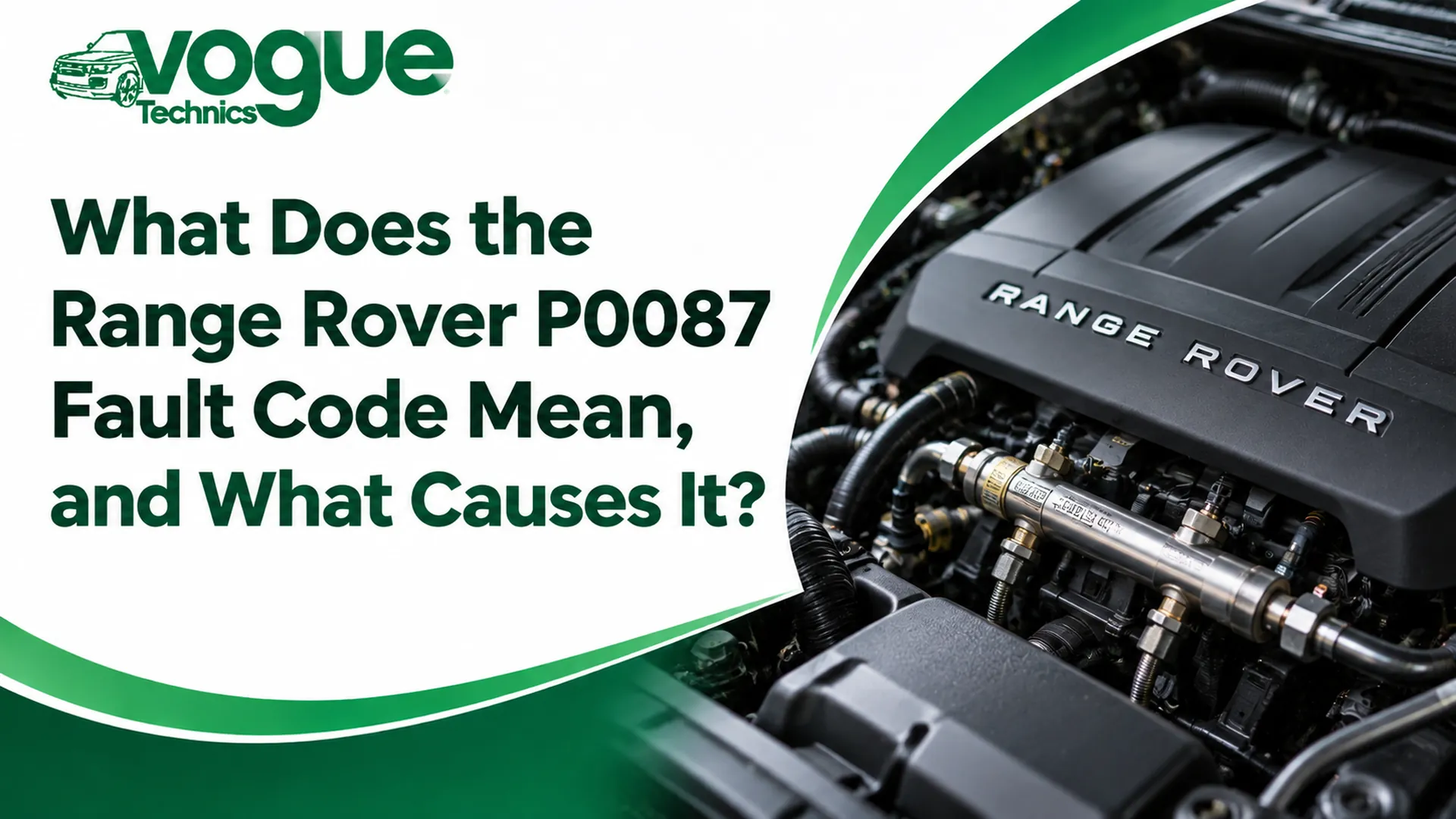
If you're asking what code P0087 is, the generic definition is "fuel rail/system pressure too low." Your engine control unit (ECU) compares the pressure it requests with the pressure the fuel rail pressure sensor reports. When the real pressure falls short for too long, the ECU stores the code and often cuts power to protect the engine.
Diesel engines depend on very high injection pressure. If the pressure drops, the injectors can't atomise the fuel properly, and the engine hesitates, struggles or refuses to start.
The short answer: A Range Rover fault code P0087 usually points to a failing high-pressure fuel pump, a blocked fuel filter, leaking injectors, a faulty fuel pressure regulator or rail pressure sensor, or air or water in the fuel. The fix depends on which of these is actually losing pressure, so testing comes before parts.
The symptoms usually look like this:
What you notice | Likely cause | Urgency |
| Loss of power, limp mode | Low rail pressure under load | Medium to high |
| Long cranking, slow or hard start | Weak pump or injector leak-back | Medium |
| Starts, then stalls | Pressure collapsing at idle | High |
| Hesitation or surging | Failing regulator or sensor | Medium |
| Worse after refuelling | Contaminated or poor-quality fuel | Medium |
P0087 is a generic code, so you'll see it on many makes, including Peugeot and other diesels. The meaning is the same on every car, but the causes and repair costs differ by engine. That is why a Range Rover needs Land Rover-specific diagnostics rather than a generic reader.
What Causes a P0087 Code on a Range Rover Evoque or Range Rover Sport Diesel?
Here are the main causes, with what we typically find:
- Failing high-pressure fuel pump. This is the most serious cause. When a pump wears, it can't build enough pressure, and in some cases it sheds metal debris into the fuel system.
- Blocked or old fuel filter. A restricted filter starves the pump. It's the cheapest fix, so we always check it early.
- Leaking or faulty injectors. A leaking injector lets pressure bleed away, which causes long cranking and rough running.
- Fuel pressure regulator or rail pressure sensor faults. The pressure may be fine while the sensor reports it wrongly, or the regulator may vent more than it should.
- Air or water in the fuel. This often follows running low on fuel or a bad tank of diesel.
On a Range Rover Sport diesel, especially the 2.7 TDV6 and 3.0 diesels, a P0087 that returns after being cleared is a warning sign for the pump and injectors. On the Evoque, we see the code appear with hesitation under load, or after a cold start. In both cases, don't ignore a repeat code.
What Do P0087-00 and P0087-22 Mean, and Which Other Codes, Like P0915, Appear With It?
Land Rover diagnostic software shows the code with a two-digit suffix. P0087-00 is the base fault with no extra detail. P0087-22 (as in "P0087 22 Range Rover Sport") adds that the pressure signal was below its minimum threshold. Land Rover P0087 00 and 22 are the same underlying problem, just reported with different detail.
Other fuel and engine codes often appear alongside it, such as rail pressure, regulator or injector codes. If you also see P0915 on your Range Rover fault code list, don't assume it's a fuel fault. P0915 is generally a gear shift position circuit code, so it's a separate system. It can show up because limp mode or low voltage has upset the gearbox control, so we read and interpret every stored code together.
How Do You Fix Code P0087 on a Range Rover, and Is It Safe to Drive?

You fix the cause of the pressure loss, not the code. Clearing the code without a repair only works until the ECU notices the pressure is still low, usually within minutes.
How Do I Fix a P0087 Fault Code on a Range Rover Step by Step?
Work from the cheapest, most likely cause to the most expensive:
- Check fuel level and quality. Low fuel or a recent bad fill can trigger the code.
- Replace the fuel filter if it's due, and bleed the system. This is often overdue.
- Read all stored codes with Land Rover-specific software and note freeze-frame data.
- Run a fuel pressure test and compare the requested pressure with the actual pressure in live data.
- Test the regulator and rail pressure sensor. A cheap component can mimic a failed pump.
- Check the injectors for leak-back and return flow.
- Test the high-pressure pump. Replace it only once the earlier checks point there.
- Clear the codes and road test to confirm the pressure holds.
Here is how the typical fixes compare:
Fix | Difficulty | Typical outcome |
| Fuel filter and bleed | Low | Solves it if the filter was the cause |
| Rail pressure sensor or regulator | Medium | Solves sensor-related faults |
| Injector replacement | Medium to high | Fixes leak-back and rough running |
| High-pressure pump replacement | High | Needed for a worn pump |
| Full fuel system clean-out | High | Needed if the pump has shed debris |
If a pump has failed and contaminated the system, replacing only the pump often leads to a repeat failure. In that case the lines, rail and injectors need cleaning or replacing too.
Where Is the P0087 Fault Code Location, and Can I Reset the Code Myself?
The fault code isn't a physical part you can point at. It's stored in the engine ECU. You read it through the OBD port, usually under the dashboard on the driver's side. The actual fault sits on the high-pressure side of the fuel system: the pump, rail, sensor, regulator or injectors.
You can reset the fault code with a basic reader, but we don't recommend it as a fix. If the cause is still there, the code returns, and you've lost the stored data a technician would use to find it. Reset it only after the repair.
Is It Safe to Drive With a P0087 Code on a Range Rover?
Short, gentle trips are sometimes possible, but it isn't advisable. A low-pressure fault can cause sudden power loss or stalling, which is dangerous on a motorway or at a junction. Worse, a failing pump can contaminate the whole fuel system, turning a repair into a much bigger bill.
Stop driving and get the car checked if:
- The engine goes into limp mode more than once.
- The car stalls while driving.
- It cranks for a long time before starting.
- There's a smell of fuel, or the warning light flashes.
If the car drives normally with only the light on, book a diagnostic soon. Ignoring it is the expensive option.
How Much Does It Cost to Fix a Range Rover P0087 Fault, and Who Can Diagnose It in Grays, Essex?
Cost depends on the cause, which is why a proper diagnosis comes first. These are typical UK ranges for parts and labour. Your quote will vary with model, engine and age.
Cause | Typical cost range |
| Fuel filter replacement and bleed | £80–£250 |
| Rail pressure sensor | £120–£400 |
| Fuel pressure regulator | £200–£600 |
| Injector repair or replacement | £150–£500 per injector |
| High-pressure fuel pump | £600–£1,800+ |
| Full fuel system clean-out after pump failure | £1,500–£3,500+ |
These are a guide, not a quote. A written quote after diagnosis is the only reliable number.
How a specialist confirms the cause. We work through the car in a logical order:
- Full diagnostic scan using Land Rover-specific software.
- Live fuel pressure data, comparing requested and actual pressure.
- Regulator and sensor tests.
- Injector leak-back and return flow checks.
- Pump output test.
- Inspection of the filter and fuel for debris, water or air.
Repair or rebuild? Most P0087 faults end in a sensor, filter, injector or pump repair. If debris from a failed pump has spread through the system, or the engine has run without proper fuelling for some time, the question becomes whether the engine itself needs further work. Because we also rebuild engines, we can tell you early which situation you're in.
Why Choose Vogue Technics Engine Rebuild for Range Rover P0087 Diagnosis and Repair?
We treat a fuel pressure code as a diagnostic job, not a parts exercise. We test before we replace, explain what we found in plain English, and give you a clear quote before any work starts.
What you get from us:
- Land Rover-specific diagnostics that read the codes and live data a generic reader misses.
- Model experience across the Range Rover, Range Rover Sport, Evoque and Discovery.
- Honest advice on repair versus rebuild, so you don't pay for fixes the engine can't survive.
- A local workshop serving Grays, Thurrock and the wider Essex area.
Call us or send the quote form to book your fuel system diagnostic today. Have your model, year, engine and any codes ready, and we'll point you in the right direction.
Frequently Asked Questions
What does the P0087 code mean on a Range Rover?
It means fuel rail/system pressure is too low. The ECU found that the actual fuel pressure fell below what it requested, which can cause hesitation, limp mode or a no-start.
What causes a P0087 code?
The common causes are a failing high-pressure fuel pump, a blocked filter, leaking injectors, a faulty regulator or pressure sensor, and air or water in the fuel.
How do you fix code P0087?
Find the cause of the pressure loss. Start with the fuel level and filter, then test the sensor, regulator, injectors and pump. Clearing the code alone won't fix it.
Is P0087 the same on a Peugeot and a Range Rover?
The code means the same thing on every make: fuel rail pressure too low. The causes and costs differ by engine, so the diagnosis and repair on a Range Rover are specific to its fuel system.
Can I reset the P0087 fault code myself?
You can clear it with a reader, but it will return if the cause remains. Fix the problem first, then clear the code.
Is it safe to drive with a P0087 code on a Range Rover Sport diesel?
It's risky. The car may stall or lose power, and a failing pump can contaminate the fuel system. Book a diagnostic as soon as you can.
What are P0087-00 and P0087-22 on a Range Rover Sport?
They are the same fault with different detail. P0087-22 indicates the pressure signal was below its minimum threshold.
Don't Let a P0087 Code Turn Into a Bigger Repair
A Range Rover P0087 fault code is a warning, not a verdict. Caught early, it's often a filter, sensor or injector job. Left alone, a failing pump can contaminate the whole fuel system.
Check the basics, avoid long drives, and get the car tested by someone who understands Land Rover fuel systems. Contact Vogue Technics Engine Rebuild in Grays, Essex to book your diagnostic and get a clear, honest answer.