
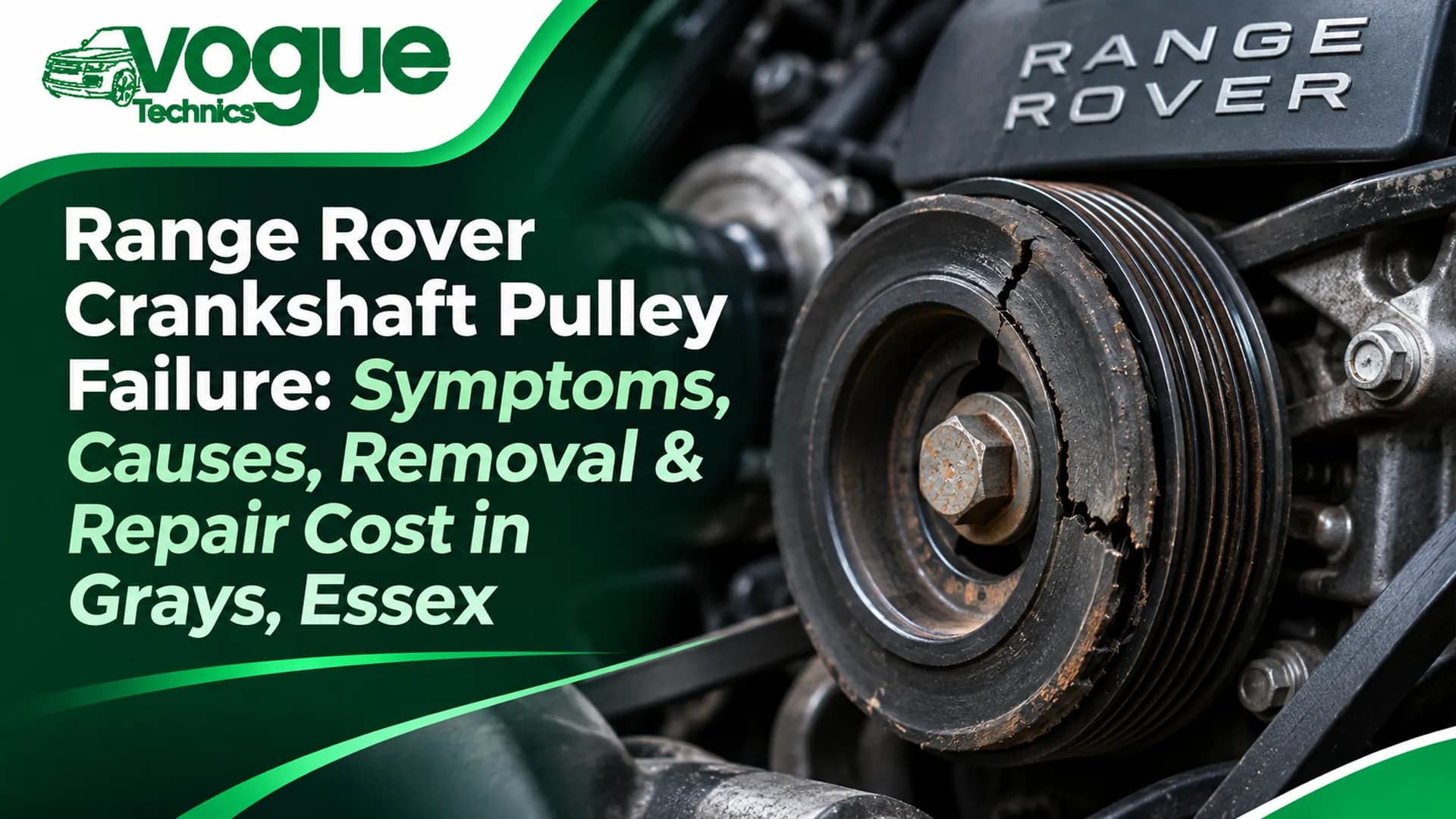
Range Rover Crankshaft Pulley Failure: Symptoms, Causes, Removal & Repair Cost in Grays, Essex
A failing Range Rover crankshaft pulley can cause belt squeal, a flickering battery light and, in the worst case, a belt that comes off mid-journey. This guide explains what the crank pulley does, what causes it to fail and which warning signs to take seriously. You'll also learn how pulley removal works, which tools are needed and what repairs cost, with expert help available from Voguetechnics in Grays, Essex.
You start the engine and hear a squeal that wasn't there last week. Or the belt keeps throwing itself off. Or you look at the front of the engine and see the pulley wobbling as it turns. Whichever it is, you're probably wondering if the car is safe to drive.
Range Rover crankshaft pulley failure is one of those faults that starts small and ends expensive if you ignore it. This guide explains what the pulley does, why it fails, which symptoms to take seriously, how removal works and what the repair costs in the UK.
What Is a Range Rover Crankshaft Pulley and What Causes Crankshaft Pulley Failure?
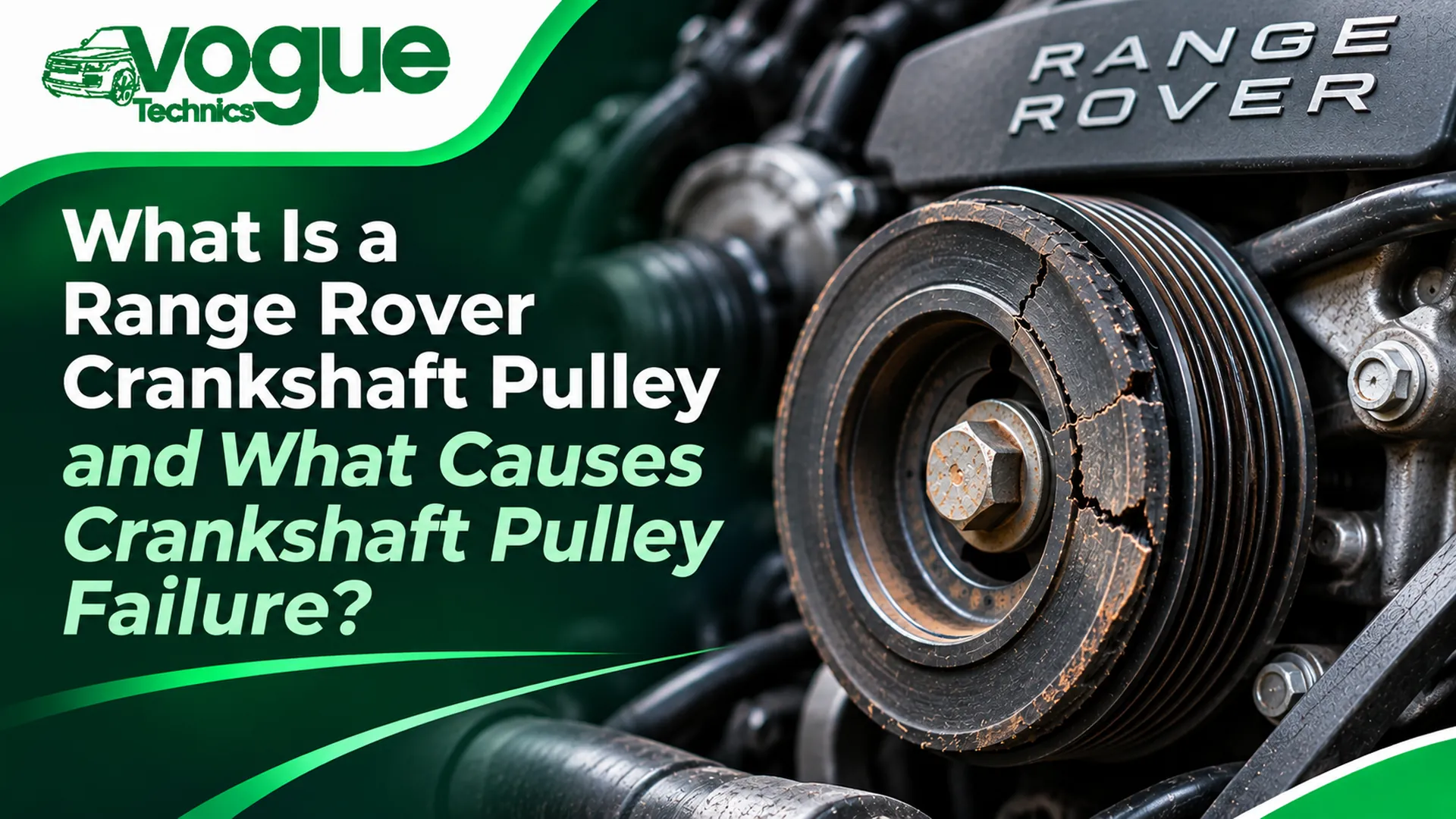
The crankshaft pulley sits on the front of the crankshaft and drives the auxiliary belt. That belt runs the alternator, the power steering pump, the A/C compressor and, on many engines, the water pump. If the pulley fails, everything the belt drives goes with it.
What Does the Crank Pulley on a Range Rover Do, and Is It the Same as a Harmonic Balancer?
A crank pulley on a Range Rover has two jobs. It turns crankshaft rotation into belt drive, and on most modern engines it also acts as a vibration damper. In that case it has an outer ring, an inner hub and a rubber layer bonded between them. The rubber absorbs the torsional vibration every combustion stroke sends through the crank.
So is it the same as a harmonic balancer? On most modern Range Rover crankshaft pulleys, yes. The terms are often used interchangeably, although some older engines use a plain solid pulley with no damping element. Check which type your engine has before you order a part, because they are not interchangeable.
What Causes Crankshaft Pulley Failure on a Range Rover, Evoque, Freelander and 300Tdi?
When owners ask what causes crankshaft pulley failure, the answer is usually one of these:
- Perished rubber: heat and age harden the bonded rubber until it cracks or lets the outer ring slip.
- Oil contamination: a leaking front crankshaft seal softens the rubber and speeds up the breakdown.
- Loose or stretched centre bolt: the pulley shifts on the crank snout and damages the mating surfaces.
- Belt misalignment or a seized component: a failing tensioner, idler or alternator loads the pulley unevenly.
- Vibration fatigue: years of combustion load wear the damper out, especially on high-mileage engines.
Mileage and maintenance matter more than the model year. A 2012 Range Rover with 130,000 miles is more at risk than a 2017 car with half that, but both can suffer if the seal leaks or the belt system is neglected.
The crankshaft pulley on a Range Rover Evoque and the Freelander is a smaller, tighter-packaged unit, so heat and access problems show up differently. Older 300Tdi engines use a simpler pulley design. There the usual culprits are a slack centre bolt and oil leaks rather than a perished damper.
What Are the Symptoms of Range Rover Crankshaft Pulley Failure and Can You Keep Driving?
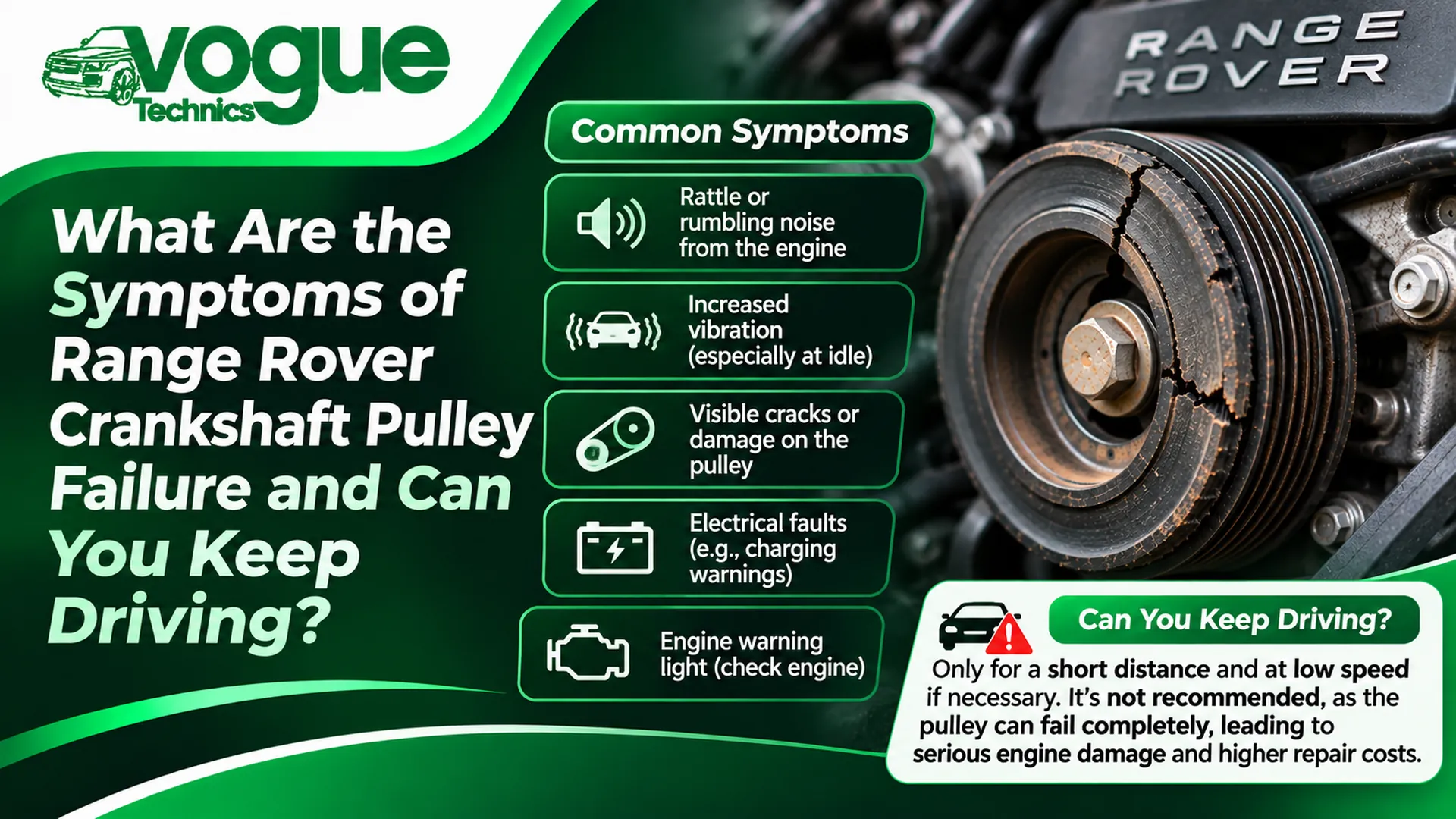
Catching Range Rover crankshaft pulley failure symptoms early is the difference between a pulley replacement and a damaged crankshaft.
What Are the Warning Signs and Crankshaft Pulley Bearing Noise to Listen For?
Common crankshaft pulley symptoms include:
- Squealing or chirping from the front of the engine, especially on cold starts
- Rattling or knocking at idle that changes with revs
- A visible wobble in the pulley, or a gap between the outer ring and the hub
- A belt that keeps slipping, fraying or coming off
- The battery warning light, because the alternator is no longer being driven properly
- Heavy steering, as the power steering pump loses drive
- Vibration through the cabin that wasn't there before
One point worth being straight about is crankshaft pulley bearing noise. The crank pulley itself has no bearing. When people describe pulley bearing noise, the sound usually comes from a failing tensioner, idler pulley or alternator bearing, or from a damper that has started to separate. That is why a proper diagnosis matters. Here is how to tell them apart:
What you hear or see | Most likely source | What to check |
| Steady chirp that changes with belt tension | Belt or tensioner | Belt condition and tensioner movement |
| Grinding or growling that follows engine speed | Idler or alternator bearing | Spin each pulley by hand |
| Rattle plus visible wobble at the crank | Crank pulley or damper | Outer ring movement and rubber condition |
| Belt keeps jumping off | Misaligned pulley or damaged groove | Pulley alignment and bolt condition |
What Happens If a Range Rover Crankshaft Pulley Breaks While Driving?
If the pulley breaks or the outer ring comes away, the belt usually goes with it. In seconds you can lose the alternator, power steering and, on belt-driven water pump engines, coolant circulation.
That brings several risks:
- Overheating, which can damage the head gasket or cylinder head
- Loss of power steering, which makes the car harder to control
- A flat battery, because nothing is charging it
- Damage to the crankshaft snout if the pulley spins loose on it
So can you keep driving? With a squeal and nothing else, a short, careful trip to a workshop is usually reasonable. If you can see wobble, hear rattling or the belt has come off, stop and arrange recovery. The recovery fee is a fraction of the cost of the damage a failed pulley can do.
How Is a Range Rover Crankshaft Pulley Removed, Replaced and What Does It Cost?
How Do You Do a Range Rover Crank Pulley Removal, and Which Tool Do You Need?
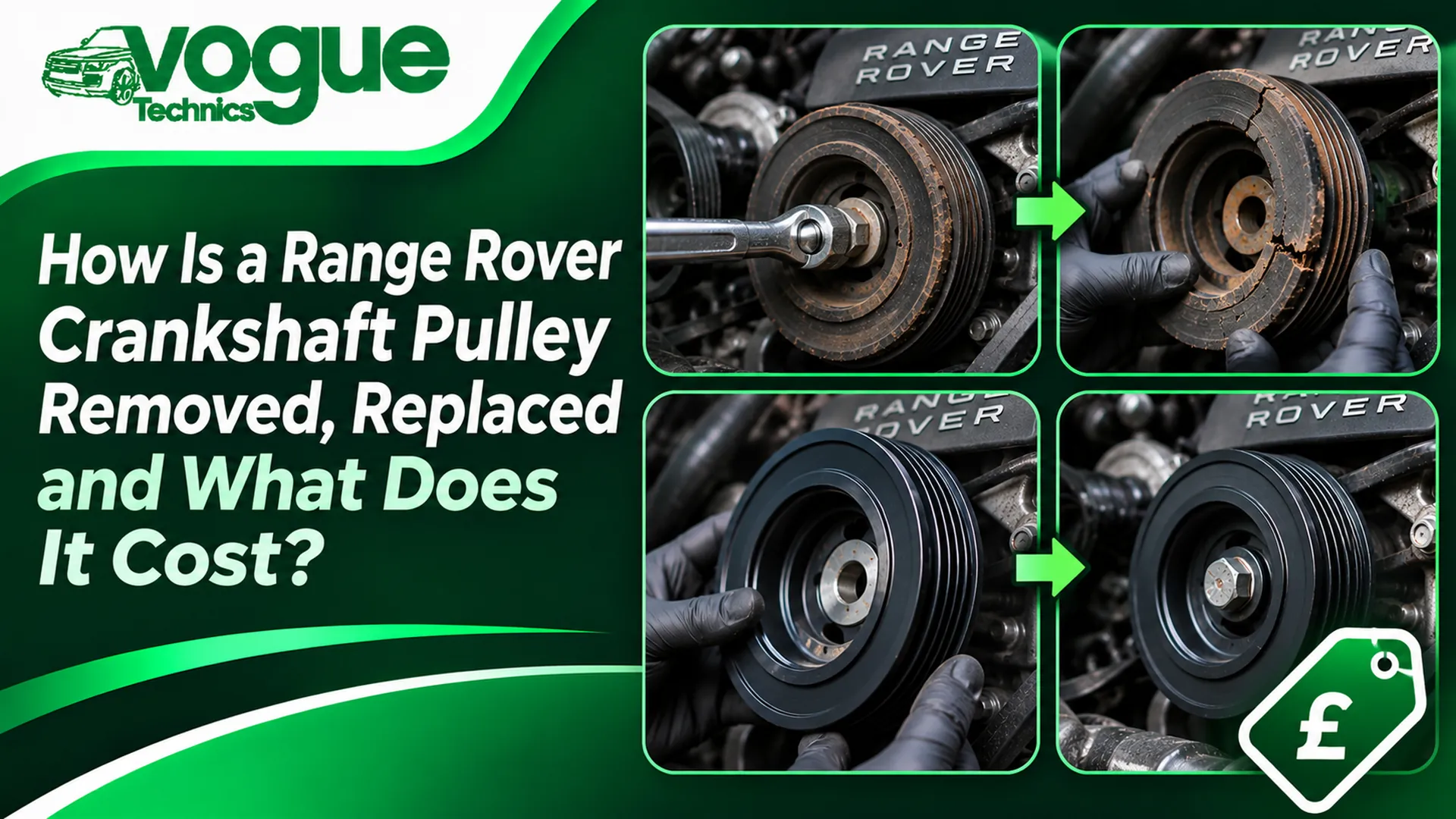
Range Rover crankshaft pulley removal is straightforward for a trained technician and awkward for a driveway job. The centre bolt is tight, the crank has to be held still and the pulley can seize on its hub. In outline, the job runs like this:
- Remove the undertray, wheel arch liner or intake parts that block access.
- Take off the auxiliary belt and release the tensioner.
- Lock the crankshaft with a proper holding tool so it can't turn.
- Undo the centre bolt, which is often a stretch bolt that must be replaced.
- Draw the pulley off the crank snout with a suitable puller.
- Clean the snout and check the keyway or locating dowel and the front seal.
- Fit the new pulley, a new bolt and torque to the manufacturer's specification, including any angle tightening.
- Refit the belt, check alignment and test run.
The right Range Rover crank pulley removal tool is a crank holding tool plus a pulley puller that fits your engine. Using a generic puller or hammering on the pulley can damage the crank thread or the snout. That damage turns a modest repair into an engine-out job. The same caution applies to Freelander crankshaft pulley removal. Space is tight and the setup differs from the larger Range Rover engines, so use a tool made for that engine.
Our advice is simple. If you have the tools and experience, follow the workshop manual to the letter. If you don't, let a specialist do it.
What Is the Range Rover Crankshaft Pulley Failure Cost, and What Affects Evoque Crankshaft Pulley Replacement?
There is no single price, but the main factors are predictable. As a rough, indicative guide, a straightforward pulley replacement at an independent specialist commonly lands in the low to mid hundreds of pounds, with main dealers typically higher. Treat these figures as a starting point. The only reliable number is a quote after inspection.
Cost factor | Why it changes the price |
| Model and engine | Part prices and access differ between Range Rover, Sport, Evoque and Freelander |
| Part quality | Genuine and OE-quality pulleys cost more but last longer than cheap copies |
| Labour time | Tight engine bays and seized pulleys add hours |
| Extra parts | New bolt, belt, tensioner or front crank seal are often needed |
| Secondary damage | A damaged crank snout or timing issue raises the bill sharply |
For Range Rover Evoque crankshaft pulley replacement, expect the new belt and any leaking front seal to be quoted alongside the pulley. Fitting a new pulley onto a leaking seal only repeats the problem.
Here is how the main routes compare:
Option | Upfront cost | Risk |
| Inspect first, replace what has failed | Small inspection cost | Lowest, because you fix the real cause |
| Replace the pulley only, ignoring the seal or belt | Lower | The fault returns |
| Wait until the belt comes off | Lowest today | Highest, with possible engine and recovery costs |
A real-world example: an owner brings in a Range Rover Sport with a squeal and a flickering battery light. The pulley outer ring has started to walk on its rubber, and the belt has been rubbing the edge of the groove. The pulley, belt and front seal are replaced in one visit and the charging system tests normally. Had the belt let go on the motorway, the same owner would have faced recovery, an overheated engine and a much larger invoice.
Why Choose Voguetechnics in Grays, Essex for Crankshaft Pulley Repair?
At Voguetechnics in Grays, Essex, we specialise in engine work on Land Rover and Range Rover vehicles. A pulley job gets the same careful process as any engine repair:
- Diagnosis first: we confirm whether it's the pulley, tensioner or another belt component.
- Correct tooling: we use proper holding and puller tools so the crank is not put at risk.
- Whole-system check: belt, tensioner, idlers and front seal are inspected, not just the pulley.
- Road test: we confirm the noise and charging fault are gone before the car leaves.
- Clear quote: you see what's needed and why before we start.
Frequently asked questions
Can I drive with a failing Range Rover crankshaft pulley?
A light squeal may allow a short trip to a workshop. Wobble, rattling or a belt that has come off means stop driving and call recovery.
What are the first signs of crankshaft pulley failure?
Belt squeal, a flickering battery light, vibration and a visible wobble at the front of the engine are the usual early signs.
How long does a Range Rover crankshaft pulley last?
There is no fixed lifespan. Heat, oil leaks, belt condition and mileage all affect it, and many show wear at high mileage.
Is the crankshaft pulley the same as a harmonic balancer?
On most modern engines, yes. The pulley also works as the vibration damper. Older engines may use a simple solid pulley instead.
Do I need to replace the belt with the pulley?
It is strongly recommended. A damaged pulley often wears the belt, and a new belt on a new pulley avoids a repeat visit.
Can a bad crankshaft pulley damage the engine?
Yes. A loose or broken pulley can damage the crank snout, cause overheating if the belt drives the water pump and leave you without charging or power steering.
Final word: a failing crankshaft pulley is a small part with big consequences. Whether you drive a Range Rover, Sport, Evoque or Freelander, the sensible move is to get it inspected the moment you hear a squeal or see a wobble. Contact Voguetechnics in Grays, Essex today to book an inspection and get a clear, honest quote before the belt lets go.