

New Defender D250 Engine Problems: What UK Owners Should Know
The new Defender's D250 is a 3.0-litre six-cylinder mild-hybrid diesel, not the older Puma engine or the 2.0 Ingenium. Its best-documented problems are recall items, including an oil filter housing that can crack and leak. Owners and specialists also report DPF, turbo, injector and sensor faults. This guide explains the warning signs, when to stop driving, and why recall and warranty checks come before paid repairs.
The new Defender's D250 is a modern 3.0-litre six-cylinder diesel. It is refined and strong, but it is not fault-free. The most clearly documented problems are manufacturer recalls, rather than design-wide failures. The first concerns an oil filter housing that can crack and leak. The second concerns a pulley that can damage an oil pressure sensor. Owners and specialist sources also report diesel-particulate-filter (DPF) issues, injector and turbo faults, and occasional serious internal failures.
A warning light alone does not mean the engine is failing. Many symptoms trace back to sensors, emissions equipment or recall items, and most D250s are young enough that warranty and recall checks should come before any paid repair.
Which Engine Is the D250?
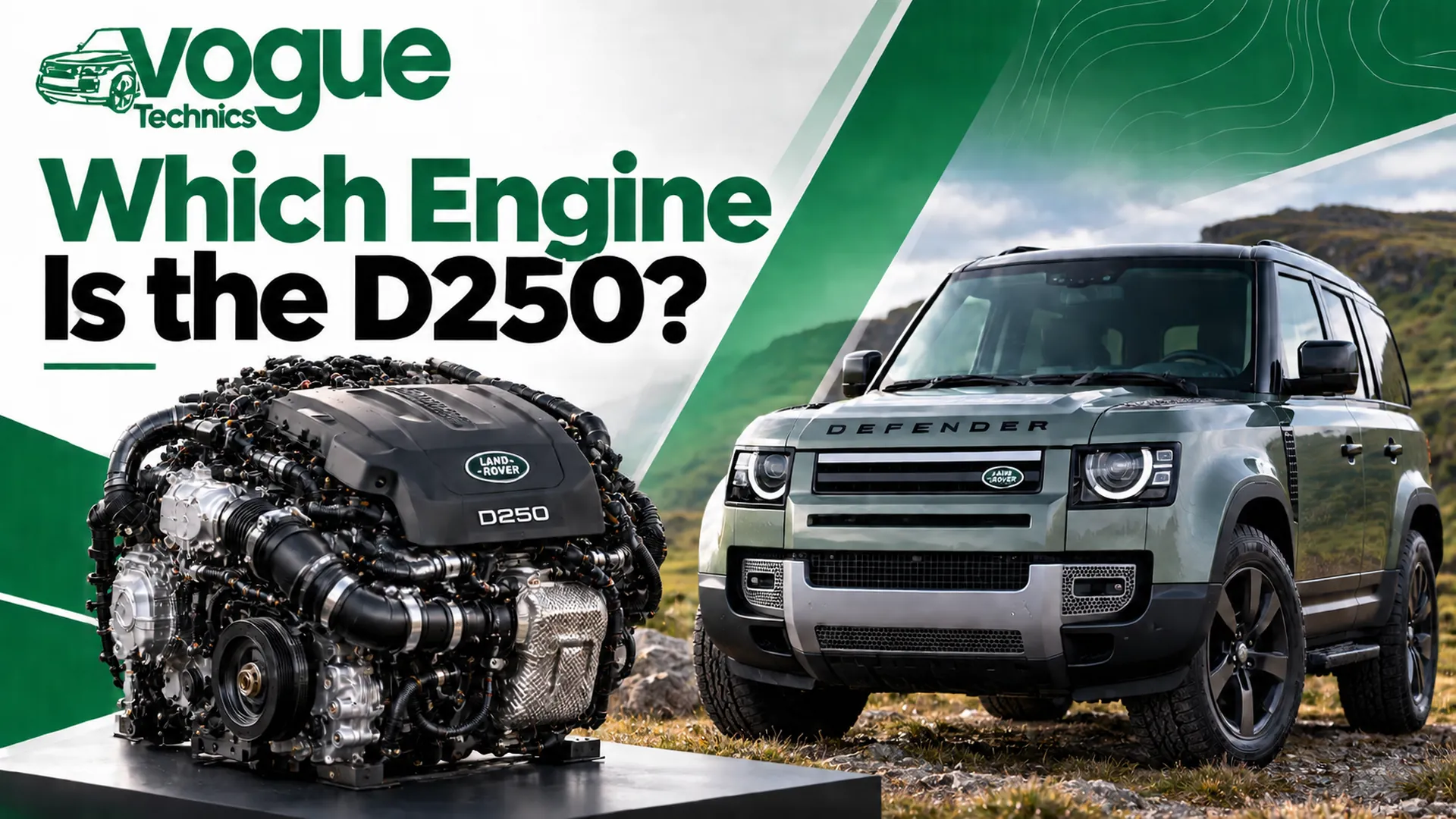
Confusion over Defender engines is common, and it leads to wrong advice. Before diagnosing anything, confirm exactly which engine your vehicle has.
D250 vs the Other Defender Diesels
Badge | Engine | Cylinders | Notes |
| D200 / D240 (early) | 2.0 Ingenium diesel | 4 | Launch engines, around 2020–2021 |
| D200 / D250 / D300 | 3.0 Ingenium mild-hybrid diesel | 6 | Introduced for the 2021 model year |
| D350 | 3.0 Ingenium diesel | 6 | Listed from 2024 |
| Td5 / Puma 2.2 or 2.4 | Older diesels | 5 / 4 | Classic Defender only, up to 2016 |
According to Wikipedia's L663 entry, the D250 produces 249PS and 570Nm from the six-cylinder unit.
The "D200" badge was used for both the four- and six-cylinder engines. Check your V5C logbook or a VIN-based lookup rather than going by the badge.
The D250 also uses a 48-volt mild-hybrid system. This adds a small motor-generator and a separate battery, so some "engine" warnings may actually come from the hybrid electronics.
Faults widely discussed for the 2.0 Ingenium diesel, such as timing-chain wear, should not be assumed to apply to the 3.0 six-cylinder. The same caution applies to the Puma engine problems that come up in searches, which relate to the classic Defender.
Known and Reported D250 Engine Problems
The table below separates what the manufacturer has confirmed from what is only reported.
Issue | Evidence level | Typical sign |
| Oil filter housing crack (recall N908) | Manufacturer recall notice | Oil leak, burning smell |
| Idler pulley damaging oil pressure/temperature sensor | Manufacturer recall (reported in South Africa) | Oil leak, oil warning |
| DPF blockage and repeated regeneration | Specialist observation; common to modern diesels | DPF warning, reduced power |
| Turbo actuator and injector faults | Specialist observation, not quantified | Limp mode, rough running, smoke |
| Serious internal failure (metal in oil) | Isolated owner reports | Knocking, oil warning, shaking |
Manufacturer Recalls Affecting the 3.0 Diesel
Recall N908 (oil filter housing). JLR's recall notice, filed with the US safety regulator, states:
- Some 2024–2025 model-year vehicles with the Ingenium 3.0 diesel or petrol engine had an oil filter housing made from the wrong grade of plastic.
- The housing can crack and leak oil onto hot components, creating a fire risk, as well as a skid hazard on the road.
- The fix is a replacement housing and oil filter, free of charge.
Idler pulley and oil pressure sensor. In 2026, a recall was announced in South Africa for D250, D300 and D350 engines in Defenders built between March 2024 and April 2026 (Business Report):
- An auxiliary-drive idler pulley can over-rotate and strike the oil pressure and temperature sensor, causing an oil leak.
- Whether the same action applies to UK vehicles should be confirmed by VIN.
What to do:
- UK owners can check open recalls on the government's vehicle recall checker or with a Land Rover retailer.
- Recall work is carried out free by the manufacturer network.
Reported Wear and Running Faults
These faults are reported by owners and specialists. They do not come with published failure rates.
- DPF and short trips. A diesel particulate filter traps soot and burns it off during "regeneration", which needs sustained driving. Frequent short journeys can interrupt this, leading to DPF warnings and, on some diesels, fuel diluting the engine oil.
- Turbo and injector faults. Specialist databases list the turbo actuator and injectors as wear items on this engine. Symptoms include limp mode, hesitation, smoke and misfire.
- EGR and sensors. The exhaust gas recirculation (EGR) system and engine sensors can trigger warning lights without any internal engine damage.
- Mild-hybrid electronics. Some sources report faults in the 48V system's DC-DC converter, the unit that links the 48V and 12V circuits. These can show up as charging or start-up warnings rather than engine problems.
- Rare major failures. Owner forums contain isolated reports of serious internal failures on young D250s, including one case where metal was found in the oil and a replacement engine was arranged. A single report does not prove a model-wide defect, but it shows why oil-pressure warnings must be taken seriously.
What to Do If Your D250 Shows Symptoms
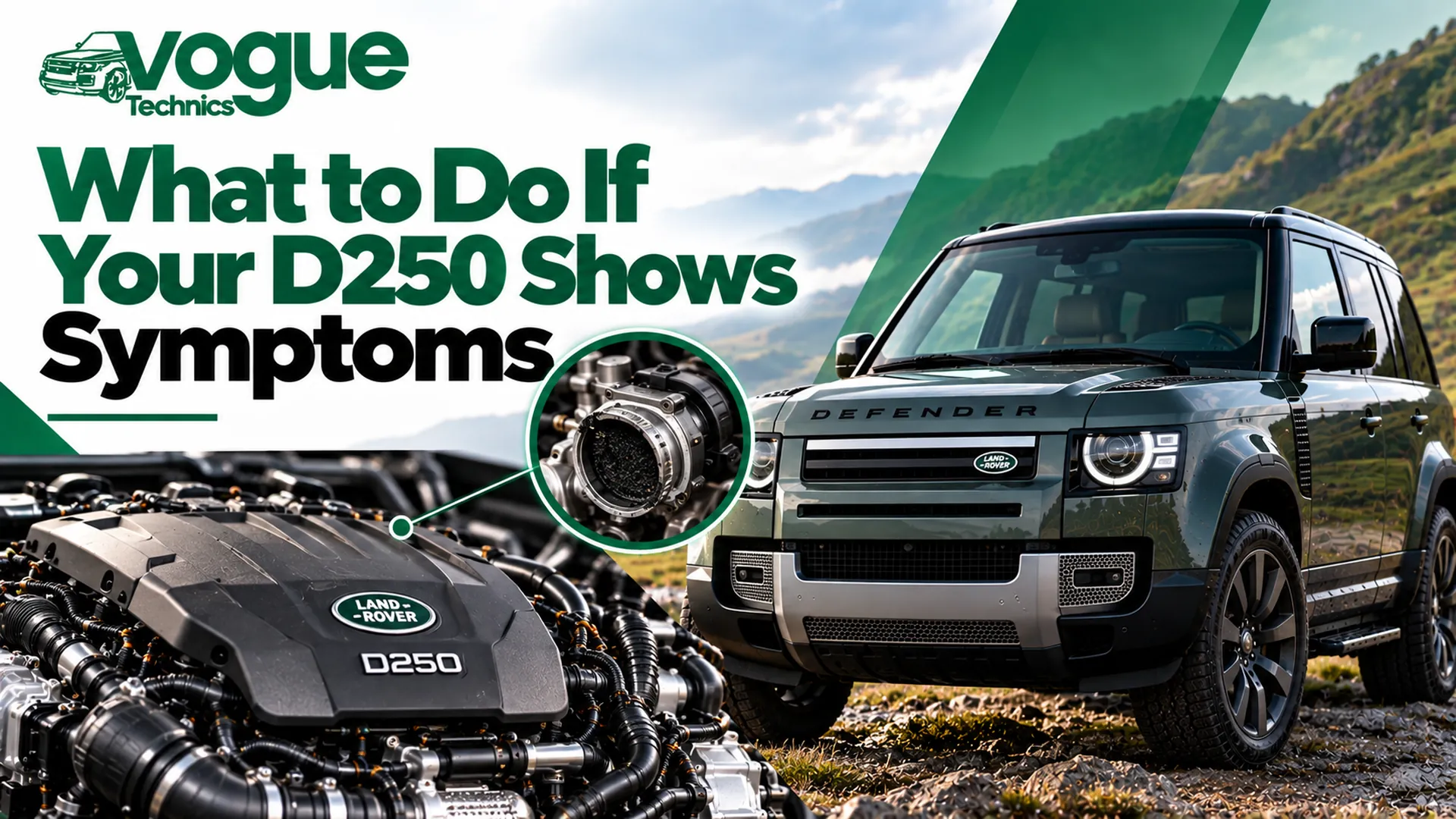
Start with the free checks, then move to diagnosis, and only then consider major engine work.
Warning Signs and When to Stop Driving
Stop as soon as it is safe and arrange recovery if you see any of these:
- a red oil pressure warning;
- knocking or heavy mechanical noise;
- severe shaking;
- smoke from the engine bay;
- a strong smell of burning oil;
- rising temperature or coolant loss.
Book an inspection soon if you notice:
- an amber engine warning light;
- a DPF warning;
- reduced power or limp mode;
- higher oil use;
- an oil leak or drips under the car.
Before paying for repairs, work through these steps:
- Check recalls using the vehicle's registration or VIN.
- Check warranty status. Many D250s are still within the manufacturer's warranty or an approved extended plan.
- Get a proper diagnosis. This means a full fault-code scan, live data, an oil inspection and a leak check, not just a code read.
- Keep a record of service history, oil grade and mileage. These matter for any warranty claim.
Once the vehicle is out of warranty, a specialist can investigate faults and quote targeted repairs. Vogue Technics Engine Rebuild offers engine repair and diagnostics for Land Rover models, alongside turbo replacement where a turbo fault is confirmed.
For model coverage, see the new Defender L663 engine page or the wider Land Rover Defender engines range.
Frequently Asked Questions
Defender D250 Engine Problems FAQs
Is the Defender D250 engine reliable?
There is no published failure-rate data that proves the D250 is unreliable. Its best-documented issues are recall items with free fixes. Diligent servicing, the correct oil and regular longer journeys help reduce DPF-related problems.
Is the D250 the same engine as the old Defender Puma?
No. The D250 is a 3.0-litre six-cylinder Ingenium mild-hybrid diesel fitted to the new (L663) Defender. The Puma 2.2 and 2.4 diesels belong to the classic Defender, which ended production in 2016.
What is the D250 oil leak recall?
Recall N908 replaces an oil filter housing that may have been made from the wrong plastic and could crack. A separate recall reported outside the UK covers an idler pulley that can damage the oil pressure sensor. Check your VIN to see whether either applies.
Why does my D250 keep showing a DPF warning?
Usually because short journeys stop the filter from completing regeneration. A longer run at steady speed may clear it. If the warning returns, have it diagnosed before the filter blocks completely.
Should I keep driving with the engine light on?
If the light is amber and the car drives normally, book a diagnosis promptly. If the oil pressure warning shows, or there is noise, shaking or smoke, stop and arrange recovery.
If your Defender D250 has a warning light, an oil leak or a running fault outside warranty, contact Vogue Technics Engine Rebuild on 01375 531355. Please have ready:
- your registration;
- model year;
- mileage;
- the symptoms you have noticed;
- any fault codes.