
Land Rover Oil in Coolant: Causes, Symptoms & Expert Repair Advice
Finding oil in your Land Rover's coolant can be alarming, but it isn't always a disaster. This guide breaks down the real causes from a failed oil cooler to a blown head gasket or cracked engine block and explains how to tell them apart using key symptoms and diagnostic tests. It also covers realistic repair costs and when it's safe (or risky) to keep driving. For Land Rover and Range Rover owners in Grays, Essex, Voguetechnics Engine Rebuild offers proper diagnostics before recommending any repair.
You've popped the bonnet, checked the coolant reservoir, and your stomach has just dropped. Instead of clean pink or blue coolant, you're staring at something brown, oily, or looking disturbingly like a milkshake. If you're a Land Rover or Range Rover owner, you already know this isn't a "top it up and forget it" situation.
Oil in your coolant is one of the more serious warning signs your engine can give you, but it's not always the disaster it looks like. Sometimes it's a straightforward oil cooler fault that costs a few hundred pounds to sort. Other times, it's the early sign of a head gasket failure that, left alone, can turn into a full engine rebuild.
This guide walks you through exactly what causes oil to end up in your coolant, how to tell how serious it is, and what your realistic repair options look like, written from real workshop experience with Land Rover and Range Rover cooling systems, not guesswork.
What Causes Oil to Get Into Land Rover Coolant?
Oil and coolant run through completely separate circuits in your engine, they're never supposed to meet. When they do, it's because something has failed and created a pathway between the two systems.
On Land Rover and Range Rover engines specifically, a handful of causes come up again and again. Understanding which one you're dealing with matters, because the cost difference between them is enormous.
Failed Oil Cooler (Most Common Cause)
The oil cooler is often the first suspect, and for good reason, it's genuinely the most common cause of oil in coolant across the Land Rover range, particularly on the Range Rover Evoque, Discovery Sport, and later diesel engines.
The oil cooler sits between your engine's lubrication circuit and its cooling circuit by design, using coolant to keep engine oil at a safe temperature. The two fluids run through separate internal passages, divided by a thin metal or plastic housing. When that housing cracks, corrodes, or the seals degrade, oil and coolant start mixing directly inside the cooler.
This is actually good news, relatively speaking. An oil cooler failure is mechanically simple compared to a head gasket or cracked block, and the repair is usually far more affordable.
Blown Head Gasket
The head gasket seals the gap between your cylinder head and engine block, keeping oil passages, coolant passages, and combustion chambers separate. When it fails, it can open a direct route between the coolant and oil galleries.
Head gasket failure on Land Rover engines is often linked to previous overheating events, age-related wear, or design weaknesses on specific engine variants. Unlike an oil cooler fault, this typically comes with additional red flags, white smoke from the exhaust, a rough idle, or the engine losing coolant without an obvious external leak.
Cracked Cylinder Head or Engine Block
This is the one every owner dreads hearing. A crack in the cylinder head or engine block itself can allow oil and coolant to cross-contaminate, usually as a result of severe overheating, thermal stress, or a casting fault.
It's less common than oil cooler or gasket failure, but it's also the most expensive to fix, often pointing toward an engine rebuild or replacement rather than a simple part swap.
Oil in Coolant But No Coolant in Oil – What Does It Mean?
This is one of the most searched questions among Land Rover owners, and it's an important distinction.
If you're finding oil in your coolant but your engine oil looks clean on the dipstick, it usually points toward an oil cooler fault rather than a head gasket. Here's why: oil system pressure is typically higher than coolant system pressure, so oil tends to push into the coolant side rather than the other way around.
This isn't a guarantee, some early-stage gasket failures show the same one-way pattern, but it's a genuinely useful diagnostic clue that narrows down where a technician should look first.
How Do You Know If You Have Oil in Your Land Rover Coolant?

Not every case announces itself with obvious symptoms. Some owners catch it during a routine coolant top-up; others only notice once the engine starts running hot.
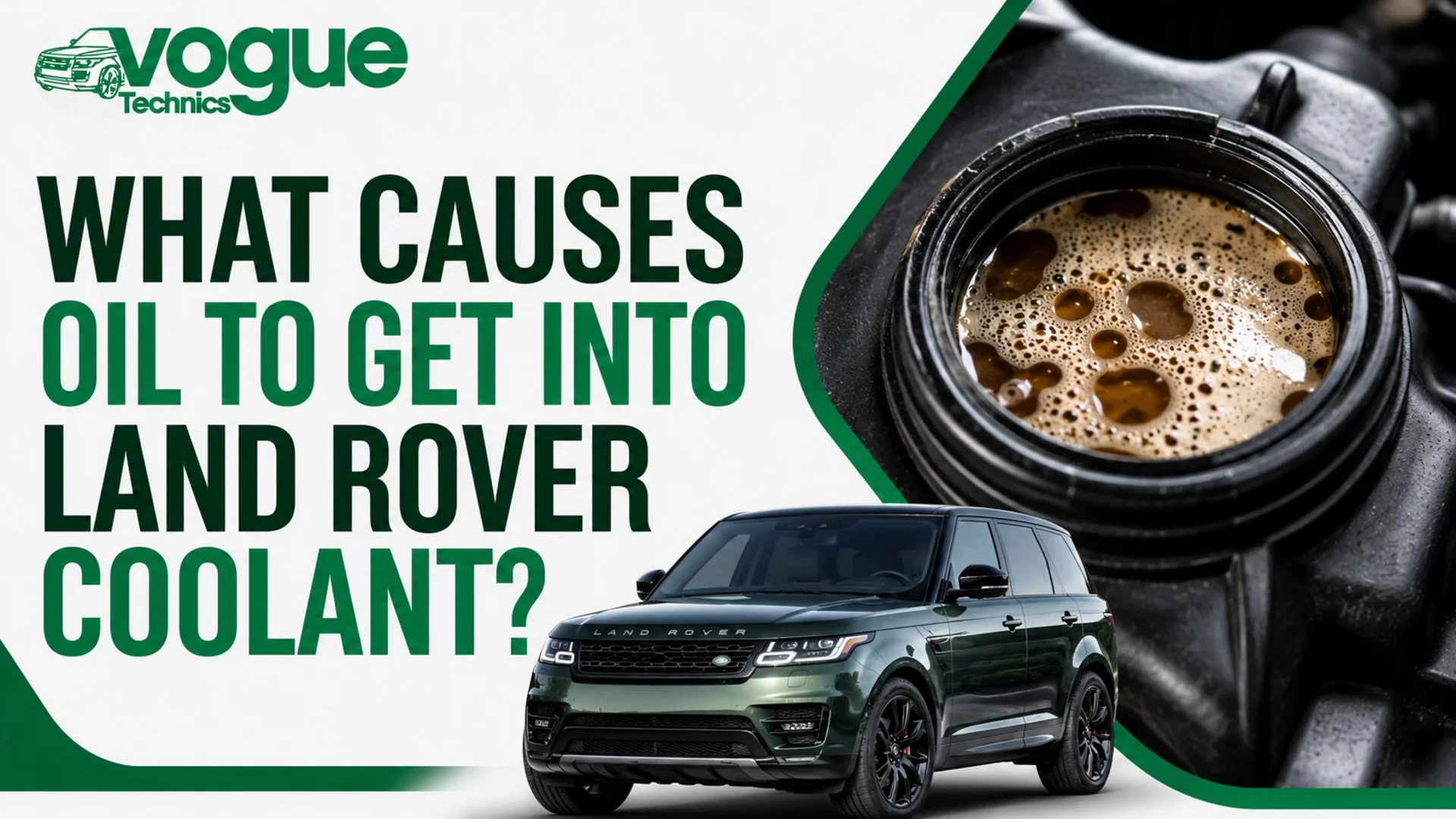
What Does Oil in the Coolant Reservoir Look Like?
The appearance of the contamination can actually tell you a lot before you even open a toolbox. Here's what different presentations typically mean:
- Brown, oily film on top of the coolant, usually early-stage contamination, often from an oil cooler fault
- Chocolate milk or creamy coolant, indicates the oil and coolant have emulsified, often from prolonged mixing
- Sludge or residue around the filler cap, suggests the contamination has been present for a while
- Black, thick coolant, often a sign of more advanced contamination or an issue that's gone unaddressed
If you're seeing any of these, don't just top up the reservoir and drive on. The coolant's ability to cool the engine effectively drops sharply once it's contaminated with oil, which raises your risk of overheating.
Oil in Coolant But Not Overheating – Is It Still Urgent?
Yes, and this catches a lot of owners out. It's entirely possible to have oil in your coolant while your temperature gauge sits perfectly normal, especially in the early stages of an oil cooler fault.
The absence of overheating doesn't mean the absence of a problem. It usually just means the contamination hasn't yet reached the point where it's seriously compromising the coolant's ability to do its job. Left unchecked, that changes, contaminated coolant loses efficiency, hoses and seals degrade faster when exposed to oil, and overheating tends to follow eventually.
Treat "no overheating yet" as a head start, not a reason to wait.
Oil in Coolant With No White Smoke – Common Questions
White exhaust smoke usually points to coolant burning inside the combustion chamber, a classic head gasket symptom. If you're not seeing white smoke, that's a reasonably good sign, but it doesn't rule out a gasket issue entirely, and it doesn't rule out an oil cooler fault either (oil coolers rarely cause smoke in the first place).
The safest approach is still a proper pressure and compression check rather than relying on smoke, or the lack of it, as your only evidence.
Oil Cooler Failure vs Head Gasket Failure – How to Tell the Difference
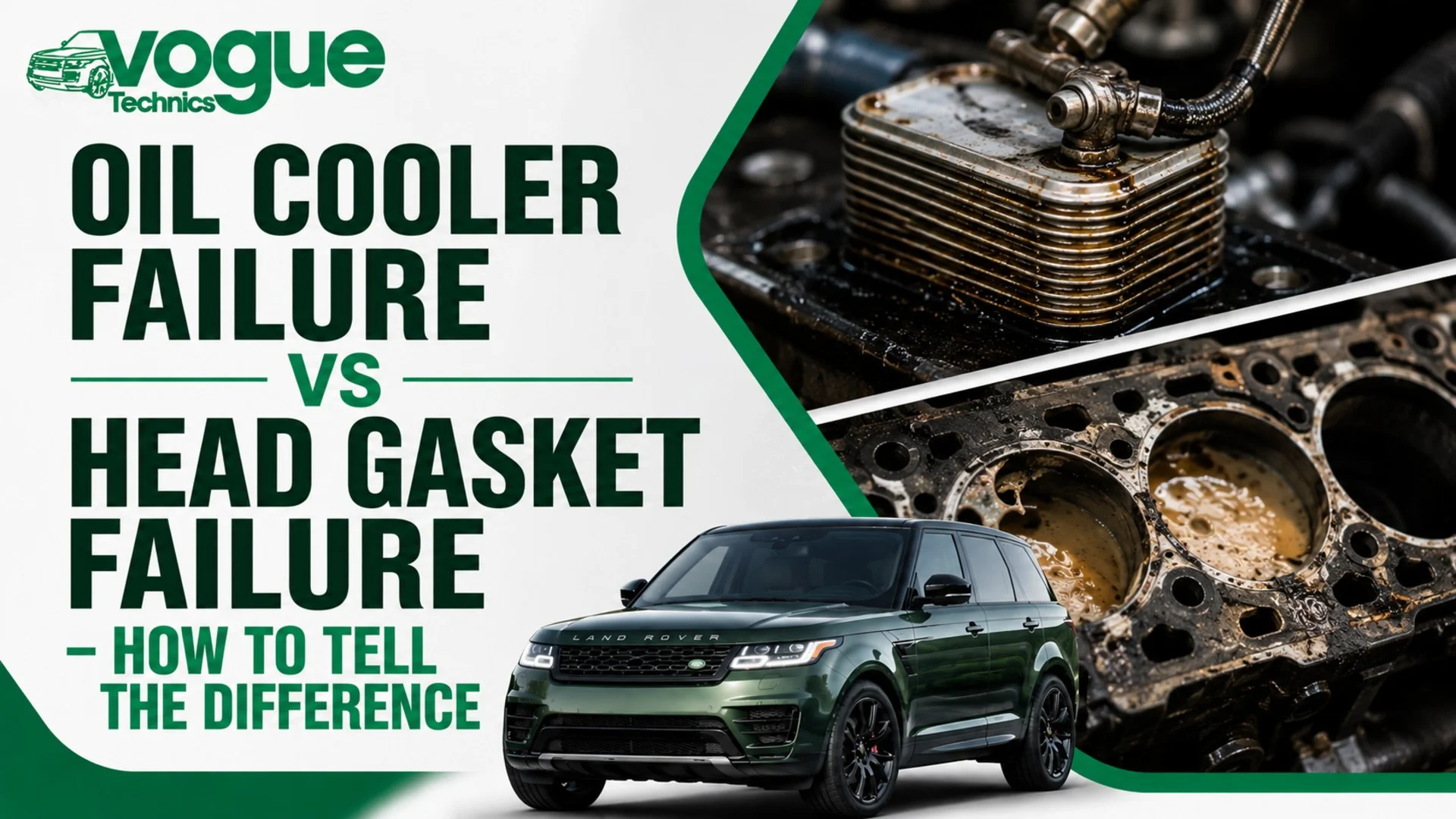
This is the question that matters most, because it determines whether you're looking at a moderate repair bill or a much bigger one. Here's a direct comparison based on the symptoms each fault typically produces:
Symptom | Oil Cooler Failure | Head Gasket Failure |
| Oil in coolant | Common | Common |
| Coolant in engine oil | Rare | Common |
| White exhaust smoke | Rare | Common |
| Overheating | Sometimes, later stage | Often, earlier stage |
| Coolant loss with no visible leak | Uncommon | Common |
| Rough idle or misfire | Rare | Possible |
| Cooling system pressure loss | Sometimes | Often |
| Typical repair complexity | Moderate | High |
Key Diagnostic Signs of Each Fault
A proper diagnosis shouldn't rely on guesswork or symptom-spotting alone. A qualified technician will typically use a combination of:
- Cooling system pressure test, checks whether the system holds pressure correctly
- Compression test, measures cylinder compression to flag potential gasket issues
- Combustion gas test (block test), detects combustion gases in the coolant, a strong head gasket indicator
- Visual inspection of the oil cooler housing and cylinder head for cracks or corrosion
- Leak-down test, pinpoints exactly where compression is escaping from, if at all
Skipping straight to a head gasket replacement without these checks is one of the most common (and costly) mistakes owners make, plenty of engines that seemed to need a full gasket job turned out to just need an oil cooler.
Can You Drive a Land Rover With Oil in the Coolant?
Technically, yes, for a short distance, but it's not something we'd recommend beyond getting the car to a garage. Contaminated coolant is less effective at regulating engine temperature, which increases your risk of overheating the longer you drive.
If you must drive it, keep trips short, watch the temperature gauge closely, and get it inspected as soon as possible. If the gauge starts climbing or you see white smoke, stop immediately, continuing to drive at that point risks turning a moderate repair into a full engine failure.
How Much Does It Cost to Fix Oil in Land Rover Coolant?
Costs vary significantly depending on the actual cause, so treat these as general guidance rather than a fixed quote:
- Oil cooler replacement, generally the most affordable fix, often a few hundred pounds depending on the model and labour involved
- Head gasket replacement, considerably more expensive due to the labour involved in removing the cylinder head
- Cracked cylinder head or block repair/replacement, the most expensive outcome, sometimes making an engine rebuild more cost-effective than repair
- Cooling system flush, usually needed regardless of the cause, to clear residual oil from hoses, the radiator, and reservoir
It's worth getting a proper diagnostic before assuming the worst. We've seen plenty of owners brace for a head gasket bill and walk away with a straightforward oil cooler replacement instead.
Trusted Land Rover Oil-in-Coolant Repairs in Grays, Essex
Oil in your coolant isn't something to sit on. Whether it turns out to be a failed oil cooler or something more involved, the sooner it's diagnosed properly, the more options, and money, you're likely to save.
Why Choose Voguetechnics Engine Rebuild
At Voguetechnics Engine Rebuild in Grays, Essex, we work specifically with Land Rover and Range Rover engines, including the oil cooler and head gasket issues covered throughout this guide. We don't jump straight to the most expensive fix, every job starts with proper diagnostic testing (pressure, compression, and combustion gas checks) so you know exactly what you're paying for and why.
From oil cooler replacements to full engine rebuilds, we handle the diagnosis and the repair under one roof, using genuine testing methods rather than guesswork.
Book a Diagnostic Check Today
If you've spotted oil in your coolant reservoir, don't wait for the temperature gauge to confirm it's serious. Get in touch with our team in Grays, Essex, for a proper diagnostic check, we'll tell you exactly what's causing it and what it'll take to fix, with no inflated quotes or unnecessary work.
Frequently Asked Questions
Why is there oil in my Land Rover coolant? It's usually caused by a failed oil cooler, a blown head gasket, or in more serious cases, a cracked cylinder head or engine block. The oil cooler is the most common culprit on newer Land Rover and Range Rover models.
Can a bad oil cooler cause oil in coolant? Yes, this is actually the most frequent cause. The oil cooler uses coolant to regulate oil temperature, and when its internal seals or housing fail, the two fluids mix directly.
What does oil in coolant but no coolant in oil mean? It typically suggests an oil cooler fault rather than a head gasket issue, since oil system pressure usually pushes oil into the coolant side rather than the reverse.
Is oil in coolant an emergency? It should be treated urgently, even if your engine isn't overheating yet. Contaminated coolant loses effectiveness over time, increasing your risk of overheating and further engine damage.
How do I know if it's the oil cooler or the head gasket? A combination of a cooling system pressure test, compression test, and combustion gas test will confirm which component has failed. Symptoms like white smoke and coolant loss without a visible leak point more toward a head gasket issue.
Can I drive my Land Rover with oil in the coolant? Short distances to a garage are generally okay, but it's not advisable for regular driving. Watch your temperature gauge closely and stop immediately if it starts climbing.
How much does it cost to fix oil in coolant on a Land Rover? Oil cooler replacement is typically the most affordable option. Head gasket replacement costs more due to labour, and cracked heads or blocks are the most expensive, sometimes justifying a full engine rebuild instead.
Spotted oil in your coolant reservoir and not sure where to start? Get in touch with Voguetechnics Engine Rebuild in Grays, Essex, we'll give you a straight answer on what's wrong and what it'll actually take to fix it.