
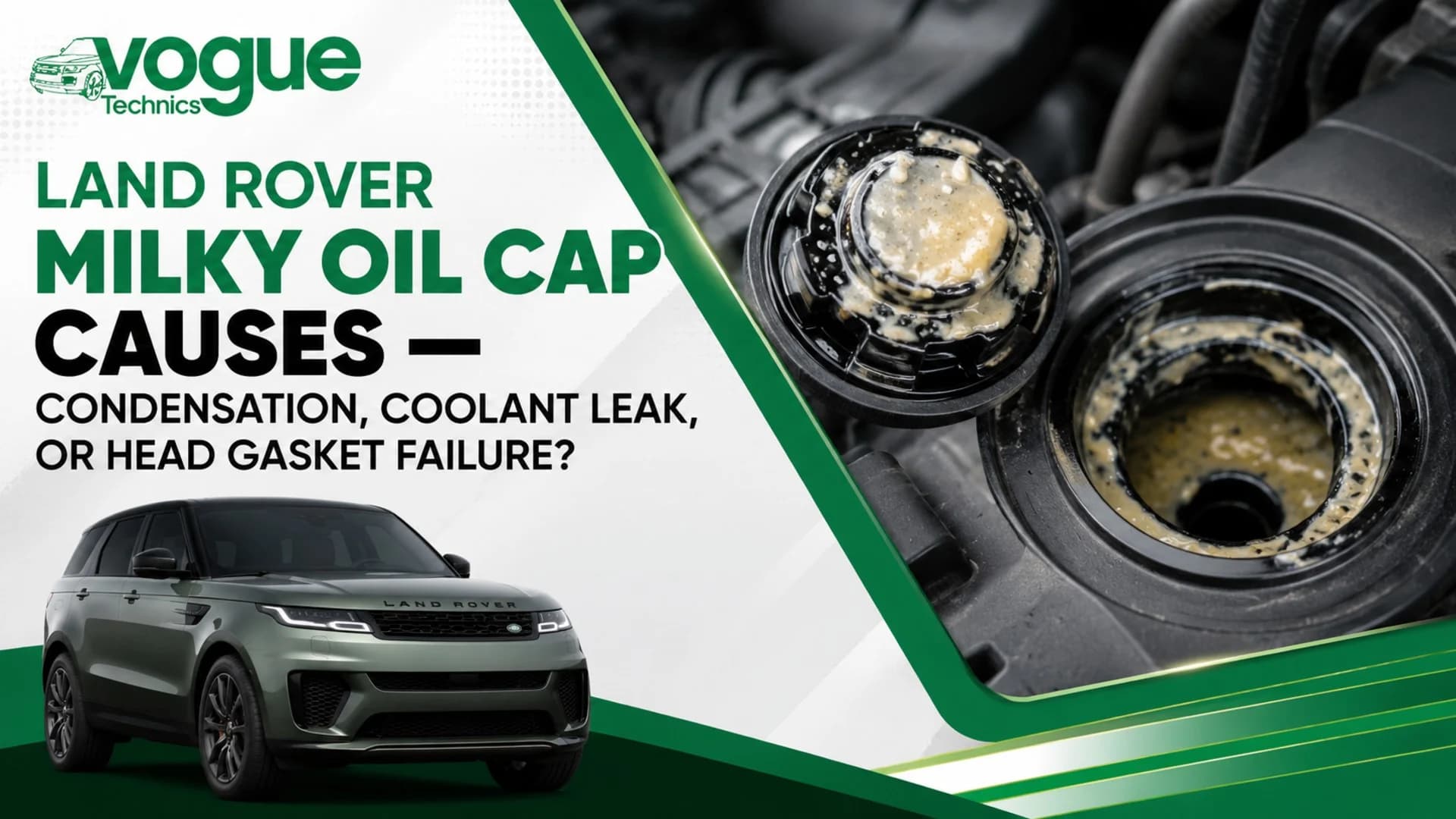
Land Rover Milky Oil Cap Causes, Condensation, Coolant Leak, or Head Gasket Failure?
A milky, mayonnaise-like residue under your Land Rover's oil cap can be alarming, but it doesn't always mean a blown head gasket. In most cases, it's simply condensation from short journeys and cold weather. However, it can also signal coolant leaking into the oil system through a failed head gasket, oil cooler, or cracked engine component. This guide breaks down how to tell the difference and what steps to take next.
You've popped the bonnet, twisted off the oil filler cap, and there it is, a pale, creamy residue that looks more like mayonnaise than engine oil. Your first thought is probably the worst one: is this a blown head gasket?
Take a breath. In a lot of cases, a milky oil cap on a Land Rover is nothing more than condensation, a completely normal side effect of short journeys and cold mornings. But sometimes it's the first visible warning sign of a coolant leak, a failing oil cooler, or genuine head gasket damage.
The difference between "harmless" and "serious" usually comes down to a handful of clues most owners never think to check. This guide walks through every known cause of a milky Land Rover oil cap, how to tell them apart, and what to actually do next, before you spend money on the wrong repair.
What Does a Milky Oil Cap Mean on a Land Rover?
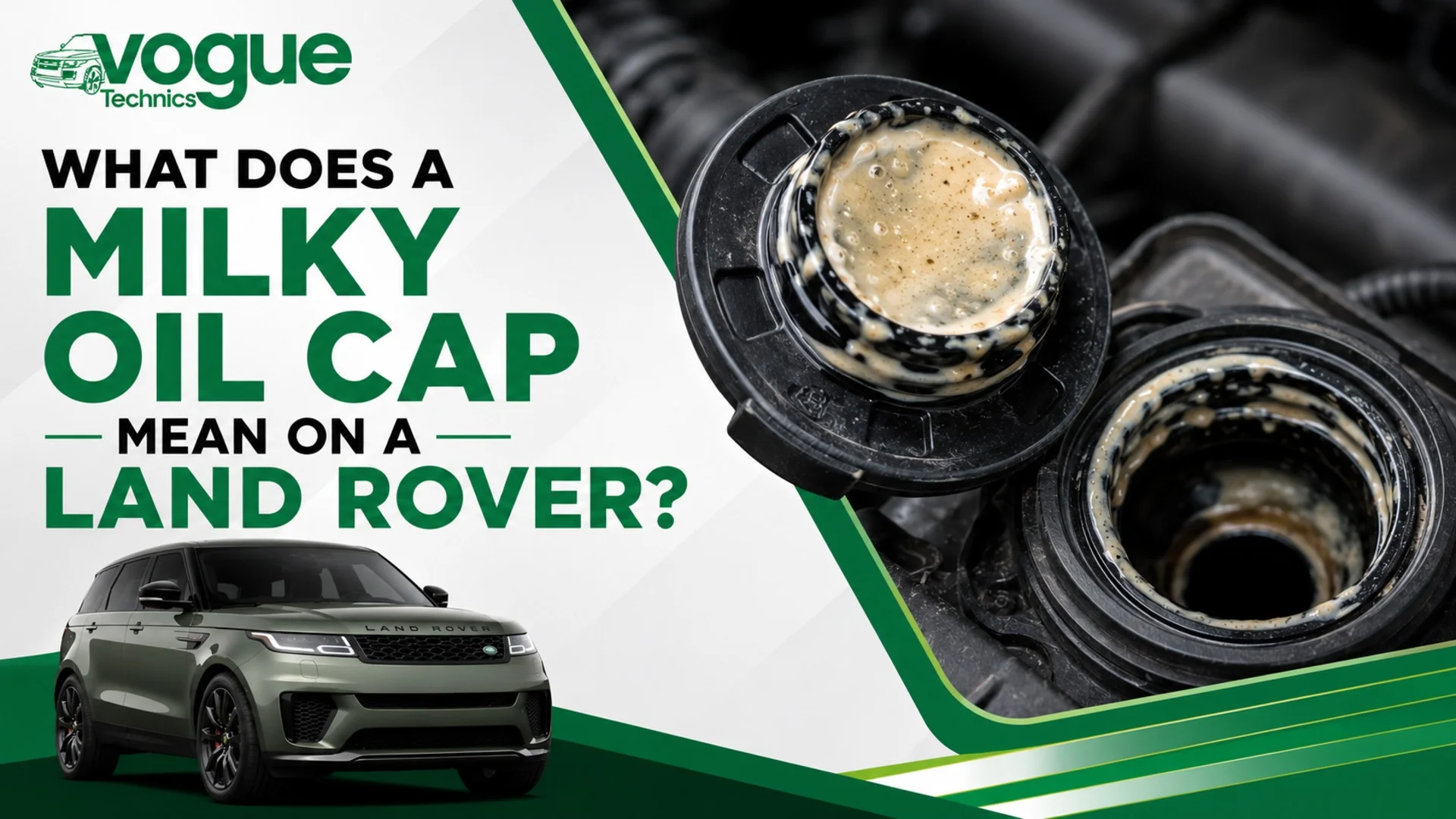
A milky, creamy, or "mayonnaise-like" oil cap simply means moisture has come into contact with engine oil somewhere inside the crankcase. Oil and water don't mix, they emulsify, forming that pale, frothy sludge you're seeing under the cap or around the filler neck.
Where that moisture came from is the real question. It could be as simple as water vapour condensing on cold metal. It could also mean coolant has found its way into the oil system through a failed seal, cracked component, or gasket. The residue itself looks almost identical either way, which is exactly why so many Land Rover owners panic first and diagnose later.
Why the Oil Cap Turns Milky, Creamy, or Mayonnaise-Like
Inside a running engine, oil vapour constantly circulates through the crankcase ventilation system. If water vapour is present, from condensation or from coolant contamination, it mixes with that oil vapour and clings to the coolest surfaces it can find. The underside of the oil filler cap is usually one of the coldest points in the system, which is why it's often the first place this residue appears, even before the dipstick shows any change.
Is a Milky Oil Cap Always a Sign of Engine Damage?
No, and this is worth repeating, because it's the most searched question on this exact topic. A milky oil cap on its own, especially after a short trip in cold or damp weather, is frequently normal condensation with no lasting effect on the engine. It only becomes a genuine concern when it's paired with other symptoms, which we'll cover in detail further down.
Milky Oil Cap vs Milky Dipstick, Why the Difference Matters
This single distinction does more diagnostic heavy lifting than almost anything else you can check at home.
What It Means If Only the Cap Is Milky
If the residue is isolated to the cap and the dipstick still shows clean, normal-coloured oil, condensation is by far the more likely explanation. The cap is often the coldest point in the system, so it collects moisture before contamination would ever reach the bulk of the oil in the pan.
What It Means If the Dipstick Is Milky Too
If you pull the dipstick and the oil itself looks pale, frothy, or has a "milkshake" consistency throughout, that's a stronger indicator of internal contamination, meaning coolant is likely mixing with the oil supply rather than just condensing on a cold surface. This warrants a proper inspection rather than a wait-and-see approach.
What Causes a Milky Oil Cap on a Land Rover?
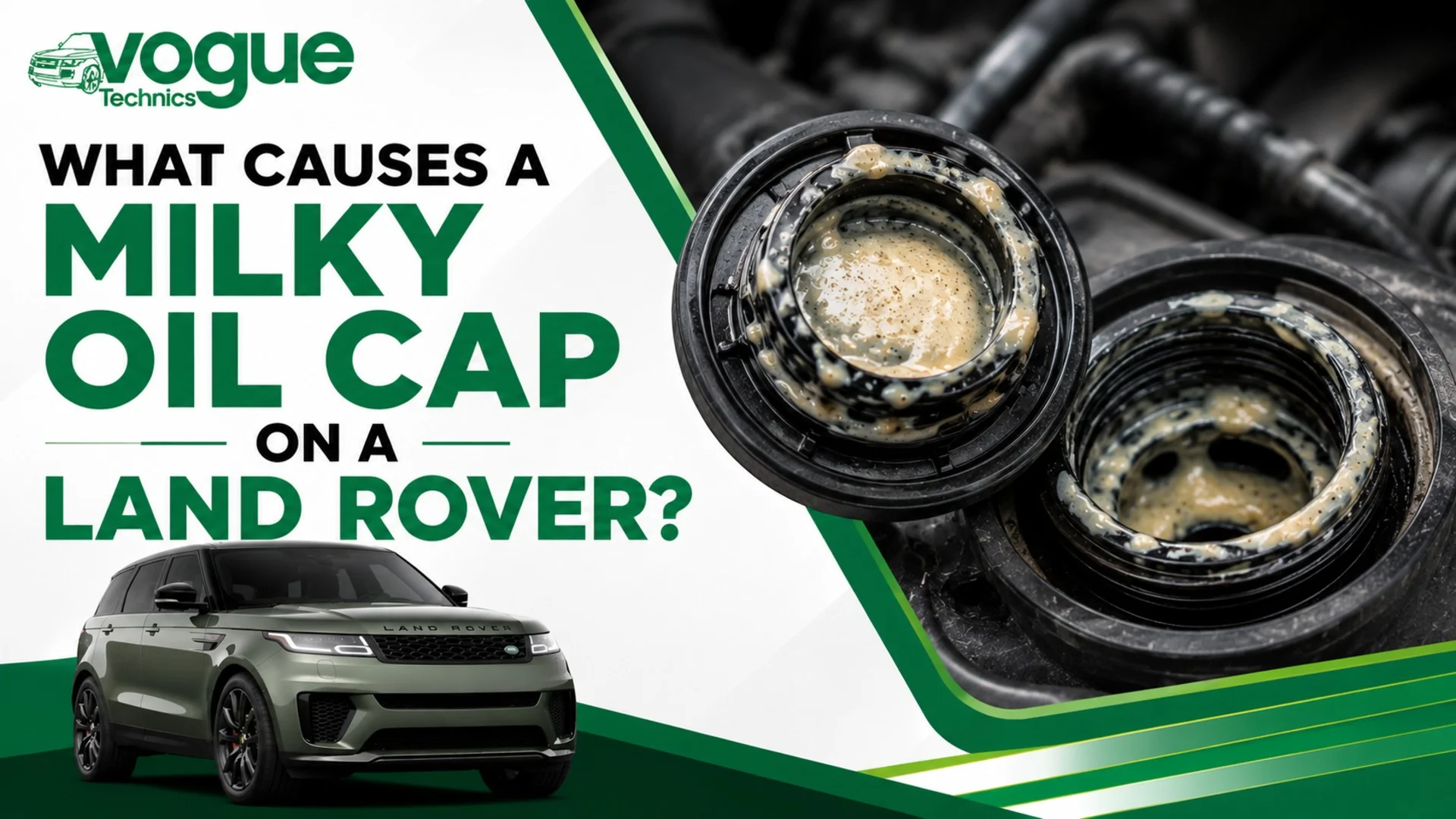
There isn't just one explanation, and Land Rover models, from the Discovery and Defender through to the Range Rover Sport and Freelander, can develop this symptom for several different reasons depending on engine family and age. Here are the five most common causes, in rough order of likelihood.
1. Condensation From Short Journeys and Cold Weather
By far the most common cause. Every time you drive, moisture forms naturally inside the crankcase as a by-product of combustion and temperature changes. On a longer drive, the engine gets hot enough to burn that moisture off as vapour through the crankcase ventilation system. On short trips, it never gets the chance.
Why Short Trips Stop the Engine Reaching Operating Temperature
Most engines need a genuine 20–30 minutes of driving to fully reach operating temperature throughout the block, not just the coolant gauge. If your Land Rover mostly does the school run, quick supermarket trips, or short commutes, especially in winter, condensation has every opportunity to build up and never gets burned off. Cold, damp UK weather makes this worse, which is exactly why this symptom spikes every autumn and winter.
2. Coolant Mixing With Engine Oil
Coolant and oil are meant to stay in completely separate circuits. When they mix, it's because a barrier between the two systems has failed, commonly a gasket, seal, or internal crack. This is more serious than condensation because it means coolant is being lost from the cooling system and is now circulating (and degrading) with the engine oil.
3. A Blown or Failing Head Gasket
The head gasket seals the gap between the cylinder head and the engine block, keeping oil, coolant, and combustion gases in their own separate passages. When it fails, coolant can leak directly into the oil galleries. This is one of the more commonly discussed causes on Land Rover owner forums, particularly on older Discovery and Freelander engines, and it's the one most owners worry about first, even though it's often not the actual culprit.
4. A Failed Land Rover Engine Oil Cooler
This is a cause many general guides miss entirely, but it's a well-documented issue on certain Land Rover and Jaguar engine families, including several 3.0-litre V6 applications. The oil cooler sits between the oil and coolant systems by design, using coolant to regulate oil temperature. If the internal seals or core of the cooler fail, coolant can cross directly into the oil supply, producing the exact same milky sludge as a head gasket failure, but from a completely different, often cheaper, fix.
5. A Cracked Cylinder Head or Engine Block
Less common, but worth knowing about. A hairline crack in the cylinder head or block can allow coolant and oil passages to intersect. This is usually the result of prior overheating, and it tends to come with more obvious accompanying symptoms, persistent coolant loss, overheating, or a compression test that doesn't add up.
How to Tell If It's Condensation or a Serious Fault
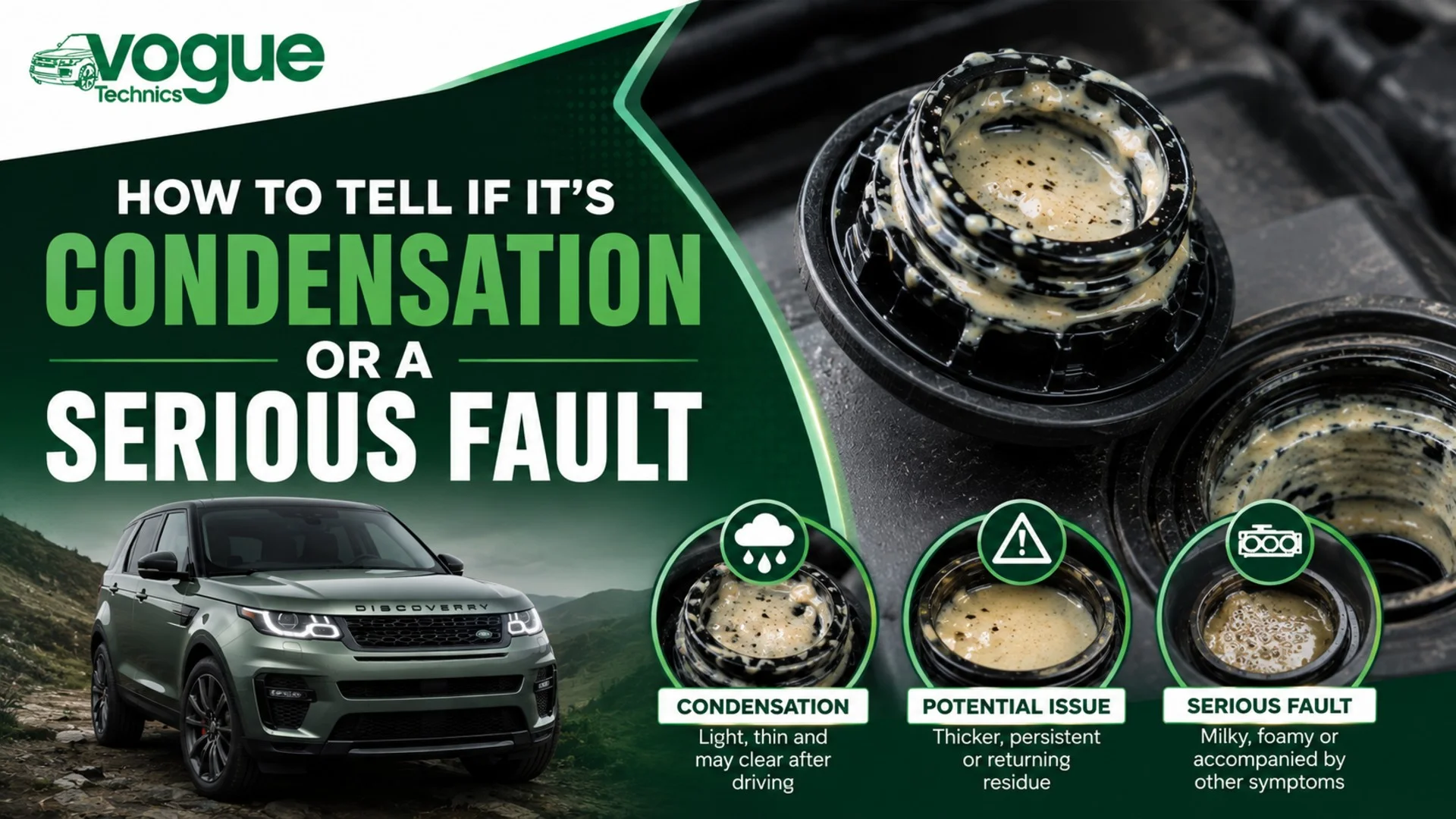
This is the section most articles skip, and it's exactly where a decision-tree approach helps far more than a generic "it might be a head gasket" warning.
Signs That Point to Harmless Condensation
- Only the cap is affected, with a clean dipstick and normal oil colour throughout
- The residue appears mainly in colder months or after a run of short journeys
- Coolant level hasn't changed and the expansion tank looks normal
- No overheating, no warning lights, no unusual smells
- The residue reduces or disappears after a longer motorway-length drive
If most of these apply, you're very likely looking at normal condensation. A longer drive to properly heat-cycle the engine, followed by a check next time you're under the bonnet, is often enough.
Warning Signs of Head Gasket or Coolant Contamination
Coolant Level Dropping With No Visible Leak
If you're regularly topping up the coolant reservoir but there's no puddle under the car and no obvious external leak, that coolant may be going somewhere internally, most likely into the oil.
White Smoke From the Exhaust
A sweet-smelling white smoke, particularly one that persists after the engine has warmed up (rather than just clearing on a cold start), suggests coolant is being burned in the combustion chamber. This is a strong head gasket indicator.
Engine Overheating or Rough Running
A head gasket failure often disrupts the cooling system's ability to hold pressure properly, which can lead to overheating, a rough idle, or an unexplained loss of performance.
Oil Visible in the Coolant Reservoir
If you spot an oily film or sludge inside the coolant expansion tank itself, that's contamination working in the opposite direction, and it's a clear sign the two systems are mixing internally.
Step-by-Step: How to Diagnose a Milky Oil Cap
Check the Dipstick and Oil Colour
Start here every time. Wipe it clean, reinsert, and check the full length. Uniform contamination points toward internal mixing; a clean dipstick with a milky cap points toward condensation.
Check Coolant Level and Reservoir
Look for the level dropping over time without an external leak, and check for any oily residue inside the tank itself.
Cooling System Pressure Test
A specialist will pressurise the cooling system and monitor for pressure loss, which reveals leaks that aren't visible from the outside, including internal ones into the oil system.
Combustion Gas / Block Test
This test checks the coolant for the presence of combustion gases, which is one of the most reliable ways to confirm or rule out head gasket failure without pulling the engine apart.
Here's a quick reference table summarising what different combinations of symptoms usually point to:
Symptoms Observed | Likely Cause |
| Milky cap only, clean dipstick | Condensation, usually harmless |
| Milky cap and milky dipstick | Internal oil contamination |
| Milky oil and coolant loss with no visible leak | Possible internal coolant leak (head gasket or oil cooler) |
| Milky oil and overheating | Cooling system or head gasket problem |
| Milky oil and white exhaust smoke | Coolant likely entering the combustion chamber |
| Oil visible inside coolant reservoir | Cross-contamination, head gasket or oil cooler failure |
Can You Drive With a Milky Oil Cap, and What to Do Next?
Is It Safe to Keep Driving?
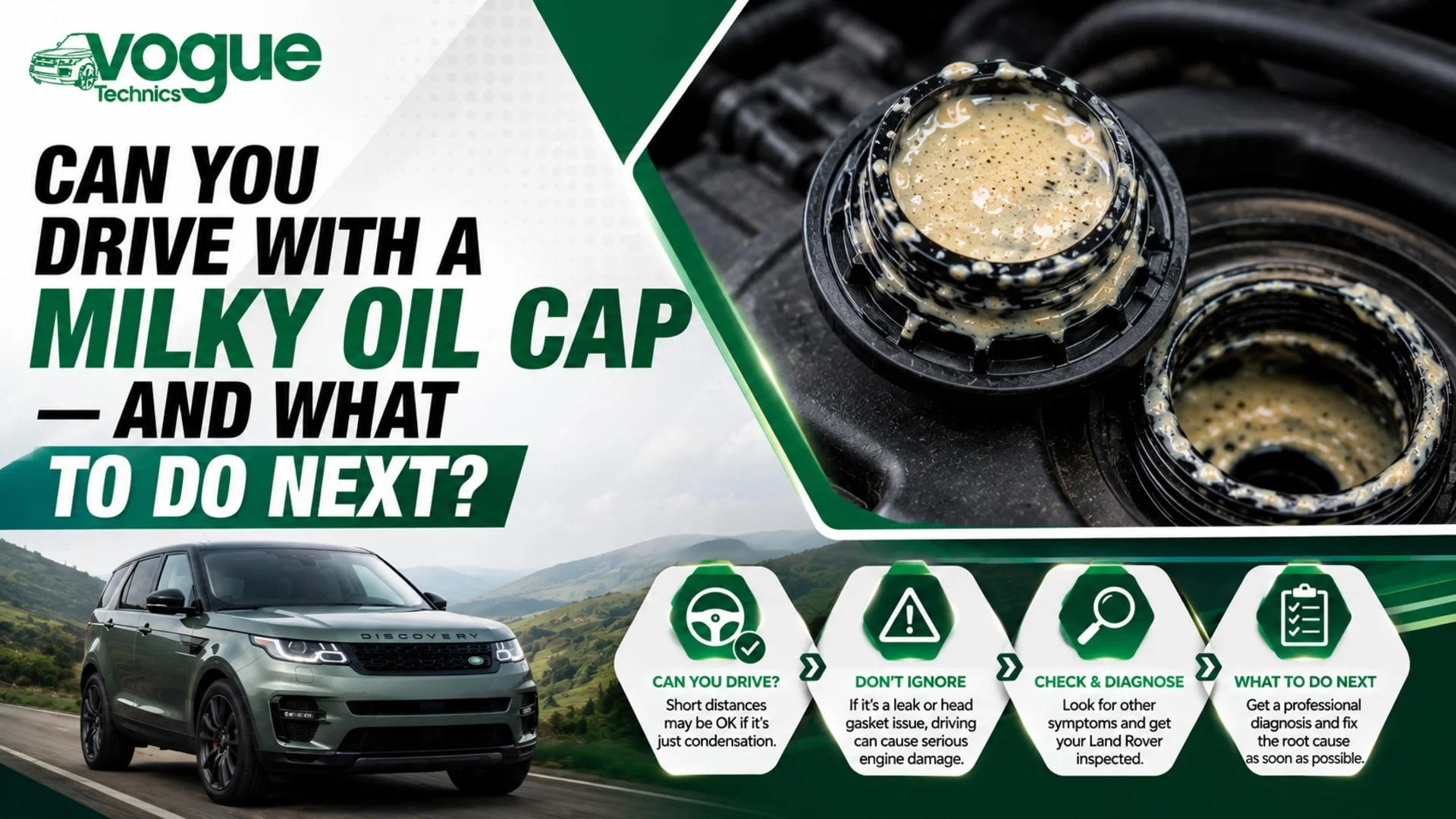
If everything points to condensation, clean dipstick, stable coolant, no warning signs, it's generally fine to keep driving while you monitor the situation and give the engine a chance to properly heat-cycle. If the signs point toward coolant contamination, continuing to drive risks accelerating engine wear, since contaminated oil loses its ability to lubricate properly, and low coolant increases overheating risk.
How to Fix a Milky Oil Cap (and When Cleaning Isn't Enough)
For genuine condensation, the fix is often as simple as:
- Taking the vehicle on a longer, motorway-length drive to fully burn off moisture
- Wiping the cap clean and checking again after a few longer journeys
- Being mindful of excessive short-trip driving, particularly through winter
If the cause turns out to be coolant contamination, cleaning the cap won't solve anything, you're treating a symptom, not the source. At that point, the oil (and potentially the filter) will need changing once the underlying fault, whether that's a head gasket, oil cooler, or cracked component, has actually been repaired.
When to Book a Land Rover Specialist Diagnostic
If you're seeing any combination of coolant loss, overheating, white smoke, or a genuinely milky dipstick, not just a milky cap, it's worth getting a proper diagnostic rather than guessing. Pressure testing and combustion gas testing take the guesswork out of it and can save you from paying for a head gasket replacement when the real fault is a far cheaper oil cooler.
Why Choose Voguetechnics Engine Rebuild, Grays, Essex
Based in Grays, Essex, Voguetechnics Engine Rebuild specialises in diagnosing and repairing exactly this kind of Land Rover engine problem, from straightforward oil and coolant checks through to full head gasket replacement, oil cooler repair, and complete engine rebuilds. Rather than jumping straight to the most expensive fix, the diagnostic process is built around confirming the actual cause first, so you only pay for the repair your Land Rover genuinely needs.
Frequently Asked Questions
What does a milky oil cap mean?
It means moisture has mixed with the oil vapour in the crankcase, usually appearing as a pale, creamy residue on the underside of the cap. It can be caused by simple condensation or by coolant entering the oil system.
Does a milky oil cap always mean a blown head gasket?
No. Condensation from short journeys and cold weather is a far more common cause. A blown head gasket is only one of several possible explanations, and usually comes with additional symptoms like coolant loss or overheating.
Why is the oil cap milky but the dipstick is clean?
This pattern usually points to condensation rather than contamination, since the cap tends to be one of the coldest points in the engine and collects moisture before it would reach the bulk of the oil.
Can short trips cause a milky oil cap on a Land Rover?
Yes. Short journeys don't give the engine enough time to reach full operating temperature, which prevents moisture from being burned off through the crankcase ventilation system.
Can a failed oil cooler cause milky oil on a Land Rover?
Yes. Certain Land Rover and Jaguar engine families are known to develop oil cooler faults that allow coolant to cross into the oil supply, producing the same milky appearance as a head gasket failure.
How do I know if my Land Rover's head gasket is blown?
Look for a combination of symptoms beyond the milky cap alone: coolant loss with no visible leak, white exhaust smoke, overheating, or oil appearing inside the coolant reservoir. A pressure test or combustion gas test gives a definitive answer.
Can I drive my Land Rover with a milky oil cap?
If it's isolated to the cap with no other symptoms, it's usually fine to continue driving while monitoring it. If there are signs of coolant contamination, it's best to get it checked before continuing to drive.
How do I remove condensation from engine oil?
A longer, sustained drive that allows the engine to fully reach operating temperature is usually enough to burn off condensation naturally. Regular short trips make it more likely to recur.
Final Thoughts
A milky oil cap on a Land Rover isn't something to ignore, but it's also not automatically a disaster. The honest answer is that most cases come down to condensation from short journeys and cold weather, and the fix is often as simple as a longer drive. The cases that matter are the ones with extra symptoms: coolant that keeps disappearing, white smoke, overheating, or oil turning up somewhere it shouldn't.
If you've checked the dipstick, watched the coolant level, and you're still not sure which side of that line your Land Rover falls on, that's exactly the point to get a proper diagnostic rather than keep guessing. Voguetechnics Engine Rebuild in Grays, Essex can confirm the actual cause, condensation, coolant leak, oil cooler failure, or head gasket damage, and carry out the right repair the first time, without paying for work you don't need.