

Land Rover Freelander 2 TD4 2.2 and Si6 Faults: What Fails, Which Years to Avoid and What Repairs Cost in the UK
The Land Rover Freelander 2 is a capable family 4x4, but both the 2.2 TD4 diesel and the 3.2 Si6 petrol have known weak points. This guide covers the most common faults, including timing belt failure, EGR and DPF problems, turbo oil feed issues, cooling system wear and Haldex servicing. It also compares the TD4 and Si6 on reliability and running costs, explains which model years to avoid, and shows when a repair, rebuild or reconditioned engine is worth the money. Get a free, no-obligation quote from Voguetechnics Engine Rebuild in Grays, Essex.
A Freelander 2 that drives well is one of the most capable family 4x4s you can buy for the money. One that has lost power, rattles on a cold start or throws a warning light on the motorway can turn into an expensive lesson.
If you are searching for Land Rover Freelander TD4 2.2 and Si6 faults, you probably want three answers: what actually goes wrong, whether it is worth fixing, and what it will cost. This guide gives you those answers from a workshop perspective, based on the engines that come through our doors at Voguetechnics Engine Rebuild in Grays, Essex. We will tell you when a repair makes sense and when it does not.
A quick naming note first. The Si6 is the 3.2-litre straight-six petrol. The later 2.0-litre petrol is the Si4, a different engine with its own issues. The 2.2 diesel came as the TD4 (150 PS) and later the SD4 (190 PS). Many buyers mix these up, so check the engine code on your V5C before ordering parts or quotes.
What Are the Most Common Land Rover Freelander 2 2.2 TD4 Problems?

The 2.2 diesel is the engine most owners end up researching. It is strong and torquey, and it does the job for years when it is looked after. Most of the Land Rover Freelander 2 2.2 TD4 problems we see come down to neglected servicing rather than a flawed core design.
Does the Freelander 2 2.2 TD4 Timing Belt Fail, and When Should It Be Changed?
Yes, it can, and it is the single most important job on this engine. The 2.2 diesel uses a timing belt, not a chain. The belt, tensioner and water pump work as one system, and if one fails it can take the others with it.
The official interval has been stretched in some service schedules, but most independent specialists recommend changing the belt kit sooner than the book suggests. Age matters as much as mileage. A low-mileage car on its original belt after eight or nine years is still a risk.
Warning signs include:
- A ticking or rattling noise at idle, especially on a cold start
- Rough running or hesitation on startup
- Coolant loss or a weeping water pump
- Squealing or grinding from the front of the engine
Why it matters: if the belt snaps, the pistons and valves can collide. That usually means a bent valve train, a damaged head and, in worse cases, a full engine rebuild or replacement. As a rough guide, a timing belt, tensioner and water pump job typically costs a few hundred pounds at an independent specialist, while the damage after a failure can run into thousands.
Real-world example: a customer brought in a 2010 TD4 that had a faint rattle for weeks. The belt tensioner had started to fail. Caught early, it was a straightforward belt kit job. Had they carried on driving, it would have become an engine-out repair.
Why Do High-Mileage Freelander 2 Diesels Lose Power (EGR, DPF and Turbo Faults)?
Loss of power is the most common complaint on high mileage Freelander 2 problems. Usually it is not one fault but a chain of related ones.
EGR valve and cooler issues. The EGR system recirculates exhaust gases, and over time soot builds up and clogs the valve and inlet. A sticking EGR causes hesitation, black smoke and limp mode. On some cars, a leaking EGR cooler can also lose coolant.
Inlet manifold swirl flaps. The 2.2 diesel has swirl flaps in the intake. Carbon can seize them, which affects power and fuel economy. In rare cases a failed flap can enter the engine, so it is not something to ignore.
DPF blockages. Many diesel Freelander 2 models have a diesel particulate filter. Short, stop-start journeys prevent proper regeneration, so the filter clogs and the warning light comes on.
Turbo and oil feed problems. The turbo relies on a clean oil supply. A blocked or deteriorated oil feed pipe starves it, and turbo failure follows. Oil that has gone too long between changes makes this far more likely.
If you browse the Land Rover Freelander 2 problems forum threads, you will see the same pattern repeated: owners chasing an EGR fault or turbo noise that traces back to missed oil changes and short-trip driving.
What owners commonly report on forums:
- Limp mode on acceleration
- White or black smoke under load
- Whistling or siren-like turbo noise
- DPF warning lights after short journeys
Practical advice: a long drive at steady motorway speed can help a DPF regenerate, but it will not fix a filter that is already heavily blocked. If you are unsure, a diagnostic scan will tell you whether you are dealing with a simple clean or a failed component.
What Are the Si6 Petrol Faults on a 2013 Land Rover Freelander 2, and Is It More Reliable?
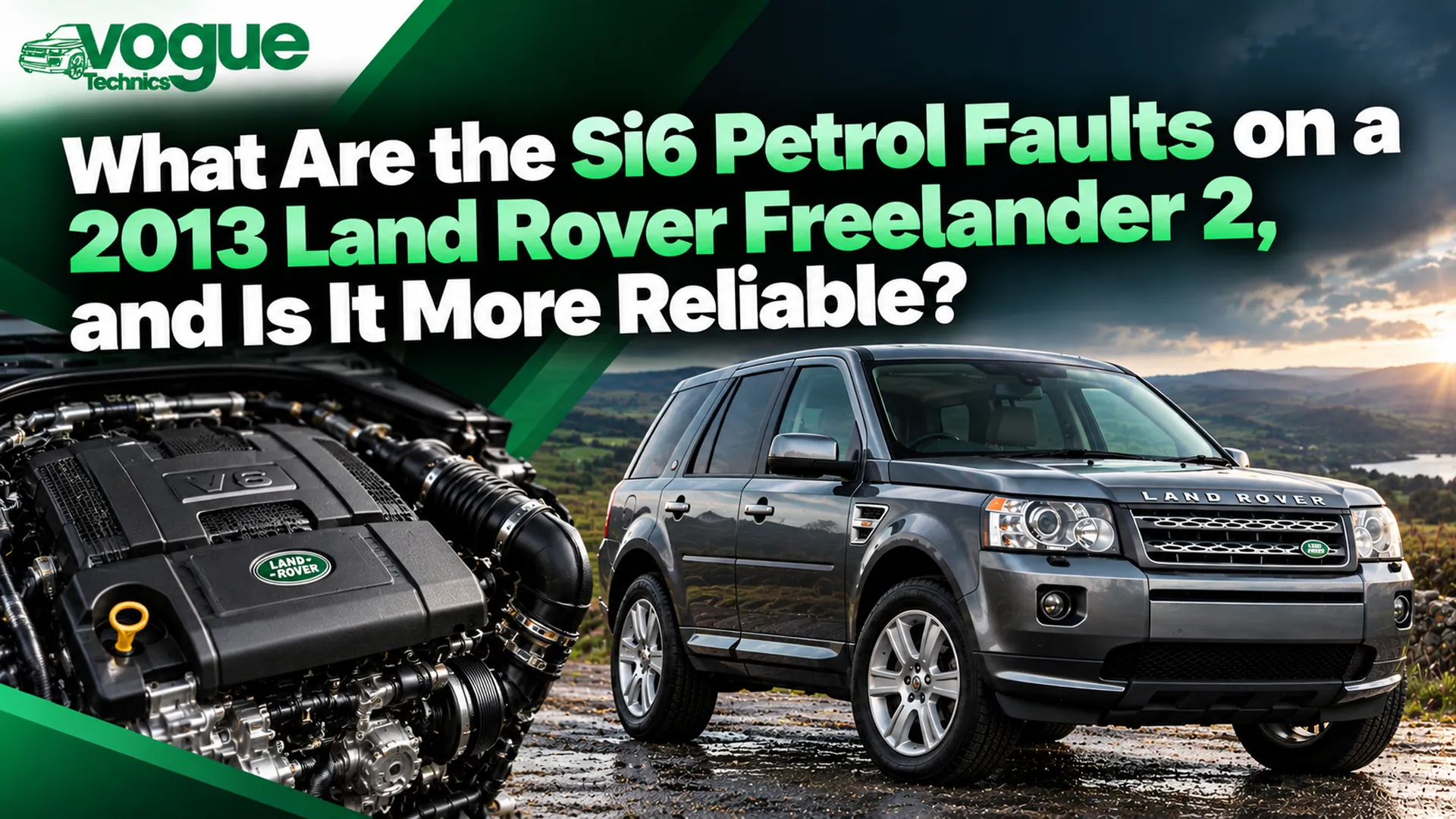
Buyers often assume the petrol is the safer choice. In many ways it is simpler, with no DPF and no EGR cooler headaches. But 2013 Land Rover Freelander TD4 2.2 and Si6 faults are different rather than absent. By 2013 the petrol line-up was also moving towards the newer 2.0 Si4, so confirm exactly which engine you are looking at.
Which Faults Commonly Affect the Freelander 2 Si6 Petrol Engine?
The 3.2 straight-six is smooth and generally robust, but age shows up in the ancillaries.
Cooling system wear. Thermostat housings, hoses and the water pump are common weak points. Overheating on an inline six is never a minor event, so any coolant loss deserves immediate attention.
Oil leaks and breather issues. Seals and gaskets harden with age. The crankcase breather system can also cause oil consumption or leaks if neglected.
Ignition components. Worn coils and spark plugs cause misfires and rough running.
Fuel economy. The Si6 is thirsty. Owners often report low-to-mid twenties MPG in mixed driving, which is a running cost issue rather than a fault, but it matters for your budget.
Faults shared with the diesel. The Haldex coupling and rear differential can fail on both engines. Typical signs are a whining noise from the rear, judder on tight turns, or a warning message. The Haldex fluid and filter need servicing on schedule, and skipping it is a classic cause of expensive failure.
Freelander 2 TD4 vs Si6: Reliability, Running Costs, Pros and Cons
Here is a straightforward comparison to help you decide.
Factor | 2.2 TD4 Diesel | 3.2 Si6 Petrol |
| Fuel economy | Much better, mid-30s to 40 MPG realistic | Heavy, low-to-mid 20s MPG |
| Torque and towing | Strong low-down pull, better for towing | Smooth but needs revs |
| Main weak points | Timing belt, EGR, DPF, turbo oil feed | Cooling system, oil leaks, ignition |
| Servicing complexity | Higher, belt interval is critical | Lower, but fuel costs bite |
| Repair cost risk | Higher if belt or turbo fails | Moderate, mostly ancillaries |
| Best for | High mileage, towing, daily drivers | Short to medium use, smooth drivers |
Land Rover Freelander 2 pros and cons in short:
Pros: excellent off-road ability for the class, comfortable ride, solid build, good visibility and strong used value when well maintained.
Cons: Haldex and rear diff servicing is often neglected, diesel emissions components can be costly, electrical gremlins appear on older cars and petrol running costs are high.
On Land Rover Freelander 2 reliability overall, the honest answer is that it depends on history. A car with documented belt changes, Haldex servicing and regular oil changes is a very different proposition from one with gaps in its records.
Which Freelander 2 Years Should You Avoid, and Is Repairing or Rebuilding the Engine Worth It?
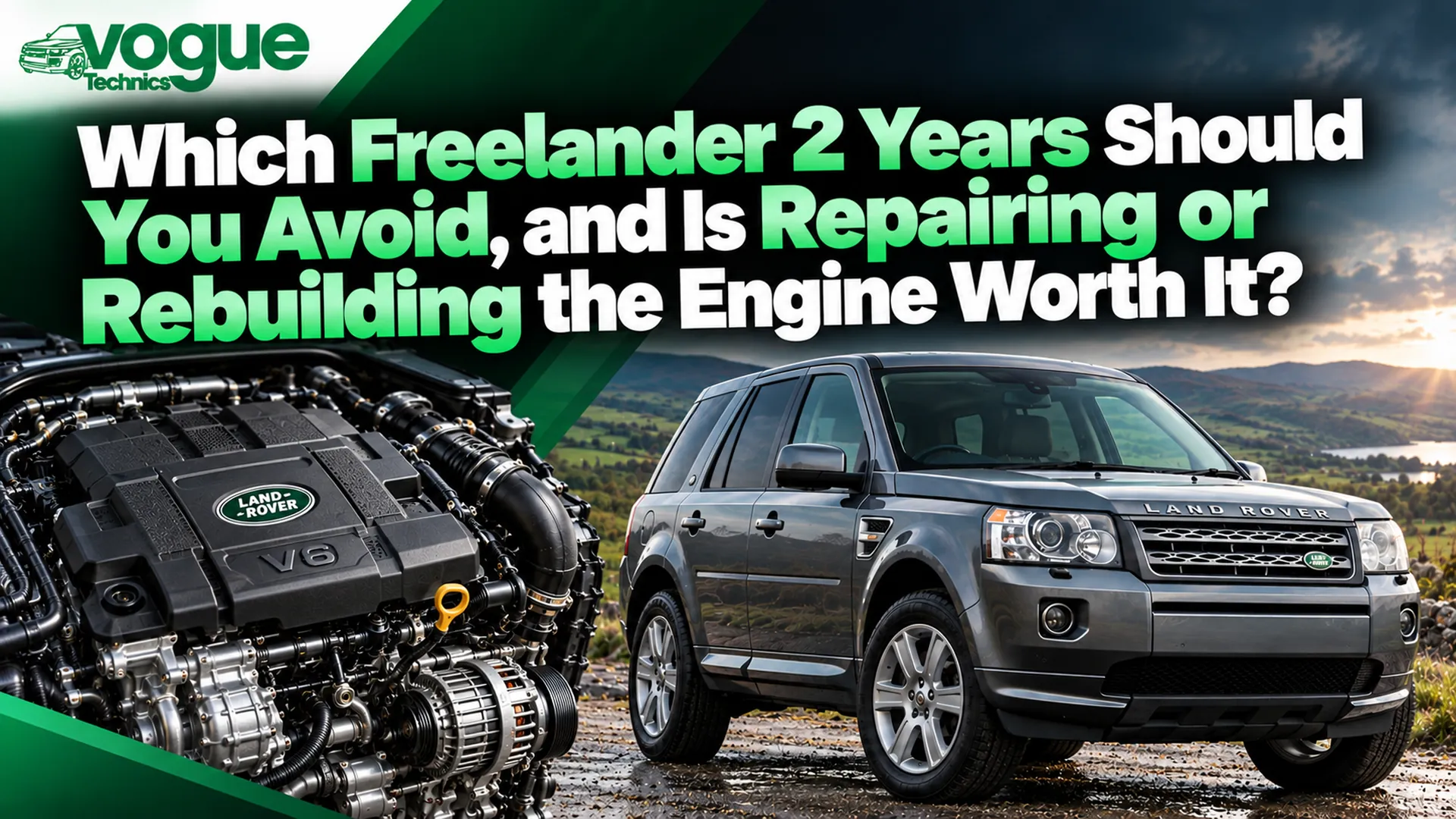
This is the section where buyers and owners make their biggest financial decisions, so we will keep it direct.
Which Land Rover Freelander 2 Years Should You Avoid Buying?
Searches for Land Rover Freelander 2 years to avoid usually have one answer in mind. There is no single cursed year, but some patterns are worth knowing.
Early cars (2006 to 2010). These carry the highest risk of age-related problems. Many are now past the point where a belt, water pump, Haldex service and electrical faults have all come due. A cheap early car with no history is the one to avoid.
2011 to 2014 cars. These received updates and are generally the better buy, including the 2.2 SD4 with more power and refinements. They are not fault-free, but the ownership picture tends to be better.
Rule of thumb: buy the history, not the year. A 2008 car with a full file beats a 2012 car with none.
What to check before buying:
- Proof of the timing belt change (invoice, not verbal assurance)
- Haldex oil change records
- Any DPF or EGR warning lights, and a clean cold start with no rattle
- Rear differential noise on a test drive
- Coolant level and signs of oil leaks
- A full scan for stored fault codes
When Should You Rebuild or Replace a Freelander 2 Engine, and How Much Does It Cost in Grays, Essex?
Not every engine fault means a new engine. Here is how we think about it.
Option | When it makes sense | Indicative UK cost* |
| Targeted repair | Isolated fault such as EGR, turbo pipe, belt kit, ancillary | Roughly £450 to £1,800 |
| Reconditioned engine | Internal damage, but the car is worth keeping | Varies by engine and supplier |
| Full rebuild | Belt failure damage, bearing wear, low compression | Often several thousand pounds |
*Prices are indicative and depend on the engine, parts and extent of damage. Final figures come from a diagnosis of your car.
Repair is worth it when the car is otherwise sound, the body is solid, and the fault is one component. Rebuild or replacement is worth it when the engine has suffered internal damage but the rest of the car justifies the cost. Walk away when the repair bill approaches the value of the vehicle and the car has other expensive problems, such as a failing Haldex and heavy rust.
We would rather tell you not to spend money than take a job that does not make sense for your car.
After an engine swap, remember to update your V5C if the engine number changes, and make sure emissions equipment is intact so the car passes its MOT.
Ready for a straight answer on your car? Send us your registration at voguetechnicsenginerebuild.co.uk and we will give you a free, no-obligation engine quote. We are based in Grays, Essex, and we work on Freelander 2 diesels and petrols every week.
Frequently Asked Questions
Is the Land Rover Freelander 2 reliable?
It can be, with proper maintenance. The biggest factors are timing belt changes on the diesel, Haldex servicing and regular oil changes. Neglected cars are where the horror stories come from.
Is the Freelander 2 2.2 diesel a good engine?
Yes, it is strong and economical for its size. Its weak points are the timing belt, EGR system, DPF and turbo oil feed. If those are handled, it can do high mileages.
How long does a Freelander 2 TD4 engine last?
Many reach well over 100,000 miles, and plenty go further with correct servicing. Missed belt changes and poor oil care shorten that considerably.
What are the most common Freelander 2 problems?
Rear differential and Haldex faults, DPF and EGR problems on diesels, power steering hose leaks, electrical glitches and timing belt issues on the 2.2.
Which is better, the TD4 or the Si6?
The TD4 suits higher mileage, towing and economy. The Si6 is smoother and mechanically simpler but costs much more to run.
Is a high mileage Freelander 2 worth buying?
Only with evidence. Look for belt, Haldex and servicing records. High mileage with a full history is often safer than low mileage with none.
What is the Freelander 2 Si6?
It is the 3.2-litre straight-six petrol engine, which is separate from the later 2.0 Si4 petrol.
Conclusion
The Freelander 2 rewards owners who stay ahead of its known weak points. On the TD4, that means respecting the timing belt, keeping the EGR and DPF healthy and using good oil. On the Si6, it means watching the cooling system and budgeting for fuel. On both, it means servicing the Haldex before it becomes a four-figure problem.
If your car is already showing symptoms, or you are weighing up a purchase, get it properly diagnosed before spending anything. A small fault caught early is far cheaper than a failed engine.
Get your free engine quote today. Enter your registration at voguetechnicsenginerebuild.co.uk, or contact our Grays, Essex workshop for honest advice on whether your Freelander 2 needs a repair, a reconditioned engine or a full rebuild.