
How to Prevent Head Gasket Failure: A Complete Maintenance & Warning Signs Guide
How to Prevent Head Gasket Failure with practical maintenance habits that protect your engine from costly damage. Learn how overheating, low coolant, faulty thermostats, and poor maintenance can lead to gasket failure. Discover early warning signs and simple steps to keep your cooling system and engine running reliably.
Your temperature gauge creeps past the halfway mark on the motorway, and your stomach drops. You've heard the horror stories, a blown head gasket can mean a repair bill running into four figures, or worse, a scrapped engine. The good news? Head gasket failure is almost never a random event. It's the end result of small warning signs that got ignored and a cooling system that didn't get the attention it needed.
This guide walks you through exactly how to prevent head gasket failure, not with vague "check your coolant" advice, but with the specific mechanical reasons gaskets fail, the maintenance habits that actually stop it happening, and the early symptoms that give you a window to act before you're looking at an engine rebuild.
Whether you're trying to protect a car you already own or you're worried about a vehicle that's already run hot once, everything below is built around one goal: keeping combustion, coolant, and oil exactly where they belong, separated by a seal that's doing its job properly.
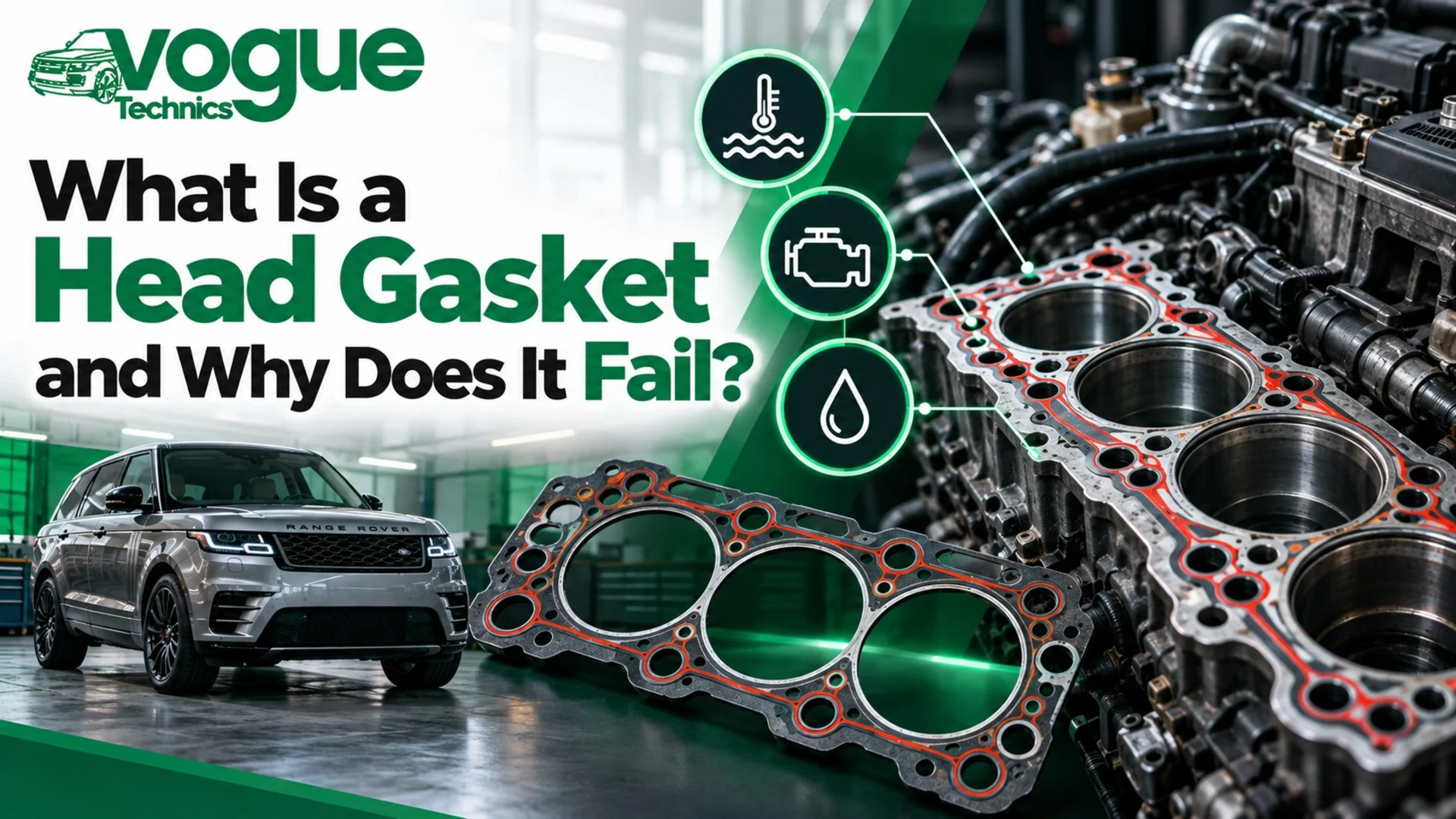
What Is a Head Gasket and Why Does It Fail?
Before you can prevent a problem, it helps to understand exactly what's failing and why. A surprising number of drivers reach for a bottle of sealer without ever knowing what the part actually does, which is part of why so many "quick fixes" don't hold up.
What Does a Head Gasket Actually Do?
The head gasket sits between your cylinder head and your engine block, the two largest castings in your engine. It's a thin, precisely engineered seal, but it's doing three separate jobs at once:
- Sealing the combustion chamber so the immense pressure created when fuel ignites stays exactly where it should, driving the piston down instead of leaking away
- Keeping coolant channels separate so coolant can circulate through the engine block and cylinder head without spilling into the cylinders
- Keeping engine oil contained in its own passages, away from both coolant and combustion gases
Modern gaskets are usually MLS (multi-layer steel) designs, thin layers of steel with a coating that compresses precisely around bolt holes, coolant passages, and cylinders. It sounds simple. In practice, it's one of the most stressed components in your car, sitting between two surfaces that expand and contract at different rates every single time you start the engine.
What Causes Head Gasket Failure?
Head gasket failure is rarely one single event. It's usually the final stage of a chain reaction. Here's how the direct causes connect back to the underlying mechanical problem, and what actually stops it:
Direct Cause | Underlying Problem | How to Prevent It |
| Overheating | Cooling system failure | Regular coolant checks, thermostat and water pump maintenance |
| Low coolant | Leak or poor maintenance | Inspect hoses, radiator, and reservoir for leaks |
| Bad thermostat | Restricted coolant flow | Test and replace on schedule |
| Failed water pump | Poor coolant circulation | Inspect for wear, noise, or leaks at service intervals |
| Blocked radiator | Poor heat dissipation | Flush and inspect radiator periodically |
| Detonation/pre-ignition | Excessive cylinder pressure | Use correct fuel grade, keep ignition timing correct |
| Poor installation | Incorrect clamping force | Follow manufacturer torque specifications |
Notice that overheating sits at the top of almost every chain. That's not a coincidence, it's the single biggest cause of head gasket failure by a wide margin, which is exactly why the next section goes deeper into the mechanics of why heat is so destructive.
How Does Overheating Actually Cause a Head Gasket to Blow?
"Overheating blows head gaskets" is the advice you'll find everywhere. Here's the part most articles skip, the actual physics behind it.
When your engine overheats, the cylinder head and engine block don't expand at the same rate. Aluminium cylinder heads (common on most modern engines) expand faster than cast-iron or aluminium blocks under extreme heat. This creates uneven thermal expansion across the mating surface where your head gasket lives.
The result is a chain reaction:
- Thermal expansion pulls the two surfaces out of their original alignment
- Cylinder-head distortion, even a warp of a fraction of a millimetre, creates gaps where the gasket can no longer maintain a full seal
- Loss of clamping force at the distorted points means combustion pressure, coolant, or oil finds a path through
- Combustion-gas leakage into the cooling system, or coolant leakage into the cylinders, follows
This is why a single serious overheating event, even one that lasts just a few minutes, can cause permanent damage, even if the engine seems to run fine afterwards. The distortion doesn't repair itself.
How to Prevent Head Gasket Failure: Step-by-Step
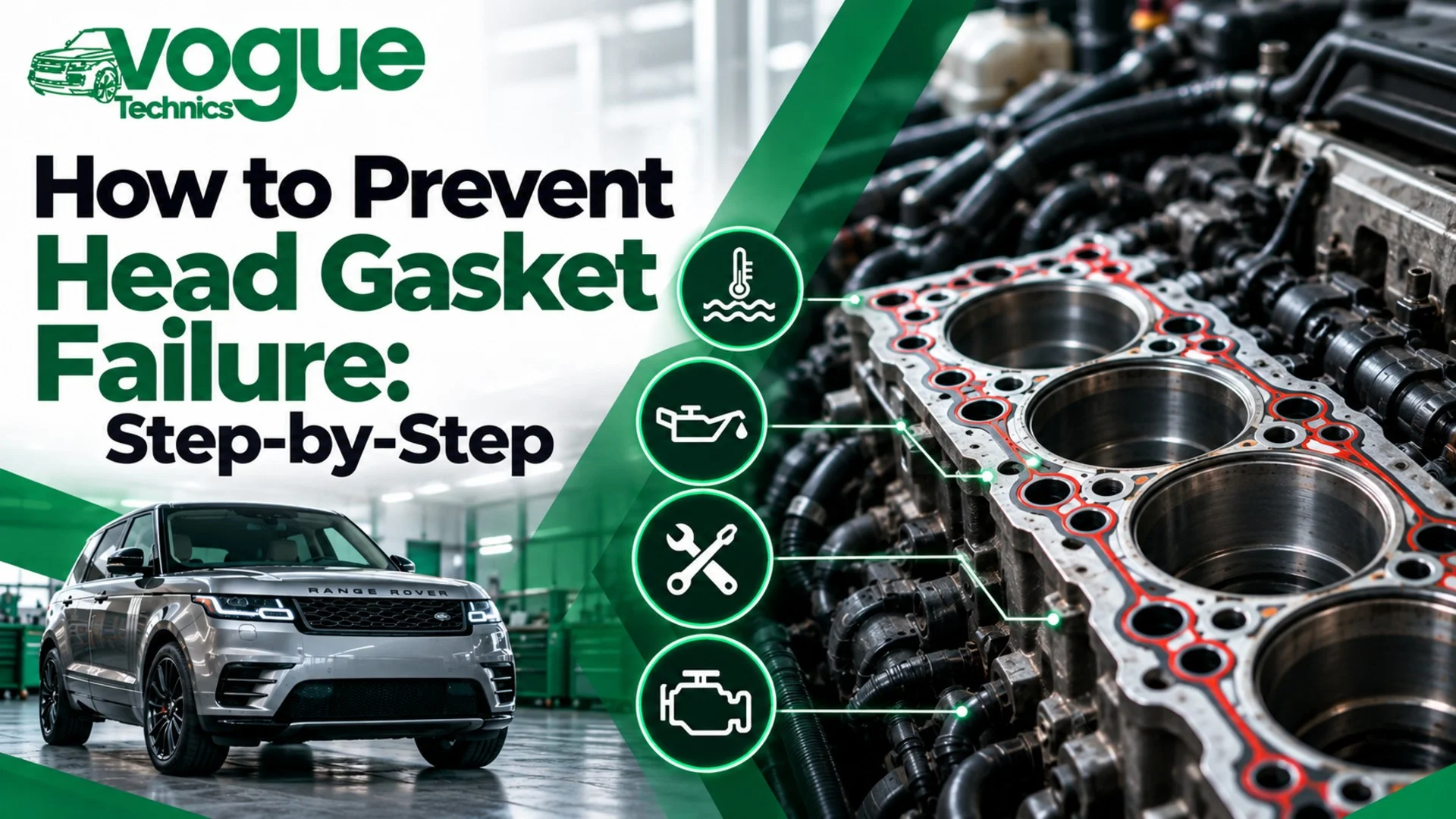
This is the section that actually answers the question you came here for. Preventing head gasket failure isn't one big action, it's a set of small, consistent habits that keep your cooling system, oil, and combustion process all working within their proper limits.
How to Maintain Your Cooling System to Prevent Overheating
Your cooling system is the single most important defence your head gasket has. If it's working properly, your engine temperature stays stable, and the thermal stress that causes distortion never builds up.
A properly maintained cooling system relies on several components working together:
- Coolant circulating at the correct concentration to resist both freezing and boiling
- Radiator dissipating heat efficiently, with no blockages or corrosion
- Thermostat opening and closing at the correct temperature to regulate flow
- Water pump keeping coolant moving continuously through the engine and radiator
- Radiator cap maintaining correct system pressure, a worn cap can drop your coolant's boiling point significantly
- Hoses and belts free from cracks, swelling, or leaks
How to Check Your Coolant Level and Mixture Correctly
Check your coolant reservoir when the engine is cold, checking a hot engine is both dangerous and gives you an inaccurate reading, since coolant expands as it heats. The level should sit between the minimum and maximum marks.
Just as important as the level is the mixture. Most manufacturers recommend a 50/50 mix of antifreeze and distilled water. Too much water reduces the boiling point and corrosion protection; too much antifreeze reduces heat transfer efficiency. If you're topping up regularly with plain water, you're gradually diluting your protection, and if your coolant level keeps dropping with no visible puddle underneath the car, that's a sign worth investigating rather than ignoring, since internal leaks don't always show up on the driveway.
How to Spot a Failing Thermostat, Water Pump or Radiator
These three components fail in different ways, and knowing the difference helps you catch problems early:
- A failing thermostat often gets stuck closed, restricting coolant flow and causing rapid overheating, or stuck open, meaning your engine never reaches proper operating temperature, both are hard on your engine long-term
- A failing water pump typically shows up as a whining or grinding noise from the front of the engine, coolant leaking from the pump housing, or a slipping/squealing belt
- A failing radiator shows as reduced airflow through the fins (often from road debris or corrosion), visible leaks at the seams, or coolant that needs constant topping up with no obvious external leak
Any one of these on its own can push your engine temperature into dangerous territory. Catching them at a routine inspection, rather than at the roadside, is exactly the kind of preventative maintenance that keeps a head gasket healthy for the life of the car.
How to Prevent Engine Overheating While Driving
Even with a well-maintained cooling system, certain driving conditions put extra strain on your engine. A few habits make a real difference:
- Watch your temperature gauge, not just your speedometer. Most drivers only notice it when it's already in the red, by then, damage may already be happening.
- Don't ignore a rising gauge on the motorway or in traffic. Stop-start traffic in hot weather is one of the most common triggers for overheating, since airflow through the radiator drops.
- Turn on the heater if you're stuck in traffic and the temperature is climbing. It sounds uncomfortable, but the heater core acts as an auxiliary radiator, pulling heat away from the engine.
- Avoid heavy towing or sustained high loads in an engine that's already running warm, the extra combustion pressure adds thermal stress exactly where you can't afford it.
- Let your engine idle for a minute before switching off after a long, hard drive, especially on turbocharged engines, to let temperatures stabilise gradually rather than heat-soaking components.
How Often Should You Change Engine Oil and Coolant?
Oil and coolant intervals get treated as an afterthought by a lot of drivers, but both play a direct role in head gasket longevity.
Engine oil lubricates moving parts and helps carry heat away from the engine internals. Old, degraded oil loses viscosity and heat-transfer properties, adding to overall thermal stress. Most manufacturers recommend changes every 10,000–12,000 miles or annually, whichever comes first, though it's always worth checking your specific handbook, since some turbocharged or high-performance engines need shorter intervals.
Coolant loses its corrosion inhibitors and antifreeze properties over time, even if the level never drops. Most modern long-life coolants are rated for 5 years or 100,000 miles, but older or non-OAT coolants may need changing every 2 years. Degraded coolant is more likely to corrode internal passages, which can restrict flow and cause exactly the localised overheating that damages a head gasket.
Why Correct Installation and Torque Specifications Matter
This is the section most prevention guides skip entirely, and it's one of the most common causes of premature head gasket failure on cars that have recently had engine work done.
A head gasket only seals properly if it's clamped with the correct, even force across the entire cylinder head. That depends on:
- Cylinder-head flatness, a warped head (even from a previous overheating event) needs to be checked and, if necessary, machined flat before a new gasket goes on. Fitting a new gasket to a warped head is one of the most common reasons a "repair" fails within weeks.
- Correct gasket type for your specific engine, MLS gaskets, composite gaskets, and multi-layer designs aren't interchangeable
- Clean mating surfaces, completely free of old gasket material, oil residue, or corrosion
- Head-bolt condition, many modern engines use torque-to-yield bolts, which stretch slightly during tightening and are designed for one-time use. Reusing them is a common shortcut that leads to inadequate clamping force
- Correct torque sequence and specification, applied in stages exactly as the manufacturer specifies, usually working from the centre outward in a specific pattern
If you've had head gasket work done recently and you're seeing symptoms return, incorrect installation, rather than a faulty part, is one of the most likely explanations. This is exactly why it's worth having the work carried out by a specialist who follows manufacturer torque specifications rather than "tightening it up firm."
What Are the Early Warning Signs of a Failing Head Gasket?
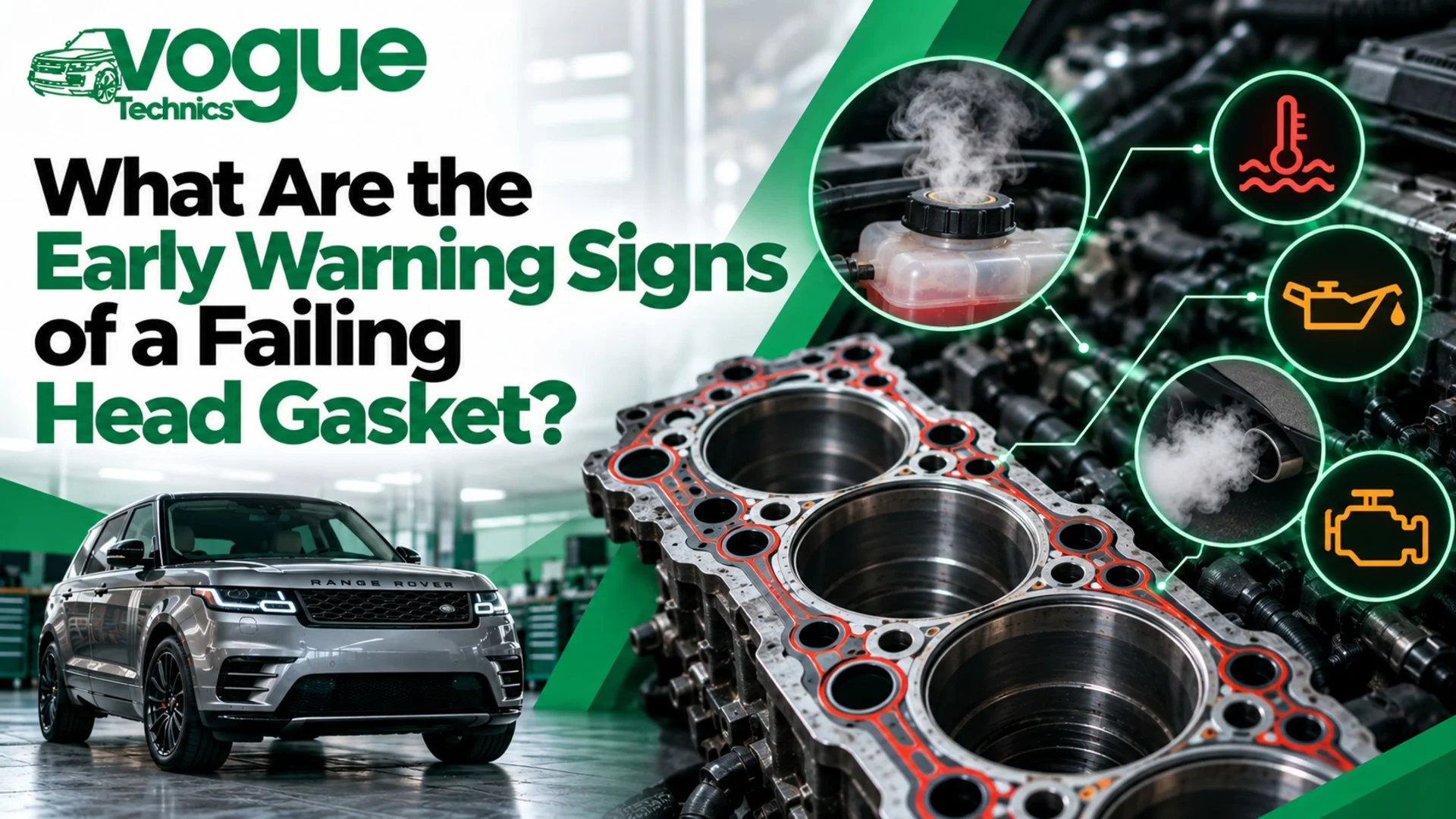
Even with excellent maintenance, it's worth knowing the early symptoms, because catching a problem in its first week is the difference between a straightforward repair and a full engine rebuild.
What Are the Early Signs of Head Gasket Failure?
Watch for these signs, and don't wait for more than one to appear before getting it checked:
- White smoke from the exhaust, especially thick and continuous rather than the light vapour you see on a cold morning, this usually means coolant is burning in the combustion chamber
- Milky, mayonnaise-like residue on the oil cap or dipstick, a strong indicator that coolant is mixing with your engine oil
- Coolant disappearing with no visible external leak or puddle underneath the car
- Bubbling in the coolant reservoir while the engine is running, which suggests combustion gases are escaping into the cooling system
- Rough idle or misfiring, particularly if it's inconsistent and paired with any of the symptoms above
- A sweet smell inside or outside the car, burning coolant has a distinctive smell that's different from burning oil
- Overheating with no obvious external cause, especially if it happens repeatedly after a coolant top-up
Any single symptom on its own could point to something else, a milky dipstick can occasionally be condensation from short journeys in cold weather, for example. But two or more together is a strong signal that warrants a proper diagnostic check, such as a compression test, leak-down test, or combustion-gas test, rather than guesswork.
What Should You Do If Your Engine Overheats?
If your temperature gauge climbs into the red, or you've already had an overheating event and you're wondering what to do next, the steps you take in the following hours matter more than most drivers realise.
- Stop driving as soon as it's safe to do so. Continuing to drive an overheating engine is the single fastest way to turn a fixable problem into a blown gasket.
- Turn off the engine and let it cool naturally. Don't open the radiator cap while it's hot, pressurised, near-boiling coolant can cause serious burns.
- Once cool, check the coolant level and look for any obvious leaks, split hoses, or damage.
- Identify why it overheated before driving again, was it low coolant, a stuck thermostat, a failed fan, or something else?
- Get the cooling system pressure-tested to check for leaks that aren't visible externally.
- Check your oil for any sign of contamination before assuming the engine is fine to drive again.
- If any of the warning signs above appear afterwards, even days later, get a proper diagnostic test done. A head gasket that's been stressed by one overheating event can fail gradually over the following weeks.
Treating an overheating event as a "one-off" that resolved itself is one of the most common reasons drivers end up with a full head gasket failure a few weeks down the line, once the initial distortion has had time to worsen under normal driving stress.
Does Head Gasket Sealer Actually Prevent Failure?
It's worth being direct about this one: head gasket sealer is not a preventative maintenance product, and it's not a permanent repair.
Sealers work by circulating a chemical compound through your cooling system that hardens when it contacts a leak, temporarily plugging small gaps. For a very minor, early-stage leak, some products can buy you time to arrange a proper repair. But they don't address the underlying cause, a distorted cylinder head, worn clamping force, or ongoing thermal stress will still be there.
Relying on sealer instead of proper diagnosis and repair often means:
- The leak returns, sometimes worse, within weeks or months
- Sealer residue can clog narrow coolant passages, causing localised overheating elsewhere in the system
- The underlying problem (a warped head, for example) continues to worsen while masked
Sealer has a place as a genuine short-term stopgap in specific situations, but it should never be treated as routine head gasket maintenance, and it's not a substitute for proper diagnosis if you're seeing consistent symptoms.
Protect Your Engine with Voguetechnics, Cooling System & Head Gasket Specialists in Grays, Essex
Reading about prevention is useful. But if you're already seeing warning signs, or you'd simply rather have a specialist confirm your cooling system is in good health before a problem starts, that's where professional diagnosis makes the difference between a manageable repair and an expensive one.
Why Choose Voguetechnics for Head Gasket Prevention & Repair?
At Voguetechnics, based in Grays, Essex, we work on head gasket diagnosis, cooling-system repair, and full engine rebuilds day in, day out, not as a side job alongside general servicing, but as genuine specialist work.
Here's what that means for you:
- Proper diagnostic testing, compression tests, leak-down tests, and combustion-gas testing to confirm exactly what's wrong before any work starts, rather than guessing
- Cylinder-head machining and flatness checks carried out to manufacturer tolerances, not estimated by eye
- Correct torque-to-yield bolt replacement and manufacturer-specified torque sequences on every gasket installation, the exact installation standard covered above
- Honest advice on whether a head gasket replacement, a cylinder-head rebuild, or a full engine rebuild is the right call for your vehicle and your budget
- Local, accessible service for drivers across Grays and the wider Essex area, without the wait times of a main dealer
If your engine has overheated recently, you're seeing any of the warning signs above, or you simply want peace of mind before a long trip, get in touch with our team for a proper cooling-system inspection.
Head Gasket Prevention Checklist
Save this checklist, or print it and keep it in your glovebox, a few minutes at the right intervals is genuinely the difference between a healthy engine and a costly repair.
Weekly / Before Long Journeys
- Check coolant level (engine cold)
- Check oil level and condition
- Watch the temperature gauge on every drive
- Look for any coolant puddles under the car
Monthly
- Inspect radiator hoses for cracks, swelling, or soft spots
- Check the radiator cap seal
- Look for white smoke or unusual exhaust colour
Every Service / 10,000–15,000 Miles
- Cooling-system pressure test
- Thermostat function check
- Water pump inspection for leaks or noise
- Radiator inspection and flush if needed
Annually / Per Manufacturer Schedule
- Coolant replacement (if not long-life OAT coolant)
- Full cooling-system inspection
- Belt and hose replacement if worn
Frequently Asked Questions
Can I drive with a blown head gasket?
It's not advisable. Driving with a confirmed blown head gasket risks coolant contaminating your oil, overheating damage to the cylinder head or engine block, and in severe cases, complete engine failure. If you suspect a blown gasket, get it inspected before continuing to drive.
How much does head gasket repair cost?
Cost varies significantly depending on the vehicle, whether the cylinder head needs machining, and whether head bolts need replacing. Straightforward gasket replacement on accessible engines costs less than jobs requiring extensive machining or where a warped head or damaged block is discovered during the repair. Get a proper diagnostic and quote before assuming the worst.
How long should a head gasket last?
With good maintenance, a head gasket should last the life of the engine, often 150,000 miles or more. Failure is almost always linked to overheating, poor maintenance, or installation issues rather than simple wear over time.
Can low coolant cause head gasket failure?
Yes. Low coolant reduces your cooling system's ability to regulate engine temperature, directly increasing the risk of overheating and the thermal stress that damages a head gasket.
Can a bad thermostat cause head gasket failure?
Yes. A thermostat stuck closed restricts coolant flow, causing rapid, localised overheating around the cylinder head, one of the more common overlooked causes of gasket failure.
Does milky oil always mean a blown head gasket?
Not always, but it's a strong warning sign. Occasionally, condensation from very short journeys can cause minor milkiness that clears up. Persistent milky residue, especially paired with other symptoms, should always be checked properly.
The Bottom Line
Head gasket failure isn't bad luck, it's almost always the end result of a cooling system that wasn't quite kept on top of, or warning signs that got put off "until next week." The habits that prevent it aren't complicated: keep your coolant at the right level and mixture, don't ignore a climbing temperature gauge, stay on top of oil and coolant intervals, and make sure any gasket work is done to proper torque specifications.
If you're already seeing warning signs, or your engine has overheated recently, don't wait for it to get worse. Contact Voguetechnics in Grays, Essex today for a proper cooling-system inspection and honest advice on protecting your engine, before a small problem becomes an expensive one.