
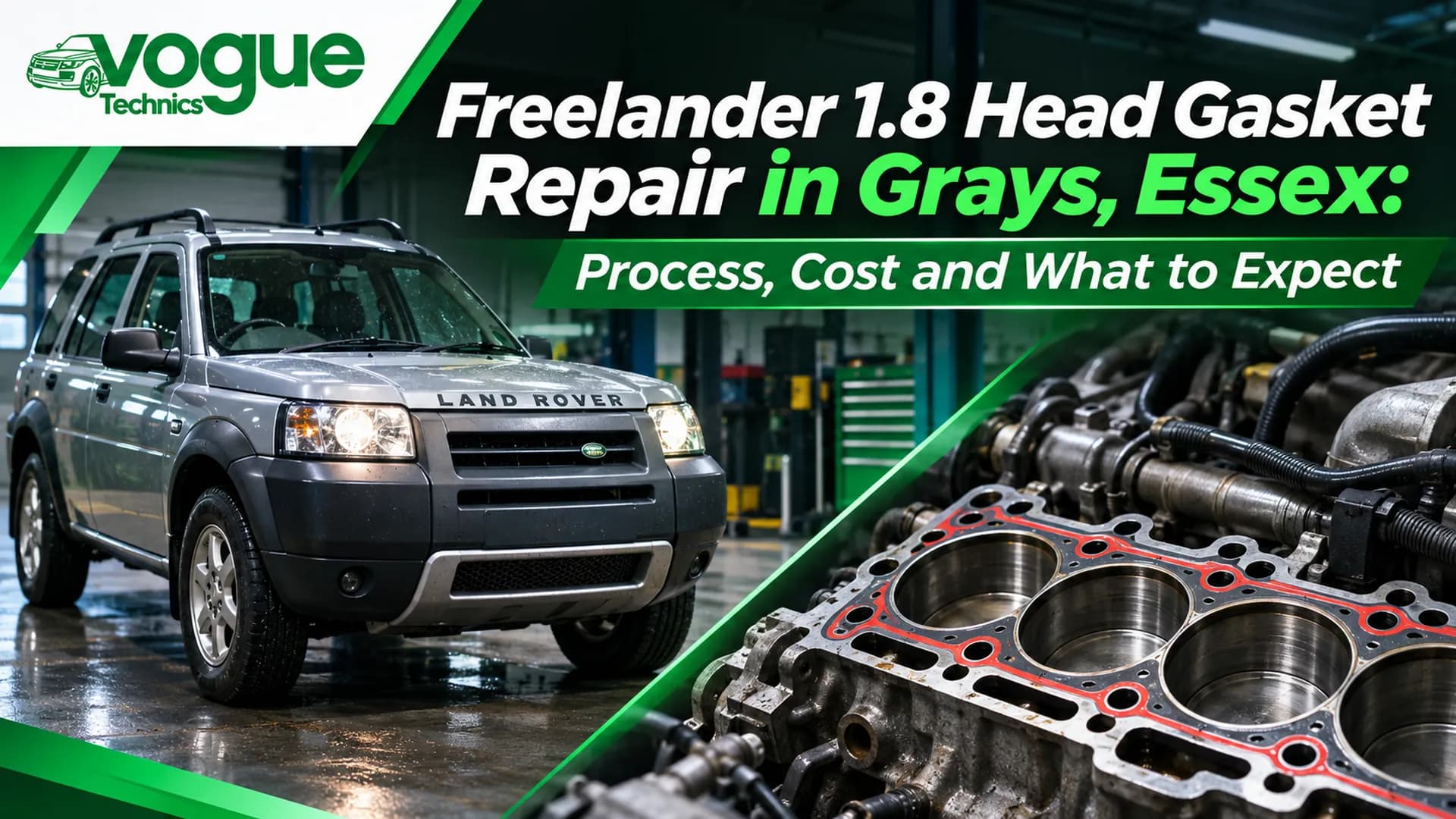
Freelander 1.8 Head Gasket Repair in Grays, Essex: Process, Cost and What to Expect
A failed head gasket on the Freelander 1.8 K-Series engine can be repaired if it's caught early and done properly. This guide explains the warning signs, what a thorough repair includes and why supporting parts matter. It also covers UK repair costs and how repair compares with a full engine rebuild or replacement. Written by the team at Vogue Technics Engine Rebuild in Grays, Essex.
Your temperature gauge creeps up, the coolant level keeps dropping, and there's a faint sweet smell from the exhaust. If you drive a Freelander 1.8, you probably already suspect the head gasket.
Short answer: a proper Freelander 1.8 head gasket repair means confirming the fault, removing the cylinder head, checking it for flatness and cracks, fitting a quality multi-layer steel gasket with new head bolts, and then refilling and pressure-testing the cooling system. Done this way, the repair is lasting. Done as a quick patch, it often fails again within months.
At Vogue Technics Engine Rebuild in Grays, Essex, we see these cars regularly, and most of the repeat failures we deal with come from shortcuts on the first job. This guide covers what goes wrong, what a good repair includes, and what it costs, so you can get a quote with confidence. If you'd rather talk it through, [request a written quote here].
Why Does the Freelander 1.8 K-Series Blow Its Head Gasket?
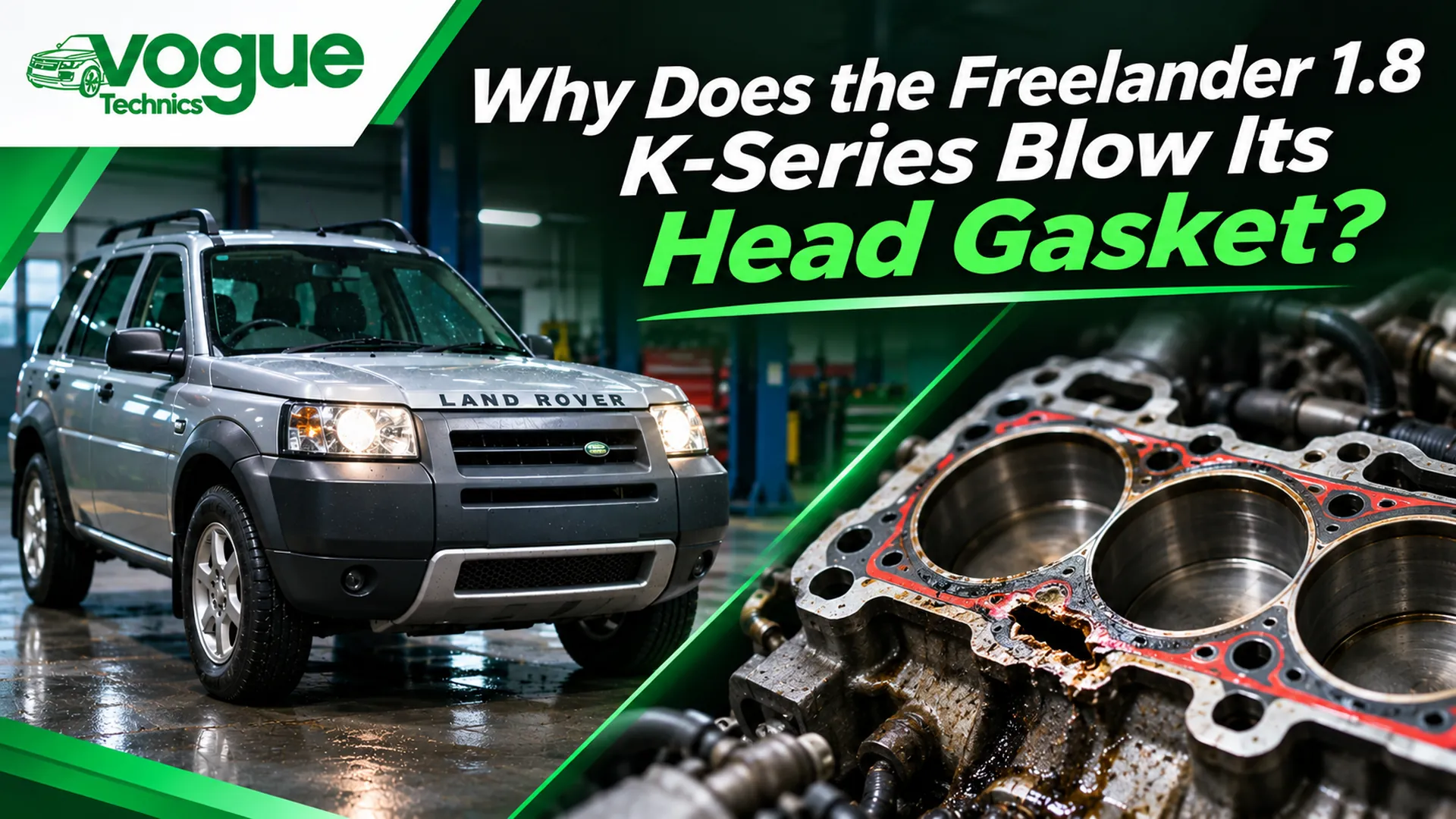
The 1.8 petrol in the Land Rover Freelander uses the Rover K-Series engine. It's a lightweight aluminium design with an open-deck block and wet cylinder liners. That layout keeps weight down, but it leaves the head gasket with very little margin for error.
The weak point is heat. If the engine runs hot even once, the aluminium head can distort and the gasket seal breaks down. Small cooling faults on these cars, such as a tired radiator cap, a leaking hose, a stuck thermostat or a failed fan, can quietly build up to that point.
In practice, we find the gasket failure is usually the result of an earlier cooling problem that went unnoticed. That's why a good repair always looks beyond the gasket itself.
What Are the Warning Signs of a Failed Freelander 1.8 Head Gasket?
Watch for these symptoms, especially in combination:
- Coolant loss with no visible leak. The level drops, but the driveway stays dry.
- White smoke from the exhaust, particularly on warm-up, with a sweet smell.
- Overheating, or a temperature gauge that swings up and down.
- Milky, mayonnaise-like residue under the oil filler cap or on the dipstick.
- Bubbles in the expansion tank while the engine runs, or a tank that pressurises quickly.
- Rough running or misfires, often worse when cold.
Any one of these can have a simpler cause, so don't self-diagnose from a single sign. A combustion gas test and a cooling system pressure test will confirm whether the gasket has actually failed.
Can You Still Drive a Freelander With a Blown Head Gasket?
We'd advise against it. Driving on a failed gasket risks warping the head, scoring the cylinder bores and contaminating the oil. Each of those turns a manageable repair into a much bigger bill, and in the worst case into a full engine replacement.
If the gauge is climbing, pull over and switch off. Early diagnosis is almost always cheaper than waiting.
How Is a Freelander 1.8 Head Gasket Replacement Done Properly?
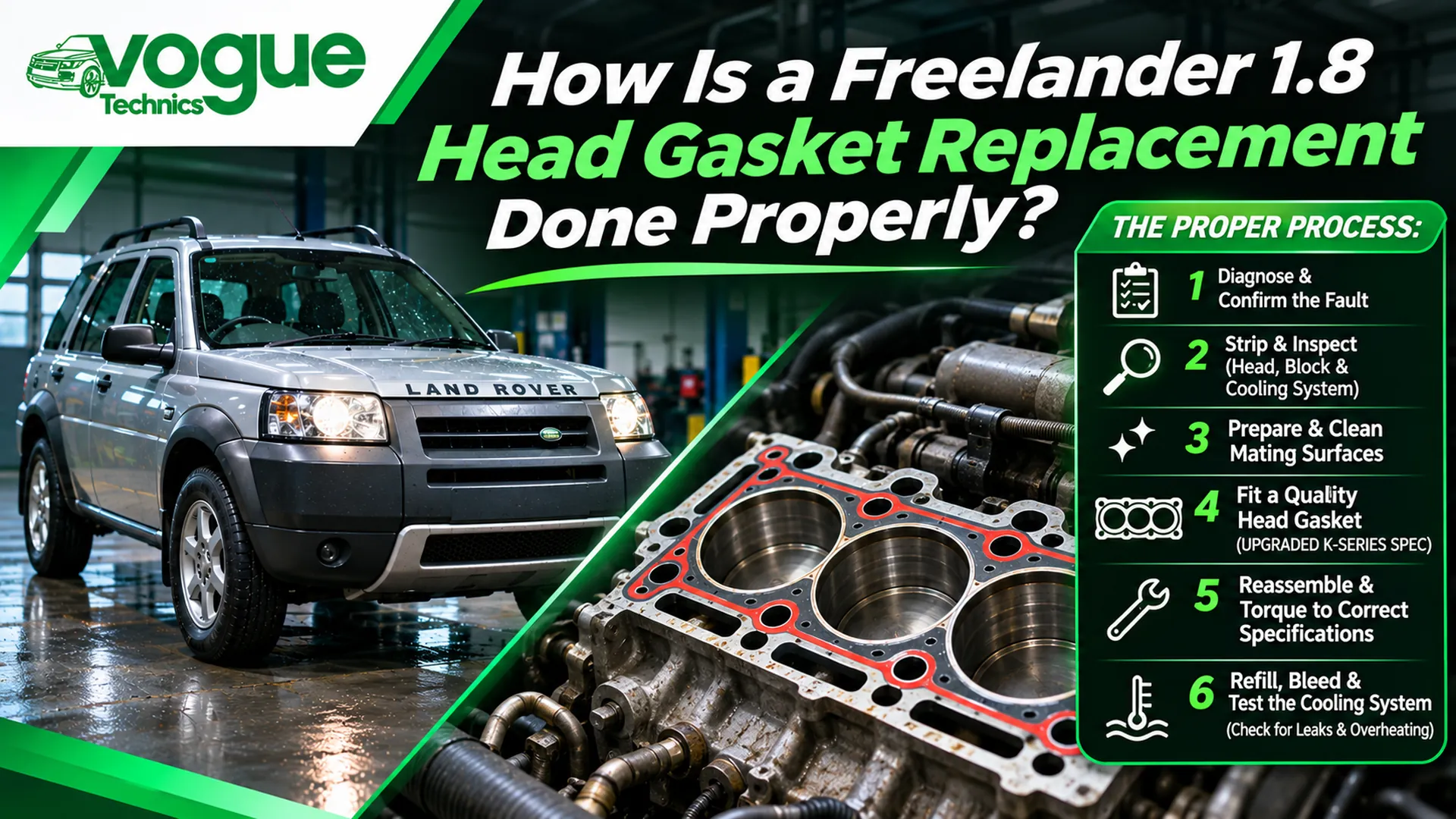
A Freelander 1.8 head gasket replacement is not a bolt-off, bolt-on job. The quality of the work depends on what happens before the head comes off, and what happens after it goes back on.
Here is the sequence we follow:
- Diagnose and confirm the failure.
- Drain the coolant and remove the cylinder head.
- Inspect the head and block faces.
- Machine or replace parts where needed.
- Reassemble with the correct gasket, new bolts and a correct torque sequence.
- Refill, bleed and test the cooling system.
What Checks Come Before and After the Repair?
Before the head comes off, we pressure test the cooling system and run a combustion gas test to confirm the gasket is the real problem and not a hose or radiator leak.
With the head off, we check it for flatness with a straight edge and feeler gauges, and inspect it for cracks. We also clean the block face carefully and check the condition of the wet liners. A warped head that goes back on without machining is one of the most common reasons these repairs fail.
After reassembly, we refill with the correct coolant mix, bleed trapped air out of the system, and then run the engine up to temperature and check for leaks, pressure and stable running. A final road test confirms the repair.
For a deeper look at how we approach these jobs, see our [engine rebuild service page].
Which Gasket and Supporting Parts Should Be Replaced Together?
A head gasket on its own is rarely enough. Because the engine is already apart, it makes sense to replace the parts that would otherwise cause a repeat visit.
Part | Why it's replaced with the gasket |
| Multi-layer steel (MLS) head gasket | Better heat tolerance and sealing than basic composite gaskets |
| Head bolts | Stretch-type bolts should not be reused |
| Thermostat and housing | A sticking thermostat is a common cause of overheating |
| Coolant and hoses | Old coolant loses protection; perished hoses can fail again |
| Cambelt and water pump | The timing belt drive is accessible during the job, so it's cost-effective to renew |
| Radiator cap | A weak cap can let pressure drop and trigger overheating |
This is where a low quote can mislead. A price that leaves these items out often looks cheaper at first, then costs more when something else fails.
How Much Does a Freelander 1.8 Head Gasket Repair Cost in the UK?
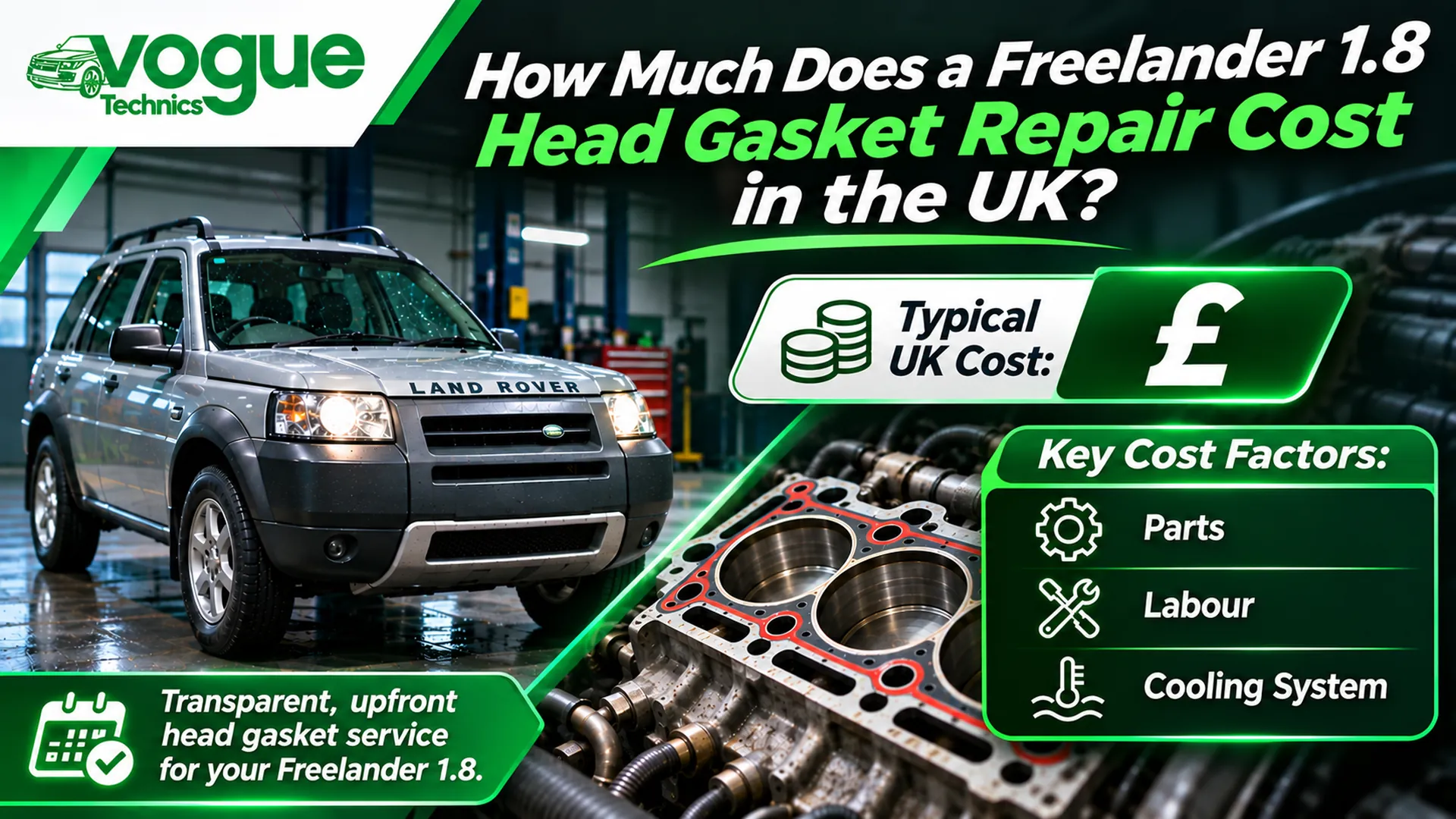
This is the question most owners ask first, so here is a straight answer. The Freelander 1.8 head gasket repair cost in the UK varies with the condition of the head, the parts used and how much extra work is found once the engine is opened up. As a rough guide, many UK independent garages quote somewhere in the region of £800 to £1,600 for a complete job including gasket set, head bolts, coolant and labour. Your own figure could sit above or below that range.
Treat any price given over the phone without inspecting the car as an estimate only. The only reliable Freelander 1.8 head gasket repair price is a written quote after diagnosis.
What Affects the Price of a Freelander 1.8 Head Gasket Repair?
Several things move the final number:
- Head condition. A head that needs skimming or crack testing adds machining cost.
- Parts quality. MLS gaskets and good head bolts cost more than budget sets, but last longer.
- Supporting parts. Replacing the cambelt, water pump, thermostat and hoses at the same time adds parts cost but saves duplicated labour later.
- Hidden damage. Liner problems, a cracked head or contaminated oil can raise the cost.
- Labour time. A thorough job takes longer than a rushed one, and the difference shows in reliability.
Be wary of very low quotes. They usually mean skipped checks, no head inspection or reused bolts.
Is It Better to Repair the Head Gasket or Replace the Engine?
For most cars where the damage is caught early, repair is the better value. Here is how the options compare:
Option | Best when | Main trade-off |
| Head gasket repair | The block and head are sound, and the car was stopped quickly | Needs a quality job to last |
| Engine rebuild | Liners, bores or other internals are damaged | Higher cost, but a long-term fix |
| Replacement engine | The engine is badly damaged or beyond economic repair | Quality and history of the replacement unit vary |
A worked example: an owner notices coolant loss and white smoke, stops driving and brings the car in the same week. A pressure test confirms a failed gasket, the head checks out flat, and a full repair with new bolts, thermostat and coolant restores the car. Compare that with an owner who keeps driving for another few hundred miles, warps the head and scores a cylinder, and ends up needing a rebuild instead. Acting quickly is the biggest factor in keeping the cost down.
Whichever route makes sense, your written quote should clearly list the gasket set, head bolts, any machining, coolant, labour and warranty terms, with no vague "parts as required" lines. If you'd like an itemised quote for your Freelander.
Frequently Asked Questions
How long does a Freelander 1.8 head gasket repair take?
A thorough repair typically takes a few working days, depending on whether the head needs machining and whether parts have to be ordered.
Will a head gasket sealer or additive fix my Freelander?
Sealers may slow a minor leak briefly, but they don't repair a failed gasket and can block small coolant passages. We don't recommend them as a lasting fix.
Is the Freelander 1.8 head gasket repair worth the money?
If the rest of the car is sound, usually yes. A proper repair costs far less than replacing the vehicle, as long as the engine itself hasn't been badly damaged.
How do I know if the head is warped?
It can only be confirmed with the head removed and checked for flatness. Overheating history is a strong warning sign.
Do you repair Freelanders in Grays, Essex and the surrounding area?
Yes, we're based in Grays, Essex, and work with owners across Thurrock and nearby areas. Get in touch to arrange a diagnosis.
Get Your Freelander 1.8 Head Gasket Repair Quote
A failed head gasket is serious, but it's usually fixable if you act early and have the job done properly. The right repair addresses the gasket, the head, the bolts and the cooling system together, not just one part.
Vogue Technics Engine Rebuild offers honest diagnosis and clearly itemised quotes from our Grays, Essex workshop. [Request your written quote today] and we'll tell you exactly what your Freelander needs, and what it will cost.